Digital Games
Company
Documents about Digital Games
Women Just Want to Have Fun: A Study of Adult Female Players of Digital Games
Aphra Kerr's paper examines adult female players of digital games from two perspectives: producers and consumers.
- Across PAL territories, only 6.7 percent of PS2 registered owners were women, according to Sony's own 2002 data.
- The women's recruitment into digital games usually came between the ages of six and ten, typically through fathers, brothers or male friends who played.
- Social networks were important in recruiting the interviewees into games and in sustaining their play.
Enhancing Gameplay: Challenges for Artificial Intelligence in Digital Games
Darryl Charles, writing for the Digital Games Research Association (DiGRA), examines the current state of artificial intelligence in digital games and argues for more radical AI innovation.
- The author states that most of the new computing resources made available to game AI have tended to be used for incremental improvements to existing AI technology.
- The paper says the majority of games still use a fairly limited set of AI techniques, including finite-state machines and path-finding that is normally a variation on the A algorithm.
- The author argues that a player must believe intelligent behaviour is being exhibited, otherwise AI coding is much less effective, irrespective of how clever it is.
Delightful Identification & Persuasion: Towards an Analytical and Applied Rhetoric of Digital Games
Steffen P. Walz's article, "Delightful Identification & Persuasion: Towards an Analytical and Applied Rhetoric of Digital Games" (DiGRA), presents first steps toward a rhetoric of digital games.
- The author proposes that a game's persuasiveness operates through offers and demands that first make the player identify with the game and then persuade the player to play and keep playing.
- The article defines gameplay as a rhetorical performance between player(s) and game design, a symbolic action taking place between them.
- The author proposes a three-dimensional model of symbolic, structural, and systemic couplings between player and game design.
The Other Game Researcher: Participating in and Watching the Construction of Boundaries in Game Studies
Marinka Copier's article, presented as a first reconnaissance exercise, examines how game studies is constructed as an autonomous discipline through boundary-work.
- The author argues that creating a new autonomous discipline such as game studies mainly involves constructing boundaries on different levels.
- The article proposes Haraway's situated knowledge as a way to realize where and how knowledge is being produced, and looking into the empirical situation of game research to see that game researchers produce knowledge from a certain (hybrid) position and perspective.
- Gieryn's boundary-work typology lists four types: monopolization, expansion, expulsion and protection.
Representing Users in the Design of Digital Games
Aphra Kerr's paper, presented at the Computer Games and Digital Cultures conference, examines how designers represent users in the design of digital games, drawing on Madeline Akrich's approach.
- Early interviews found that end users had very little explicit involvement in digital game design before a game went into testing.
- Publishers were described as risk averse and unlikely to invest in a start-up with no track record or in a concept that did not readily conform to existing genres.
- The games.inc designers formed implicit representations of players based on their own preferences as game players rather than on formal user research.
Australian Game Development Survey 2024
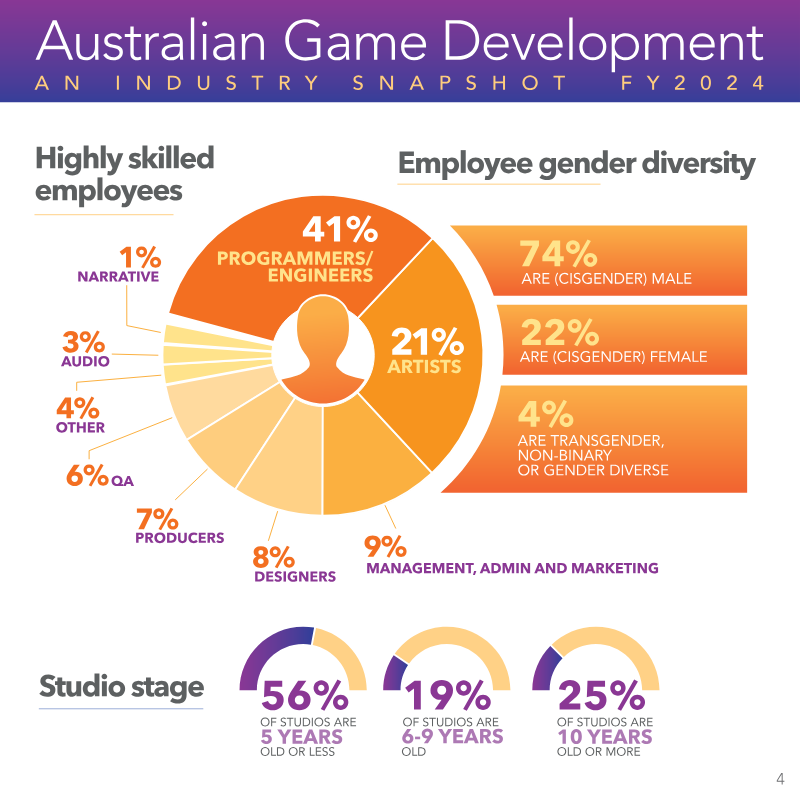
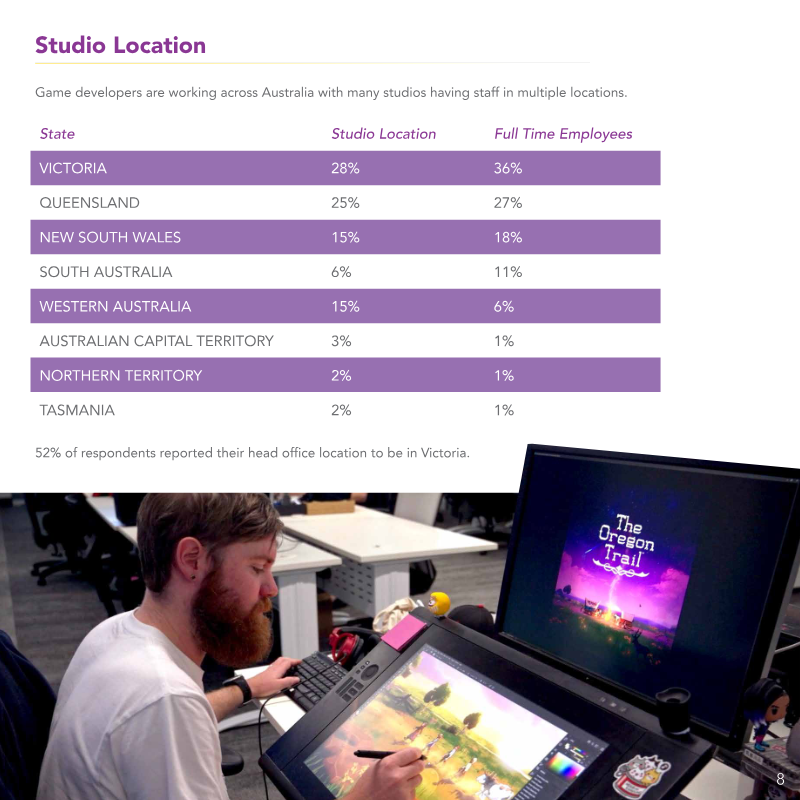
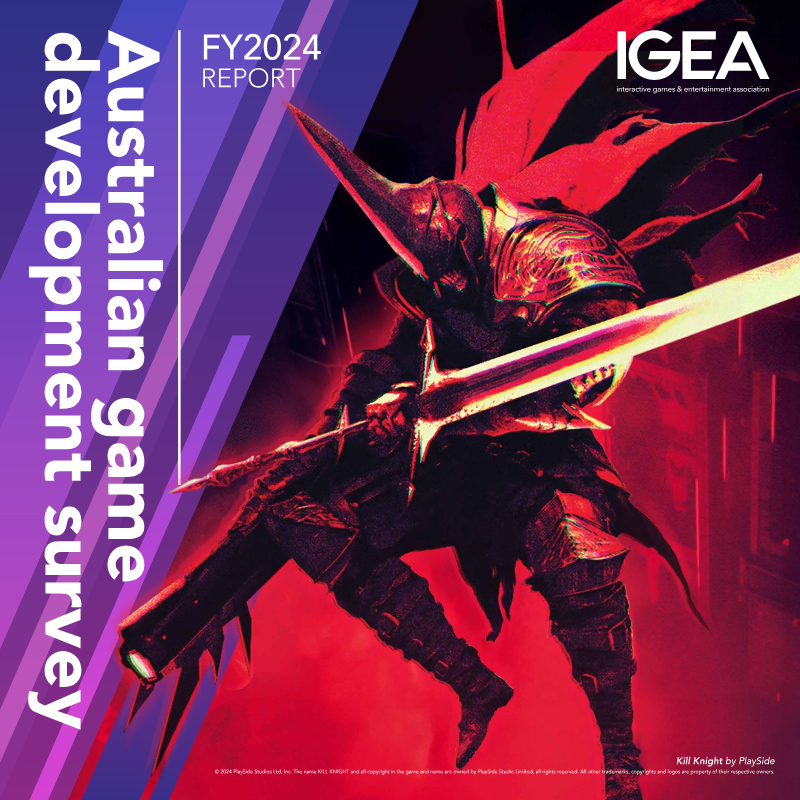
The Australian Game Development Survey 2024 provides an annual snapshot of the Australian game development industry, detailing its size, scope, health, and key trends for the financial year 2024.
- Australian game development revenue dipped 1.9% to $339.1 million in FY2024 (1 July 2023 to 30 June 2024), while employment held roughly steady at 2,465 people, signalling stability amid global headwinds.
- The sector is heavily export-oriented, with 93% of revenue generated outside Australia.
- Eighty-five percent of studios develop their own intellectual property, pointing to a sector with strong original content capability.



2019 Year in Review: Digital Games and Interactive Media
The 2019 Year in Review by SuperData, a Nielsen company, provides a comprehensive analysis of the global digital games and interactive media market, highlighting key revenue trends, audience shifts, and technological advancements.
- Digital games revenue reached $109.4 billion in 2019, up 3% year over year, while the broader interactive media sector grew about 4%.
- Free-to-play titles drove growth, accounting for roughly 80% of digital games revenue, with mobile contributing $64.4 billion, about three-fifths of total spending.
- Premium game revenue fell 5% to $18.9 billion, reflecting a year with fewer blockbuster releases than 2018.

New York City Digital Games Industry: 2021 Economic Impact Study
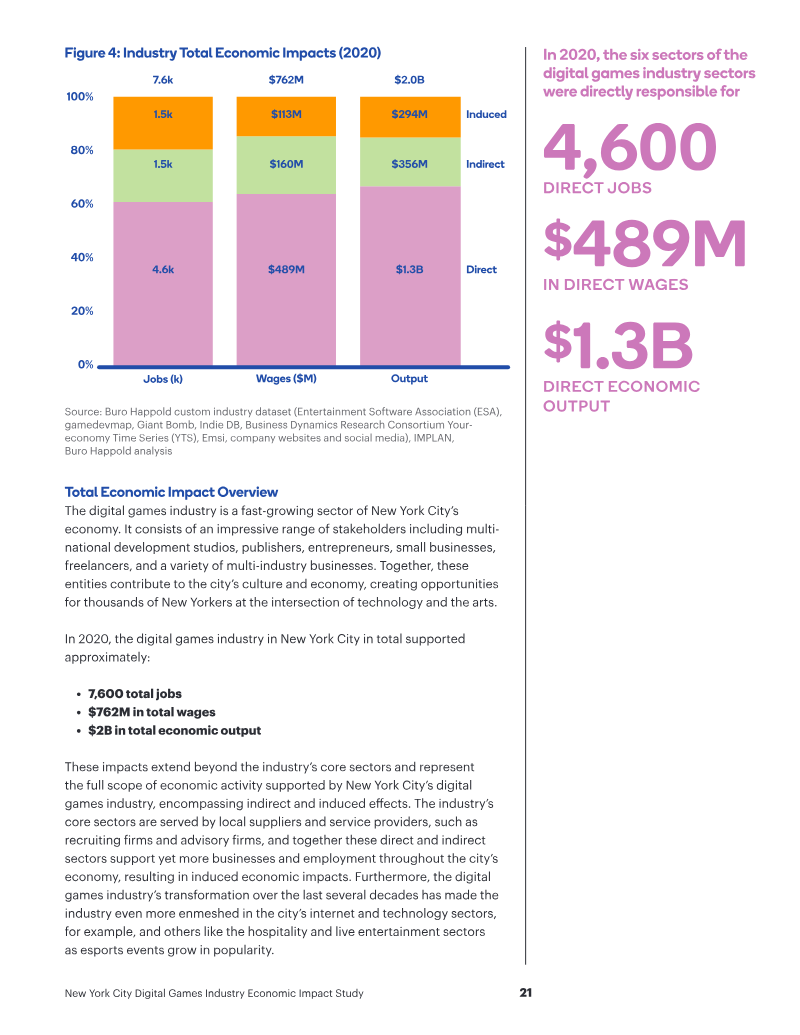
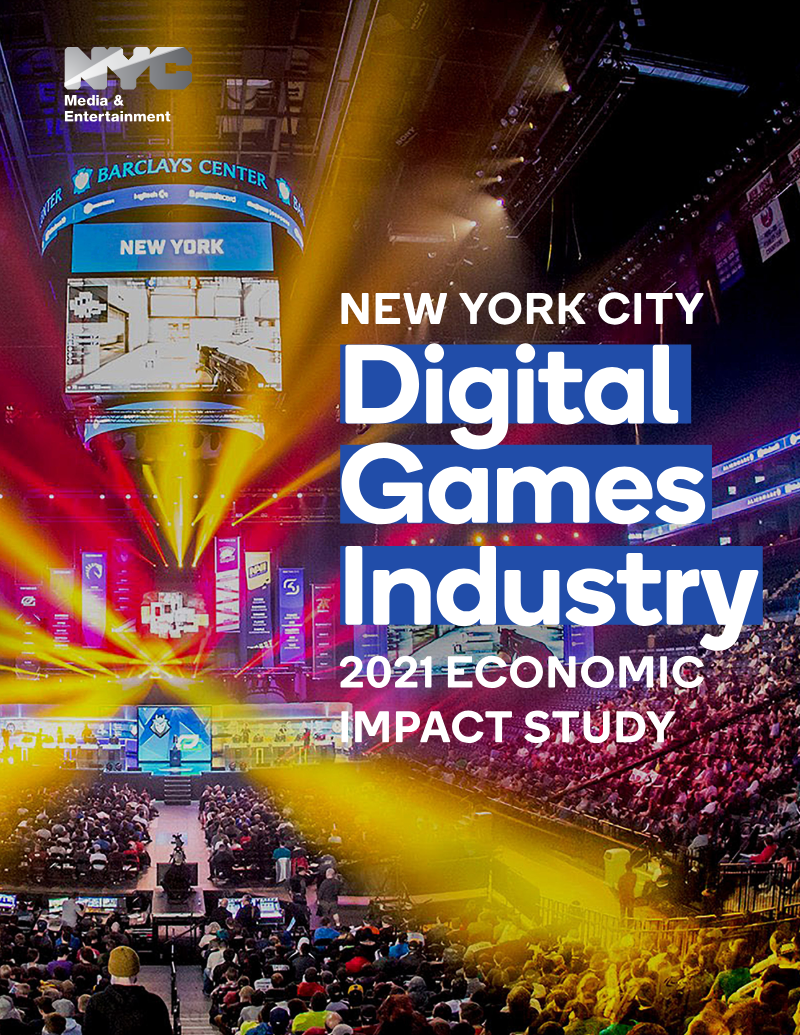
The "New York City Digital Games Industry: 2021 Economic Impact Study" comprehensively assesses the economic contributions and growth potential of New York City's digital games sector in 2020.
- New York City’s digital games industry generated $2 billion in total economic output and supported 7,600 direct jobs as of 2020.
- The sector has tripled in size since 2008 and is supported by an ecosystem of over 200 development and publishing studios.
- Venture capital investment in the industry reached $774 million in 2020, representing a 105% year-over-year increase.

Report of the German Games Industry: 2026
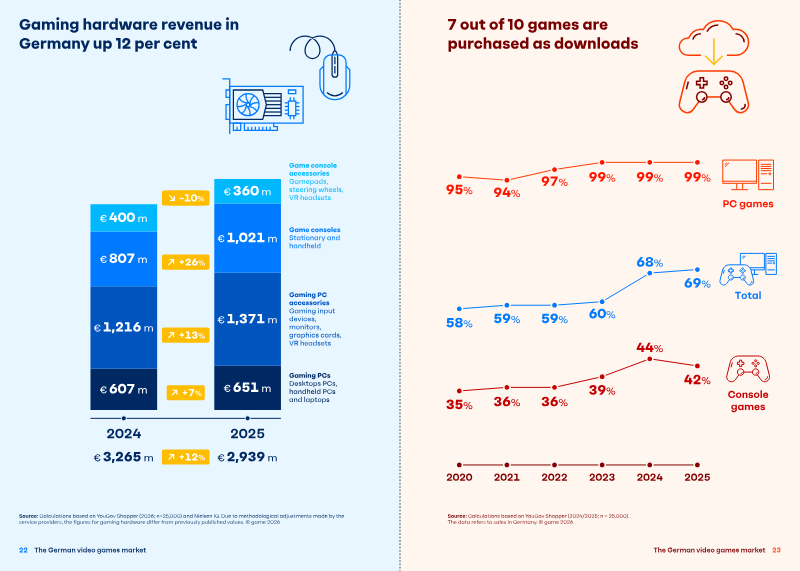
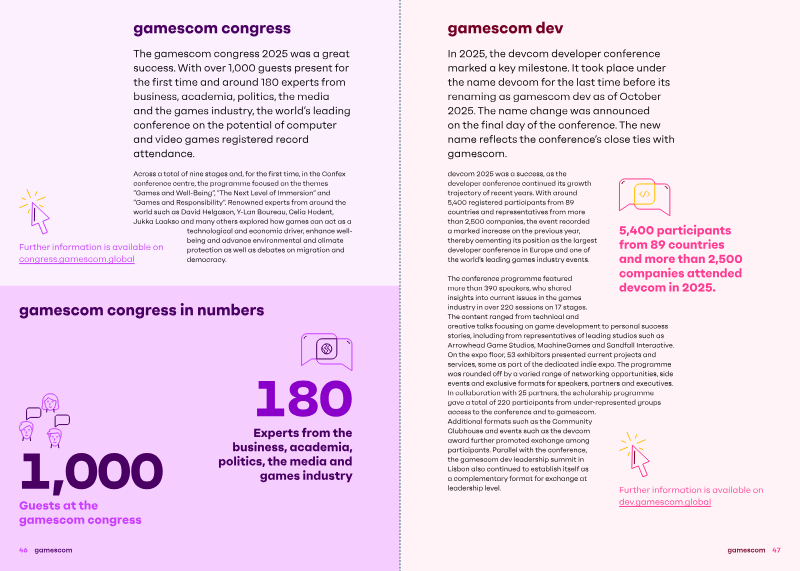
The "Report of the German Games Industry: 2026" provides a comprehensive overview of the German games market and industry, highlighting its significant growth, key revenue drivers, and persistent challenges, while also detailing efforts in cultural promotion, youth protection, and industry representation.
- The German video games market reached 9.4 billion euros in 2025, a four percent increase driven by a 12 percent surge in hardware sales and over one billion euros in online gaming service revenue.
- Domestic production remains low, with local companies capturing only 5.50 euros of every 100 euros spent in the German market.
- Federal funding for the industry is set to reach 125 million euros annually by 2026, supplemented by proposed tax incentives and infrastructure projects like the House of Games Berlin to boost competitiveness.