2015
Company
Documents about 2015

The Impact of Kickstarter on Board Game Design
Kickstarter has fundamentally reshaped board game design, production, marketing, and distribution, in ways that appear largely irreversible.
- Crowdfunding platforms such as Kickstarter and Gamefound have connected backers' purchasing power directly to designers, enabling games that traditional publishers would have rejected as lacking a market, being too costly to produce, or being insufficiently appealing.
- The paper argues this shift has weakened the influence of conventional gatekeepers (publishers, distributors, and to some degree reviewers) and disrupted the traditional three-tier distribution model, with changes that appear largely irreversible.
- Kickstarter has raised expectations for visual aesthetics and component quality, and these expectations shape design decisions from the earliest stages of ideation.
Adaptation and Artistic Translation: Localization of The Witcher 3: Wild Hunt in the Context of National Cultures
This DiGRA 2022 presentation abstract examines the obstacles of artistic adaptation and translation in CD Projekt Red's The Witcher 3: Wild Hunt (2015) from a game production studies perspective.
- The paper argues that The Witcher 3's advertised Polish and Slavic cultural identity must be balanced against the need to make the game playable for non-Polish audiences, oscillating between full localization and deliberate foreignization.
- Drawing on Kevin Flanagan's framework, the study analyzes four 'moments of encounter' in game adaptation: transposing literary source material into interactive form, porting across operating systems, linguistic and cultural translation, and player-driven modification.
- The game adapts Andrzej Sapkowski's Wiedźmin book series, and its fantasy conventions and intertextual links to folklore shape how narrative and stylistic elements carry over into play.
Turn-of-the-Century Anxieties: Sanitarium and the Recovery of American Identity
Wojciech Sitek reads DreamForge's 1998 adventure game Sanitarium as a representation of American identity in disintegration at the close of the millennium.
- Sitek reads the 1998 adventure game Sanitarium (DreamForge Intertainment) as a cultural artifact of late-1990s American anxieties about national identity as the millennium approached.
- The article argues the game confronts national historical failures and warns of collapse, but ultimately offers a hopeful vision of renewal grounded in individualism and free-market values.
- Sanitarium's critique of late-capitalist America covers privatized healthcare, corporate exploitation, and buried traumas such as the treatment of Native Americans and human experimentation.
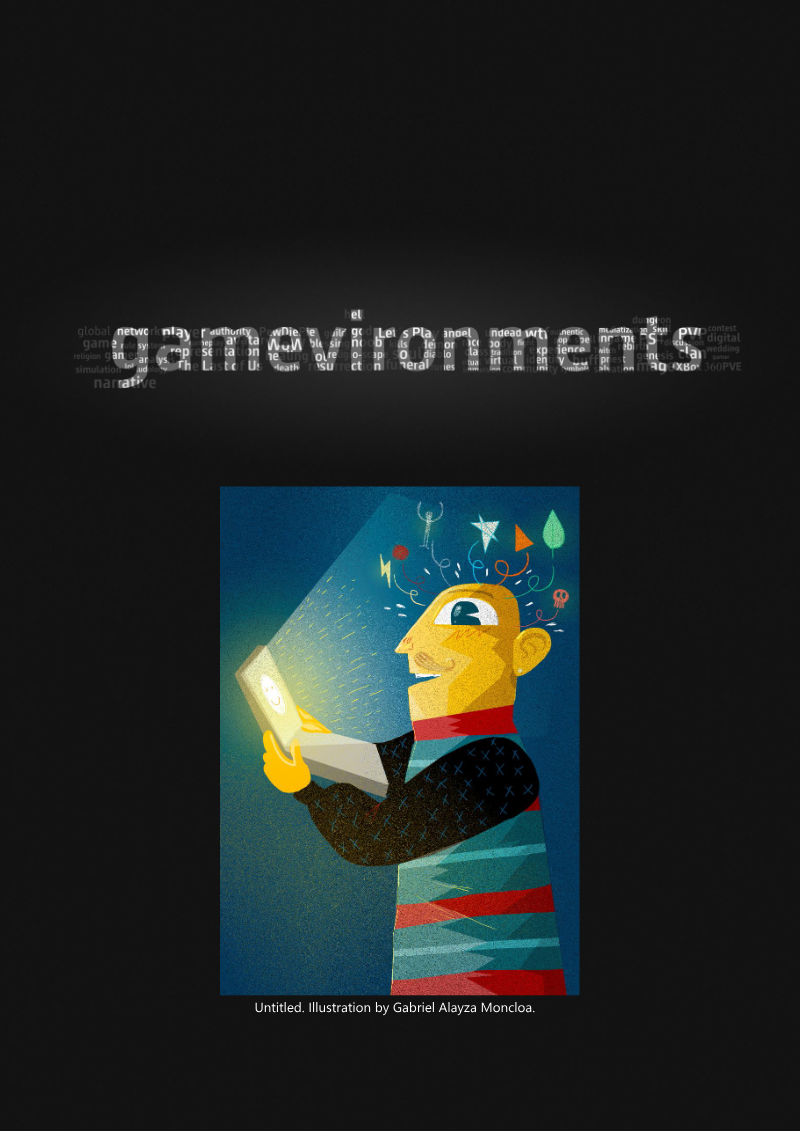
Revisiting Teaching and Games: Mapping Out Ecosystems of Learning
Novaes and Lima examine how the Seventh-day Adventist Church's text-centered Bible study paradigm shapes its religious games, drawing on an inventory of English-language Adventist titles from the 1930s onward for analog games and the 1980s onward for digital ones.
- Seventh-day Adventist games from the 1930s through 2021 consistently reflect a text-centered model of religious education, shaped by the church's identity as a people who know the Bible, rooted in the Millerite movement and Ellen White's prolific print output.
- Adventist publishers framed their games as "recreation" rather than "amusement" and promoted them as tools for Bible study, family life, and evangelism, despite Protestant and conservative Christian suspicion of games as linked to gambling, vice, and idleness.
- The analysis inventories Adventist games from denominational periodical advertisements, beginning with the first denominational titles, Seventh-day Adventist Authors and Bible Truth Game, in 1938 through the 1950s.
What Valve Thinks About the Future of Festivals on Steam: A Valve Q&A
Valve representatives Alden Kroll, Kaci Aitchison, and Tom Giardino held Q&As at DevGAMM and Indie X in November 2021, and marketing consultant Chris Zukowski paraphrases their answers with his own commentary.
- Steam's front page is algorithmically personalized to each user, but primarily rewards games that have already achieved high sales volume and effective tagging.
- Steam Next Fest will continue as a permanent fixture, though Valve has not explicitly committed to hosting third-party festivals indefinitely.
- Developers seeking to organize custom Steam events should contact Valve at least three months in advance and include high-performing titles, ideally those with over $350,000 in previous Steam earnings, to secure front-page visibility.

Six Years of UKGTF
Since its 2015 launch, the UK Games Fund has backed close to 200 independent UK game projects with grants of up to £25,000 each, aimed at own-IP development at the earliest stage.
- Since its 2015 launch, the UK Games Fund has supported nearly 200 independent game projects with individual grants of up to £25,000.
- The fund has directly supported approximately £14 million in early-stage projects, generating an estimated £20 million in wider economic leverage.
- Portfolio companies report an average staff growth of 45% following their initial funding application.

Bad Week for Video Games Research: Industry Stats, Data, and Bullshit
A critique of declining rigor in video game market research, this September 2021 commentary argues that demand for industry data has outpaced the supply of reliable analysis, especially after Nielsen shut down SuperData.
- The 2021 SEC settlement against App Annie for $10 million highlights systemic integrity issues and deceptive data practices within VC-backed market research firms.
- Market research quality has declined due to a 'growth at all costs' mentality, leading to the proliferation of circular reporting and reliance on outdated methodologies.
- Industry valuation claims, such as the $336 billion figure cited by Naavik and Bitkraft, are often based on seven-year-old forecasts and circular citations rather than primary data.
There Is No Immersion: Critical Intervention through Hypermediacy in Metagames
Sarah Thorne argues that There Is No Game: Wrong Dimension (2020) belongs to a subgenre of self-reflexive indie metagames, including The Stanley Parable and The Beginner's Guide, that critique industry pressures in the wake of the post-2008 indie boom and the so-called "Indiepocalypse."
- Thorne's article examines 'metagames', self-reflexive indie games that use unreliable antagonistic narrators and deliberate breaks in immersion to critique commercial pressures in game development following the post-2008 indie boom.
- The central case study, There Is No Game: Wrong Dimension (2020), is read alongside its earlier 'Jam Edition' and The Stanley Parable, with brief reference to Pony Island and The Beginner's Guide.
- Drawing on Bolter and Grusin's immediacy/hypermediacy distinction, the article argues the game foregrounds its medium (nested CRT monitors, a broken screen, a phone camera) so that immersion itself becomes the object of play.
Can Playfulness Be Designed? Understanding Playful Design through Agency in Astroneer
Bódi asks whether playfulness can be designed, using the survival-crafting game Astroneer (System Era, 2019) as a case study.
- Playful design is analysed through 'agency,' defined as the possibility space for meaningful player action that a game's design affords and constrains, drawing on Murray and Salen and Zimmerman.
- Meaningful play is framed as a relational feedback loop in which players perceive the outcomes of their actions and see them integrated into the game world.
- Astroneer's open-ended goals and creative problem solving are classified as paidic, exploratory play rather than ludic, rule-bound, win-oriented play, following Caillois and Frasca.
Metagaming and Metagames in Esports
Esports metagaming is an overloaded concept that needs a precise definition before it can support rigorous research.
- The paper proposes a unified definition of the esports metagame as the perceived optimal or dominant playing strategy at a given moment, with metagaming meaning the use of information external to the game to shape play.
- Accurate esports analytics, casting, and machine learning depend on understanding the prevailing metagame, because the same character or statistic can carry different meanings as dominant strategies shift.
- Win rates alone can mislead: Dota 2's Death Prophet shows a 68% win rate despite a pick rate of only about 5.6%.
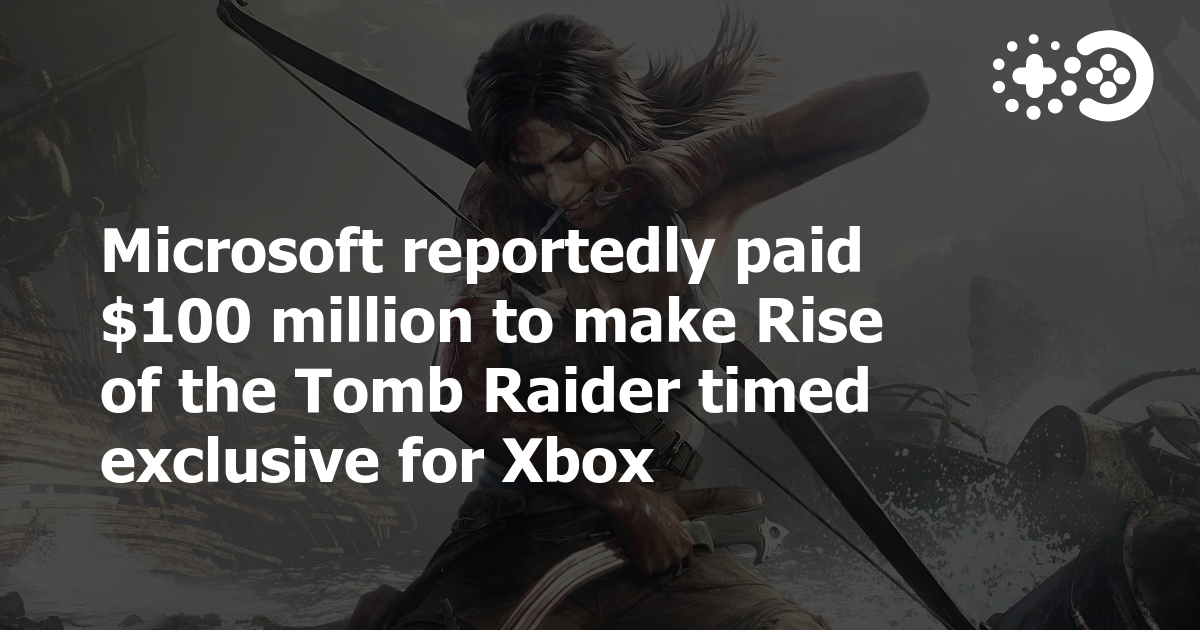
Microsoft Paid $100 Million for Rise of the Tomb Raider Timed Exclusive
Microsoft reportedly paid $100 million to secure a one-year Xbox timed exclusivity window for Rise of the Tomb Raider, which launched in 2015.
- Microsoft reportedly paid $100 million to secure a one-year timed exclusivity deal for the 2015 release of Rise of the Tomb Raider on Xbox.
- The financial detail was revealed on the LinkedIn profile of Fabien Rossini, the former director of strategic planning at Square Enix, before being removed.
- Rise of the Tomb Raider sold over 1 million units within its first two months of release.
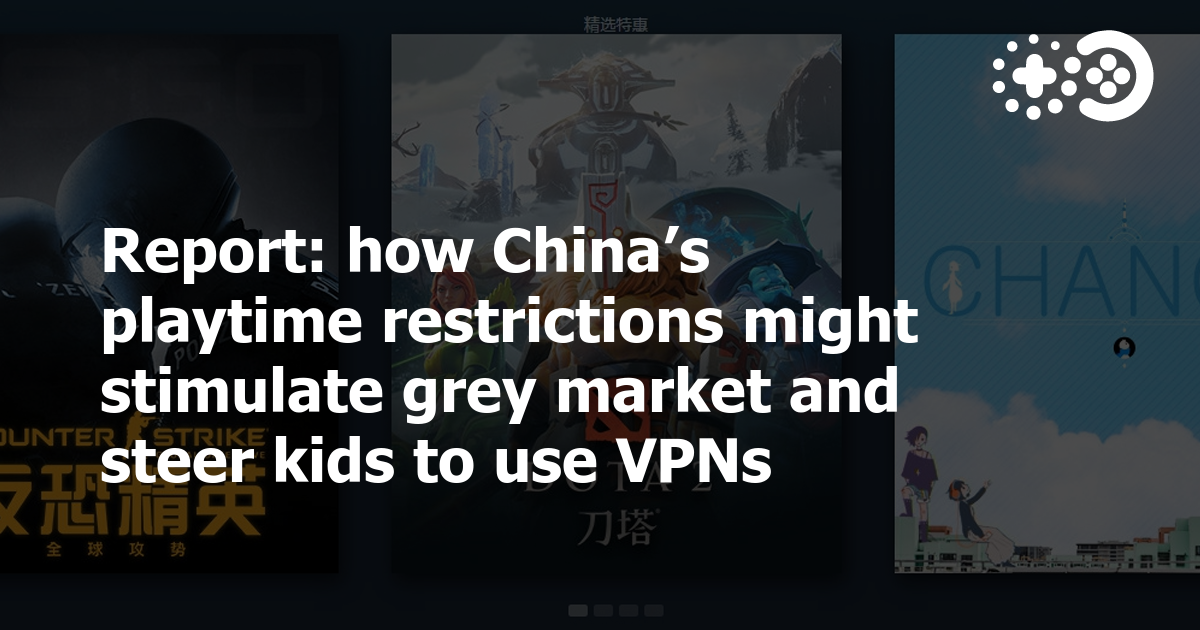
How China’s Playtime Restrictions Might Stimulate Grey Market and Steer Kids to Use VPNs
China's grey market for video games is already large, and the country's August 2021 rules limiting minors to three hours of play per week may expand it further.
- China’s 2021 regulations limiting minors to three hours of gaming per week are expected to drive increased use of VPNs and reliance on the grey market to bypass restrictions.
- The grey market for video games in China remains robust, with console sales in the grey market nearly tripling those in the official market as of 2018.
- Steam wishlist conversion rates have significantly declined, with games released between 2023 and 2025 selling an average of 0.22 copies per wishlist in their debut month, compared to 0.45 copies for games released between 2020 and 2022.