1 free read left. Create a free account for unlimited reading + AI research.
Create free accountArticle DiGRA
1 free read left. Create a free account for unlimited reading + AI research.
Create free accountArticleDiGRA
The paper examines The Witcher 3: Wild Hunt, made by CD Project Red in Poland. The game was released in sixteen languages.
This DiGRA 2022 presentation abstract examines the obstacles of artistic adaptation and translation in CD Projekt Red's The Witcher 3: Wild Hunt (2015) from a game production studies perspective. It frames localization as more than text translation, encompassing cultural differences, aesthetic preferences, religion, law, technical constraints, and playability. The abstract draws on prior scholarship that stresses translator creativity, "transcreation," and a spectrum of localization levels running from no localization to full localization.
The analytical framework is Kevin Flanagan's "four moments of encounter in video game adaptation": adapting a text from another medium into a game, porting between operating systems, linguistic and cultural translation including localization, and player-made modifications and adaptations. These categories structure the study of how the game was adapted and translated.
Three areas of analysis are planned. First, the game is treated as an adaptation of Andrzej Sapkowski's Polish fantasy book series, with its stories, characters, and places converted into quests, avatars, and areas, along with the genre's narrative traits and intertextual links to fairy tales and legends. Second, the study addresses translation and cultural specificity. The game was made in Poland from Polish-language source material and is now available in sixteen languages, yet it is marketed on its "Polishness." It contains references to Polish architecture and landscapes, quotations from works such as Mickiewicz's Dziady, and the legend of Prince Popiel. The challenge lies in preserving national content without undermining playability or the immersion of non-Polish players. Third, player activism is examined, including explanatory comments on cultural references and fan-driven localization efforts such as the Turkish version of The Witcher 2.
The stated aim is to describe translation and localization obstacles for a literature-derived game with strong national references, and to show how the localization teams resolved them. Examples include translated names, literary quotations, and easter eggs, illustrating a balance between full localization and deliberate foreignization that keeps the game's Polish and Slavic character intact while remaining playable internationally.
Each row is a game or company this document names, each column a document, oldest first. A mark means that document names it. Select a row to see those documents.
DiGRA · 2026



DiGRA · 2026
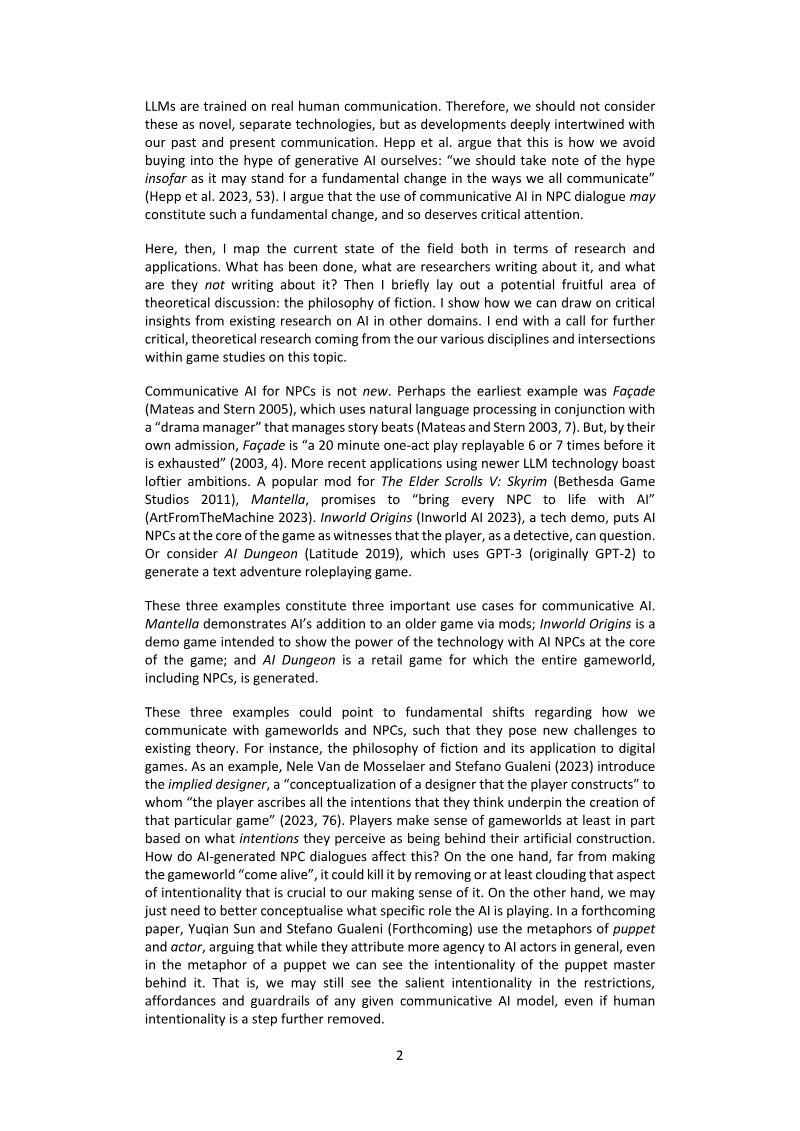
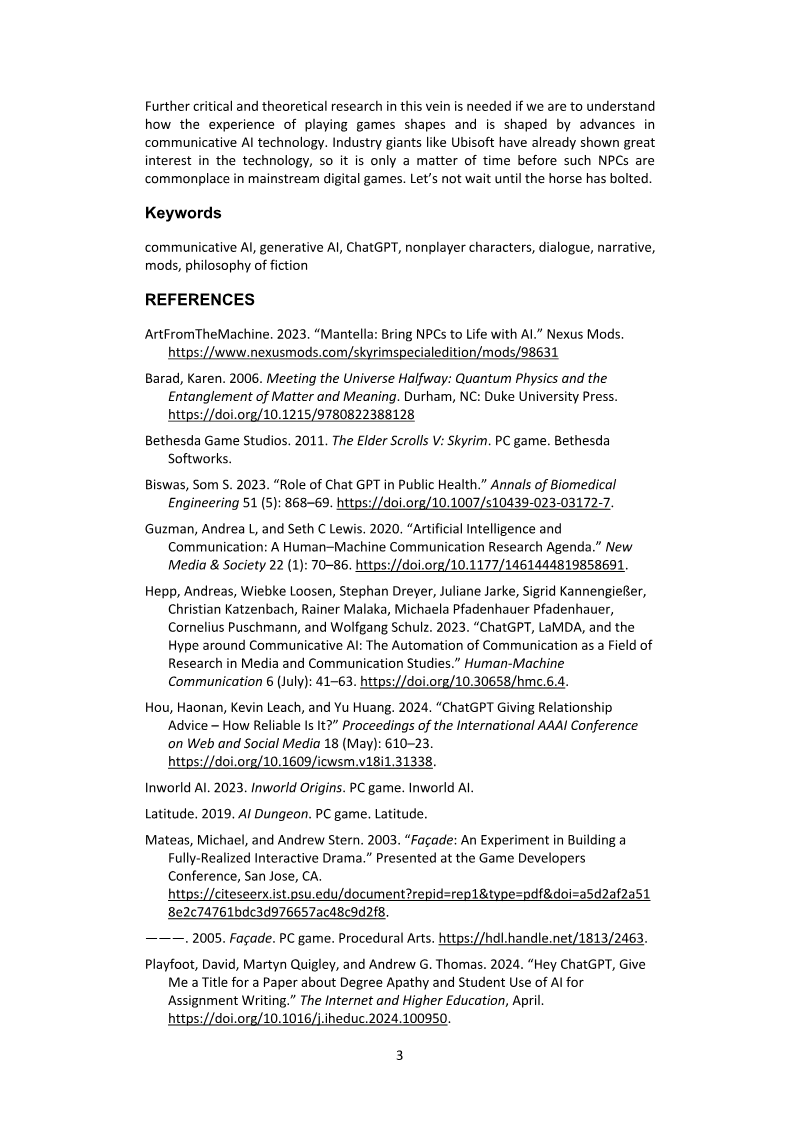
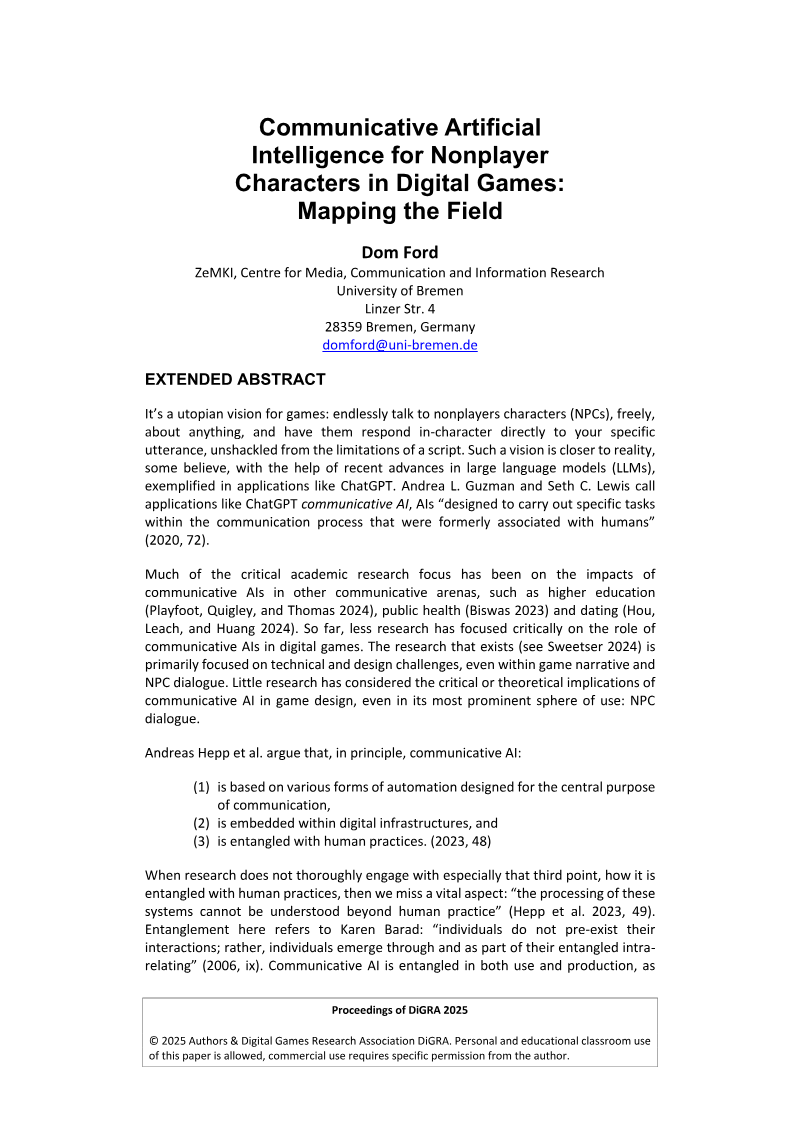
DiGRA · 2025
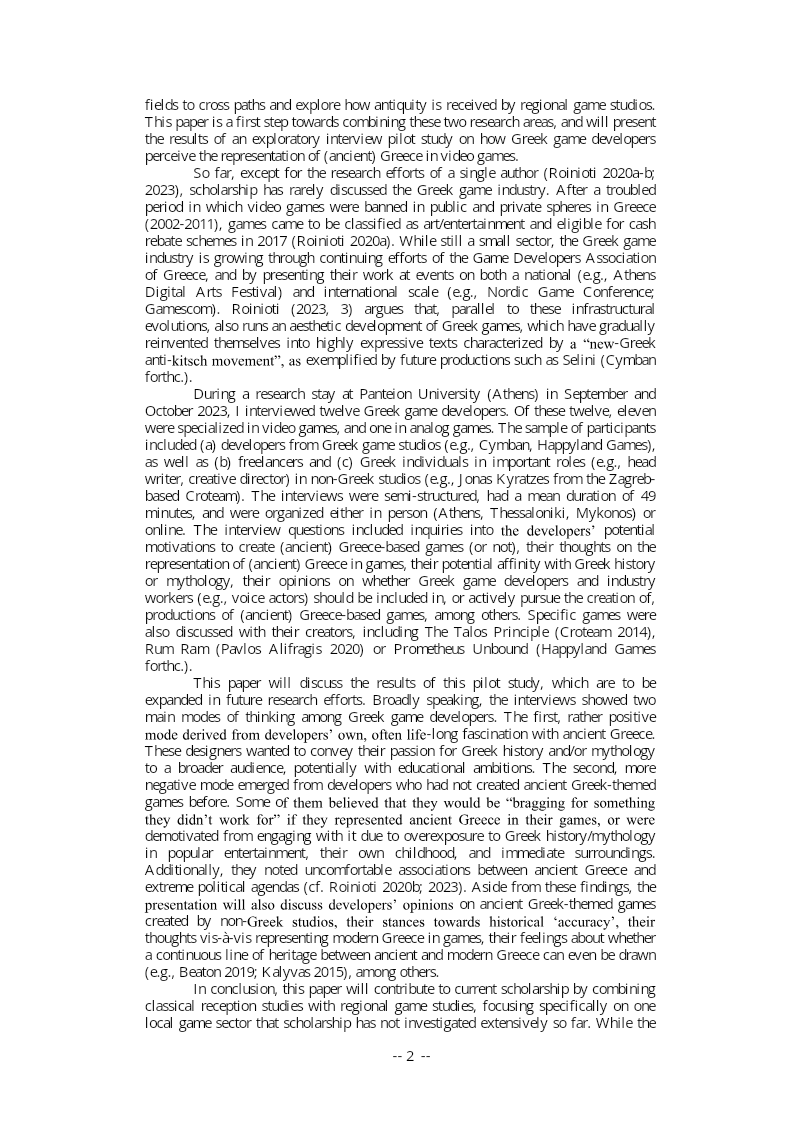
DiGRA · 2024
Game Developers Conference · 2023

Game Developers Conference · 2023
Game Developers Conference · 2020
Game Developers Conference · 2017
Game Developers Conference · 2015



European Conference on Games Based Learning (ECGBL) · 2026
European Conference on Games Based Learning (ECGBL) · 2026



European Conference on Games Based Learning (ECGBL) · 2026
European Conference on Games Based Learning (ECGBL) · 2026