1 free read left. Create a free account for unlimited reading + AI research.
Create free accountArticle Eludamos: Journal for Computer Game Culture
1 free read left. Create a free account for unlimited reading + AI research.
Create free accountArticleEludamos: Journal for Computer Game Culture
Thorne's article examines self-reflexive indie games, called 'metagames', that critique commercial pressures in game development following the post-2008 indie boom.
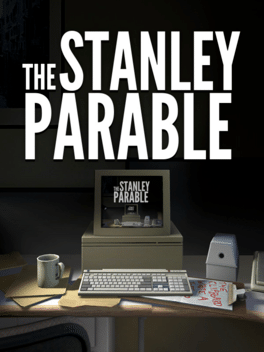
Thorne's article examines a subgenre of self-reflexive indie games, or "metagames," that use unreliable, antagonistic narrators and deliberate breaks in immersion to critique the commercial pressures of game development following the post-2008 indie boom. Its central case study is There Is No Game: Wrong Dimension (2020), read alongside its earlier "Jam Edition" and The Stanley Parable, with brief reference to a wider catalogue of titles such as Pony Island and The Beginner's Guide. The analysis draws on Bolter and Grusin's distinction between immediacy and hypermediacy, arguing that the game's foregrounding of its medium, through nested CRT monitors, a broken screen, and a phone camera, makes immersion itself the object of play rather than something simply absent.
The game's most significant narrative reveal is that its glitch antagonist, Mr. Glitch, emerged not from developer error but from a creator who abandoned a passion project after a failed crowdfunding campaign and redirected its heart character toward a more profitable mobile title. The work frames exploitative monetization, illustrated in a "Free2Pay" chapter, and commercially driven design as the true obstacles to the medium's maturity rather than demanding players. Its resolution positions player and developer as allies against an industry that privileges sales over creative expression, though the article notes that the game offers no overt practical solutions to these problems.
Drawing on concepts such as defamiliarization, the "immersive fallacy," and the notion of players being simultaneously "inside and outside" the game, the analysis concludes that Wrong Dimension oscillates between ludic flow and narrative immersion. Its nostalgic and shifting elements draw players in even as they prompt reflection, a tension the article presents as central to how metagames pursue critical intervention.
Each row is a game or company this document names, each column a document, oldest first. A mark means that document names it. Select a row to see those documents.

Eludamos: Journal for Computer Game Culture · 2026
Eludamos: Journal for Computer Game Culture · 2026

Eludamos: Journal for Computer Game Culture · 2026
Eludamos: Journal for Computer Game Culture · 2026

Eludamos: Journal for Computer Game Culture · 2026
Eludamos: Journal for Computer Game Culture · 2026
Eludamos: Journal for Computer Game Culture · 2026
Eludamos: Journal for Computer Game Culture · 2025
Eludamos: Journal for Computer Game Culture · 2025
Eludamos: Journal for Computer Game Culture · 2025
Eludamos: Journal for Computer Game Culture · 2025
Eludamos: Journal for Computer Game Culture · 2025
DiGRA · 2026