The games industry is undergoing a significant structural transformation characterized by increasing consolidation and the rise of an oligopolistic market. Driven by the escalating costs of game production and a strategic pursuit of economies of scale, the industry has moved away from the fragmented landscape of the previous decade. While market concentration dipped between 2010 and 2020 due to the proliferation of mobile and digital distribution, the trend has reversed sharply, with the top ten publishers now controlling 56 percent of all publishing revenue.
Analysis of 153 game companies—comprising 109 public and 44 private firms—reveals that the largest entities are growing significantly faster than the rest of the market. The top four publishers currently hold 39 percent of the market, placing the industry in a concentration bracket comparable to airlines and telecommunications. This consolidation is evident across all device segments: console gaming is highly concentrated, with the top five firms capturing 74 percent of revenue, while both PC and mobile sectors are trending toward higher concentration levels despite their historical fragmentation.
Although mergers and acquisitions, such as the Microsoft-Activision Blizzard deal, have contributed to this shift, they account for only about one-sixth of the rise in concentration since 2020. The primary driver remains the necessity of scale in a high-cost environment. Looking forward, the industry is expected to continue this trajectory, with the top ten publishers projected to control two-thirds of total publishing revenue by 2030. While emerging technologies like AI may temporarily lower entry barriers and foster a brief period of fragmentation, historical patterns suggest that the industry will ultimately reconsolidate, leaving the largest firms with even greater market dominance.

SuperJoost · 2026
SuperJoost · 2026
SuperJoost · 2026
SuperJoost · 2026
SuperJoost · 2026
SuperJoost · 2026

SuperJoost · 2026
SuperJoost · 2026
SuperJoost · 2026
SuperJoost · 2026
SuperJoost · 2026
SuperJoost · 2026
InvestGame
Aream & Co · 2026
Drake Star Partners · 2026
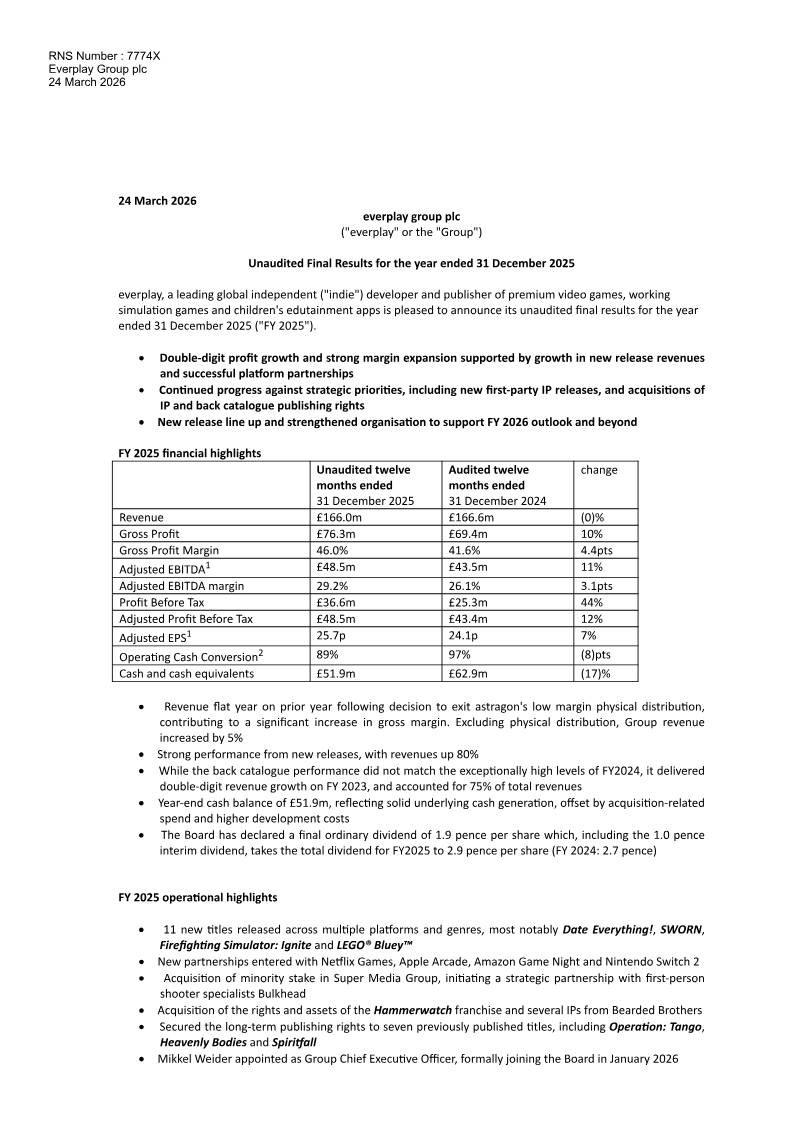
Everplay Group · 2026
Capcom · 2026
Modern Times Group · 2026
Drake Star Partners · 2025
DDM · 2025
Drake Star Partners · 2025
tinyBuild · 2025
Drake Star Partners · 2025
CD Projekt · 2025