USA reports and market data
Documents
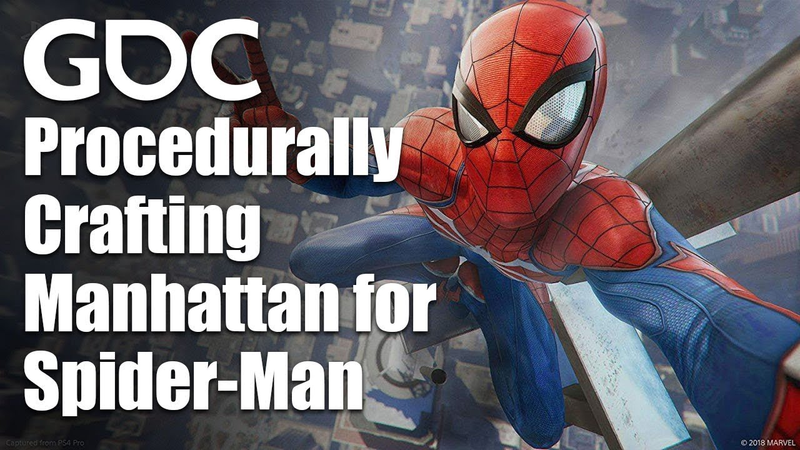
Procedurally Crafting Manhattan for Marvel's Spider-Man
The development of Marvel’s Spider-Man relied on a sophisticated procedural pipeline to construct a high-fidelity, open-world representation of Manhattan.
- The development team used a procedural pipeline to automate 80% of the city's environmental content, successfully generating 8,300 buildings and 544 roads.
- This procedural approach allowed a relatively small team of 250 people to construct a high-fidelity, open-world representation of Manhattan.
- The pipeline utilized a modular dependency system that enabled the entire game world to be regenerated overnight, significantly reducing the risk of widespread rework.



Essential Facts About Video Games and Violence
The primary purpose of this analysis is to refute the existence of a causal link between video game consumption and real-world violence.
- Longitudinal studies and meta-analyses consistently show no causal link between violent video game consumption and future aggression or criminal behavior.
- Violent crime rates in the United States have reached multi-decade lows during the same period that the video game industry has experienced significant expansion.
- Primary drivers of violent conduct are identified as family environment, mental health, and individual personality traits rather than media consumption.

The Business of a Video Game Concept Art Studio: Section Studios Tour
Section Studios, a Los Angeles-based art services firm, specializes in visual development, concept art, and pre-visualization for the video game and entertainment industries.
- Section Studios operates as a full-service production house providing visual development, concept art, and pre-visualization for major franchises including Riot Games' League of Legends, Activision's Call of Duty, and the God of War series.
- The studio is scaling its production capacity by shifting from a centralized Los Angeles model to a hybrid structure that utilizes satellite operations in the Philippines and Korea to improve cost-effectiveness.
- The firm manages a fluctuating headcount of 30 to 70 employees, allowing it to scale resources dynamically to meet the specific demands of large-scale game development and marketing projects.

Where Do Your Fortnite Dollars Really Go? - The Origin Story of Tim Sweeney - Extra Credits
Tim Sweeney, the founder of Epic Games, has utilized his significant wealth generated from the success of titles like Fortnite to become one of the largest private landowners in North Carolina.
- Epic Games founder Tim Sweeney has utilized wealth from titles like Fortnite to acquire nearly 40,000 acres of land in North Carolina for conservation purposes.
- Sweeney’s land holdings exceed the total geographic size of the country of Liechtenstein.
- In 2016, Sweeney donated $15 million to reroute power lines away from the ecologically sensitive Box Creek Wilderness.
Ayzenberg | The Future of Brand Marketing for Games
Modern game marketing has transitioned from traditional creative advertising into a precise, data-driven discipline that bridges the gap between brand awareness and measurable financial return.
- Modern game marketing has shifted from traditional advertising to a data-driven model that directly links creative content to measurable financial return and conversion.
- Agencies are utilizing proprietary technology, including AI and sentiment analysis platforms, to move beyond vanity metrics and predict market trends based on consumer data.
- The industry is increasingly using in-game engines to produce cinematic assets, which creates more authentic experiences and fosters deeper emotional engagement with players.
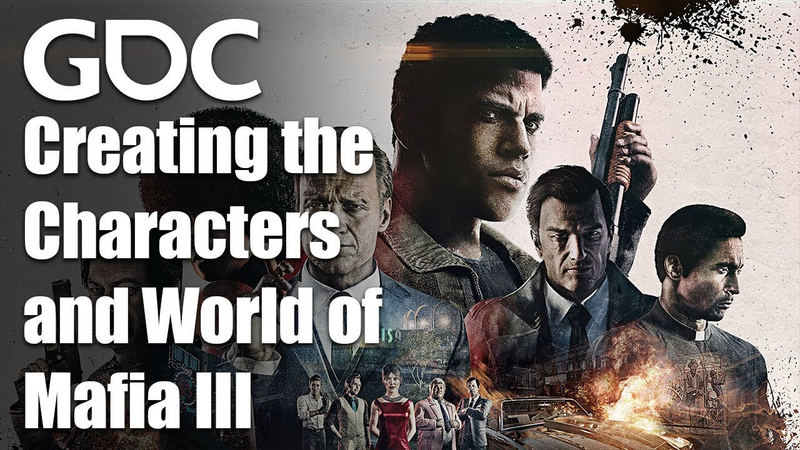
Creating the Characters and World of Mafia III
Mafia III centers on the narrative of Lincoln Clay, a Vietnam veteran navigating the volatile landscape of 1968 New Orleans.
- The narrative of Mafia III is set in 1968 New Orleans, utilizing a documentary-style presentation with archival footage to ground its fictional revenge story in the historical reality of the era's racial and social tensions.
- Developers utilized extensive research from literature, documentaries, and firsthand accounts to ensure historical accuracy in character motivations and systemic world-building.
- The game features a sophisticated police AI that dynamically adjusts response times based on the socioeconomic status of different city districts to mirror systemic disparities of the late 1960s.

PlayJob Podcast #2: Zhenghua Yang
The modern independent game development landscape is undergoing a fundamental transformation, moving away from traditional definitions of scale toward a model defined by team culture, funding autonomy, and creative intent.
- Serenity Forge maintains creative autonomy and a horizontal, trust-based organizational structure by eschewing external investors in favor of a hybrid business model that balances client work with independent projects.
- The modern independent game industry is shifting away from the 'starving artist' model toward professional, high-quality operational standards that allow small teams to compete with larger entities in a crowded market.
- Developers are increasingly viewing games as vehicles for social responsibility and emotional communication, prioritizing the creation of meaningful content that shapes the values of future generations.
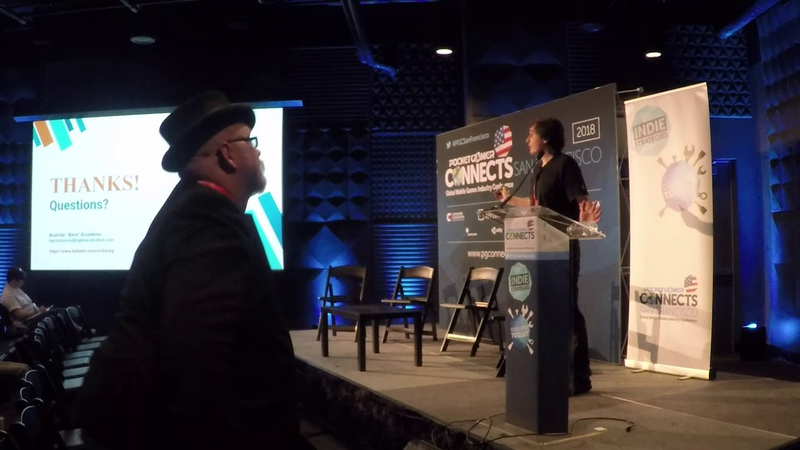
Game design tactics
The molecular design methodology offers a systematic approach to game development by breaking down complex game mechanics into fundamental, player-centric components.
- The molecular design methodology reduces game development time by at least 50% by replacing subjective, character-based design with a universal language of standardized player skills.
- Game mechanics are broken down into 'molecules'—quantifiable units based on specific player inputs like reaction time, spatial navigation, and decision-making—rather than character skins or animations.
- Designers organize these molecules into blueprints that dictate the temporal and spatial distribution of gameplay, providing a measurable overview of progression and identifying development bottlenecks.
The future of games publishing
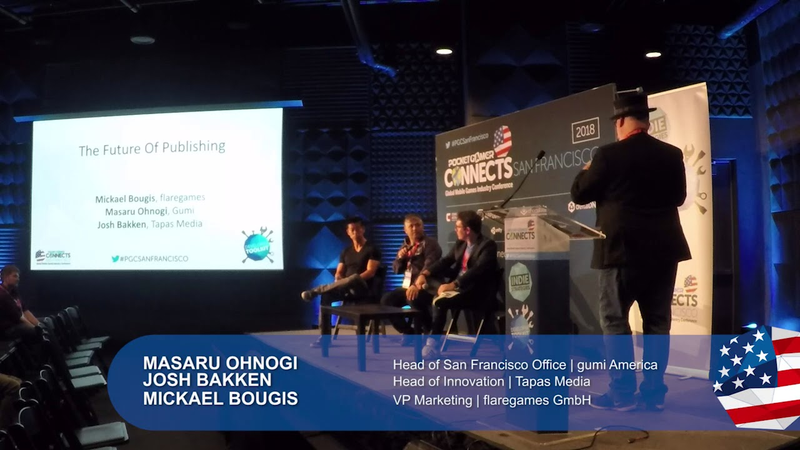
Game publishing has transitioned from a traditional marketing-focused model into a multifaceted partnership defined by technical infrastructure, strategic curation, and long-term operational support.
- Modern mobile game publishing has shifted from a 'no publisher needed' model back to a reliance on publishers due to the increasing complexity of marketing, live operations, and the integration of numerous SDKs—sometimes as many as 26 per game.
- Publishers now prioritize long-term sustainability, often asking developers if they are prepared to commit 4–5 years to supporting a single title, as games with long-term live operations often maintain revenue levels similar to their launch period.
- Publishers are increasingly cautious about funding development for unproven teams, preferring to sign established studios or projects with high market potential to mitigate the high risks associated with mobile free-to-play development.
Augmented reality games for kids – Lessons learned from Sky Whale AR
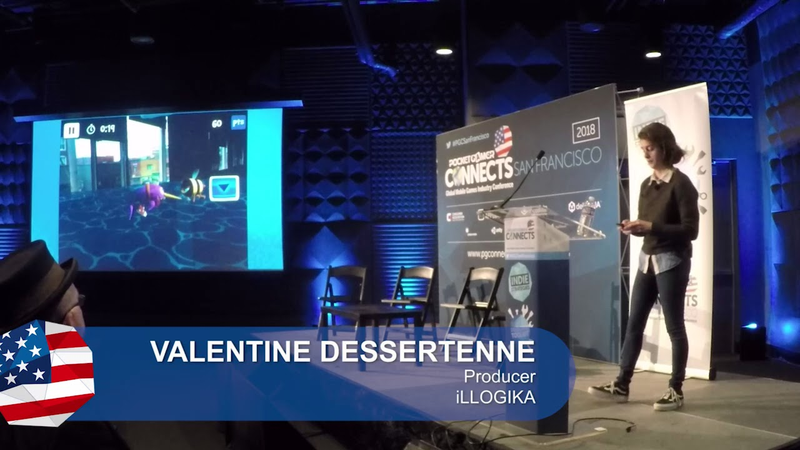
The development of Sky Whale AR, an augmented reality (AR) expansion for a Nickelodeon-branded mobile game, serves as a case study for addressing the technical and ergonomic challenges inherent in creating AR experiences for children.
- To mitigate physical fatigue in children, AR sessions should be limited to approximately one-minute, high-intensity intervals with minimal edge-based screen interactions.
- Developers should adopt a non-gated approach to AR, ensuring it remains an optional feature that does not compromise the core 2D gameplay experience, as seen in the April 2018 launch of Nickelodeon's Sky Whale AR.
- Rather than relying on unreliable surface detection, developers should prioritize device movement as the primary control input to improve tracking consistency.
Indie starter guide to brand building
Effective brand building for independent game developers requires moving beyond visual identity to establish a core set of values and an authentic narrative.
- A brand is defined as the collective perception of an organization when its leaders are not present, serving as a critical strategic asset for long-term business growth.
- Developers should define their core values, driving motivations, and desired emotional resonance before beginning development to ensure a consistent foundation.
- Consistency must be maintained across all touchpoints, aligning internal studio ethos, game design, and public communications to ensure authenticity.
Talking narrative in games
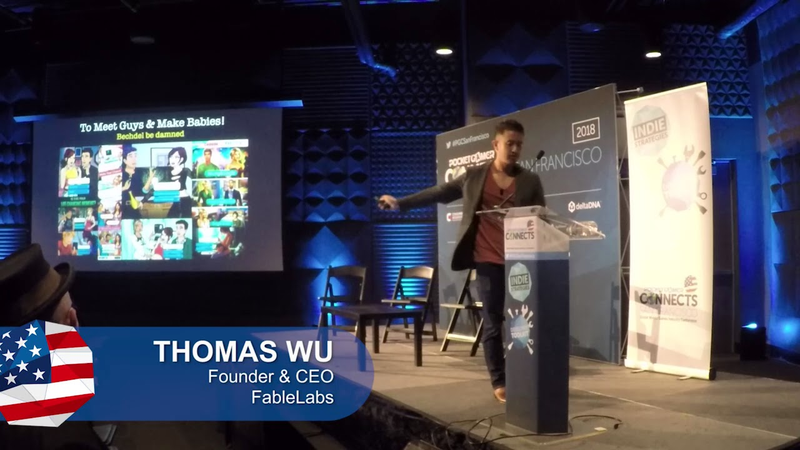
The presentation argues that the video game industry frequently relies on flawed, exclusionary patterns and oversimplified data models that stifle innovation and misidentify target audiences.
- Industry reliance on rigid, bias-driven data models frequently leads to the misidentification of target audiences and the stifling of creative innovation.
- Historical industry generalizations regarding gender-based genre preferences are inaccurate, as female audiences represent significant viewership segments for high-fantasy, horror, and sci-fi content.
- Developers should shift from reactive, data-obsessed design to first-principles thinking, using data only to validate hypotheses and identify pain points rather than to dictate creative direction.