1 free read left. Create a free account for unlimited reading + AI research.
Create free account
Game design tactics
Key insights
7 takeaways- 01The molecular design methodology reduces game development time by at least 50% by replacing subjective, character-based design with a universal language of standardized player skills.
- 02Game mechanics are broken down into 'molecules'—quantifiable units based on specific player inputs like reaction time, spatial navigation, and decision-making—rather than character skins or animations.
- 03Designers organize these molecules into blueprints that dictate the temporal and spatial distribution of gameplay, providing a measurable overview of progression and identifying development bottlenecks.
- 04The methodology eliminates the need for redundant daily status meetings and subjective documentation by providing a centralized, data-driven table for tracking development status.
- 05Quality assurance is enhanced through this system by providing testers with precise, objective, parameter-based criteria for evaluating game difficulty and performance.
- 06The framework enables the reuse of design assets across different projects, significantly accelerating the prototyping and balancing phases by utilizing proven, parameter-based systems.
- 07Lead designers use this scalable framework to mitigate risk by ensuring consistency across the development cycle and defining specific difficulty tolerances for team execution.
Ask AI about this video
Transcript
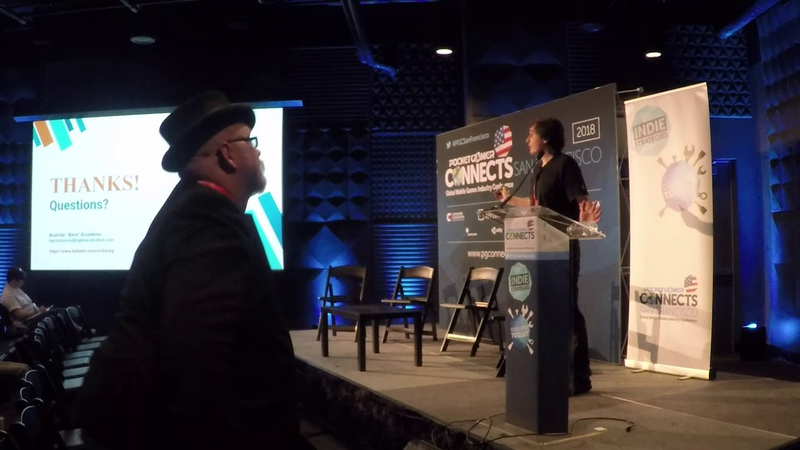
[Music] [Music] I'm the creative director big blue studios and today I'm going to talk to you how to reduce get the same time by 50% potentially or more a quick question how many of you I evolved in game design okay and I assumed the rest of you are involved with people involved with game design which is the bigger issue so just a quick word about myself I've been in game design since the 90s I've gone through pretty much everything from independent paper role-playing games to triple-a console and PC titles yeah this
is one of the games I worked on and one thing I've noticed consistently is that a lot of time is wasted in game design for the weirdest reasons so let's get started what are game designers we all know the answer to this but for this talk let's consider game designers being like interpreters so game designers are the ones that translate a concept or theoretical idea and tell everyone else on the team what to do in order to get the final product so why is time wasted like where well imagine this all of us have different experiences we follow the different methodologies different models we have the different terms different visions making a game even in among the same thing is like cheating the Tower of Babel also do imagine doing this while
working on tools which are not designed for game design these are currently the most popular tools for game design unfortunately having to communicate with other disciplines which often don't have the time or patience to listen to the game design specifics and keep the documentation up to date so Wow what is the root of all the problems and now prepare for the next slide that will blow your mind our character is not a player why is that relevant because with the exception of minigames or design absolutely all design is character related which means we think in terms of okay we have these stats these skills these compel these combinations this difficulty unfortunately unless we're
all working on the same game this doesn't do us any good instead what we really want to focus on is the thing that doesn't change the player whatever the game the player does a set amount of things we provide input press button small sticks move if it's virtual reality have voice commands we observe we make decisions and here is where the molecular approach tries to make one common language which could be used for all games so what's the molecular design it's a methodology that's breaks down game design to the smallest components which are based on player skills it then uses them to assemble level level design elements and puts them in the game progression in the game blueprints I'll show you in a minute what that is and since the it's so clear and obvious a lot of reports could be done very
quickly using this methodology and not wasting time to have explore daily meetings to explain what you did two hours prior now do a quick analysis some of you may have seen this game at some point so yeah what do we do in this game well we can chair we can move and for those more skilled than I we can throw fireballs however there is one problem it is that in effect we can do none of those things the character can what we do is pretty much this no let me see okay so this is the mechanic of jumping we assume this is the character the this is the space to the platform and this is the chasm so all the player does as a player is provide input within a certain time frame so while trying to execute the
action within a certain error tolerance that's all we do in terms of a player so in this case this is a difficult example we have to react providing the speed before we reach this point or we fall down but on the other hand because this is the maximum difficulty we have to jump at this point otherwise we want we have no error tolerance to continue now movement is pretty much similar with this we have a direction which is based on input and we have to react in a certain amount of time based on the object we want to either approach or get away with because if it's an enemy we have to move away if it's a bonus we have to get to it before it disappears obvious and finally finally we have throwing which is providing input for set amount of instances the number of
instances means if something has to help we have to hit him twice which is clicked twice so in effect this is what we as players to the these are our actual parameters our players queue based parameters so let's arrange them like so now already we have about 50% of the game in one instance so I'm not exaggerating using this you can make the entire game the entire game on screen however we are missing two things as players we can strategize and observe strategize means we decide where to go based on a number of options provided and thread throughout ratio so if it's more beneficial for us to go here that's what we decide and this is already as game designers we make that decision for the player the player sees what he sees we
just provide the options so that they can decide and as observation it's providing visual inputs to so that players can see or not things that are different on the map for example hitting this would create nothing hitting this if you look very closely there is a slight difference this is a king a hidden bonus panel so this is all and good and coming from this the row from the molecular to all this is a to that currently I am big you are developing to create is to have a table that has absolutely all the players queue parameters in this is most of them but this is a work in progress of course and a lot of trauma is concerned so the idea is once we have this we can set a difficulty to each one of these cells now this is example for time to react
using these cells and these their values we create molecules now molecules represent everything in a level and in our game it could be an enemy it could be an obstacle it could be an item it could be anything we create our huge bunch of elements and put them in this table now this is our time and spatial distribution of the grain in the game or in other words the blueprints so here we have all the elements let's say this is an element we have the mechanics they use which on which level it occurs and where on the map they are located so from one look here you can tell what is the progression what mechanics are introduced where what elements introduced and where they're positioned on the map in one word this is your entire game so you can presented to animal what are the benefits of this system apart from it
being very confusing because shifting from player from character design to player design is a bit of a mess well first main benefit clarity because once you figure out everything that stands so far it's one universal language that doesn't change I can explain a game to anyone anywhere provided they have the same idea the same methodology so that also means that I can take pretty much anyone here taken in a small role with the entirely new game and half a day you will know the game as well as I do because all the things are universally the same and they are very measurable so there is no subjective based on this approach and since everything is measurable it's great for monitoring because already in the conception phase you know what your game will be this entire process to create the entire blueprint of a game to take between a
day and two weeks based on the the complexity of your game so once you have that you know where you start you know where you end and you know how far you've reached so you can constantly tell someone okay this is the bottleneck this is where we have to put in more effort or this is what we have to cut and another beautiful thing is you don't have to go to meetings to give daily reports to your options leads and reduces the two or even an Excel table could be made to give this on a daily basis like a change lock we've done this this has been included we're having problems here and also QA can use this in order to see what to test specifically because again they know absolutely everything in the game up to the parameter itself and finally something dear for to all of us it says a lot of money in many ways
one it saves designer time because roughly this if you take in consideration how many times you go in meetings to discuss terminology or explain to others in the team what you have to do this already is about 25% reduction assuming well it might experience I've gone I've had to our meetings per day Assassin's Creed just throw terminology so with this that is done also you save a lot of program at time because you no longer have to go to the programmer and say oh please change this or change that or can you do this but I can't exactly explain it you can have the two linked to an engine a engine or D engine if the engine is not complete you can go faster and that saves them a lot of time and a lot of well harsh words let's say and finally and my personal favorites
once you have made again let's say you have made the best game of 2018 you know what your mechanics you like you want to use them again nowadays you have to start again and cope you have done but here since you button here since you already done the game you have the mechanics you can literally interact them from your old game and put them in your new game and you have the full mechanic enemies and obstacles included so in some cases it could be as easy as doing a quick reskin to have the entire game mechanic in your new product and you can imagine how much time that saves also keep in mind because in your past previous game this has gone through the tweaking you know it's going to work so with that thank
you thank you for your time and if anyone's interested in a more in-depth talk of this don't hesitate to get in touch with me any means any time quite just to go in a bit more detail in some of it so I come from the school where we use use case analysis so you know um I'm really rubbish at UML but the principles of defining an actor what actor does and then how that actor what is observed by the results of that outcome which is a really useful way to communicate to developers because it's essentially how a lot of software development is done anyway so I think it's like a fraction of what you're kind of describing so I get that I get that the actor is a might be a player the player presses button X Y Zed at this particular period of time the result is X Y Zed and then there's a dependency I what does that system
effect I think I think that's what you're kind of describing is that fair Oh sort of yeah yeah so what I'm trying to work out is where what extra are you describing with this method so it feels like you're taking the actor kind of classic UML style approach of working but then adding components like this character all all that enemy okay so the thing is I'm going much lower this is not an entirely new process is based on the rationale game design methods Ubisoft used okay but the idea is that if we look at every everything becomes one parameter one single skill so the most common is time to react you have to provide an input within a certain amount of time so any actor or any components could be made by a combination of these
skills having the mechanic done like it becomes like having a template and just changing the parameters makes all your enemies or obstacles based on that template so it's like a much simpler system it's like trading the periodic table in chemistry talk trade all the molecules kind of get that I'm being self-indulgent here cuz I find it's fascinating all right genuine interest in and understanding the model but it feels like again maybe it is my my bias but if there's a lot of a lot more work for a designer to break those pieces down but it is a payoff at the end which is you've got a componentized yeah great point it's a part answer yes shifting towards getting around to understand this at the first time it is a bit difficult it took me personally three years because at the time I was given just okay I was the only example was given
was time to react and I said okay can I make a game from this it took me three years to manage to make the simplest game when I mean simple I mean really simple jumping over nothing but once you know you go through that period it saves a lot of time because it focuses designer time exactly on game design no more making documents no more secondhand translation like oh I want the character to move inside and do this okay what is this and what is a character character is only a surface image so in terms of this there's no difference from a first-person shooter and hack and slash melee game you both move something to a point in the screen and press a button in its a crosshair in other it's the character and just watch so once you get around this problem it becomes much much easier because you only focus on what you want the player to achieve and then art and the other
team mostly art decides what the rapper would be like if this is a racing game or if this is a first-person shooter game or any hybrid of everything mentioned already so it's does that answer Oh make think it kind of makes me think is more again please feel free to shout if I'm if I'm going too much so I genuinely got interested it's this idea of it seems to me at some point you know the designer it's the designers role and again the role of a game designer I think is a very very big subject and you know my friend Todd Kelly has a fantastic phrase which is basically the role of game designers to mitigate risk it sounds very boring but I think it's a brilliant way of describing it and if it is mitigating with it you know it's not just a mitigating risk to the developer because the way I heard a rich me when you were talking it sounded like a very code mindset programming mindset
kind of approach but I don't think I was right I think I think you've helped me get past that but it seems at some point someone has to make calls about things like oh yeah is it a sword fighting game or is it a shooter game and what kind of feel do we want for that weapon do we want a classical in real-world medieval-style combat experience or do we want a swashbuckling Errol Flynn kind of sword fighting variants or do we want to lack all the thing around like it's a Wii controller kind of thing and although there's an art component to that I think is actually a design decision what those things should be how does that fit into that model you're describing that is true and that changes nothing from that aspect meaning the designer isn't in a vacuum again he makes the decisions but now he makes them in a way that could be easily translated to everyone else so to speak so it's the the only purpose of this was because I got bored of writing one-hour reports every day and reading half half an hour reports from my team every day
and I said okay can there be something to automate it and this led to Russian game design which I was also working on it at the time and I thought why not combine the entire design process from conception to post-production in 1/2 which will eliminate the need for meetings the need for reports and most of all make design the reusable because I was tired throwing away all the design after each game yes a really interesting point anyone have thoughts in the last few moments just question of a I think it's really interesting because what you're talking about it almost sounds like an AI matrix though like you could you could plug in certain parameters of reactions for characters to within certain tolerances on these things and that would you know randomize the game or whatever but you're basically just breaking things down to a little of so the question I have is like
when you would use something like that you're then you could I I think it would make it easy to farm some of that stuff out like she said have all your team even you say I need this this element this character to be within these tolerances or within these with these parameters this is a boss character he needs to have this many hits blah blah blah or whatever yeah pretty much if I can just quickly go back no out of time the idea is every parameter is based on five theoretical cases and you can put your personal parameters in between so when the lead designer or the person with the most experience puts the parameters everyone else can quickly make it just by sliding so this is a new character slide to one difficulty this is a boss slide this to maximum setting
five it can even make a character impossible impossible for a certain mechanic an example is from Prince of Persia sense of no Prince of Persia Prince of Persia which was before sense of time there was one enemy which was invulnerable and it had to be destroyed by getting him to break columns in this method you can say okay this is so difficult that it's impossible no matter how much damage you do this is not what the player has to do it has to be obvious so the player does something else so all of these could be easily manipulated and on that note thank you very much [Applause] [Music] [Music]
Summary
The molecular design methodology offers a systematic approach to game development by breaking down complex game mechanics into fundamental, player-centric components. By shifting the focus from character-based design—which often relies on subjective, inconsistent terminology—to a universal language based on player skills and inputs, this framework aims to reduce development time by at least 50%. The core thesis posits that all games, regardless of genre, share a common set of player-driven parameters, such as reaction time, spatial navigation, and decision-making, which can be quantified and standardized.
The methodology functions by mapping these fundamental player skills into a centralized, data-driven table. Designers assign difficulty values to specific inputs, creating "molecules" that represent game elements like enemies, obstacles, or items. These molecules are then organized into blueprints that dictate the temporal and spatial distribution of gameplay. This structure provides a clear, measurable overview of game progression, allowing teams to identify bottlenecks, track development status, and eliminate the need for redundant daily status meetings or subjective documentation.
Beyond streamlining communication, this approach enhances efficiency by making design assets reusable. Because mechanics are defined by objective parameters rather than specific character skins or animations, developers can port proven systems from one project to another, significantly reducing the time required for prototyping and balancing. The system also benefits quality assurance by providing testers with precise, parameter-based criteria for evaluation. Ultimately, this methodology serves as a tool for risk mitigation, allowing lead designers to establish a rigid, scalable framework that ensures consistency across the entire development cycle while empowering team members to execute tasks within defined difficulty tolerances.