1 free read left. Create a free account for unlimited reading + AI research.
Create free account
Indie starter guide to brand building
Key insights
6 takeaways- 01A brand is defined as the collective perception of an organization when its leaders are not present, serving as a critical strategic asset for long-term business growth.
- 02A well-defined brand identity acts as a strategic anchor that informs business decisions, hiring practices, and navigation of the competitive games industry.
- 03Developers should define their core values, driving motivations, and desired emotional resonance before beginning development to ensure a consistent foundation.
- 04Consistency must be maintained across all touchpoints, aligning internal studio ethos, game design, and public communications to ensure authenticity.
- 05Small studios should transition from creator-led messaging to community-driven engagement to leverage organic word-of-mouth and loyalty, effectively bypassing the need for large marketing budgets.
- 06Brand health should be measured through qualitative monitoring of community sentiment, social media discourse, and player feedback rather than direct-response metrics.
Ask AI about this video
Transcript
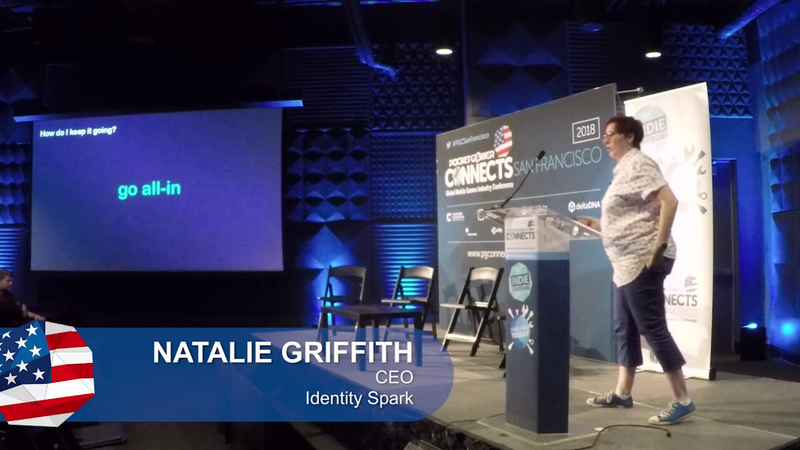
[Music] [Music] okay thanks Oscar um so yeah my name is nathalie Griffith I'm the co-founder of identity Spock which is a brand identity and marketing and communications agency based in the UK I've been in the games industry 28 years this year doing various things I started off as a graphic designer and spent five years as a journalist but since then I've been on the marketing and communication side and I'm quite excited to be here this week actually because identity Spock is five years old on Friday same thing so what I want to talk about today is the importance of understanding your brand and how actually it can contribute to increasing your ability to actually grow the
success of your business and it isn't just something you kind of pay lip service to at the beginning just realize I didn't establish what the kicker was anybody okay so what is a brand well the important thing is it is more than just a logo the visual branding is super important and it is you know it's clearly something that you shouldn't be overlooking but a lot of people I think seem to think that once they've they've got a groovy logo and they've you know they've got the deliver for their game or that company that that's kind of kind of it so what is it well regardless of what you think of how Amazon do business which I'm not debating here but Jeff business as a quote here he's promoted to saying a few times that a brand is what other people say about you when you're not in the room and I think
that's a great way to actually think about what you're really projecting and what you really want to want to stand for because if you've got a brand out there that doesn't really truly reflect what it is that you care about and therefore doesn't reflect how you actually conduct yourself then it doesn't matter whether you've got a really cool logo and you've got a tagline on the website that sounds really impressive because actually when you're not in the room that's not what people are going to talk about they'll talk about how they feel about interacting with your brand [Music] well it's quite interesting that with Thomas's talk before Oscar it's gonna say a very similar thing really that is actually it's about it's about what you passionately believe in it's about what you're trying to achieve what drives you the values that you have all of that kind of thing it's not about what you what you think people expect you to say so it's always a really important right at the beginning to be sitting back and thinking about what are the things that drive you so you need to be thinking
about what it is you do who you're doing it for what makes you perhaps better or different from the other people that are out there and what kind of benefit you bring in people if they interact with your brand I've been named check out the again here SiC taking the front here because of my class Oscar mentioned a minute ago when they're creating a team-based decentralized data science platform but one of the things that impressed me about them right from the very beginning is that they had a very very clear sense of what they were trying to achieve the things they cared about not just the the vision they had at the platform that they were building because these things obviously always evolve over time but it was the vision they had of how they wanted to do business how they wanted to come across the kind of value they wanted to bring to people and that's something that is you know is gold dust if you have that at the beginning okay so why should you both well hopefully if you're trying to build your business and actually you know grow over the long term then you need to build up some some loyalty there as well you can't guarantee on succeeding if if all
you're doing is going to new people all the time that's just really hard work right and really expensive so if you build a strong brand the people actually connect with then you're going to build that loyalty and they're going to be more inclined to stay with you on your journey and help support you and amplify what you're doing why is that why does that matter to people well people do business with people that's one of those sort of oft used phrases of kind of salesmen and business people but it's true and even in games and games businesses and talking to our players it's the same kind of thing people want to have that like emotional resonance with what it is that you're getting across and they want to have that connection with you and see what it is that you're trying to achieve whether that's as a business or even it's just the ethos of the type of games that you produce people get much more connected if they have that emotional residents and residents and they have much more desire to help you succeed I know in our emotional resonance it's a
bit of a kind of you know marketing babble a kind of limit but the bottom line is you don't need to have a psychology degree to work out exactly what's gonna connect and resonate with all the people that you're going to be interacting with but the bottom line is again what Thomas was saying earlier don't fake it because people see through that straight away don't come up with what you think they want to hear come up with what you want them to hear it's it's the story you want to tell it's the feeling you want them to have it's what you want them to say about you when you're not in the room ideally I kind of take issue with the kind of not letting marketing drive things and I think that that is true to a large degree but I would also argue that actually if you're not thinking about this stuff in the beginning before you've even written a single line of code then you're potentially not setting yourself up with the strong foundations that you need later to be able to build that brand and have it have it stable in future
so always 20 sit down and think about it as early as you can do do a SWOT analysis of what you're trying to achieve think about the things that you you want to do where the value is that you're that you're bringing to the particular area that you're going into and then build the rest of your communications and marketing strategies on top of that and also make sure that then your your development and technical and business growth plans are also underpinned by that as well it has to be something that works right across the business [Music] you're saying they're thinking well I've already got started I didn't do at the beginning so it's a bit late isn't it well no it's actually never too late to do it he's always worth stepping back from the coalface and just making sure that you are doing things the way you wanted to because it can be very easy to get kind of sidetracked and do do different things I spoke to several developers yesterday as part of the IgD a mentor cafe and several of them were in a similar place that I've come across a
lot of Indies before where they've had maybe one game that's gone out there and they're now looking at that kind of difficult second album I think we're kind of they're not really sure whether they're going to be able to capitalize on the players they had before it's a different type of game and then like the next game we're doing is gonna be different again so we're kind of not really sure where we say nothing that's a really good time to be sitting down and thinking about this stuff because with the best one in the world if you're kind of one or two person band I'm creating an indie game yes you're gonna focus on getting that out there at the beginning and you don't necessarily have the kind of the desire all the time or the knowledge and the skills to be able to do like a solid brand strategy right at the beginning but it isn't too late to do it later so if you're facing that kind of stage where you're maybe two or three games in it's actually a really really good time to sit down see what you've produced see how people have responded to it think really clearly about the stuff you want to do in future and how you want people to view you and then make sure that that all feeds back into how you communicate with your players and how you go to the business
okay so you get that set up and how do you keep it going well again I think people that are sometimes a bit suspicious or not suspicious but maybe nervous of this kind of thing because it seems like this sort of marketing dark art they tend to even if you get them to kind of think about what it is that they want to want to stand for what they do stand for they might kind of go oh well you know maybe we'll just change the copy on the website and we'll see how people respond to that before we change anything else just go all-in because actually if you're trying to be authentic and you're trying to be genuine about what it is you care about you want to make sure that every single touch point where people come across your brand don't hear people talking about it or see one of your games you want all that to match it's got to be consistent otherwise you're not going to get emotional residents because before they will really get what you what you stand for you say this over here but over here that doesn't really matter this is the
bit that maybe kind of seems a little bit counterintuitive because I talked about kind of looking inside yourself and knowing what it is that drives you and what your passions are but actually if you're getting that emotional connection with people and they care about what your brand they care about what you're doing hand it over to them arguably these days a brand is owned more by its advocates than it is by the people that created it so if you get if you're lucky enough to get a strong community building up around your products then empower them and encourage them to to share that and to talk about you to other people the idea of word-of-mouth marketing is absolutely critical these days and particularly if you're kind of on the smaller indie side you might not have the the budget or the bandwidth to to do large-scale UA or traditional marketing but actually what you can do is you can empower those people that care about what you're doing and encourage them to speak on your behalf
so come on itself then you give it to the community ya know comedy the important thing with having a strong community is making sure that you're constantly engaging with them but that doesn't mean constantly broadcasting to them and actually means listening to them more than anything else it's it's paying attention to what they say about what you're doing the things they like the things they don't sometimes it means making tough choices and yet perhaps changing things in your games or in your approach that you hadn't really been sure you wanted to do before but actually if if you've got passionate people following what you're doing and all the things are pointing towards making that change then make that change to make sure you keep listening to people and make sure you keep feeding back that you are listening to them I've done superfast really but yes so those key tenets are super super important it's about transparency it's
about authenticity it's about sitting down and thinking really what is it that's driving you to do what you want to do it's writing those things down it's making sure that everybody are working with believes in that stuff too it's making sure that everybody you hire or subcontractors you work with some freelancers that they get that too and that everybody is pulling in the same direction then when you start to get a little bit of traction then you bring that community with you and you empower them to help support you even further so that's me done I wish your questions and questions on I need more exercise so you know if don't make me run around thanks very much for your talk I was wondering how you gauge consensus on how your brand is how people see your brand
how you get kind of concrete facts about how it's seen on a wide scale so okay so you mean consensus from kind of external people not within within an organization yeah it's listening to them it's it's monitoring stuff it's looking at how what people are sharing what comments they're associating with it if you've got a game where you've got forums running then obviously that's that's kind of the place where you sit and you sit and monitor that stuff you mean you can obviously kind of look at what how things impact your cell and sales and stuff too but the bottom line is that it's kind of the emotional feel of it and looking at monitoring people on social media monitoring people when you maybe need em only game events so I mean things like this where some of you have got got booths out the back they're just getting that sense from people of how if they've heard of heard of you before where they heard it heard of you from are they really keen to come and play the game you will start it's a bit of a it's not hugely scientific and the kind of data unleashed friend over here is probably spinning but you caught you
can't pin that kind of emotional resonance on to a set of facts and a set of data so easily but by constantly come paying attention to your audience and to your community and also looking at how other communities respond to other games too so look at your competition see what kind of interaction and engagement they're getting on their social channels or on their forums or whatever it is and you can compare those against yours and get a sense of whether people are responding to you in a positive and engaged way or not any more questions I mean I kind of tend to think of branding as one of those things where it's hard to measure in the short term it's something that it applies over extended periods of time yeah and it's why a lot of thing I think a lot of companies undervalue it's that its impact because when you can measure an install from a direct app it's hard to then value when you put lots of effort into PR or branding where were the installs exactly it's not
something you can pin an exact ROI on yeah but the gradual building of awareness and quality kind of impression of a band over time is worth its weight in gold it's very much [Applause] [Music] [Music]
Summary
Effective brand building for independent game developers requires moving beyond visual identity to establish a core set of values and an authentic narrative. A brand is defined by the collective perception of an organization when its leaders are not present, making it a critical asset for long-term business growth. Rather than relying on superficial marketing tactics, developers should identify their driving motivations, the specific value they provide, and the emotional resonance they wish to cultivate with their audience. This foundational work should ideally occur before development begins, though it remains a valuable exercise for established studios seeking to refine their identity between projects.
The strategy emphasizes consistency across all touchpoints, ensuring that a studio’s internal ethos, game design, and public communications are aligned. Authenticity is paramount; audiences are highly perceptive and will reject messaging that feels manufactured or insincere. Once a brand identity is established, developers should empower their community to act as brand advocates. This transition from creator-led messaging to community-driven engagement is essential for smaller studios with limited marketing budgets, as it leverages word-of-mouth and organic loyalty to drive growth.
Measuring the success of these efforts is inherently qualitative, as branding often lacks the immediate, trackable return on investment associated with direct-response advertising. Instead, developers should gauge their brand health by actively monitoring community sentiment, social media discourse, and player feedback. By listening to the audience and remaining transparent, studios can foster deeper connections that translate into sustained player loyalty. Ultimately, a well-defined brand serves as a strategic anchor that guides business decisions, informs hiring, and provides a stable foundation for navigating the competitive landscape of the games industry.












Comments