1 free read left. Create a free account for unlimited reading + AI research.
Create free account
Talking narrative in games
Key insights
6 takeaways- 01Industry reliance on rigid, bias-driven data models frequently leads to the misidentification of target audiences and the stifling of creative innovation.
- 02Relying exclusively on historical data from the 1980s to 2018 to predict future hits is inherently limiting because it fails to account for the underlying motivations behind consumer behavior.
- 03Historical industry generalizations regarding gender-based genre preferences are inaccurate, as female audiences represent significant viewership segments for high-fantasy, horror, and sci-fi content.
- 04Developers should shift from reactive, data-obsessed design to first-principles thinking, using data only to validate hypotheses and identify pain points rather than to dictate creative direction.
- 05Companies can better align their output with their actual consumer base by implementing internal dashboards to track asset diversity and removing demographic biases from recruitment processes.
- 06The industry should prioritize the quality of the initial user experience over artificial replayability metrics to foster an environment where authentic, diverse narratives can succeed.
Ask AI about this video
Transcript
[Music] [Music] great so my name is Thomas wu i'm founder of fable labs we're building a platform for episodic and interactive fiction and dave wanted me to talk to you guys about narrative and rather than get into the nuts and bolts of how we create narrative i thought be better to actually focus on how do you create the right environment for great narrative so before I went into the current gig my last corporate job was in private equity investing focused on media it's working for this fund called elevation partners we invested into Bioware and pandemic combined them sold them over to EA and while we were working on investing and
I'd say everyone in this room is an investor if not with direct capital you're investing your time and your resources and into projects that you find of value and so there's so much noise out there and so we often build data models to make sense of this world and the issue what they do models that seems very obvious is that data models are based off historical data they don't tell you why something happened and they don't tell you what to do you have to groom your analytic abilities to figure that out and I want to start our journey with a quote from one of the most famous investors of all time you can read that over there it's by John doar and he is talking about what convinced him to invest into Google and from this statement I think what's important is what he's implying right investors like to use pattern recognition to shortcut decisions and he's essentially saying if you're a female you don't fit our pattern if you're merely you don't fit our pattern if you have kids you
definitely don't fit our pattern if you're minority you don't fit our pattern and this is important because this is an investor that's had huge huge hits and the problem is the the platform from what she's speaking from many people take as gospel and really I don't want to take anything from the fact that they've been enormously successful but the reasons for the success Iowa challenge are not these reasons so let's take a walk down memory lane and see how we might have made some of the similar mistakes so 1985 birth of mainstream videogames all right we can go farther back bolus let's say it's 1985 so 15 years later we've got we've gone through three console cycles we've gone through tens of thousands of titles so we know our target customer we know the market size we know the tie ratios at how many games we sell per console we know the genres and we know the growth rates for those genres it's a mature market we know everything right there's this young
designer he has a very personal experience his house burns down and he decides it wouldn't be great to make a game that's more about observing how characters interact and about building and his company laughed at him they said teenage boys are not gonna play a virtual dollhouse game well EA bought Maxis and they luckily had the courage the green light this title and so on sims was released in 2000 and then it went on to sell 200 million copies so this for its time was the best-selling video game franchise it was so big that even with an EA's casual department they broke this out separately into its own division and the experts were right about one thing the the target customer wasn't teenage males it was teenage females who up until this point had been completely neglected so all the experts said okay I'm gonna update our models now we know it's young people play video games got it so Facebook in 2007 was opening up its API to developers and this company called
/ki came out with a game called farm town and Zynga soon after cloned the game out iterated them and brought the farm bill to the masses and so this perplexed everyone right game developers I don't know if you guys were around at the time but they were angry this is their what is this this is not even a game all right people created applications in protest the Canada created cow cow clicking games right and the biggest insight of this was that what they found was that the highest performing segment the segment with the highest lifetime value was women over 45 and you know again all the datum all the experts were like how do we miss this all our data is wrong we never saw this data so then the industry as a whole we decide to reskin this thing eleventy billion times and shove it down their throats until they didn't play anymore and then we concluded oh they never liked it in the first place around
2009/2010 this company by the name of water cooler they are down to there they've only got one shot left and so they take this game out there called evany it's a Chinese game they clone it and they put on a face book they tap into the viral channels and they buy Facebook ads against it and it took them maybe a year to really get to a point where they could acquire users profitably but when people first saw the game they thought there's no way this will ever work because because everyone knows Facebook games are all about building it's about building your virtual space how could you how could a game about infiltrating other people's virtual spaces and burning them down how could that be successful right Facebook doesn't have hard core male game players that are all female everyone knows that and and of course when this ended up being successful what do we do we clone this a million times including Kabam water chlorine changer nevikov and they clone their own titles several times in
in hopes of achieving more success with this so it's but I don't want to say that we're the only ones that do it right if we look let's look at the film industry the film industry has been around much longer than us they've been around for over a century and yet it's shocking to me that only in the last five years we're coming to some of these insights right girls like superhero movies or that you don't need to white male leads to carry a movie or even this year you don't even necessarily need white people to carry movie or how we learning these lessons now right so is everything is there everything fixed or there are no more opportunities on the table for us well let's just take one specific sector let's just look at how do we market to females today right that's a simple search games for girls and seeing the calc color palettes are very very differentiated from each other you know
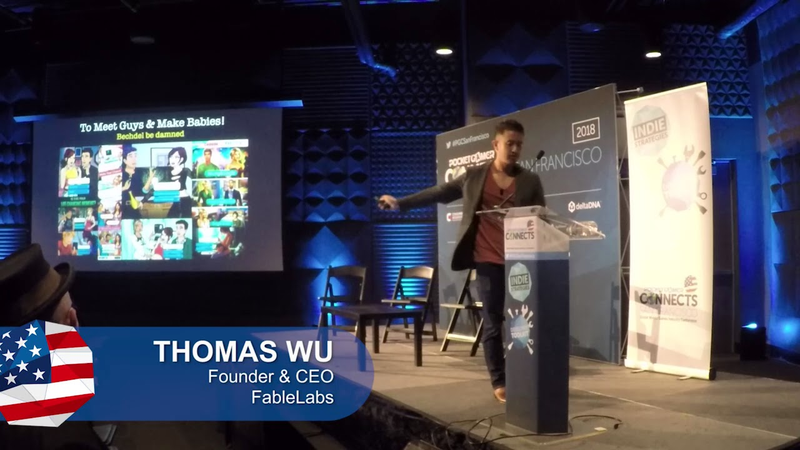
and then they graduate on to dress up games here so they can finally reach their crowning achievement right I love this one right here I love this one I hear is this your life-changing moment is this your life cheering Roman did you get that did you get that that job did you get that did you solve geopolitics and bring world peace the world no you got pregnant and you're having a baby you've reached the highest level right and the truth is there's nothing wrong with any of the things that I just showed you individually but as a collective is this as simplistic as an entire gender is this is this what we think of an entire gender is this is this all day like girls definitely females definitely do like some of these titles but does this mean this is all they like I would challenge no I would say that there is a lot of misconceptions about what females like so let's look at them pretty common everyone thinks women don't like high fantasy of course they don't you know
like trolls orcs all that's up now except half of the social media activity on Game of Thrones last year was by females all right my wire outlet right okay so they definitely don't like blood and violence except half of all horror movie fans are female well they definitely definitely don't like sci-fi except three of the biggest hits in the last few years feature of fifty to sixty percent of female audience well we just there's no way this is wrong females look like sex way less than that except how do you explain that I don't know could it be that these over simplistic generalizations are just wrong so how can we do better because I think doing better is what gets you those opportunities those breakout hits that you're looking for so first of all I would go to first principles and this is a term popularized by Elon Musk when he
was trying to figure out how to fly rockets to the moon and I think it applies to our the media business as well you need to create a hypothesis to explain why you feel the way you do about something hypothesis makes no sense keep diving right so previously if we had this thesis there was older people don't like video games well let's dive into that what is a video game video game is is interactive entertainment well older people like passive entertainment why wouldn't they like interactive entertainment well you know because they you know they jump in the hole and they die and they don't they don't they don't like oh you're talking about a very specific title so you're talking about maybe older people don't like games that are not accessible to them I don't know if that's true or not but at least that's a starting point of a hypothesis [Music] the second is if you're waiting for perfect data in your market it's too late by the time you have perfect data the opportunities are gone so what I
like to do is I like to look at adjacent markets so when I was starting out and and very fundraising for a company a lot of people question they're like well everyone on mobile in mobile gaming they're playing eSports they're doing clash of clans like now there's no narrative people don't like narrative on mobile games and so this is a slide from our pitch deck last year where I showed okay let's look at other forms of media look at books television traditional games and let's look at the concentration in green there of story-driven content versus non story driven content in all those other media genres you're seeing anywhere from fifty to two thirds the story driven content and today in mobile well back then in mobile it was 5% so I don't I can't predict the future I don't know where it's gonna go but can I can I bet that it will go somewhere between 5% and 50 I feel pretty comfortable about that I've never there's this whenever when a dingo was launching this game about venture world I got targeted for one of
these surveys I thought was hilarious it was the survey where basically they asked you what kind of game do you want us to make you next and you know if they're basically trying to outsource their game design and what they were when they came back with was actually a list of things that sounded like Star Wars meets Indiana Jones meets Shrek this is a company that's taking data analytics to an extreme right and your consumers are not paying you to ask them questions I want to make you have to have the product conviction to say I think this is going to be great and that data the metrics are there to validate or disprove your hypothesis but you can't let marketing run the show and and I always I you know I think this is a I truly am and my I admire Pixar for having the courage to make a movie that features a rat that wants to be a master chef right just think about that what what kind of marketing division would let you do that was that what's the SEO
on a rat you know it ranks up there with a voiced it doesn't it's not and yet that's how you create a breakout hit you do something different you can't do the same thing that everyone else does I think that you need to provide data to your creators a lot of times when you're working on with some high stakes solutions you end up with the suits running the show the telling creatives everything that they need to do and I think what it actually needs to be is that the producer is there to provide information to the creative so highlight the pain point not the solution you can come up with potential solutions but let them make the final call in a solution because what I found is that when I tell people when I tell create as I say your story here are the drop-off points when I can show them this kind of concrete data this conversion from episode 1 the completing ant to the next episode etcetera they're professional and smart enough and creative enough to come up with solutions that would never think of as industry we have to avoid doing lazy
generalizations you know the wonder woman did well and congrats to patty Jenkins for pulling it off but when she was doing this people were so nervous for her because if she failed it would have huge implications for female directors for superheroes your honors that feature famil female leads and if you think about it that's ridiculous if this were a failure it's because this was a failure because there are there were millions of variables that go into it has nothing to do with patty Jenkins being a female so the quote that we started with they invested on the site a fund called Sequoia and right there on the on the left you can see sequoias makeup and this is pretty typical for investment funds it's typical for our industry as well it's not enough to look around the room and see diversity the fund I joined had six people at the time creating models and doing the analytics and all of them were Asian and there was six
decision-makers so it was you know John Rotello Rodger McNamee Fred Anderson Bono etc all six white males and so it's not just about getting diversity into your organization you have to make sure that they are in positions of power so we're seeing great progress you know this is fun for instance they hire their first senior u.s. female investor and something like 44 years so they checked off both minority bucket and the female bucket in one swap there there's there's tools out there that can help you avoid some of your biases I really like how this recruiting platform actually they they have a setting where you can you can make it so you can't see someone's name you only see their initials and you can't see their face now and I love it because now you can evaluate someone on the basis of what they've done rather than who they are from a superficial level so when we're creating our stories we we frequently what we find is a lot of writers there's the writers kind of
fall in two broad buckets there's one with a very concrete idea of how they want all the characters to look and then there's some writers that say you know I don't particularly care about these characters right here and just give me give me whatever you have an art asset wise and so when we're just making these art assets and we weren't tracking anything I realized that 80% of our characters were white and it wasn't it wasn't that we tried to do it that way it's just that it was it became the default so I can even though our character make a white person right and as soon as we started doing we started putting dashboards on the kind of assets in our system then we were able to normalize out to something they'll look much more like the makeup of our consumers and Minh emphasized that it wasn't like I sat there and I said you know there's a quota system this needs to hit this all I had to do was share this data I just shared the data and things fixed themselves so in that feeble Labs the way we're
tackling this problem is that we're throwing out the experts all together so I want to leave you with this story there was there was a writer JK Rowling maybe some of you've heard of her she was she was a single mother she was you know living on food stamps and she was practically homeless right and she'd never had a hit she definitely didn't fit any pattern of what a hit maker looked like and she was turned down by 13 experts 13 people who worked in publishing whose job it is to review manuscripts we've been doing it their whole lives she was turned down by 13 people and then as you know Harry Potter has gone on to be you know it's generated twenty billion dollars of revenue and Harry Potter's kids have yet to tell their stories right so they're not even done yet so what what that tells me is that maybe the experts don't know anything at all and if there's people like JK Rowling out there who got rejected 13 times there's probably other talented creatives out there who don't have an
outlet so if you have a story that you want to tell please talk to me I'd love to hear about it we get a lot of people who say you know what's the story that you want you want me to tell and and that breaks my heart a little bit you know because it's not about the story that I want you to tell it's about the story that you want to tell because that's the story that you're gonna write with authenticity and passion and that's that's how we're gonna create a breakout hit so thank you questions I personally check one quickly we would say I think the idea of using the scientific method properly even incorrect content is amazing and I constantly try and explain to people that making a game is a hypothesis but you might ask you questions do you mean just ask questions are you testing those suppositions you're responding to as well I just I just meant that when we have this assumption right about okay maybe we shouldn't do X because of Y
though that you actually take that statement and you and you say well let's let's really analyze it if that's true or not because a lot of times we can't find the answers in in the direct data right and so and so we I'm trying to highlight different techniques we can do to basically not get at the not get at a perfect solution but make you feel comfortable enough to say yeah that's that's worth invest in that narrative let's let's go for it I was taught as a marketeer was every time we produce a you know an idea or a brand or whatever always ask so what because so what you cares why should anyone care and you know actually challenging your own perception your own questions is also important anyway I think you I enjoyed your talk very much I was wondering about replay value of narrative games how do you go about encouraging people to dive back in after that experience the story once sure so I'm gonna be a little biased on this so replay generally is gonna be for less than 10% even if you get the 10% replay that's
that's huge and so I would not optimize for replay I would actually optimize for your first play now that doesn't mean that you should create interactive fiction that has no branches I think that you'll find a lot of people do that sort of narrative and I understand why all right branching is expensive but your player doesn't need to actually replay it multiple times and see all the different ways that can end up they just need to know that there was the possibility of X and they got Y and generally that that's enough so yeah answer your question I think the first replay should be your number one goal and if you if you win that then on the replay that's that's just icing on top but I wonder if you're just deterring I thought what because you're doing it from a platform play maybe the opportunity that you're presenting is actually a little bit more kind of stable because whereas I would normally argue for replay because of the you know obvious kind of value in terms of came to the service effectively the platform I would argue is the service and the access to a range of content it's the
reason to return so while that individual one-time play might not be ideal if you were doing that game yourself if you're doing it that kind of play as part of a wider platform I think that's a much more sustainable model is that right there I mean maybe what also answer your question is if you just look at what is the you know traditional retail game with 80 hours of gameplay what percent of people actually make it to the end it's a fraction and I think I think they found I don't know exact stats right now but I think it's around a quarter of people so you know it's easy to sort of because you care about your products so much you want you you know you want to provide all those optionality x' but reality is most people aren't gonna see it so I would I would optimize for that that first experience I know I'm not know thank you for watch quick I just wanted
to know if you have the study to edge you games up for apps in the less gear so and if what your opinion would be on that you know last year but I I definitely think there's a lot of crossover because I think that stories are the way that we passed information down from the centuries right like we could we could tell stories before we could write and so if it's imagine back in old day you're around a campfire you're listening this story and it's like don't go over there there's there's lines over there and like that's where the watering hole is and if you didn't like stories if you didn't pay attention that you got eaten by the lion so so as a species we've we've grown to use stories as a form of communication and that's why we're wired for stories so I think we learn better with stories and if you look at early educational apps out there they're all just single they're like to put through their like doing this and that and then they try to add game mechanics on top of that to make it more interesting because inevitably students get bored so the
next layer on top of that I do think there's an opportunity for a narrative to teach and taking step back I learned so much about how gangs and how police and how politics works by watching the wire right and their objective was not to not to you know edutainment it was to write an authentic story by interviewing people who worked in those kind of departments to write a real story but in that process he learned something from it so I think that the best sort of entertainment of educational apps are going to focus on how you entertain and then knowledge will come with it [Music] you [Music]
Summary
The presentation argues that the video game industry frequently relies on flawed, exclusionary patterns and oversimplified data models that stifle innovation and misidentify target audiences. By examining historical industry shifts—such as the success of The Sims, the rise of social gaming, and the evolution of mobile strategy titles—the analysis demonstrates that industry experts often fail to recognize the potential of underserved demographics. The core thesis posits that developers should abandon rigid, bias-driven assumptions in favor of first-principles thinking, which prioritizes authentic storytelling and creative conviction over reactive, data-obsessed design.
Key findings highlight that industry generalizations regarding gender and genre preferences are often incorrect. For instance, data indicates that female audiences represent significant portions of viewership for high-fantasy, horror, and sci-fi content, contradicting long-standing industry beliefs. Furthermore, the analysis suggests that relying on historical data to predict future hits is inherently limiting, as it ignores the "why" behind consumer behavior. Instead of outsourcing design to surveys or marketing departments, creators should use data as a tool to validate hypotheses and identify pain points, while maintaining the autonomy to pursue unique, high-quality narratives.
The scope of this discussion encompasses the global video game and media industries, with a focus on mobile and console development from the 1980s to 2018. The methodology emphasizes a critical review of industry history and investment patterns, advocating for a shift toward inclusive, data-informed creative processes. By implementing internal dashboards to track asset diversity and removing demographic biases from recruitment, companies can better align their output with the actual makeup of their consumer base. Ultimately, the industry is encouraged to prioritize the quality of the initial user experience over artificial replayability metrics, fostering an environment where authentic, diverse stories can thrive.