1 free read left. Create a free account for unlimited reading + AI research.
Create free account
The future of games publishing
Key insights
7 takeaways- 01Publishers act as a bridge between content creators and developers, such as Tapas Media leveraging its webcomic audience to help developers integrate popular characters and stories into games.
- 02Modern mobile game publishing has shifted from a 'no publisher needed' model back to a reliance on publishers due to the increasing complexity of marketing, live operations, and the integration of numerous SDKs—sometimes as many as 26 per game.
- 03The 'greenlight' process for many publishers involves strict milestone-based evaluations, where projects are frequently killed early if they fail to meet vertical slice expectations to prevent the waste of resources.
- 04Publishers now prioritize long-term sustainability, often asking developers if they are prepared to commit 4–5 years to supporting a single title, as games with long-term live operations often maintain revenue levels similar to their launch period.
- 05Publishers are increasingly cautious about funding development for unproven teams, preferring to sign established studios or projects with high market potential to mitigate the high risks associated with mobile free-to-play development.
- 06Developers should focus on building community and acquiring users as early as possible, using platforms like Kickstarter or existing IP fanbases to validate interest before full-scale production.
- 07Entering the Chinese market does not necessarily require a complete game overhaul; publishers like Gumi suggest that Western developers can succeed by identifying 'low-hanging fruit' and integrating specific regional SDKs to adapt their existing titles.
Ask AI about this video
Transcript
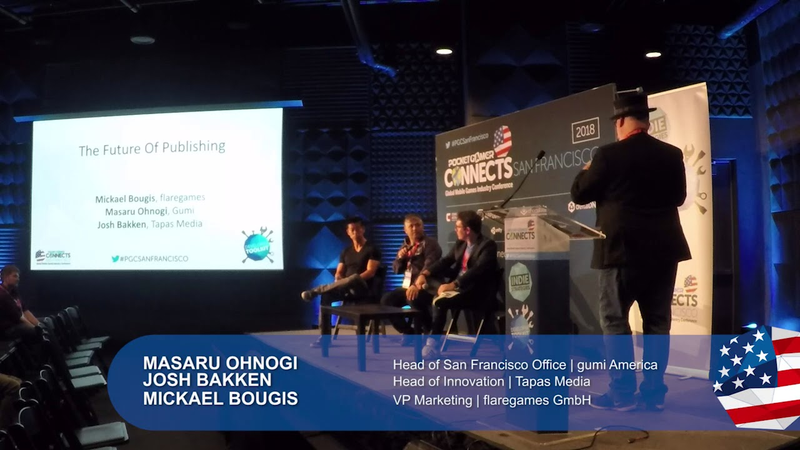
[Music] [Music] we're gonna do a panel on the future of publishing I find interesting about this is because not that long ago we were having fantastic conversations about you don't need publishers anymore in this brave new world and now it feels that we come full circle and obviously now it's got a little harder to to market things and to deliver things that we have to think of it more carefully so I mean what we'll do is well basically just get you guys to introduce office do you guys do I'm from yes and Gumi is a mobile
gaming company invest in Japan about 150 employees spends public winter stock exchange and about similar studios in all over the world and we have a couple of global he titles the one is a Final Fantasy pre-experience and the brave frontier is our first core over tires back in 2013 and then I personally learned a PC gaming only gaming company previously in San Francisco also I learned a Korea studio and I'm involving most of global publishing our games currently I'm hungry maracas air beer but we cannot launch the VR game next year that's why I keep running researching how to publish VR games that's why I experienced PC mobile and we are publishing stuff that's why I think I can talk about it also I do the
proxy and as well that's why I can talk about many stuff about publishing yes thank you hi my name is Josh Park and I'm with Thomas Media tops media is a developer of an open publishing platform for web comics and novelists so it's a global free open publishing platform and so yeah that's pretty much what we are what I do for them is my titles as head of innovation so whereas most of the company is focused on building the best open publishing platform they can I'm kind of in charge of trying to see where we can take that platform next and so in this case and what I've been doing since January is reaching out to primarily indie devs and saying hey we have this great community 2.1 million monthly active users about 160,000 daily active users who really are engaged with this content so if you're gonna build a game and you're focused on mechanics and
the fun of the game come take a look at tapas and if there's a story that you see that you are gravitate toward and go you know what we could take that story and those characters that are already made and put them into our game then that's something that I'm saying yeah go for it and then once that's done we can tell all those fans hey go check out this game for this property that you guys love and so I've been doing that since early January and it's been going really well so hopefully gonna continue that cool hi Michael I am VP Marketing at Flair games we are mobile free to play publisher we do only mobile only free to play we're based in Germany and the publishing is about like in flourishing independent games is about 90 percent for a business we do have two Studios that we own but we also treat them xyx exactly has external external studios and before that have
been in console publishing at Microsoft in EA so we can just guess a little bit about comparison between mobile and console publishing as well yeah key points for me is that you know we've gone you know you guys have got a slightly different view on the world there may be some day old a triple-a console teams would have had like five ten years ago and I think that's really what I found really interesting is you know what do you think defines what you bring to the publishing world whether it's directly for the game or for supporting people are going to bring games to your web brands you know what do you guys think you bring that's set you aside and why it's valuable for a developer to work with you you know you first okay so we used to do the third party liberal publishing but I we stopped it I'm not sure I can give you answers we tried a many way of the publishing like not only
just you a advertisement also collaboration with influencers the very very very early days and about so much knowledge to publish other words listen the more important things is a community management because we people is now through the internet he talked with the users and then back in the day we don't didn't listen to the users bit but not much but recently like a discourse so many PR communication like a problems I exist and we can easily pick up the values or thinking and we just know does implement those kind of users preference you know comprehend everything that kind of know-how is a very we have right now then we can provide to that developers so you took kind of a on very kind of stuff as well so is there a difference between the way you work with people you know on those different platforms all the way you look at content all those different platforms yes but basically PC
hardware experience are not so different it put most important things to how we interact with the users that dot I think key from your point of view obviously you look working with people do you want to make games using your content so how does that affect the way you work with people what we try to do is we try to make a bridge between people who are really passionate about making games and people who are really passionate about creating content and just kind of providing that bridge so when we're talking with Deb's I never go and pitch IP specifically to them don't even talk to him about it what I do say to them is hey come check out tapas if you want me to tell you just to kind of give you like a Cliff Notes version of what's really popular I can give you like a top ten and I can tell you like there's this many series that have this many subscribers like 80 million or 40 million views I can do that for you but you know really go and take a deep dive
and it's been working really well because developers like to just to give you a really good example right now we're in the process of making a side-scrolling leveler right level side scroller and a demon dating sim so those are two completely different types of games two completely different types of developers and there are nothing that I would have come up with for those particular properties that these people are talking about so really what I think tapas is trying to provide and what we're trying to provide is a way for it's kind of like a library for developers really you know let's just go in to the library look around you know crack open a book and go wow this is so great I didn't know this existed before and it kind of hopefully helps them find some passion for some IP and helps their resources in terms of them not having to do all that character development and things like that yeah I think it's
really fascinating when you kind of I mean I might might some in choose me to Homestuck a few years ago and it's like the sort of content that you know didn't make any sense to me before I started looking at it and I completely understand why you know it's it's got such huge further fans you know cosplay you know Homestuck characters all the time yeah and there's kind of webcomic kind of there may not be something you find out about unless you're part of that subculture I find that fascinating you guys who actually got that sister you know your work point presumably the massive subculture in each of those different vehicles right exactly yeah so from Fred's point of view it sounds like you're the most traditional in some ways you know totes the way you work but you kind of come into this in a slightly different way than usual you know you you know you know was that was the game and you know we were doing that kind of
game and then you've ended up publishing crazy things like you know Chuck Norris and all this other stuff so transition I think it's it's it's really about like you know building blocks on top of each other and you know we it all started with speaking with developers understanding what they want exactly and when we started to the pershing in 2014 how did percent of the studios were meeting were coming to us with the same request they wanted users and they wanted money and what they meant most of the time is that they wanted money to get users so you know we've been providing that right but I think that between 2013 in 2014 and today we had a couple of stuff that happened first the producing a mobile game is becoming more and more difficult and it's a bigger and bigger investment like when we started to do publishing probably the average funding we were giving was half a million to a million now we're much more
into the three to five million that means longer projects that means bigger team so that means also some help from our side into helping your prediction the second thing is the complexity of complexity of the marketing it's not only about getting users it's only about doing you a you know we discussed about branch this afternoon we discuss about live ups all that means SDKs usually and like an average at fair games we we push 26 SDKs into one game and others and as a developer only 26 on it I know I'm the so that means that you know when you realize that and you know and we do that because it's useful right so when you realize that that means unity also like in a build tech as a publisher because it's impossible I mean we just were about to raise a game in two weeks from a studio that is like two guys in Andorra and if I push you 26 SDKs today at six months so that means that we use
a VP sure have to be able to take scope and a half of the resources we have right now out of hundred forty people that's actually take people that will actually do the SDK integration and and built wrappers and stuff like that so yeah I think our role has been has been really really evolving over the last three to four years finisher but I think it's all starting with like you know what studio won't like you know I'm it's it's really I'm not here to sell something that people don't want or don't need yeah I think it's a really key thing that's happened is that the nature of what publishing the parrot when treating make game is is almost nil I mean obviously making a good game is far from nil but that's not a subject but actually getting that that game I think there is a there is a wider question about who's funding development at the moment which is you know I don't know if we're gonna get into that we'll find out but I mean know when you get involved with the project what are the
decision-making processes that help you guys decide this is the project we aren't going to do and what are you looking for to make that happen when you're making a project what is it you're specifically you can what the conditions that you're looking for that say yeah this is the project we're gonna work with so our internal process so we have us internally the several other studios and then every studio about game creator and a studio head and they also always be eager to develop new games and then we have a certain process I think I forgot record four five steps and then one is of course from the prunning and if we the past they they can just make a are for burden and we also see that the milestone and they thought finished the epicene long time and within the budget and then quality's exactly the same as they prong primary then next it's a better budge on
what kind of pauses we do and unfortunately sometimes we have to discover off the projects of course yeah not only the project itself also that you know outside of the environment it's gonna change suddenly new game comes up in the compete you can win you know defeat those games and you have to stop there sometimes our process at the moment like almost a traditional kind of greenlight process you know a vertical slice yeah that path is you go to a milestone they pass the milestone I think at some point they don't you try to kill early so that you don't end up wasting too much results yeah so from your point of view obviously you're coming in it in a different way do you have a kind of a criteria that you're looking for for the partners who you're working with and some way to monitor that they're actually delivering relevant to that particular brand that they're working with so we're a little bit early on in some of our games but they're going pretty well I would say the number one thing that we look for that I look for is passion from both the developer and the IP creator
and we get them together and we get them on slack and you know get them talking and skypes and you can just kind of definitely tell when you know to believe this is what run or whatever is yeah but you can definitely tell when the creators super excited and the developers just going on and on about how great that IP is and how they love their newest episode and all these other ideas of what they can possibly do in terms of spinning off subsequent games and back stories of side characters yeah once you get those situations that's kind of something that I really look forward to if there was a situation where a developer jumped on and you could just kind of tell that they were gonna try to use this as a short way to not have to develop characters for the games I know I talked about that before but if it was just strictly kind of like like a business like a reskin joke yes like I mean rescan would be fine but there isn't like an excitement or passion for it and we can't get the
creator on board with the with the developer and a really exciting in organic genuine way then probably would probably pass on that and we're kind of reminds me of actually the worst game of all time Lord of the Rings bowling seriously where they had Hobbit heads as the bowling balls that was the only thing that made it Lord of the Rings yeah you probably won't see something like that coming from us how's your process compare we actually have three tables and the process of slightly different familiy ability and other the first one is co-publishing and I would say co-publishing is what you can the most traditional version of pushing you can think which means we engage at very early stage usually when the studio only have a deck and then you know we go
through the food predictions together and we found that it used to be our primary business I mean actually very close to council finishing it used to be our primary business like three four years ago it's not anymore and the key problem with that type of producing is that you can only sign you can first we can only sign it with perfect teams so if the team doesn't have a pedigree you just team if you have a couple of staff that are missing and stuff like that then it makes it very difficult because the risk is very high and then suddenly you cannot take massive risk on the positioning of the content so usually you end up signing RPGs and like you know games that or actually for the market today because you're like hey even if the market evolves bad over the next like you know 18 to 24 months like you know probably I'm still on the market that is big enough today so even if it's minus 20 percent or not I'm not out of market which is exactly why we're doing less and less that we still do yet but we do last lesson of that what we our biggest
part of our business today is what we call the accelerator which is a separate table that one we mainly work with studios that have an MVP that we can put in the market we've been finding over the times that allow studio actually prefer doing their VP's by himself it doesn't requires massive resources it's usually like you know three four months of development and that's allowing us to take much more risk because that means that we can put that in the market we can validate to keep he eyes and that means we can work with much smaller studios because the production risk is for less and we can also take much much more risk on the jam like you know it's like if you ask me to I believe that the next big thing is fishing game I don't know and if I need to put five minimum table to know that I'll probably not do that but if you have an MVP I'm more than happy to spend like you know 50k 100k to get us and users into that game and let's figure it out together right so yes it's a very
different process between the two different levels and then we are building a third table for China and that one is really yeah we're doing that with our partner here maybe and and that one it's really about like you know testing in China and seeing what's the what's the appeal in China from change care sources so you know it sounds like you know the level of risk affects the kind of things that you're interested in you know in particular I am I kind of half imagine you'd say I'd be looking for certain stats in soft-launched but it sounds like you're not necessarily going quite that far I mean you know I would actually ping back to to your talk an hour ago which is about and I think that's the key difference between between console fishing and mobile fishing which is on console you're looking for a team that can shape the game mobile you're looking for a team that can run that game for five years and if you get for revolt today for example I mean keen is the best example
that the studio that we work with and then but in 2014 they've been running the game for four years and a half now and the revenue today is very similar to the very first ones yeah and and that's the cure it's like when I'm meeting people I'm always asking the question which means which is like you know are you are you planning to dedicate the next 45 years of your life doing that game I mean from from Goody's front of you it sounds like a lot of the work you're doing is with internal teams but yeah obviously some external but is is that what you're looking for two teams that understand how to sustain a liver game is making the game enough and you have x2 other teams that look after the live operation side basically our structure is given the lipo operation the people who develop the game do that but some exhibitions but mainly one team
just run the game at the moment and it's right to me just be praised you know arcata people to learn you project to each other we can not take a risk especially when we become IPO you know we tend to just minimize the risk at the moment in the company it's interesting because I think you know do you think increasingly that capacitator so sustain and manage the service over time becomes a key part of what you need or is it if you think at the moment that's not likely to change your your-your-your teams making will continue to be the team's operating experience the gaming developers who wanna make new games that's a more like a management way how we motivate to just maintain existing game or how that's incentivize that our team members those are you know more
like a management issue we've done a lot of time going through the process I mean most of my career I've I've managed services and what I found fascinating is the transition point work from launch but the proportion of the team that has able to transition he's actually relatively low and most the time most of my experience and it's often not necessary they're not necessary as expensive skill sets as well the ones who can manage a team are often a little bit more cost-effective trying to set in a nice way it's not that it's not they're not not skilled enough they're slightly more abundant if anything it seems to me it's more about kind of the keeping the thing going and actually being smart enough to be the dissect the original team so that you still sustain the capacity to build new features are effective but you may not need as many of them and you may want to take them to another project experience any of that
yeah is that something you've experienced at all yeah I mean on our side there's always that I mean that question is always coming at some point first because I mean you know I guess most of you experienced that when you work on something for like three years four years five years at some point you are just running out of ID and you're getting bored and yeah and all our Studios there's a point especially it's always touring with the creatives right there's a point where those guys are just like hey you know what I've been jointed characters thousands and thousands of times over over the last four years and five years and I want to do something else so yeah you always have the question where this video wants to transition to another project at some point and it's either you give that game to another studio they're willing to do that or you or you built with it the same studio a separate team that is that is doing that but it's always a very risky time like you know for I would say four world - we did that perfectly for non-stop date we crashed at that that's
what crashed again we just transitioned out of out of the studio that was doing that yeah and it was a big mistake I think it happens I mean I think unless you've got that canned connection emotional connection and ownership it's very tough anyway but I mean so just from your point of view you know have you sound that you're a bit early to experience this stuff is that fair yeah for this project I was a free to play producer around two games the same experience in that comp yes yeah yeah so do you see that affecting the games you're currently working on that are you planning ahead of that transition process so what we're doing is we're fortunate and that the developers that we've chosen or have chosen us depending on how you look at it they've they have a track record of putting out games and sustaining those games so I'm pretty confident that that's something that they'll be able to continue to do and hopefully grow those IP and off of the
games that they're launching now so I don't foresee that being an issue in the future for the partners that we have right now so I mean I P is a good question actually I mean obviously in a traditional old-school space the publisher would invest in development and would take the IP as part of that process certain extent in this case obviously their licensing effective video your IP do they get to keep their own IP for the game itself yes exactly so all the source codes and the mechanics of the games those are all the IP that when they're creating it they get to keep on those yes don't you and all you guys investing in that process or are you simply just taking a world to share off the back end yeah it's pretty much right now just a revenue sharing situation yeah I'm from one of you the IP when you you hand over UI money or is it just about you know brownie shares or some other model it depends I would say depends
from a given to another like if you are you know if it's a new IP and if you want her to build the IP and spend multi-millions marketing into that probably we can need to get the IP just to mitigate the risk but I would say it's only half to a third of our contract I mean at the end of the day I'm more interested about the users than the AP like you know I think one of one of our value as a publisher is that we have a portfolio of games and we can move the users from a game to another and when I say that that sounds really bad because that means like you know people to visualize us pushing users and you game into another which is not what we're doing but it's about understanding when a user's churning and understanding like you know what kind of other games that you have in your portfolio you would play and I would like right now about 20% of our users actually play a second game and I'm much more interested cross-promotion really isn't it yeah yeah and and it's about it's about understanding what the user want as well and have those games for for that guy and I'm much more interested in that then that's what gives you ability in
power as a as a publisher beyond your spend I think it's one of the things that was often missing anger when you when you trying to build a game on your own you've got to accumulate your audience and leverage that just to make money of your game if you're a part of a publishing group in theory at least they should be able to you know drive that wider audience to cross-promote within that group of that portfolio brothers what do you mention I mean you know funding development as a topic and I'm always asked a question like you know should I go for VC should take VC money should I go for pretty sure and usually you know looking at what my friends and VC's are looking at and what we were looking at we don't look at the same thing because if you're the perfect studio if you have a development team of like 25 people if you have 10 people in marketing and a user acquisition team probably you don't think a pretty shuttle and and you know however if you're looking for like you know users from an external game that like you know
for example if you're like hey we think that you have that game and we think that the user of that game would love our games as well then probably what you want to be sure and not just VC money yeah so we get that I think we should follow that one art but probably not strong in terms of obviously the IP side is mostly internal from why everyone's to say but this whole idea about cross promoting between games is that something that's important to the way you operate are you looking to help you know it kind of help keep the audience within that portfolio of games you guys work on so we actually do like collaboration type II collaboration sinks a lot some all games ending every month as you can imagine so different IPS are different users and in the club right in exchange you know the users and then the fundamental our user base is going increasing this is a very very significant marketing well at the moment and then you have a much many many
partners and I now not only other IP also differences or people game everything really powerful because the thing you know fundamentally the fact you're not just looking about building your community within your own games you're actually looking for external partners that may be not in the game space for in that wider space I think does that do you think that gives you kind of extra extra audience mind chair for one of a better phrase terrible phrase but you know value of keeping the attention of a wider group of people as a result does that really work for you yeah I think so because generally we start like a you a you know the the number of users we can get from you it's limited they need to the next stage then Japan case we do the mass marketing like a TV commercial users pass to if we want more users we need to the cooperate other IPS those kind of things our basic strategy we've seen either in in your
space because obviously when you got these web comics you have segmented audiences within them do you get that kind of special guest appearance you know crossover effect it within your portfolio not so much special guest appearance but we definitely attract genres and we definitely put collections together for ones that we think make sense another thing that we do to kind of keep mind chair is we're really open to working with different types of partners so we have a we have a kind of a homespun advertising network on tapas and recently we just signed a deal with a cosmetics company of all things and so they're very big thing yeah and so so hopefully we can and we're in the process of branching out so that people see us as web comics but then also other interests on the platform as well so to move forward I'm thinking about now you
know we've we've established that there's an operational you know concern we've got to find the right team you're delivering the right game you know do we do we think that most games teams need a publisher when you mention this to Senator as well do they need a poacher or is it specific kinds of content that when they want to scale that's when they need to work with a publisher whether it's you guys or someone else what do you think Michael um no I don't think so I don't think that's for everybody I think it's you know with the entry barrier in our industry and it was the cost of bringing him about get a bomb I'd give him to market and even more bring a successful bug mobile game to market going up every year and pretty much every month I think it's more and more people so you have we actually speak now with a lot of people that publish their first and second games and and self-published that did that actually very successfully but now they want to work with a publisher like you know we worked with limbic actually from here on zombie gunship and that was exactly the case on the gunship the
first one was self-published are successful and but for the second one and for transition to free-to-play they wanted the help of the publisher but now you have like you know you I think you have studios that have internal publishing capacities and those guys are not necessarily looking for a pretty sure and you have studios that want to build internal publishing capacities and if it's your vision if it's in your DNA and if it's what you promised to your investors then probably you should not work with a publisher what do you think do you think people should be looking for a publisher or you know she's more people trying to be become their own self opening process it depends but personally the station is changing like I told I told you guys a beginning so there are so many the community the platform like a discord and this is a PR case so our one subsidiary does launch a really buddy don't like our Papa John then this roach in the steam because we want to have a
user feedback and and we just know implemented based on the user feedback and then the point is we really like just a choir user as early as possible then make a built community and keep doing that and try to keep it up game with users basic users and then don't users just influence other users that case I don't think we don't need publishers especially we are there are human yet we cannot add any advertisement as for inference way it's a very important should be same I think increasingly whether you're gonna choose to go for the publisher or not I think a less than any developer should take from that is the earlier you can get people excited about what you're trying to do the better I think one of the things that Kickstarter is still good at if you can find a wider audience or if you're tapping into the audience that lives in
that space is that you can create noise and and an interest but showing you listening being authentic with you yeah one thing I was it depends on your ambitions your global ambitions let's say so 10 cent of all you know mighty Giants of companies we actually publish 10 cent comics and animation route APIs so it's not that they don't can't afford to do that in the States or in the Western markets but they actually chosen us to do localization and publishing of some of their titles and so I think and I think we would probably do the same thing when we like go into well I know we for sure we've already have deals where we have web comic publishers that are in you know Japan South Korea it's not something that we want to tackle ourselves so I think it just depends on your ambition for your content
interesting do you have like a a preferred partner you work with for the Asian market there's a little more anime style of webcomic type stuff or do you just simply have your space and they find other things elsewhere so what we do is we work with some major content I mentioned $0.10 there's also another one out of China called u-17 who's also a really big comic and manga publisher so we work with them and we reciprocate that relationship so when we build something more of a Western flavor and we present that to them and see if that's something that they want to try to launch in their in their territories okay obviously this is something that's come up quite a lot in games where they you know how we handle Western market content versus Asus and marketing content is something particularly trying over you know to a certain extent Japan you know we have to be kind of careful how we handle that is that something that's becoming more kind of globalized
or are you seeing that actually these dedicated connections matter to you yeah that's a big topic actually and that has been I would say that has been even more relevant like you know back to when we started finishing 2013-2014 people were coming with us like studios were just coming with us and they were giving us global publishing rights more and more we see studios like you know asking questions about what your strategy on Middle East what your strategy on China which was charged Iran Japan because they're also considering working with different publishers like local publishers I mean you know on our side we think that and through our experience with our own games for revolt a non-stop night we think that China is actually easier than what people think I mean like getting in the top hundred in China is crazy difficult but like you know China's about 25 percent of the mobile market getting like 20 to 25 percent of your revenue of your game from China is
actually something like you know easier to what people think you don't need to redo the whole game for that so you know that's why we invested into that that label we say mobi to actually like you know find the door for Western developers to go to China into a very different way which is not remaking your wall game but it's just like you know looking at yo game today and what are the low-hanging fruits that that we can do what are the two three SDKs that we can plug and then go to China and you know like not if you play non-stop night in China for example you will not notice any difference compared to the Western Russian and China I still fifty two percent further of Nietzsche data um so it's it's possible no point of view you know it's there do treat Western market any different from the the home market the Japanese market if you're talking about detail is it very different yeah so our case is I we primarily launch in Japan and then once it becomes successful we localize publish in our
experience we try to adjust character also the game drive operation wise and and for example in China China China is a consumer items are much much faster that's why we implemented more even and but uh at the end we find out the users talking like a no community site they just won in Hawaii exactly same on Japan operations one in Hobart I got very very Chinese you know specific contents that was I really surprised it's actually same as us and courier yeah so because we don't stop and pass then just notified like a Facebook page was something that I got told you just get information easily if we just want to go but it's a mysteriously could be okay but uh our case it's a German post user see launched everyone they're not satisfied it no I just realized what
kind of games excite you and what you look forward to you know we looking for within the game who wants some of that Josh actually wouldn't you start what are you looking for in a game personally or game that you would work with oh that's just creativity and something that is out of the box I'm not I do speak for topics on the subject of games and we're not looking to do clones of anything out there so hopefully when somebody sees a game that has the tapas brand attached to it you're gonna see something really true to its source content and something really interesting so it's basically a love letter to the fans and hopefully the devs get behind that that's what we're looking for I would say service in a way that you know when we come to your show like we went at GDC for example we saw 600 games I would say probably 150 to 200 or a really great ideas and a really great
projects but what make the difference is that you have 10 to 15 people that will really present your projects where they don't really think about it's not only about like hey I want to make that game but it's really about hey this is how I think the service this is really how I think how users can interact with my product how they can interact in the product how they can interact outside of the product with the community and that makes the huge difference for me it's exactly I'm always just wondering I was comparing that to going into an airplane right it's like you have like airlines are always telling you hey you had a great experience because like you know the flight 112 and for some time but if you had a shitty experience at the airport then it and that's the first thing you remember and it's exactly the same thing here if you just think like that part of the experience and if you don't think your experience as a wool you're likely to have users having a shitty experience because of that it's the whole health stick experience yeah exactly so no you watch the thing yes so we still invest the beer is now beer MMORPG
foster open-world game and minecraft type of VR game also any type of it should be your first game copy some game existing game to the air this should be an approaching game keepo then we re considered to invest we didn't get into blockchain now should have done more of that you know we at least we have a couple of tracks that we're dealing with that so on that note with the seconds ticking away I'm gonna say thank you very much to the panel for their time I think if you take Bart and well I think we're basically aim to the end of the day so on that note I'd like thank you all for spending time with us in this room I think we've got a whole bunch of things today we've tried to look at the way that people you know sket started in industry and how even people who are still working in the sort of bigger into the scheme of things the triple a's the EAS and i antics they're still thinking about the fundamental questions of
player delight and excitement as much as they're thinking about the ways of turning into revenue when we've had a whole bunch of people talking about how do we look at the brands how do we think about the questions that we ask and I think that for me one of the biggest takeaways was one of the things that Thomas was talking about earlier the idea that we're building hypotheses that we're testing and I think yeah someone whose massive fan of the whole scientific method anyway it's me that's brilliant the fact we don't have to worry about you know we want to be creative we absolutely have to be creative but the creative process is a is an idea which we can test I think it works we can help people engage with that we can make amazingly interesting vibrant delightful games that people will want to willingly spend money on because it's worthwhile and we have an amazing industry that lets people engage in entertainment that they do they don't just passively receive and that's an incredible thing that builds
autonomy a sense of confidence a sense of escape within this world we're currently in we sorely need and on that note thank you very much [Applause] [Music] [Music]
Summary
Game publishing has transitioned from a traditional marketing-focused model into a multifaceted partnership defined by technical infrastructure, strategic curation, and long-term operational support. The primary thesis centers on the publisher’s role as a risk-mitigation partner that provides essential services—such as SDK integration, community management, and regional market navigation—to bridge the gap between independent developers and global audiences. Success in the current landscape is increasingly predicated on rigorous project evaluation and a shift toward data-driven validation, ensuring that resources are allocated to titles with the highest potential for sustained engagement.
The industry has largely moved away from high-risk co-publishing agreements in favor of accelerator-style programs. These initiatives prioritize the development of minimum viable products to test key performance indicators early, thereby minimizing financial exposure for both parties. Modern publishers now emphasize the importance of live operations, favoring studios that demonstrate the capacity for long-term content updates. By leveraging portfolio-wide cross-promotion and intellectual property collaborations, publishers can effectively manage user acquisition and retention across a network of titles, transforming individual games into enduring user experiences.
Decisions regarding whether to seek a publishing partner depend heavily on a studio’s internal capabilities and its specific ambitions for global market entry. While self-publishing remains a viable path for some, many developers rely on external partners to handle the complexities of localization, community building, and navigating challenging regulatory environments like China. Ultimately, the most successful projects are those that prioritize authentic communication and early community engagement. By viewing games as holistic, evolving ecosystems rather than static products, developers and publishers can better align their efforts to maximize reach and longevity in an increasingly competitive global market.















Comments