1 free read left. Create a free account for unlimited reading + AI research.
Create free account
Augmented reality games for kids – Lessons learned from Sky Whale AR
Key insights
6 takeaways- 01To mitigate physical fatigue in children, AR sessions should be limited to approximately one-minute, high-intensity intervals with minimal edge-based screen interactions.
- 02Developers should adopt a non-gated approach to AR, ensuring it remains an optional feature that does not compromise the core 2D gameplay experience, as seen in the April 2018 launch of Nickelodeon's Sky Whale AR.
- 03To ensure safety and engagement, developers should implement visual prompts to encourage movement while using virtual barriers to keep players within a defined, safe space.
- 04Successful AR design requires treating current hardware limitations—such as battery consumption and inconsistent tracking—as creative constraints rather than purely technical hurdles.
- 05Rather than relying on unreliable surface detection, developers should prioritize device movement as the primary control input to improve tracking consistency.
- 06Visual depth perception on 2D screens can be effectively enhanced through the use of drop shadows, desaturation for distant objects, and glowing highlights for interactive items.
Ask AI about this video
Transcript
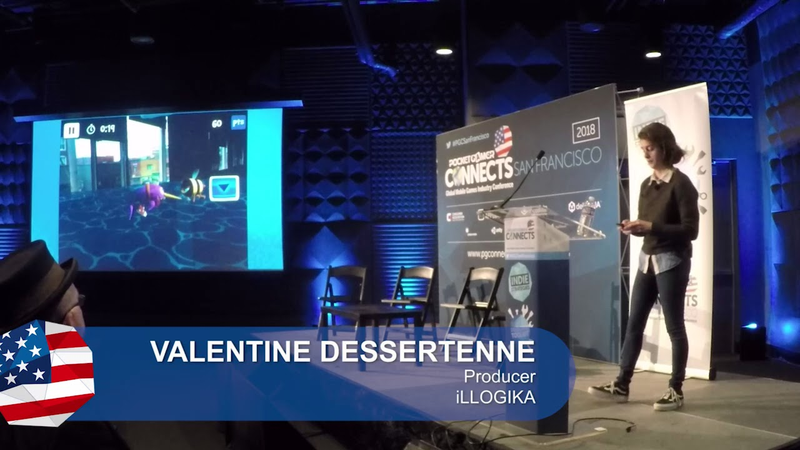
[Music] [Music] - I'm Valentin - certain producer analodjica and today I'm here to talk to you about era games we've developed for kids and lessons learned we got from there so essentially a short case study if you will so first of all Who am I that's my huge face right there if you don't see it here I am a producer logica over there I've shipped more than ten games and projects over the last four years and before that I was working over in the tech scene who is a logic s so we're 40 people game studio based in Montreal we were founded in 2009 so been
around for a little while we develop mainly using unity and we do work for hire projects for larger studios smaller studios as well but that's our speciality so we recently worked on cuphead for example to help them shed the game worked on their crops go head man go bunch of projects with Square Enix we also develop our own IP and games including Sumeria which recently launched a little bit of shameless self-promotion here it's our first IP we launched May 9th so a couple of weeks ago on ps4 Xbox one and Steam so feel free to go check it out now so kind of the game that we're I'm going to use as a base for these lessons learned is sky whale AR it's a game we developed with Nickelodeon as an add-on mode to their existing sky whale game which was a key game that we took and added an AR 3d mode to it it's part of the game shakers world if you're familiar with it it's a
TV show where little girls create games and they should them on the App Store like sky whale and here's the brief trailer of the game to give you an idea of how it plays this is not what it's supposed to look like oh oh this is the original game which was 2d kind of we would control the whale to go as far as possible and get to and do your high score and then we develop the AR mode which is appearing right there which is a 3d mode where players go to catch as many items as possible and a limited amount of time so it's a really fast arcade style game with both a race mode where players try to grab as many items as possible in a row mode where they can just explore the world and augmented reality with the little purple will you just saw and the
main feature is that players and tracks over water and under a water plane then they can dive to and surface up from as they will drink the game it launched in April 2000 18 so really recently so just if you're not familiar to give a brief brief overview of AR today Apple and Google are kind of leading the way they each have their own SDKs AR core for Android AR kit for Apple and iOS air is really interesting to brands and for games right now because it allows for a lot of engagement having characters and items within your own world is super interesting for companies the drawbacks are massive battery costs having a camera feed all on all the time is really taxing on devices and right now also with phones that have tiny screen immersion is still kind of low because
your viewpoint is so limited but that's gonna improve over time so now onwards to the lessons learned and challenges and the solutions we implemented for them so where they are games especially the type we're developing fatigue plays a big role so holding up a device for a really long time can be tiring on the arms especially for small children with their weak little arms it's hard to hold up a phone so to combat fatigue we opted to have very limited screen interactions so the game is mainly played by holding the phone or tablet with two hands and there's very little tapping of buttons so people don't have to take out their hand and tap which is even more tiring holding the phone with just one hand all the interactions are on the edges of the screen so that would you can just move your thumb over and tap we focus with the gameplay on device movement so no tapping and we did very short play
sessions so play session would average around a minute which is the right amount of time to be able to kind of run around and then sit down interact with the shop play the 2d version of the game and then rest up and go again another challenge we had was especially with movement so as I mentioned the game is played by moving around with your tablet and walking around it feels really counterintuitive because if you're a kid your mom is probably telling you to sit down when you're playing with your tablet and not run around with it and also after playing a game that's in 2d that's like a sitting game and then switching to AR mode it can be really weird to make that change so did that we had two solutions the first one was to directly encourage the player to move around so whenever they would boot up the AR mode they would get this screen which is super visual like you have to stand up and you have to run around to play and our second which was more for the safety of actually moving
around was that we limited the movement to a closed space within the game with barriers appearing when the player moved too far so we would have an anchor in the middle that spawned an area about the size of a regular room standard room and barriers would appear in the game when the kids went too far so like here you see that barriers appearing over there and they're being prompted to go back towards the center of the room another challenge is limited compatible devices so AR support is growing all the time but it's still not every device that supports the AR SDKs there's not much we can do about hardware so for us we opted to make AR really an option within the game and not a requirement so that kids and people who didn't have access to a are compatible devices could still play get a full game experience out of the 2-d game and we
also put all the content that we had added an AR and 3d mode we put it in the 2d oops and the 3d version of the game as well so here you can see this button the AR button it would only pop up if we if the device that the person was playing on was compatible and if it's not it just not there so at least it's not like gated or anything like that [Music] so another issue ran into is obviously the unreliable tracking AR tech is still pretty early so tracking is not always perfect and some environments are just really hard to track in like in our office we have super shiny floors and desks and the tracking was really all over the place there and especially for the gameplay we were using where you're moving the tablet and phone around all the time it really disrupts the tracking
so to do that we took kind of combat that we use tracking especially surface tracking as really something to improve gameplay necessary to successfully play the game so for example we had props like corals popping up when players were underwater and those were popped up on places where we thought there was a surface but if we couldn't find any surfaces we would just assume where the floor was pop the corals there and yeah that way it was never a negative experience but it could be a positive plus to have functional surface tracking also we focused on tracking actual device movement to move the whale around rather than specific surfaces because that's the one that works the least well it's like here you can see those curls over there the props that were spawned because we dragged the floor in this shot
depth perception so depth perception AR is a bit of a challenge because you're sent a faking 3d on a 2d camera feed which can be a bit tricky so for this we had really three approaches the first set we added drop shadows to every item that was flying in the air so that it it would the drop shadow would be on the water on the floor where the item was it was really much easier to find it this'n items were very d saturated - almost like they were in a fog that players weren't paying too much attention to them because they were far and close items would glow when they were collectable so if a player was close enough to an item to grab it it would start to glow so that they could go and get it so here's a quick very high-quality gift to show you those features so in a wait for it - so you
see the items that start glowing as soon as a whale gets near to them and as well as the drop shadows unlike that banana and that not that ice cream it's too close and all of the other items over there as well as that turtle over there which is slightly saturated and then I always get as we get closer it becomes much clearer I'm just gonna grab a sip of water while we watch this okay scale was also another issue that we encountered much like in VR and AR doesn't take much for scale to feel off and for the experience to be kind of not necessarily nauseating because it's such a small window but not comfortable so for example if you're moving with your iPad you would expect everything to move towards you at the same speed as you're walking towards it so for this I don't really have any special tips I would just say if you're developing AR games
take into consideration it might take you a while to get that scale right so have some development time put away - to do that finally the size of the screen so as I was mentioning earlier phone screens are pretty tiny so for AR it's not super immersive we prefer tablets and encourage people to use tablets but don't get to decide what devices people have and we can't make a lot he just hardware so what we opted was just to use really clear minimal UI that reads really well on a screen so that people could actually experience they are rather than have UI cluttered everywhere and just see the augmented reality on their screen and focus on that so this is what the UI looks like in the final version so as you can see it's really simple big button to go below or over water points time and pause menu really keeping it streamlined
so conclusion if you can take away three points from this it would be to really when you're developing a now AR keep play sessions short and really like exciting for that small amount of time that people are playing and interacting and augmented reality focus on legible simple game play like really simple actions so moving around the character and just grabbing items really simple really easy to pick up as well as UI simple legible UI is a mess and also you know the AR still has a long time to go and to grow so really embrace the technical technological limitations and made that big that a feature if you can and yeah I just know it's going to improve as time goes forward so that's it from you let me know if you have any questions thank you very much yeah so any questions guys I think the scale thing is something I'm kind of mostly interesting I'm working on a of
all things an AR location-based first-person shooter funded by blockchain I have all the buzzwords it's called reality cutting inside so we have this it's kind of issue we quit cheating because we're gonna put it into a because it's shooting in real space if we don't want to have the whole school shooting school shooting kind of thing we want to try to make sure that doesn't happen so we're putting in a virtualized world but we still have the same issue which is we want there to be where we've got real world objects like buildings we want them to be relatively in position here so that's scaling thing I think is a really kind of big challenge do you think other people are gonna have that same sort of issue making sure that you've got you've got data points and you're moving you can't guarantee that the combination of camera GPS is gonna give you enough accuracy to be able to do that in any way that's useful is gonna be a bigger issue as AR becomes more and more actually immersive with like headsets and things like that where
it's gonna be you're gonna feel dizzy like it like they struggled with in VR as well it's like if the tracking is off by a bit or the scale is off by a bit things feel weird so yeah I think it's definitely gonna be an issue and a bigger issue moving forward oh no and we found that was it was interesting with we're placing these artificial people on spaces but of course we're they are key and I recall they're looking for a bit you know a flat plane a flat plane could be a windowsill if you've got distance character distance so we have these tourney characters that were actually in a distance appearing on a window ledge so they're tiny people rather looking like real problems I know no but I mean I think the bottom line is that we're experimenting on me it's a huge the early period of time and I think you know what you were showing there is a you know how important is to get that experience right and find these little subtle twists the like drop shadow which really make it pop out I've talked too
much there's a question over there the question I have is up so you added this as a feature so what difference did it make in the whole exclaim play experience versus just just running it as a feature like what what is the main thing that you tracked by adding this feature what what is a measure like a fun aspect of engagement like what is the thing that you were measuring with the AR gameplay mode we don't do the tracking because this was developed for Nickelodeon so I can't really answer your question unfortunately yeah I don't really have an answer for you I'm sorry what's tricky one in German anyway isn't it trying to work out how do you work measure fun yeah did they come back it was the easiest one was it hard finding children testers and was there any
challenges with the children being able to read the directions on screen no it was pretty easy finding two testers I mean we there's a lot of people this to you who have kids that they'll let us use as guinea pigs so that's great we so for the reading of the instructions we had very minimal on screen writing so the the UI card that I showed earlier what the kids have to stand up and play that's probably the most text you'll see in the entire application so that wasn't really a problem we did have lengthy tutorials at the beginning that we totally booted because it was just too much text and kids weren't paying attention to it so yeah we cut down for sure but the small amount we did it of text we did they were able to read it pretty effectively so I I have to verify this but the application is I think 7 years 7 to 12 is the target so they know how to read
pretty well at that point yeah I'm working on I'm helping a team that's got a British TV camera well he does TV character but it's a traditional old school novel character Peter Rabbit and they're making a very simple app for 5 to 6 year olds and you know they're having to simplify everything right down obviously because they can't guarantee it's like how to do reading in that yeah that's part of the kind of desire it's to create stories that you can share with your parents but the key focus there is not just the parents so not just Charlie it's the pairing relationship and I think one of the key issues is how games for kids that take into account not just the fact we have a commercial relationship with the parent but we have an entertainer relationship with the child and the parent and that's a very tough dynamic for particular indie teams I think it's is it often an instinct I think for indie teams to try and make games for kids and as a marketeer just the hardest nastiest thing to try to do because it's so so
much legal and support work you've got to cover on top of making again so I tend to try and suggest to people not to do that but they rarely listen anyway it's bad doing kids games far from it it's great but it's just you to be careful okay yep cool any more questions last chance in which case I'm gonna say thank you very much thank you [Applause] [Music] [Music]
Summary
The development of Sky Whale AR, an augmented reality (AR) expansion for a Nickelodeon-branded mobile game, serves as a case study for addressing the technical and ergonomic challenges inherent in creating AR experiences for children. Launched in April 2018, the project aimed to integrate 3D, motion-based gameplay into an existing 2D arcade title. The primary objective was to enhance player engagement through immersive AR features while navigating the limitations of current mobile hardware, such as battery consumption, screen size, and inconsistent tracking capabilities.
Key findings emphasize that physical fatigue is a significant barrier for younger users, necessitating short, high-intensity play sessions—typically lasting around one minute—and minimal, edge-based screen interactions to avoid the strain of holding devices for extended periods. To manage the counterintuitive nature of moving while playing, the development team implemented visual prompts to encourage physical activity while utilizing virtual barriers to keep players within a safe, defined space. Furthermore, because AR compatibility varies across devices, the team adopted a non-gated approach, ensuring the AR mode remained an optional feature that did not compromise the core 2D gameplay experience.
Technical solutions for tracking and depth perception included using device movement as a primary control input rather than relying solely on surface detection, which proved unreliable in varied environments. To improve depth perception on 2D screens, the developers utilized drop shadows, fog-like desaturation for distant objects, and glowing highlights for collectible items. The project concluded that successful AR design requires embracing current technological constraints as creative features, prioritizing simple, legible user interfaces, and allocating sufficient development time to refine scale and spatial immersion. These strategies ensure that even with early-stage AR technology, developers can create accessible and engaging experiences for younger audiences.