Monetization reports and market data
Documents

Developing In The Flash Era
The era of Flash gaming served as a foundational training ground for many contemporary independent game developers, providing a rapid, iterative environment that facilitated professional growth.
- The Flash era (late 2000s to early 2010s) acted as a critical incubator for modern indie development by providing a low-barrier environment for rapid prototyping and iterative design.
- Platforms like Newgrounds and FGL (Flash Game License) enabled developers to build professional portfolios and secure funding through direct sponsorship models.
- Publishers such as Armor Games and various portal sites monetized the ecosystem by paying developers to integrate branding into games, using the titles as traffic-driving advertisements.

How does Legend of Solgard monetize?
Legend of Solgard, a mobile title developed by Snowprint Studios and published by King, functions as a mid-core, lane-based match-three game that integrates tactical unit positioning with a complex, multi-layered progression economy.
- Legend of Solgard utilizes a multi-layered progression economy that forces resource scarcity, compelling players to make strategic choices about character upgrades and creating natural demand for additional currency.
- The monetization model combines standard free-to-play mechanics, including hard and soft currencies, loot boxes, and time-gated progression, to sustain long-term player retention.
- The game employs a subscription-based model that provides a steady stream of hard currency in exchange for daily logins, effectively driving both revenue and daily active user counts.

How Chocolate helps developers monetise "more intelligently"
Mobile game monetization is increasingly shifting toward intelligent, data-driven video advertising strategies that prioritize user experience alongside revenue generation.
- Developers must transition from basic ad integration to sophisticated, data-driven strategies like real-time and header bidding to optimize floor prices and maximize yield.
- Monetization performance should be managed through granular user segmentation based on behavioral data, geographic location, and progression milestones.
- A/B testing is essential for analyzing how specific ad placements impact player retention and churn rates.
Stupid questions every games developer should ask
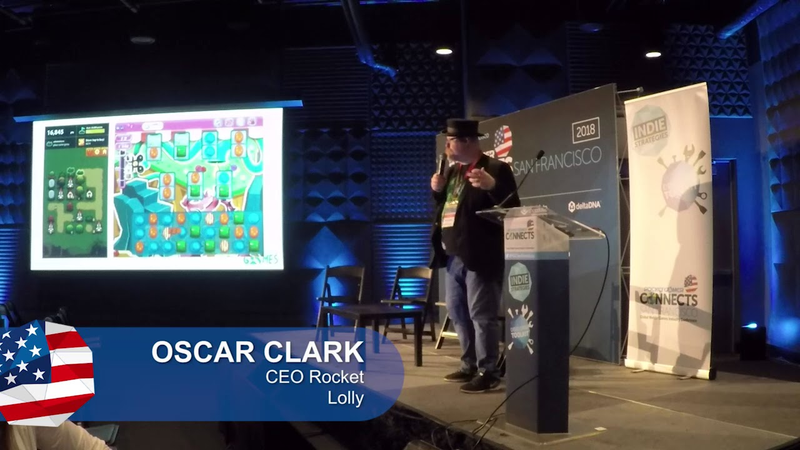
Success in the modern, saturated gaming market requires a fundamental shift away from derivative, nostalgia-driven design toward the creation of unique, emotionally resonant experiences.
- Success in a saturated market requires moving away from derivative, nostalgia-driven design toward unique, emotionally resonant experiences that draw inspiration from outside the gaming industry.
- Long-term player retention is achieved by respecting user agency through the removal of tedious onboarding and the inclusion of natural stopping points to prevent burnout.
- Post-launch engagement is driven by fostering a sense of social identity and community ownership rather than relying on coercive monetization strategies.
Influencer marketing – Easy ways to start receiving positive return on investment
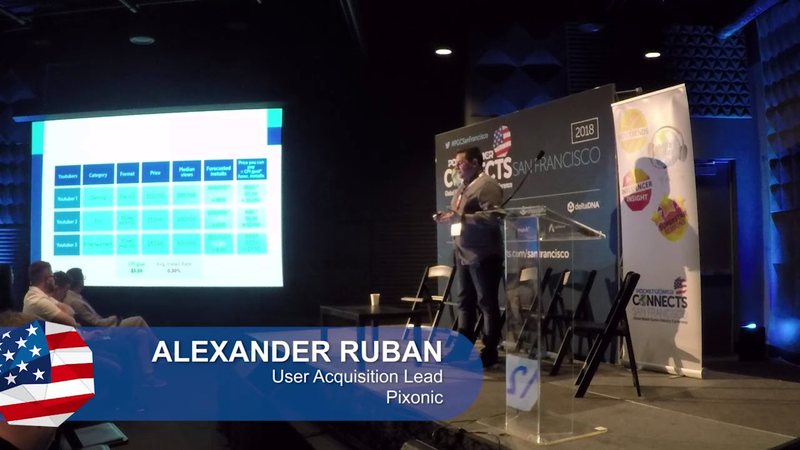
Influencer marketing serves as a critical, high-performing acquisition channel for mobile games, particularly as ad-blocking technologies limit the effectiveness of traditional display advertising.
- Transform influencer marketing into a predictable acquisition channel by using median view metrics rather than volatile individual video performance to forecast reach.
- Calculate affordable influencer partnership rates by multiplying median views by average conversion rates and target cost-per-install (CPI) goals before entering negotiations.
- Categorize influencers by genre and content type to identify high-performing segments, such as non-gaming or DIY channels, which often outperform traditional gaming influencers.

Data-driven optimisation for in-app purchases and gameplay
The primary objective of this presentation is to demonstrate how data-driven analytics tools can optimize in-app purchases (IAP) and player retention within mobile games.
- Lifetime value (LTV) is directly optimized by integrating automated analytics to improve both player retention and monetization.
- Unity IAP Promo increases conversion rates by using algorithmic targeting to surface relevant purchase opportunities during natural gameplay.
- Remote Settings allow developers to dynamically adjust game variables like difficulty and item distribution without requiring new application builds or engineering overhead.
The future of the mobile monetisation and user acquisition market
Mobile monetization and user acquisition are undergoing a fundamental shift toward prioritizing high-quality user experiences over aggressive, short-term tactics.
- Mobile monetization is shifting from aggressive, short-term tactics toward high-quality, authentic, and playable ad formats that prioritize long-term user engagement.
- Developers are diversifying distribution strategies beyond the traditional Facebook and Google duopoly by increasingly leveraging emerging platforms like Snapchat and Pinterest.
- Machine learning is automating targeting processes, allowing marketing teams to shift their focus toward creative strategy and rapid iteration cycles.

Free-to-play monetisation – Surviving past the loot box
The mobile gaming industry is currently undergoing a significant transition in monetization strategies, moving away from a heavy reliance on randomized loot boxes toward retention-focused models.
- The mobile gaming industry is shifting from randomized loot boxes toward retention-focused monetization models due to public backlash and increased regulatory scrutiny regarding gambling-like mechanics.
- Apple and Google have implemented mandatory disclosure requirements for virtual item drop rates, forcing developers to provide greater transparency to players.
- Battle passes have emerged as a primary revenue driver because they offer a clear value proposition and encourage long-term player engagement through predictable progression rather than chance.
AI that boosts in-app purchases and monetisation
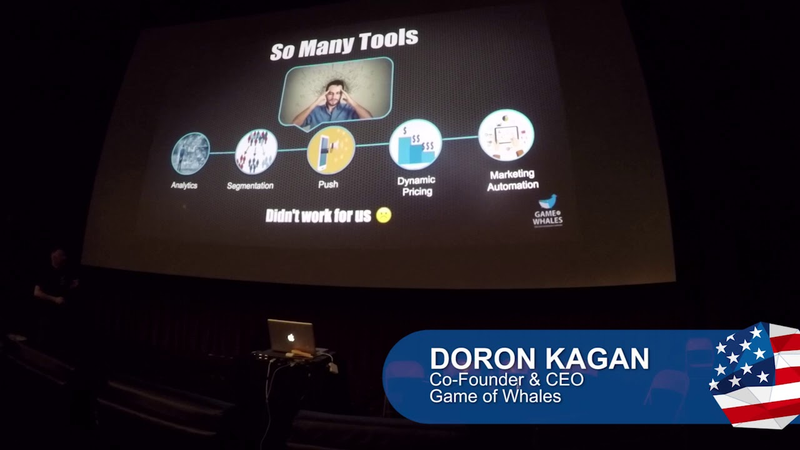
The primary challenge in mobile game monetization lies in the inefficiency of manual data analysis and static segmentation.
- Automated, AI-driven monetization systems can increase game revenue by 15% to 25% by optimizing individual player offers.
- Manual segmentation and static pricing are inefficient, often leading to player alienation or the devaluation of game economies through excessive currency distribution.
- Predictive machine learning models outperform reactive analytics by analyzing real-time player behavior, resource levels, and progression to determine the optimal next purchase.

Monetisation from the trenches – Lessons from the fight to maximise ad revenue
This panel discussion, held at Pocket Gamer Connects San Francisco 2018, features monetization experts from Zenjoy, Kongregate, and Sega Networks discussing strategies for maximizing mobile game ad revenue.
- Integrate advertising into the core game loop during the early development phase rather than treating it as an afterthought to ensure a balanced, data-driven monetization strategy.
- Prioritize rewarded video as the primary ad format due to its superior completion rates and positive user reception compared to other formats.
- Maintain a diversified ad strategy by utilizing interstitials and banners for non-paying users or specific game contexts to supplement rewarded video revenue.

GDPR – How to be compliant and what that means for your company
The General Data Protection Regulation (GDPR) serves as a comprehensive framework designed to protect the personal data of European Union citizens, regardless of their physical location or the nature of their interaction with a service.
- Non-compliance with GDPR carries severe financial penalties, reaching up to 20 million euros or 4% of a company’s total global annual turnover.
- GDPR applies to any entity handling the personal data of EU citizens, meaning companies incorporated outside the European Union are still legally obligated to comply.
- Personal data is defined broadly under the regulation to include any identifiers such as IP addresses, device IDs, and social identity markers.

Understanding the impact of header bidding solutions on mobile apps
The mobile advertising industry is undergoing a fundamental transition from traditional, inefficient waterfall monetization models toward unified header bidding and advanced bidding solutions.
- The mobile advertising industry is transitioning from inefficient waterfall models to unified header bidding to enable real-time, competitive auctions that maximize publisher revenue.
- Widespread adoption of unified bidding is currently hindered by the technical overhead of managing multiple SDKs and the need to maintain control over inventory and floor prices.
- Publishers are adopting a phased, risk-averse integration strategy to balance monetization efficiency with operational stability and revenue predictability.