1 free read left. Create a free account for unlimited reading + AI research.
Create free account
The future of the mobile monetisation and user acquisition market
Key insights
7 takeaways- 01Growing scrutiny regarding the psychological parallels between monetization mechanics and gambling is forcing developers to reevaluate the balance between profitability and user welfare.
- 02Successful monetization requires balancing creative excellence with rigorous data-driven optimization to ensure that rewarded video formats do not cannibalize in-game economies.
- 03Mobile monetization is shifting from aggressive, short-term tactics toward high-quality, authentic, and playable ad formats that prioritize long-term user engagement.
- 04Machine learning is automating targeting processes, allowing marketing teams to shift their focus toward creative strategy and rapid iteration cycles.
- 05Developers are diversifying distribution strategies beyond the traditional Facebook and Google duopoly by increasingly leveraging emerging platforms like Snapchat and Pinterest.
- 06The industry faces significant operational challenges due to a lack of standardized publisher-level reporting and data transparency, which complicates fraud prevention.
- 07Mainstream brands entering the mobile space often struggle to align traditional agency models with the performance-based metrics required for success in mobile ecosystems.
Ask AI about this video
Transcript
[Music] [Music]
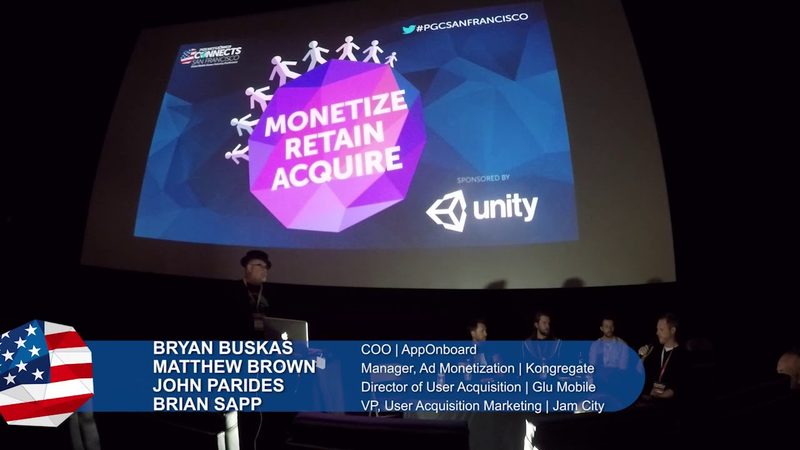
hi the names Cramer's the co-op our Lord I've spent the last eight years on the platform side previously and I call me part of the original team there and that opera media works more recently at a port which is an app demo platform that focuses kind of on user acquisition
and monetization as well as creative tools and developer insights and user behavior analytics so I come from the platform sides both sides and our goal is to try to make those things match as best as possible for the new people in the audience the manager of ad monetization at Carnegie we were mobile game publisher and a web platform and all sorts of other stuff but I mainly focus on in-app ad monetization for our titles hey I'm John Paradis I am the director of user acquisition at Glu Mobile so all my experiences on the buy side prior to Glu I was at DNA if anybody remembers that doing a reengagement marketing and doing a lot of analytic support for the user acquisition team hi I'm Brian SAP I oversee ua marketing at jam city so right now I'm solely focused
on the US side but prior to that I was at WB WB games where I oversaw UA Analytics and AdMob ization and I'm prior to that I was on the platform side at actually so very familiar with both sides or the apology for you in the game so I think the first thing off the top is really user experience you know being in a colony in early days we were one of the early pioneers and rewarded video whenever I said it was too expensive and would work for CGI it wouldn't work to find inventory we proved that it was great user experience and that's what led first on so having a great user experience was was really the most important piece we're seeing that today with playable ads I think initially in
the last few years they've been forced into rewarded video waterfalls and mediation that rely on certain technologies today you've got dedicated zones where you all you player demos all you do or try new apps which again is this new concept of rewarded demos again a good user experience driving some great results but everything comes back to a great user experience especially when you're working with the biggest biggest game developers in the world and some of the biggest properties early days of games in game a few OBO see your point of view you want the user that's how that you probably yeah you know user experience stuff more important you want to keep the users
happy with their experience in the game so you don't want to just be throwing ads at them at corrugate we are you know we are preferential towards reward a video or on ports in app demos and those are great you want to find you could place them for the game that has relatively high engagement you know if you have reward video poisoning but it's only only 15% of users are engaging with that placement something is something is going horribly wrong and so you know it touches on what I mentioned earlier is that you want to build your games with ads top of mind throughout the building process so it you know it should be involved in the court why do they care you might be the one
right yeah you need to give the user something decent value in order for them to want to watch the ad you know to sacrifice 30 seconds time playing the game to actually get something viable in the game of an again you don't want it to be too valuable you know on the cannibalizing IP so if you have pardons on currency one of our rules is never give away our currency for an ad watch because you know I'd watch this fractions of a cent and yeah but it has to be enticing enough to to make the no
we don't really care about the users experience the other application obviously but we do have to be mindful you know what is what are the different environments that people are experiencing these advertisements so in some environments you know a shorter video might be appropriate in some environments a longer one might work better so we really need to not just look at CPI but also keep in mind like what what are the CTR is in conversion rates that we're seeing on an ad to to get an idea of you know how would how are the ads actually behaving if you're if you're seeing a 1 percent conversion rate either means that there's some serious fraud going on in the channel or they the user is is for some reasoning reason being pushed to the app store and create great value for your brand even if it drives a few installs and on the on the playable side like those those things are incredibly hard to build incredibly labor-intensive but they need to be constantly iterated on and
optimized to make sure that you're providing a good experience - I wish I had an answer but unfortunately we don't have that visibility no Brian if you have different experiences now I'm I agree we don't get that level of visibility but I think from the you a perspective we're thinking about what where do we want to be in the game of course we want the user not to be upset anything for us it's like you know we're thinking about what creative is gonna get a huge I mean I'm thinking about what can we give the user the meaningful for them but then we're thinking about
what is gonna pull that user out of the game to install another game right and so for us it's all about creative we really focus in on what creatives working with what happens and then further to that we think about like the first impression like what can get us that first impression because we do see higher value with the first impression impression versus somewhere further down the waterfall which I'm sure you guys see and so for us you know that's us
well I think the level of creative has gone significant the last four or five years starting really with like mid course space so like obviously a lot of these games I'm talking with very hardcore game show gameplay so they had to invest in CG right and so CG became more prevalent in UAS and now what you're seeing is the move for CG into more casual aiming so both with like the puzzle a lot of things but then also more live-action so I feel like to some extent like more brand creative is being implemented into you a creative at the end of the day you still want stuff that's gonna make people clicking convert right but I think the days of you know putting in something that is a literally clickbait is going away because especially with most of the platforms moving Tilly and they're not long-term sustainable
right so marketing is getting more important it's about making those two sides and hatch rights on one side it's
it's the conversion and the click-through rates and engagement on the other side the CPM and user experience I think one thing that ties to kind of on the creative side is with these kind of high value kind of playable or these demos you have today we've actually seen that we produce labels that have hundreds of thousands of outcomes so there is a high degree of replayability in the ad itself that people will actually choose to keep engaging with that accurate we're talking like 45 seconds 60 seconds even minutes of time sent in an actual accurate I think you know with things like Google Instant apps and the Play Store now launching demos on the App Store and Google announcing last week that they can run these now across all UAC kind of inventory you're gonna see this more and more that greater it's going to be really important but if you're given you're gonna need to make these metrics match right so you know you don't want somebody spending hours inside you had right there they're supposed to be in this game you know monetizing being
engaged there but you do want to have you know powerful creative at the other day it really comes down to just return on the hats and very like most of these campaigns are open-ended budgets are very very large that's out of twenty billion dollar global market for app installs heavily driven high rewarded video and playable and on down but it's a huge market where they're able to make these things need but ultimately it comes down to you need to be monetizing you to these new installs that comes in and that's where you know video labels and some of the higher formats perform these days yeah obviously eCPM asthma I mean so revenue is obviously one right and you get there with eCPM requests impressions engagement rate which I touched on earlier we find that an ideally engagement rate is above forty
percent and it generally caps out around seventy percent also impressions per daily engaged user we find that the sweet spot is between four and eight or nine if you get above that really no value coming from the 911 impression some people are gonna watch 17 ads in the game so those are the big ones that it's optimizing and trying to find which placements you know have higher engagement rate and how many impressions users are watching in that particular point spent often we've launched in test markets with four or five different ad placements and monitor their monitor each of them you know looking at engagement rating impressions per for that specific placement and then kind of take the ones away that aren't working yeah that's perception that are
different networks you know a good sessions as it could be X number of hours so for example and source what set sessions as a four-hour window and and sometimes they have caps in place where they will only serve you know two ads per session but they all serve four as per user for 24 hours and so it does change which networks are serving in at what sepia yeah I mean basically the same I think Brian actually probably covered this tree thoroughly but at the end of the day row as is still the key metric we're looking to return the money we're spending or else we wouldn't get anymore budget but obviously that that tells you how things are doing but not lie so drilling down into the CTR conversion
rate what the eCPM is on the placements that you're buying are that really tells you what you should do next and that's that's really important yeah of course so drilling down into the King the different campaigns are running and then down into the ads that I'll tell you where to build the next creative what sort of creative it should be and that'll help you move your business forward maybe it's a good question so you can I
think waste a lot of time doing that kind of stuff changing buttons changing your text simple things like that and forget about the things that are really going to change your performance which is actually making ads that say different things about the game or or presented in a different way tell users why this game is going to make their lives better I think it's something that brand marketing professionals figured out like 30 years ago that you shouldn't tell people about a product but tell people why if they use your product you'll be happier and your friends will be happier people will love you more some of its kind of BS but those are the things that will actually move the needle
I think it's a little bit of both meaning we as the industry I think kind of follow the leaders and if you look at like what the industry is doing sometimes looks like six-year-olds playing soccer and they're all chasing them all right and so you know you a teams I think we'll be looking at creatives that their competitors are doing and we'll copy them and it makes sense because we're all performance marketers and we're looking at that more like if they're spending in scale doing that then we should probably do that too and so everybody will test what the other people are doing with respect to creative but then I think we get stuck in a box and no one kind of moves out of it we don't get any like massive step
function lips yeah yeah like literally every night Portland right yeah like they copy what everybody else is doing but you know I think there is more energy being put into brand and it's starting to happen it's slow but it's definitely starting to happen and I'm kind of excited to see where it goes you know creative for me the priority and we put a lot of resources into it and branching out from kind of what everybody else is doing although you still have to test that stuff because down a day like whatever is working is what you have to go in but you still need to put in like enough time to test different concepts similar java saying you know what idea or concept is gonna sell this game and then which concepts gonna sell to the specific audience so I think with machine learning actually with Google and Facebook it frees up more time for us to focus on creative and I think that's kind of where the
industry's headed more around strategy and creative from that serving side like clearly like machine learning science like this all plays into constant innovation every day or the hour and the investments you put there with PhDs throw bodies and brain power and you know prove algorithms and targeting there on the other hand kind of where'd you see you know innovation to do your last question is also like on gap source I think you know it was only a couple years ago Apple attic video - like the app store pages Google last week just
took out in snaps to put kind of playable ads on em O's on the app store you see these kind of new experience or ways to to try apps before you I do demo things before you download but part of that's because like the size of these axes we have some apps to give the lights in size three gigabytes in size you're trying to ask a user like will you delete half the photos on your phone to play my game and literally so I think you know we're seeing innovation on the data side we're saying it kind of on the distribution side across the board ya know I think part of the challenge with you know I
three years ago playable ads kind of first came on the scene and they're they're built in HTML and JavaScript and they took like 45 to 60 days to build one app right from scratch it approved licensed ORS all sorts of things like you can't you can't iterate on this you can't really be test that's part of where we developed a solution in a pond or two to do this like in seven days so we cut that I like 80% that we can actually iterate and create real experiences much faster to demo things to try things so it's kind of innovation in the creative side of how you create these things to do it much faster and attention I think we're still seeing
people in a very good fit relatively steady I think I've on board does a really nice job with their inept demos like baseball I am Jordan I'm down I want to play cupid again just kind of Tooting upon boards horn over here I mean they take gameplay straight from the game itself whereas you know machines own whoa throw like a tower defense that's I'm a game at all and I think you know we did see fatigue with that because they were spending so much and they were everywhere and everybody is pointing the same tower defense game a million times well thank the first time I was like oh that's cool but now
we haven't seen fatigue yet I wouldn't be surprised we do at some point this is you know it's still a smaller part of the market video is obviously still came and you know maybe we'll see that in the next year or two but we haven't seen it yet to Matthews point yeah I think we
can probably ruin this by basically lying to people about what the games were selling are the playable we've done so far are pretty true to the games either a direct recreation or maybe a slight simplification to make it you know more accessible in an ad format since some of our games are pretty complicated and might not be appropriate for someone who's never gone through a tutorial yet but you know this this format is still working very well I mean I would say playable is the biggest innovation right now there are obviously other big opportunities in you way right now but more things like players like snapchat interests our name to catch up with Facebook in terms of their targeting technology as well as
traditional growing in that regard but in terms of we haven't seen that yet but that's not to say that volume we see on messenger knows other kind of messenger s you know I think the innovations aren't playable even within playable you're seeing it like for us for example on board which is more actual team the
other playable as we've built we've seen like secondary goals being like very key of driving conversion and not playable so in effect like these are many games and these minigames have been evolving very quickly you know I think further to John's point like there are a big opportunity with the platforms that have a lot of data but I haven't had the ad tech ketchup which to me is Twitter's now finally edging of interest as you mentioned snapchat I mean these are huge huge platforms and they weren't necessarily built with performance marketers in mind like Facebook was I would even say Google's catching up they caught up very quickly in the last two years but those platforms have a lot of opportunity probably have a lot of performance marketing money for them once the targeting gets better and better which
how do we make sure we have it yeah I think transparency from the beginning I remember like six seven years ago we had like industry groups like the mobile acquisition transparency Alliance groups to try to work together on transparency is bad bad things like profit from is a major problem I think you know for every you every network platform I've worked at is always trying to fully transparent down to be a publisher of the app a placement of IDs the zone that created you know one thing that's there's you know with the innovations in the exact units table see we actually had a case a few months ago or we had a publisher with our SDK running our play bowls and we would see these crazy conversion
rates we would see lots of lots of clicks and lots of conversion rates and when we went to pull up so we collect every tap every interaction user behavior in that hat because we are an SDK today solution we found that like those patterns were irregular or there weren't any apps on the screen we were able to turn that off very very fast there is a lot of given the market has grown over the last years there's a lot of products parents these key that but I think it's one in the first step there's lots of new innovation you know with with tools that are helping us you know stamp out some of the fraud the quick injection with things like that not really as long as the ad is doing what it's supposed to it began for the user then
yes oh yeah I leave with a mediation part from the lawyers gonna be some Delta they collect their own you know the revenue come straight from the network API in a the mediation platform they calculate surround impressions on my Calcutta CPM based on that everybody kind of counts and impressions differently so there's going to be a three to five percent difference but I mean it's a huge issue for us everybody that we work with are very well established you know one is you could be that somebody one ad network has a bad
came running were to reach out to everybody yeah I mean most of networks when you set up for the game you can basically
check a box that says don't show put your ads or ads for trade or movies or whatnot sometimes I do go through the cracks I think you know that networks would have to comment but I think some of it it's it's manually blocking specific campaigns we have had our largest at the venture capitalists I remember there were a bunch of Walking Dead ads I'm showing it and people would get upset and it was actually flagged by the App Store in it so became you know I think we just had to really rely on the ad networks to to block these actually yeah it's a huge issue
obviously we work with some networks that are fully transparent and some that are not but at this point in the industry I don't think that's acceptable anymore and I think the the change that needs to happen is only gonna come about if people like Brian and I make an ultimatum and say you know if if your network is not fully transparent within a certain period of time then that's it and it is a serious issue seeing IDs and hatches instead of instead of package names or web URLs it opens the door for networks to provide multiple publisher IDs for a single publisher it makes it impossible to actually prevent fraud over any period of time and it means that the the
industry is just completely opaque I don't think that prevents networks from rotating information on the bubble shows on the network card all of that is user level VDP are slows down I think you shouldn't work with those people GE PR definitely slowed down everything I'm sure a lot of people in this room are spending the next couple of weeks with legal paperwork but that shouldn't slow down our efforts to make sure that the the fraudulent networks on or across Yulin publishers in the industry are prevented from getting paid out well made fraud is
definitely an issue we want to call that transparency I don't know but we do see quite a bit of it and it's basically right so like he's build tools to capture it literally within like a month there's something else go away I think yeah I think right you
know this is kind of measuring this based on like CPM costs right so costs are going up without a doubt and that's because of better targeting an optimization but at the same time more advertisers with diving and so like like this weekend alone I got hit with so many Deadpool tool and you know Marvel is really jumping in right and they've done a really good job going after like Millennials on the platforms are on and traditionally these were the platforms that the games kind of exclusive control over and that's just going away everybody because they can they're not even buying on a per user cost right they're buying high balls and
they can pay a lot more and you're going up the same demo in some respects well it's funny I think it's I think receive entertainment come in I think more the mainstream brands are sitting on the sidelines because they're CMOS don't understand it to be honest like I listen to these quotes that they give and they're like you know our video time view time on Facebook was only seven seconds that's awful and I'm like well from performance marketers longer than that it's probably bad right and so like they don't quite understand these platforms and how they you're basically trying to grab people's attention and make them convert on something very quickly so I think like as those $1 we moving to
yeah no I think you've seen him emerge you've seen in this head of these like we just call them explorable ads or horrible video where it could be kind of choose-your-own-adventure it could be you know a 15-second movie trailer for her Deadpool 2 or whatever right that you give it at sea for now two different avenues different chapters different items engaged with it so they're more like interactive idea would say and labels like where that line you know converts it's a bit blurry but you are see brands come in with with pretty interactive experiences I'm based in Los Angeles so yes a lot of entertainment entertainment automotive and I'd say qsr are these are guys who really believe in TV to have brands they remember generations love or they're really trying to reach those generations and those audiences so there are some of the first movers they've been you know experimenting with mobile the last you know five six years in the last couple
of years I'd say they they've got much more aggressive oh yeah and I I think the formats there I think it's part of the agency model that's broken we're working with Brandon and created with a brand and any agency can take six months three to six months of approvals a iteration to make it in a box right versus in performance we can we can have something out in a couple days and haven't have you know different a/b tests and let the data tell us what works and what doesn't so it's part of it I think the Brandon agency model that's broken preventing some of us but that is changing as these agencies evolve and become more digital and more performance based so the animal waiting detect remember back to me yeah actually
when we were working it was brand that's fine but your friend is basically always running with exception of there is few CPE campaigns they're running on a CPM so they're not going to you know it's going to be $10 CPM whether that's for the first impression or the tenth so they're gonna be further down the waterfall brands still aren't blamed you know they're not willing to pay CPM through CPI's to acquire users they just want somebody to the an amazing
from your view from from the player watching and it depends on the user and you know what they care about me you know 99% of our ads are games because we are operating a game right and but you know every every cue forever it is like though this is the cue for corporations to watch I put a million dollars and I understand that on Facebook and
Instagram it's it's different but for us you know I'll see a couple of Verizon ads and that's about it and it's it's really not a big factor Preston I guarantee you this 2018 q4 is this is the one and everybody's coming in Grant dollars really never materializes if it does great then I can you know maybe go direct to an agency and say hey you know if you know our CPM and I could swap them in 6 7 8 for 15 second ad that would be great for me it is just another person telling you that and actually so we we release our tap sports baseball game every year it's an annual title I actually looked recently and we haven't really seen growth in CPI on that game year-over-year at least not
substantially so at least just by that measure we haven't seen substantial competition from grants we know it's happening to a certain extent and we definitely see it happening in December but I think to a certain extent there's there's a certain limitation here to Brian's point like brands are scared of seeing that you know someone only watched seven seconds of a mad but part of that and we think of that where it's like oh these old people they like don't know how to do performance marketing but that's the metric that they're interested in like Charmin is not looking for an install they're trying to capture action so that when they're at the grocery store that's what they remember and you can't remember that if you only watch the ED for seven seconds so like entertainment yeah that's something's going to keep moving into this space but like a consumer consumable goods like they there's really no reason for them to
expand into the space because it doesn't work the way that they wanted to like header bidding excuse me like
header bidding no I'm probably nothing well I think you the connected people who have tried to do that
resolution which is a very very time in equation which is our colleges so Pamphylia Deepak details there is to me a very different behavior or payoff which is a wider conversation of why gambling addiction seems to me [Applause] [Music]
[Music]
Summary
Mobile monetization and user acquisition are undergoing a fundamental shift toward prioritizing high-quality user experiences over aggressive, short-term tactics. The industry is moving away from misleading advertising toward authentic, playable formats that drive engagement without alienating players. Long-term sustainability now depends on balancing creative excellence with rigorous data-driven optimization, ensuring that monetization strategies like rewarded video do not cannibalize in-game economies. While return on ad spend remains the primary performance metric, successful developers are increasingly focusing on high-level brand messaging and diversifying their distribution beyond the traditional Facebook and Google duopoly by leveraging emerging platforms like Snapchat and Pinterest.
Technological advancements, particularly in machine learning, are automating targeting processes, allowing marketers to shift their focus toward creative strategy and rapid iteration. Despite these gains, the industry faces persistent challenges regarding data transparency and the lack of standardized publisher-level reporting, which complicates fraud prevention efforts. Furthermore, a disconnect remains between mainstream brands entering the mobile space and the performance-based metrics required for success, as traditional agency models often fail to align with the unique demands of mobile ecosystems.
The landscape is further complicated by the adoption of complex, high-stakes bidding models that necessitate sophisticated technical integration. As these monetization strategies become more aggressive, the industry is increasingly forced to confront the ethical implications of its practices. There is growing scrutiny regarding the psychological parallels between certain monetization mechanics and gambling addiction, prompting a necessary reevaluation of how developers balance profitability with user welfare. Ultimately, the future of the mobile market rests on the ability to harmonize technical sophistication with a commitment to transparent, user-centric engagement.


















Comments