1 free read left. Create a free account for unlimited reading + AI research.
Create free account
AI that boosts in-app purchases and monetisation
Key insights
7 takeaways- 01Predictive machine learning models outperform reactive analytics by analyzing real-time player behavior, resource levels, and progression to determine the optimal next purchase.
- 02Manual segmentation and static pricing are inefficient, often leading to player alienation or the devaluation of game economies through excessive currency distribution.
- 03Effective monetization systems must be self-driving to manage thousands of behavioral segments and adapt to frequent game updates, a scale impossible for human teams to maintain.
- 04Using 'walled garden' control groups allows developers to isolate and precisely measure the incremental revenue impact of AI interventions against external factors like organic user acquisition.
- 05Automated, AI-driven monetization systems can increase game revenue by 15% to 25% by optimizing individual player offers.
- 06Performance-based pricing models, where service providers take a percentage of incremental revenue, allow developers to implement AI monetization tools with minimal financial risk.
- 07Real-time intervention is critical for retention, as approximately 50% of a game's daily active user base does not return the following day.
Ask AI about this video
Transcript
[Music] [Music] it was we realized our business meaning
that in the beginning after each number which
is one digit number in most cases today would not play more every day goes like that so this is the numbers which we were looking at the other fact we were looking at the size of the opportunity so in an ideal world where we can convert everybody and nobody would share we would have 98 times the revenues that we used when that were great at the time so we said okay how do we get these numbers analytics everybody are using
anything we use it in order to improve our game we use it in order to build better games and music understand the users so and you try to get sense of what you get from the users at that time you had like seven eight hundred thousand any active users that's a lot of data and what we learned is that if you do don't be fine the data point in the right way and you don't get the result and then you need to wait the cycle of an update and get in the resource cetera so we create some analytics company to power our company and help us put it in the right way long story short few months of work ended up with okay we understand better but it didn't really change the KPI so we moved on to signal patience there are many companies that are offering
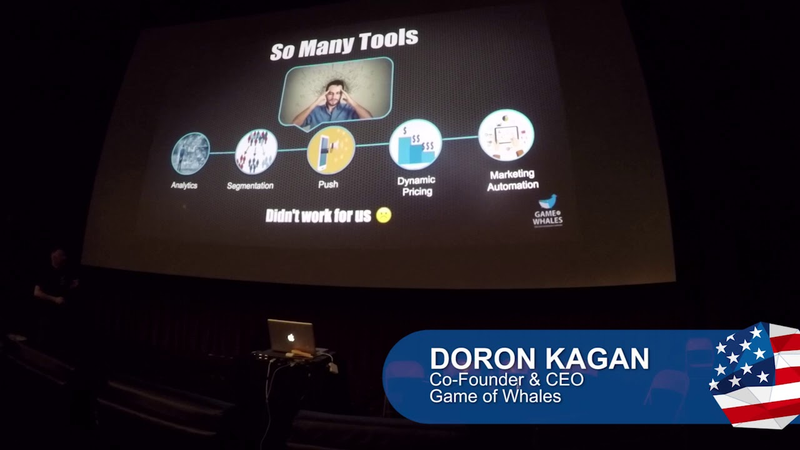
segmentation based on many codes many ideas but again the action points really didn't change the middle or the KPI because the segmentation didn't sleep with the system that should attract the game in improving the game itself which is great goes back to ten years ago but it's still great but the user get a lot of push notification and you need to be really creative and we moved on to dynamic pricing and we got a lot of heat and anger from the users that started to compare prices over the social networks and we tried marketing automation which looked great in the beginning so all the
users both dog and the special offers in so spike himself in a purchase went up to the room but then after two weeks we had what we call hangover because they had too many coins they didn't know what to do with it and we were punished in more than what we got in the first rest with so what is the so we we send updates to
the game at least every four to six weeks sometimes it changed the game economics dramatically so the system that's new something came yesterday should adapt to something new and work with it we need to seek them to be real-time because of the 50% the users that are seeing the game today would not see it tomorrow so if we don't see the information in Rita and we don't have the ability to react in me and we want it to be a self-driving button which what was the hardest challenge we don't want to hire more people we don't want to hire data scientists we don't want to hire
marketing people we ought to play games we want the system to use the data automatically in order to improve our and the last thing that was the bonus question was we were really suffering in the meetings around data it was the punishment of anything get out really said with some kind of plan that might work and might not work and see you next week so we said we are leaking fun as a game developer how can we create a b2b system around data to be fun something that you are seeing and actually enjoy so that's the first example of whatever and LTV is very a big buzzword in the industry but it's so simple a group of users to track them according
to their life hats and to get the number and you don't get it look at any of the developer console so the first thing we've done we run system that can segment by pamphlet instead member type of user can segment like this we just drop the users through there and then we said we want to see the real time in action so every time somebody buys something within the game we want to see and we ought to see who the user is and we won't let each ink or something even nicer if it's a big in aperture and then something amazing happened because we were trying to once we put this on the big screen with speakers in the room and they kept her in Cheney and all kinds of different sound effect when there was the quite
almost a few minutes and that was the first time that we saw good reaction from the developers to something like this so what do we see we see every time you buy something we see bring a purchase what Glamorgan electricity's for the specific user what country comes from what platform the smoke measures are what kind of user is a fish how long have you been playing et cetera and we see the main KPI again nobody needs to calculate just in front of you instead our computers in the conversion rate in the outdoor and it's all compared to the right benchmark automatically so if it's Monday it will compare to the previous Mondays if the previous country was holiday you can take it out automatically so and this small window is basically the secret sauce so we have AI automation
for everything what the system is doing what we did for ourselves and now rolling out is basically a system that looks at the data the game analyze the users behavior it each based on this behavior in start interacting with the users with and then checks the results of this introduction to the control room you have a control group which is a world garden of the users manually and not by a I machine and this basically removes any external effect because anything on effect like featuring by Apple and Google an update use blue user position will affect both groups at the same level so this is a clean contribution of the game of course platform to the game because it compares
after normalizing or the numbers of the control group to the campaign so this is how it looks more or less so this is a user so you grab the previous one we see a lot of user you can click on a user get to the user card on the CRM see the history of the in-app purchases that there are two buttons at the top push and offer when you create special if you clip cushion just and sending a message to look like this you will get it from within the game and if you send special offer you basically choose one of the SKUs of the game you defined so many times what's the time frame it would be redeemable so this special offer is only for 20 minutes 24 anything will do send
it with the push of just inside the gate and this is example how it looks in the game so this year package we had 20% more years so the user will go to the store would see a badge or special offer for years revising but as I said the most important thing about the cocoon is the automation this is the revolution because in a game like our day trial extreme we have 1400 segments which is unthinkable when we try to do it manually in the days between damn it manually we had 25 segments that it was hard to manage manually 1400 is based on behavior because what the system three is trying to predict what's the nesting for this user and is it the last session of the user because preventing churn is one of the biggest advantage that we have at the
rates and platform analyzing the resources that the user head analyzing what is the next item that behavior looks like because I know exactly what is the game machinery is not just an all-around fun yet more point forget the discomfort around point is trying to understand the level of resources the user have the progression in the game so what is he up to what if the next item the dis user needs if he needs a golden sword and you have 1,000 coins and the golden sword bones cause and of the coil the system will even become of 80% if you want I would not tell you what to do but be aware
now we can finish it with five dollars and still stay with ones so that's a conversion method one of them there are many others but this is how the system after the good services cost a lot of
money or developers that have a lot of monthly active users because usually the charge model is according to monthly active users we approach it in a different way and we send we are a premium service so take it implemented compare the results and then when the results are good for you we take a card from the increases we contribute to the game if not just take it off and this is the results that we're seeing so far the conversion rates seventy retention and with revenues between fifteen to twenty five percent and that's more or less
[Applause] [Music] [Music]
Summary
The primary challenge in mobile game monetization lies in the inefficiency of manual data analysis and static segmentation. Developers often struggle to convert non-paying users into spenders, frequently relying on blunt tools like generic push notifications or aggressive dynamic pricing that can alienate players. The core thesis is that an automated, AI-driven approach to player segmentation and real-time interaction can significantly improve key performance indicators (KPIs) like conversion rates and retention without requiring additional human resources or data scientists.
Effective monetization requires a system that operates in real-time, as approximately 50% of a game's daily active user base may not return the following day. Traditional analytics often fail because they are reactive rather than predictive, and manual marketing automation can lead to "hangovers," where players are flooded with currency, ultimately devaluing the game economy. An ideal solution must be self-driving, capable of adapting to frequent game updates, and able to manage thousands of behavioral segments—a task impossible for human teams to perform manually.
The proposed solution utilizes machine learning to analyze player behavior, resource levels, and game progression to predict the next optimal item or offer for each individual. By creating a "walled garden" control group, the system isolates the impact of AI-driven interventions from external factors like platform featuring or organic user acquisition. This allows for precise measurement of incremental revenue. By shifting from a flat monthly fee model to a performance-based pricing structure—where the service provider only takes a cut of the revenue increases generated—developers can mitigate risk. Implementation of these automated, behavior-based systems has demonstrated notable improvements, with reported gains in conversion rates and retention, alongside revenue increases ranging from 15% to 25%.






















Comments