Mobile reports and market data
Documents
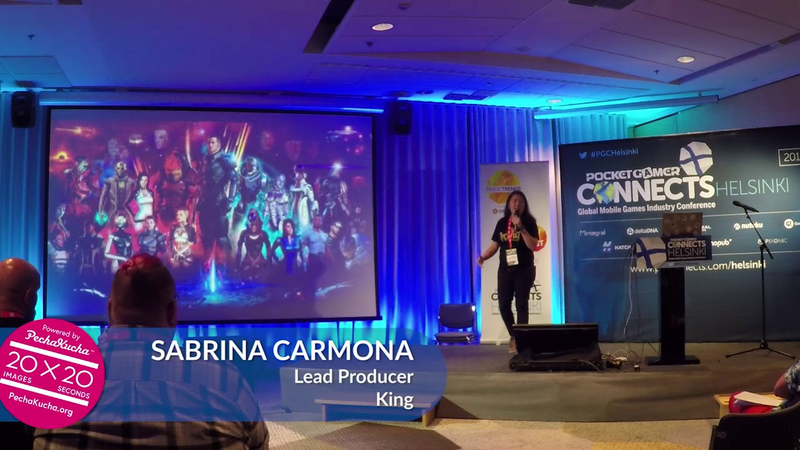
PGC Helsinki 2018 Pecha Kucha sessions: King's Sabrina Carmona
The integration of diversity into character design serves as a critical responsibility for modern game developers, as the global reach of mobile and digital gaming necessitates broader representation.
- Modern game developers have a responsibility to move beyond the industry-standard 'white, male, and able-bodied' protagonist model to better reflect the global mobile gaming audience.
- Character design must intentionally challenge traditional tropes, such as the over-sexualization of women, the portrayal of elderly characters as villains, and the use of gendered color palettes.
- Developers should evaluate whether specific design choices serve a legitimate narrative purpose or if they are merely reinforcing outdated biases.
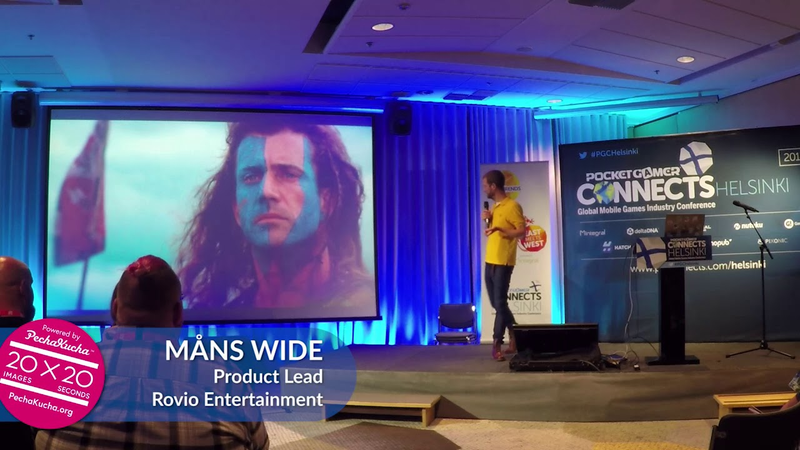
PGC Helsinki 2018 Pecha Kucha sessions: Rovio's Måns Wide
The modern mobile games industry often forces developers to reconcile the idealistic pursuit of creative passion with the pragmatic necessity of monetization.
- Developers must bridge the disconnect between data-driven monetization strategies and the emotional resonance that originally inspired their game design.
- Treating players as mere revenue streams or statistics leads to the dehumanization of the user base, which undermines long-term creative engagement.
- Integrating direct feedback and personal narratives from support staff can transform anonymous high-value players into relatable individuals with specific motivations.
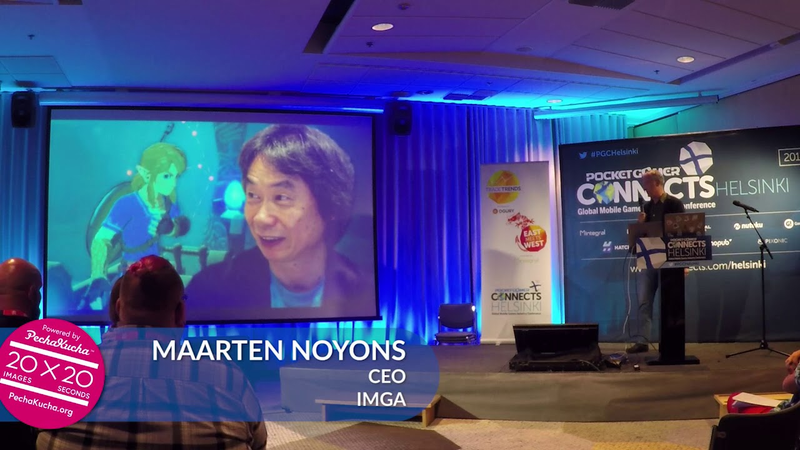
PGC Helsinki 2018 Pecha Kucha sessions: IMGA's Maarten Noyons
The concept of legacy serves as the central theme, exploring how individuals across various industries—from technology and gaming to politics—shape the burdens or inspirations they leave for subsequent generations.
- Legacy is defined by the tension between a creator's intended professional milestones and the evolving, often contradictory, public judgment of their actions over time.
- The gaming industry creates enduring cultural touchstones, such as the development of Snake in Finland and The Legend of Zelda, which serve as positive foundations for future innovation.
- Professional legacies can act as either a source of inspiration or a burdensome weight that successors must navigate or dismantle.
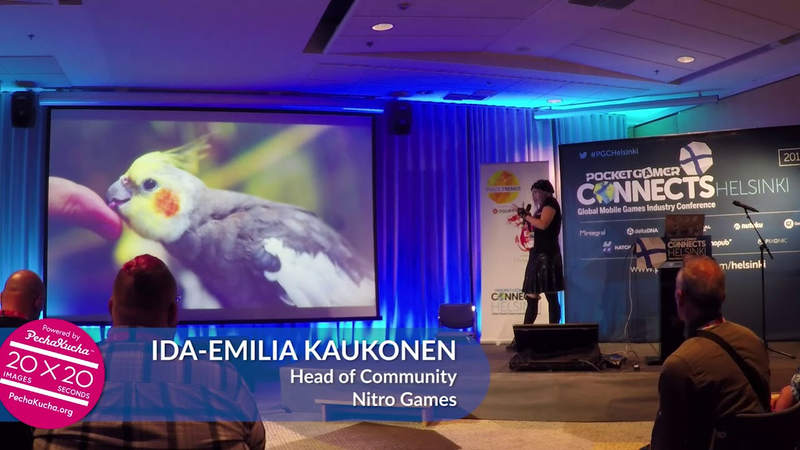
PGC Helsinki 2018 Pecha Kucha sessions: Nitro Games' Ida-Emilia Kaukonen
Effective community management in the gaming industry requires a proactive approach to crisis prevention, user retention, and boundary setting, mirroring the complexities of caring for exotic pets like parrots.
- Prioritizing the retention of an existing community is significantly more cost-effective than the high expense of user acquisition.
- Silence from a community is a more dangerous indicator of decline than vocal frustration, as anger suggests active engagement while silence signals apathy.
- Community managers must act as a protective buffer to shield development teams from user grievances, ensuring that actionable feedback is prioritized over superficial aesthetic updates.
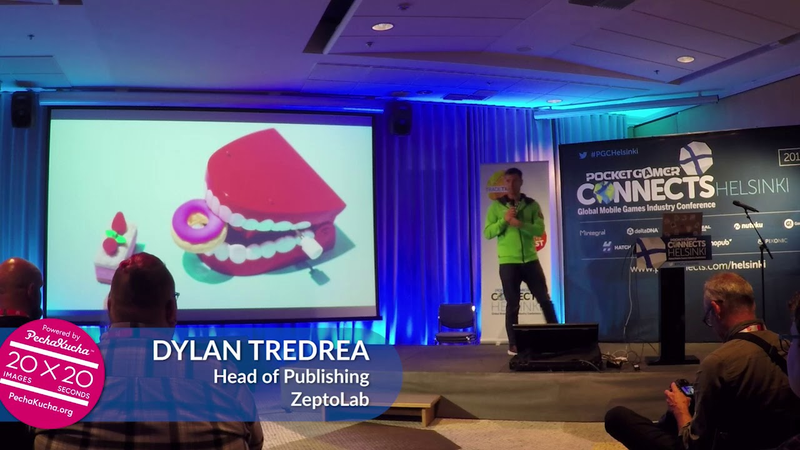
PGC Helsinki 2018 Pecha Kucha sessions: ZeptoLab's Dylan Tredrea
Revenue projections in the mobile game industry serve as essential strategic tools rather than mere exercises in fiction.
- Revenue projections are strategic tools for deconstructing game variables and quantifying risk rather than precise financial predictions.
- Transparency regarding knowns and unknowns in projections builds trust with publishers and investors, serving as a vital sales document to justify internal investment.
- Effective models should prioritize simplicity by focusing on core metrics like daily active users (DAU) and average revenue per user (ARPU) rather than complex decay or retention functions.

How does Badland Brawl monetize?
Badland Brawl, developed by Frogmind, utilizes a standard free-to-play mobile monetization model centered on a character-based card deck system.
- Badland Brawl utilizes a dual-currency economy where soft currency (gold) is the primary bottleneck for unit upgrades, while hard currency (gems) is used to accelerate time-gated progression.
- Progression is gated by time-based egg-opening mechanics, which incentivize players to spend gems to bypass wait times or use incentivized video ads to speed up enhancement.
- The game features a rotating daily shop that allows players to purchase specific character shards directly, creating a secondary pressure point for gem spending.
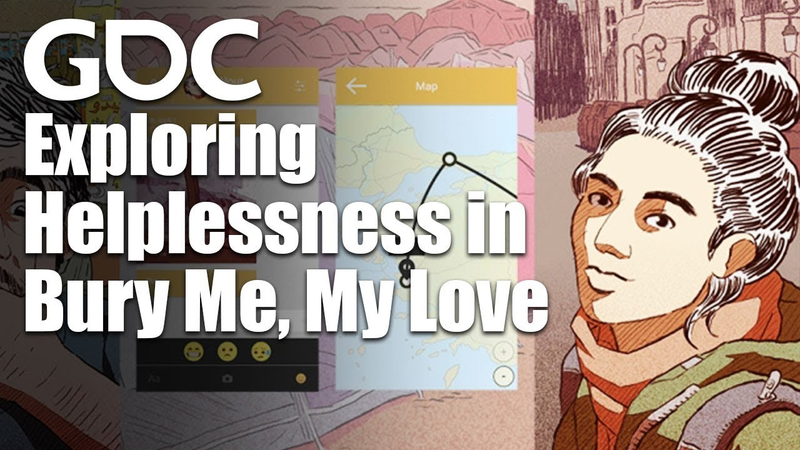
Exploring Helplessness in Games with Bury Me, My Love
Bury Me, My Love functions as a deliberate subversion of traditional game design by prioritizing emotional resonance over player agency.
- Bury Me, My Love subverts traditional game design by prioritizing emotional resonance over player agency, deliberately stripping away the illusion of mastery to mirror the migrant experience.
- The game simulates the helplessness of long-distance communication during humanitarian crises by forcing players into the role of a passive observer who must navigate unpredictable character availability.
- Mechanics such as real-time waiting periods and the omission of save points are used to maintain a state of constant uncertainty and anxiety for the player.
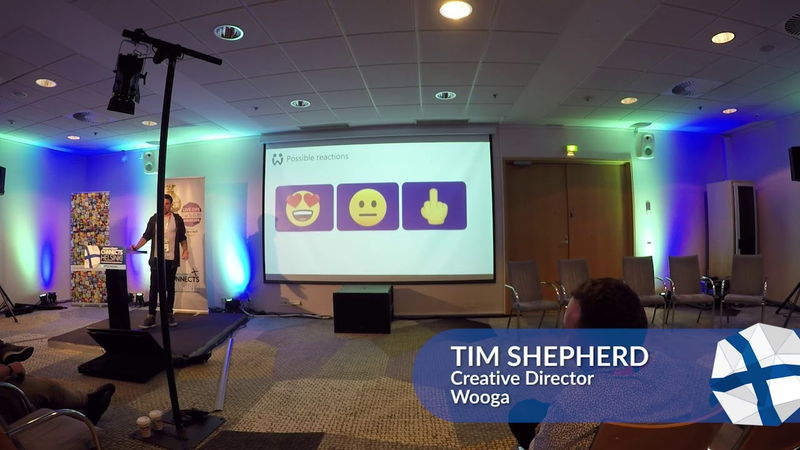
Live operations: Bringing a seven-year-old game back to life
The revitalization of the seven-year-old mobile title Diamond Dash serves as a case study in re-evaluating product positioning and audience psychographics to extend a game's lifecycle.
- The revitalization of the 2011 mobile title Diamond Dash demonstrated that declining performance often stems from a misalignment between developer perception and actual player motivations rather than a lack of inherent product value.
- Research identified a critical shift in the core audience from casual explorers to highly competitive players, necessitating a pivot to a 'casual-competitive' framework to unlock new engagement and monetization opportunities.
- Technical modernization, including a migration to a unified codebase and the integration of rewarded advertising, was essential to validating the game's business model and increasing lifetime value.
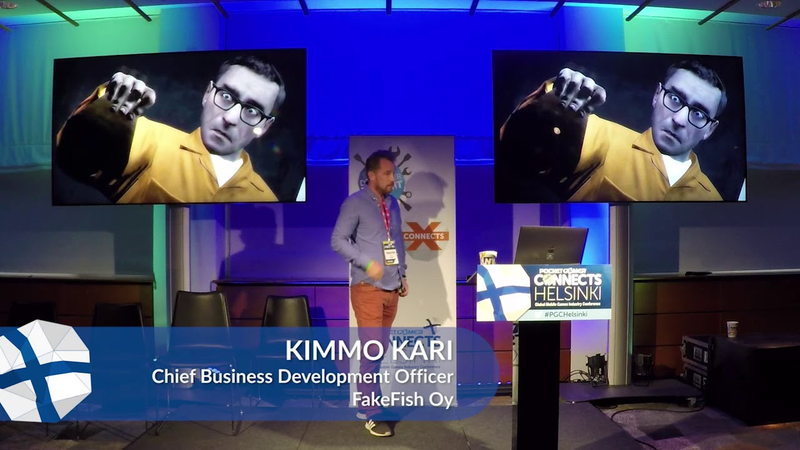
Community-based games development
Community-based game development leverages the power of internet tribalism to foster collaborative, high-engagement projects.
- Community-based development leverages existing niche lore, such as the SCP Foundation, to secure a built-in audience and reduce reliance on traditional marketing.
- Projects utilizing community collaboration can achieve significant scale, evidenced by an SCP-based game reaching over 10 million downloads without traditional advertising.
- Open-development models can drive high engagement even in early stages, as seen with a submarine simulation game on Europa that garnered 100,000 downloads while still in open alpha.
Game design for incentivising players
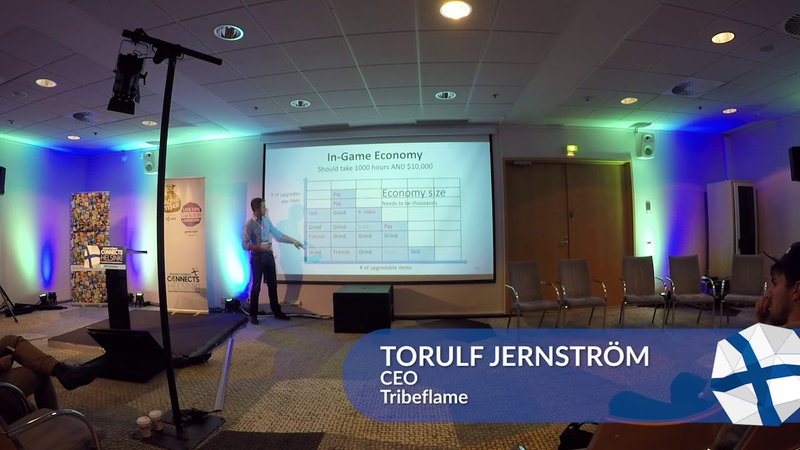
Effective game design in the free-to-play mobile sector requires a holistic approach where every feature serves a specific incentive, such as increasing session frequency, extending play duration, or strengthening the in-game economy.
- Game design must prioritize a unified, expansive in-game economy where every feature—from progression paths to social systems—directly drives player engagement and monetization.
- Developers should implement a '10% rule' to provide granular, frequent upgrades that maintain player interest and depth over thousands of hours of gameplay.
- Monetization strategies must balance the needs of 'grinders' who invest time and 'whales' who invest capital by allowing purchases to bypass time-intensive progression without sacrificing competitive fairness.
How Nvizzio increased day 30 retention by 50% with Unity's LiveTune
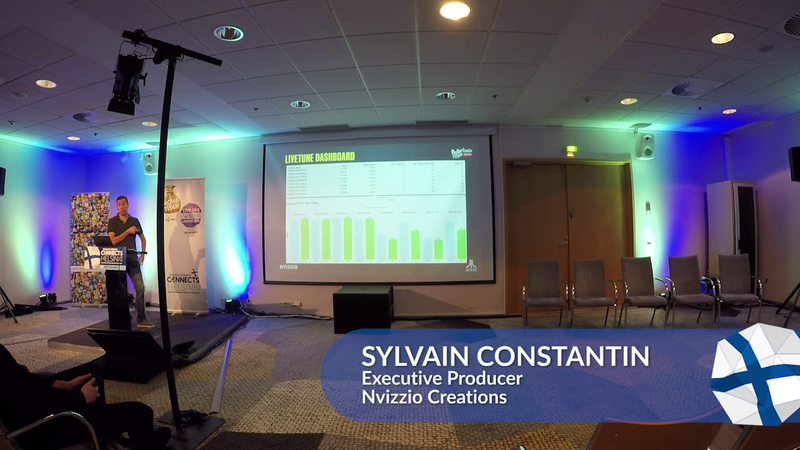
The mobile game developer Nvizzio Creations, led by executive producer Sylvain Constantin, utilized Unity’s LiveTune and Unity Ads to significantly optimize the performance, retention, and monetization of the title RollerCoaster Tycoon Touch.
- Nvizzio Creations achieved a 50% increase in day-30 retention for RollerCoaster Tycoon Touch on Android by using Unity’s LiveTune to optimize technical performance across fragmented devices.
- LiveTune enabled real-time adjustments to game settings, such as frame rate and memory management, without requiring full build updates, effectively closing the performance gap between Android and iOS.
- By shifting to a diversified ad strategy featuring user-initiated rewards, the studio increased daily revenue per user by a factor of three.
Round Zero's game evaluation process: A date with real users
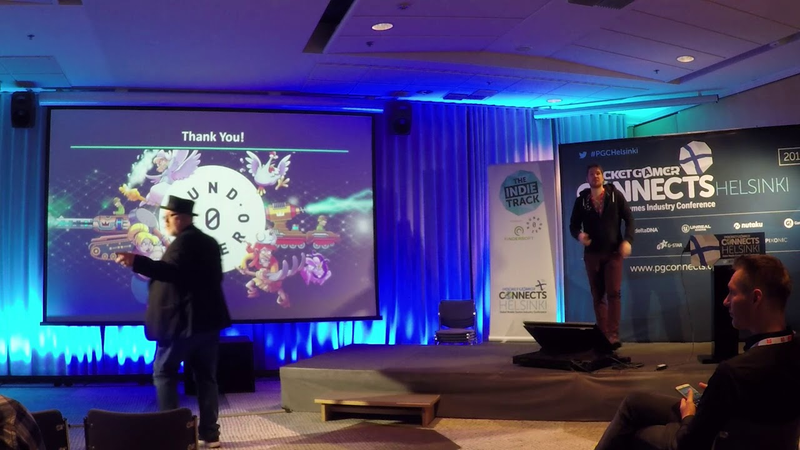
Round Zero, the publishing arm of Fingersoft, utilizes a data-driven evaluation process to identify and validate mobile free-to-play games.
- Round Zero leverages the Hill Climb Racing user base to test prototypes with 100 to 1,000 users over one-week campaigns to validate market viability.
- The evaluation process sets a 30% day-one retention baseline for initial tests, accounting for backfill traffic from lower-cost markets.
- The firm has tested over 100 games since inception, achieving an 80% pass rate for monetization testing.