1 free read left. Create a free account for unlimited reading + AI research.
Create free account
Live operations: Bringing a seven-year-old game back to life
Key insights
6 takeaways- 01The revitalization of the 2011 mobile title Diamond Dash demonstrated that declining performance often stems from a misalignment between developer perception and actual player motivations rather than a lack of inherent product value.
- 02Research identified a critical shift in the core audience from casual explorers to highly competitive players, necessitating a pivot to a 'casual-competitive' framework to unlock new engagement and monetization opportunities.
- 03Technical modernization, including a migration to a unified codebase and the integration of rewarded advertising, was essential to validating the game's business model and increasing lifetime value.
- 04Establishing robust communication channels was a prerequisite for successfully managing user feedback and sentiment during the transition from a maintenance-only phase to active development.
- 05A full visual reskin and UI overhaul were implemented to improve marketability, though the team noted that such large-scale changes should be preceded by rigorous A/B testing to avoid negative user sentiment.
- 06The project proves that challenging fundamental assumptions about a product can reveal new growth trajectories when data-driven validation is prioritized over speculative design changes.
Ask AI about this video
Transcript
[Music] hello thanks for attending its I've had a good day it's been a great set of talks I'm hoping I can bring some some new insights to to your day so bringing a seven-year-old game back from the dead the diamond - journey first a little about me didn't free to play games for about 10 years now studying right here in Finland specializing in live ops in free-to-play design especially but now currently working back in the marketing departments so when I pitched this talk we were halfway through a strategy of bringing diamond - back to back to life and I'm sure everyone's familiar with something like this in games development by the time we got arrived here what we thought would happen with not exactly what it happened so what I'm going to do
is give you a brief overview of where we started things that happen along the way and some takeaways so yes I'll talk about how we made this decision to bring diamond - back from the dead and what we did with the product side and what we did with the marketability side and going to touch on quite a few topics here so hopefully there's something for designers product managers marketers are like okay so diamond - is 7 years old this year and over the course of the 7 years it's been it's come from nothing - very very successful - a relatively sunset game but we do have very loyal players most players have been playing for over a year and even without active marketing the game still gets about six to ten thousand organic users every day a little walk through the history of diamond - this graph in the background
is our daily active users so this started way back in 2011 when the game was launched on Facebook just as Facebook games were taking off and obviously we jumped on this upward Trenton quickly launched mobile versions of the game and then we entered LiveOps mode and you through all the way what happened in the match three space in 2012 a small candy game came around and normally paid that any attention until everyone had to pay it attention and Diamond Dash continued being operated by a full live vibes team and in the background while star Dow was declining Lucas focus shifts do are newer better better more profitable games such as jelly splash and pearls peril so around 2015 the game moved to what we call light ops which is basically sunset maintenance team and a couple of interesting things happened in 2015-2016
in the match three space there was a couple of games that started to become noticeable notably because they were stepping away from the traditional candy crush saga model so either in changes to core gameplay like in Toy blast or a different meta game like in garden escapes or fish them also we had enjoyed a little bit of success with our first true sequel to a Wooga product with Bubble island - so all these kind of things in the in the atmosphere which is a sequels and new gameplay we were asking what's next for Diamond - so when my manager came to me I said what do we do with diamond - I had to take a quick evaluation of the product and we're all familiar with this needing to be correct if you want a scalable game and for Diamond - this just was not the case when we dig into this a little more so
so what we needed to do obviously is bring this up and bring that one down and we looked at two things we looked at our product and we looked at our players so first off we looked at the product it's a match three game these are definitely our competitors in the space and some stuff was still working we still had excellent brand recognition the and the tapping gameplay was still very accessible and almost seemed to be as if it was trending as toy blast started to shoot up the charts a bit unfortunate there was quite a lot not working namely because the game was designed seven years ago and best practices moved quickly and Diamond Dash just didn't keep up also there were issues with how marketable the game was based on its look and feel and the number of competitors that were in the space we looked at players and we took audience surveys we dug into player profiling methodologies I'm a big fan of that so
if anyone wants to talk more happy to always talk about psychographics one of the most revealing questions that happened from this was when we asked people how this diamond - make you feel how plain how does playing diamond - make you feel we're working on this assumption so and hopefully familiar with the bottle player models which have you subscribed to this is just used for simplicity here but we were on this is our working assumption that match-three audience is firmly in this explorers quadrant maybe some features stretch out to socializes or achievers but generally we're looking at Explorer type player profiles and in 2011 we had diamond - position right here in the middle there was a few more social features there's a few more competition features maybe this was why it did so well beginning because in the beginning because it appealed to so many different types of people what our player research revealed was it was
the absolute opposite of what we thought in 2017 diamond - players were straight-up killers they wanted to be there to kill everybody in the competition they were extremely competitive and this was a bit of a revelation for us it was not a match 3 game it's less about this and more about this climbing the leaderboards for for the players that were still around and internally this made us have to take a big step back and say we've calling in a match 3 game for 7 years but maybe it's something different we looked at what was actually appealing about Diamond - Ian coined a term casual competitive which is built on these pillars so not too dissimilar from our Katy kind of things when you look at what other titles would fall under those pillars you wouldn't find too much in the puzzle
match three genre but when you start to look at the broader app store you'll find quite a lot of different genres that touch that could be categorized underneath this umbrella term and with that looking through our match three product with the new lens we realized that was quite a lot of opportunity for this product that we had that we didn't consider before so very few match puzzle competitors in the casual competitive space there's top-grossing potential there's a lot of features that resonate with with this casual competitive audience that we had space for and dev time for ad support is extremely generous in a casual competitive and we still had lots of brand power and at the fact that games inherently social means that I could help us a lot with marketability and then suddenly this these things coming together seem makes this start to look feasible that we could do something with LTV and we could
do something with CPI so these are the next couple of things that we did first we made a vision based on what we believed that our players wanted it was built on various game pillars that might not have necessarily made it into our roadmap if we were still looking at it as a match three game we realized that the codebase was a mess it was seven years old it was spread over three different platforms and the first thing we needed to do was you unite all the codebase if we wanted this chance to build anything stay poised oh and just remind ourselves that meanwhile it was still business as usual is still operating a live game and we use this opportunity to really double down on our social media and player communications channels by running live ups and events sorry live events and sales and talking to our players like this is in later on before we jumped into our unit support it was quite an abhi quite an expensive and timely process we wanted
to validate our business the business model we knew we were going to rely to be depending on ads working in diamond - for for this to pay off so we put some rewarded ads into the iOS version and as you can see our hypothesis was correct rewarded ads was working very well in this type of game in these placements that we had them this gave us the confidence to move forward with the unity project luckily another project of Wooga had been through this process before and we got a lot of learnings from them and we got to a point where we needed to switch out a codebase on hundreds of thousands daily active users so you know how this one goes not the smoothest of transitions and this was our customer care ticket or our error report so it could be any one of them if you can't quite identify when we released it was right there but because
we had all of our invested in our player communications channels we had everything we needed in place to address all the player concerns and help yeah I hope this migration process along without too much of a detrimental effect and everything looked like it was off to a promising start so we looked at a range of metrics so this was our engagement the number of rounds were actually playing just because were increasing just because we'd developed a smoother process and smoother experience our ad bookings obviously went up when we rolled out across all platforms and our engagement went up not just for new users but for players who were loyal to the game as well so oh no we were very happy with what with our decision to move to the unity point and we needed to do something on the CPI site so we wanted to really give it a fresh coat of paint the game had not had updated
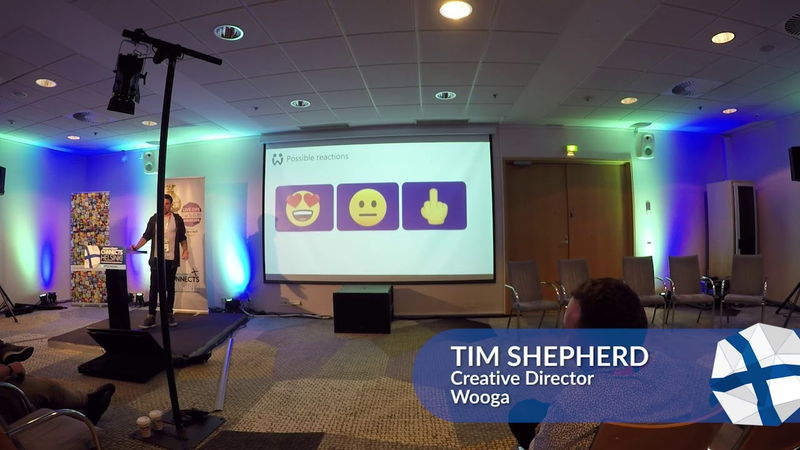
graphics and we thought that this would be a good opportunity to increase the marketability create new appeal and redesign some of the ui/ux that had become quite bloated over the time we knew who our players were and we knew what we wanted to create for them so we said a few benchmarks established a few benchmarks that we wanted to emulate and yeah we said about re skinning the entire game I had got some very lovely gifts here but I pulled them at the last minute so you'll have to take my word for it that the animation on these is beautiful so it's just some before and afters and you can see that the the reskin was made it a lot more polished and a lot more interesting and marketable just before we released had a little panic as a product manager and for what were the possible reactions could be to this reskin so first off players could love
it we all hoped that they would and all the KPIs would go through the roof and everyone would talk about and say hey diamond - is back and it's amazing secondly they could not care less nothing happens and if that's the case then why did we bother doing it in the first place all the third thing could be that they absolutely hate it because we all know how much players love change this was bored about just as snapchat released their reskin project and - a horrible play of user fallout so I was pretty skeptical about how things were going to go that said we evaluated it and we decided that we were going to go ahead anyway but not to be burned again we did learn from our lesson and we managed to mitigate a lot of the issues by rolling out very very slowly and addressing the any bugs or usability issues as they came about and this was done because we were constantly looking back to our metrics and we got a lot of mixed
responses so I'm not sure what I'll crop now grafica means in Russian but we could probably figure it out and yes so we were little we didn't know where this was the vocal minority or whether this was a trend and whether we made a horrible mistake we needed to roll back again you could probably figure out which date we released it on it was that one and yeah we had to go back to our data or other metrics just to validate that they just complaining or we actually really screwed things up but we can see that we got back to a level of engagement that was on par with how it was in the beginning so today we've managed to raise the LTV of Diamond Dash by adding lots of features low-hanging fruit to the product that weren't there before they were supported by a casual competitive audience but not necessarily a match-three one and we've
bought the CPI down by increasing the marketability of it you can see that it's still not where it needs to be so the next steps for Diamond Dash is moving it the product from product to marketing where our marketing team will be doing lots of App Store optimization testing and experiments trying new acquisition tools such as playable ads and investing in various other cross promotional tactics either with IP or with our other live portfolio products so this quick summary it's worthwhile challenging your fundamental assumptions about your product and your audience every once in a while because you may be surprised of what you find out and that may allow you to view your product through different lenses and identify different opportunity if you are anticipating periods of large change it's very worth investing in your communication channels to make sure that
if anything does go wrong you've got all the tools in place to talk to your players when you are evaluating change it's worth making sure you're looking at the relevant metrics not just for new users not just for existing users but make sure you've got a spread of data points that will represent across the player lifecycle and validate hypotheses effective efficiently so I think our our way of doing unity ads sorry iOS ads before they're in the unit support was a very efficient way of validating that business model rescanning the whole game to see whether or not that would be more marketable was probably not so efficient okay thank you 36 over so yeah we have some time for questions I think yeah at the end of a post-mortem well it's a matter of thin so we're somewhere in between but there is always lots of questions I can see that thanks for a great presentation have you
done any eye contests for example on Google Play and have you what do you think about your playable ads have you got them then - sure so App Store optimization is an ongoing process for all of our portfolio titles I contest screen shot test fake app stores click-through test these are all things with captain hindsight I would do before doing a reskin making sure we got it so yeah we've done them we do do them regularly and successfully yeah and playable ads is relatively new for us but happy to talk more and at length about that we are seeing some success hi Tim right talking thanks for that I wonder if you have tested to do risking prior you've actually done into for the whole game I could fake ads to see whether it improves the conversion rate and to help you decide whether this is what it yes that's absolutely what we should have done yeah so
so what was the the whole strategy like I said at the beginning that we were halfway through when I pitched it it was we had a strategy to work towards reengagement campaign and we the goal was always to get the risk inversion and then market it and our company focus changed it was very long strategy for Diamond Dash and during this time our company focus changed then the reengagement campaign was deprioritized so we've got a beautiful new game but no immediate plans to start the re engagement plans so yeah so it made sense at the time but you know thanks him at this point what why not make a diamond - - instead of making new code base and new art right so the seek a sequel was on the cards we did did do some prototyping for it when we started
to look at the game through this casual competitive lens though we we started to realize that hey maybe we're leaving a lot of the money on the on the table here and maybe it's not right for a sequel maybe we're not completely done with them - maybe we can breathe some new life into it there seems to be quite a lot more opportunity worth investing in before we I guess we'd want to do a sequel and we knew that there was nothing else that could be done with the original and at the time we felt there was something that could be done [Music]
Summary
The revitalization of the seven-year-old mobile title Diamond Dash serves as a case study in re-evaluating product positioning and audience psychographics to extend a game's lifecycle. Initially launched in 2011 as a standard match-three game, the title eventually transitioned into a maintenance-only phase as the developer shifted focus toward newer, more profitable projects. The primary thesis of this initiative was that the game’s declining performance was not due to a lack of inherent value, but rather a misalignment between the developer’s perception of the audience and the actual motivations of the remaining player base.
Research revealed that the core audience had shifted from casual explorers to highly competitive players driven by leaderboard rankings. This insight led to the adoption of a casual-competitive framework, which identified untapped monetization and engagement opportunities that were previously overlooked under the traditional match-three classification. To capitalize on this, the development team undertook a comprehensive technical overhaul, migrating the game to a unified codebase and integrating rewarded advertising to validate the business model. Subsequent efforts included a full visual reskin to improve marketability and user interface efficiency.
The project highlights the importance of robust communication channels when implementing significant changes, as these tools proved essential for managing user feedback during the transition. While the technical migration and monetization updates successfully increased engagement and lifetime value, the team noted that large-scale visual overhauls should be preceded by rigorous A/B testing and market validation to mitigate the risk of negative user sentiment. Ultimately, the experience underscores that challenging fundamental assumptions about a product can reveal new growth trajectories, provided that data-driven validation is prioritized over speculative design changes.














Comments