1 free read left. Create a free account for unlimited reading + AI research.
Create free account
Game design for incentivising players
Key insights
6 takeaways- 01Game design must prioritize a unified, expansive in-game economy where every feature—from progression paths to social systems—directly drives player engagement and monetization.
- 02Developers should implement a '10% rule' to provide granular, frequent upgrades that maintain player interest and depth over thousands of hours of gameplay.
- 03While cosmetic-only monetization works for culturally dominant titles, most developers must integrate progress-based monetization to ensure players remain incentivized to upgrade assets and stay active.
- 04Monetization strategies must balance the needs of 'grinders' who invest time and 'whales' who invest capital by allowing purchases to bypass time-intensive progression without sacrificing competitive fairness.
- 05Retention is optimized by offering diverse game modes, ranging from quick casual sessions to long-term strategic alliance battles, supported by rotating live operations.
- 06In genres like military strategy, mechanics should emphasize tactical planning over reaction to foster high-engagement experiences that reward long-term coordination.
Ask AI about this video
Transcript
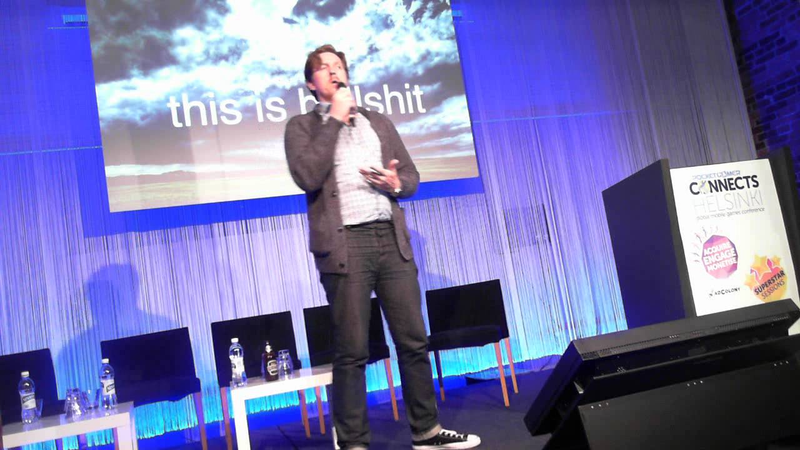
[Music] thank you so my name is Tory Fearne strim I am from a a company here in in Finland called tripe flame our main claim to fame has been a a cute little monkey called Benji game called Benji bananas that we have reached some hundred something million downloads for and recently we were acquired by animal car brands of Hong Kong and we're not now a part of them we're still the same eight-person team which is basically now just one one team in a logic in a larger company currently we are developing a midcourt core game and I wanted to share some some of the thinking about how we approach game modes and and planning for
live ops when we are developing this game so the the core of it is this that you should be building cool games but that's not enough for every feature that you're building into this you should be asking what does this feature incentivize the player to do does it drive more sessions does it drive longer sessions does it get players to come back or does it get them to interact does it strengthen the economy so the cool features on its own that you build to to get the acquisition in there to drive down your CP ice and get up get the organics up you need to think about the others to have had the whole package the game we are talking about is this it's called Valhalla Wars it is a it's a
military strategy game and actually I'll show you next slide what the core of it we are actually going into soft launch right now in case you want it just point your your cameras at that QR code and you'll most likely be able to download it if you're in one of the like half a dozen markets where we are going now right now we will be going global in October on soft launch the core mechanic of this this is the cool stuff this is the innovative new new thing here we have you know a battle game kind of clash Royale like that you you have enemies over here and you over here the uniqueness here is that we are building a planning game rather than a reaction
game so you're getting your your units down here and you get to give them orders you walk along exactly this path and this stroll over here walks along exactly that that path supported by the cavalry over here that takes the spot so I'm setting up thoughts and plans for these guys and then I'm saying okay I'm done and they follow my orders without me interacting after a while I get the second wave of reinforcements and I tell them what to do it's sort of what what a medieval general would really have done I mean you cannot still cannot and certainly couldn't then micromanage units out on the field no you tell them that this is the plan and then you go execute and probably things turn out funny because the opponent didn't do what you you expected them to do yeah
this is the cool core mechanic now let's start looking at incentives so the first thing was incentives to get people to come back we have those what's the chests in clash Royale we have a cool Viking ships in our game of course this is one of the main incentives for you to play different different modes clash royale uses them for only their main game mode we are building in several different game modes and they will each have their own slots tied to that game game mode so if you want to have several of these shipments they're timers running in parallel you will be playing several different game modes of course the way we want to balance this
out is that the more time I spend in a day the more sessions are more time in one day the higher my progress speed my rate of progress so we want this curve to go up but with diminishing returns diminishing returns so that the they shouldn't open up too great a difference between someone who has a lot of time to grind and someone who has only a little time to grind remember your best paying customers are likely to be the people with a career and large paycheck some bankers and lawyers are going to be your whales they don't have a lot of time so if you incentivize too much grinding here you will have teenagers with lots
of time on their hands beating out the paying customers you don't want that so you want you want this curve to keep going up but as a slower and slower pace now in case you are wanting to try this out right now right now we still don't have have that so warning I'll be upfront about where your experience will suck for the first we equal to in our game this is what happens in our game we have the one game mode that's currently in there and then it will flatline you will basically get nothing more for spending more time in the game after you have filled those slots since since the multiple gamers aren't in there yet Claire modes so what do what incentives do we have for
collaborating with with other players we're building in this HP system your main character the leader of your your Viking clan is your yard and that guy is up upgraded only with HP and you get HP from donating cards to other players also since we we really like to be able to incentivize player with these slots tied to different game modes we are building in clan slots so these are our battles that you play together with your whole clan and the whole clan gets a shipment now let's let's go into the monetization part how do we incentivize monetization the first thing to realize is that in free-to-play the whole store
what used to be outsourced to to a physical store it's now inside the game so the previous talk was about the premium mindset the premium mindset originally was that let the physical store take care of all the dirty marketing stuff sales and promotions and two for the price of one and limited-time offers and all of that now we have to take care of it first rule of this is that you do not want your store to look like Poland in 1989 or possibly the UK after heart breaks it what you want is Walmart today so you need you need to have lots of stuff on the shelves now what's the shelf for for us there are different ways to progress
in free-to-play games you can progress will with skill or luck or grinding or paying or help help from friends you want to make sure that draining and paying are are our options this leads to what we call the 10% rule that really you want lots of stuff to upgrade 10 percent at a time so that you you can get enough depth into this this content now what we're building is a player versus player game and this is how we visualize it that you're basically climbing the ladder of progression here and with with luck and skill and grinding you you will be most players will be climbing up this with using these tools on the other side someone with less time on their hands but more money on their hands the paying customers the bankers and lawyers they
won't have time to grind but they will be able to pay and have a jump up this ladder to keep pace with that one so here's the banker keeping pace with his son who is growing a grinder both are equally good ways to progress in this and then they are having a battle probably the banker needs to be slightly higher because the more grinding makes that guy more skilled and we have a PvP match here and that's sort of a a combination of skill and level but keep these ones very short we cannot allow paying and cheating in here people will very very quickly be be very very pissed off that this is is a pay to win game you can allow them to pay here because that just means they will be matched up against tougher players over there inside the game each match will still be fair so I shall show you the the
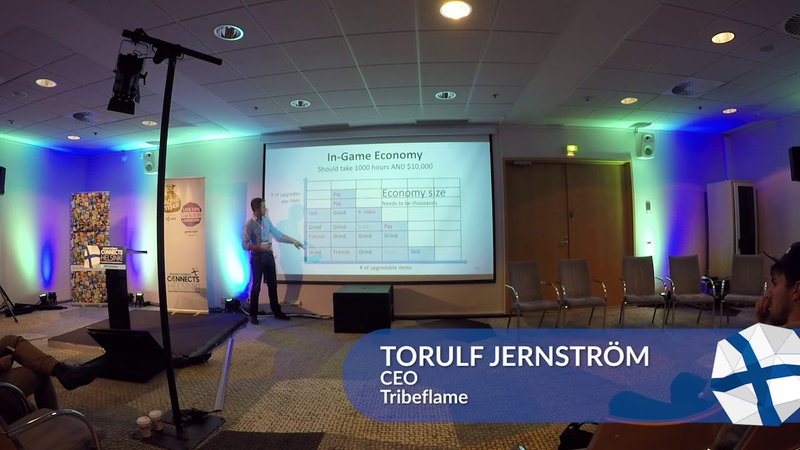
shelf this is the shelf of a free-to-play game on one axis we have the number of upgradeable items and on the other is the number of upgrades I can have so all of these cells together that's your in-game economy and you unlock these this sells by grinding or inviting friends or grinding some more ore or paying or watching rewarded video ads or or such this needs to be huge in a free-to-play game like we heard last speaker talk about about buffing up the in-game economy - what was it several times the size if this isn't large enough you'll never get the games words you should be able to play thousands of hours and spend thousands of dollars at the same time without running out of content here so the question is now with
back to incentivizing do all the game modes we have built into the game do they all incentivize me to unlock this these cells in that I showed you in lost last slide for instance in our game we are battling with units why should I collect more than the minimum I need for one battle do what incentive do I have to do that for instance or the game modes where the units are exhausted let's say I'm playing ten games in a row if one unit dies in a battle I cannot use it anymore in the next battle that means that I need to have a large collection of upgraded units to still have something good to throw into the battle in game eight nine and ten or there's some challenges where where I
have to use certain units or I am not allowed to use certain units this of course forces me into using some specific collection of cards remember that PvP still has to make use of these upgrades if you make a PvP mode which is likely going to be the main mode mode of games like this where everything is always at the same level you are taking away a large incentive for people to upgrade and and fill out these cells here so driving these upgrades that's the upgrade screen of our game everything has to tie into the same economy do not make any mini games where you're giving away stuff that is not dependent how much you get is not dependent on the
level or number of units that you have upgraded here keep your incentives always always there and lost in my last minute a word about battle paths has anyone heard about a game called fortnight thus fortnight mean that all of us can now just sell cosmetics and fare to play games yeah if what you make happen to become the number one game on the school playground so that you get the real world recognition from your friends there that I have this skin then go right ahead sell only cosmetics but now the rest of us who probably will not reach that position as the thing that teenagers talk about at school the rest of us probably will still have to be be selling progress in the games and all of
the stuff I've told you probably applies thank you questions I thank you for a great talk I would like to ask regarding game modes aren't you afraid that the the more game modes you have the more difficult the player are I mean that they don't have a single place but all them buy the same game true you can overdo it though in the the limit seems to be higher than I would personally anticipate it for instance have you played summoners war or anything similar this very successful
games have like a dozen game modes and it's all overwhelming to me but they appear to be doing really nicely war a problem of course if you split into too many different buckets a player versus player game you will get the problem of there's not enough matches on the other hand for LiveOps to keep stuff interesting and fresh it's good that that you you have different versions of the same core open to people to keep it to keep it fresh as I said there's also different different motivations for players we want one version that is very very quick to play that you know I can progress in this mode if I only have 15 seconds we're literally looking at such a short game and then there's the very involved game
for the long-term the what drives the hobbyist who's really committed to this game wants to play a long really strategic game where they are coordinating a fight with their their allies and sending like hundreds of units into the same battle so we can't get all of these into the same same mode so we have to have a few and frankly that's one of the reasons that LiveOps works is that you don't have to put all of them active at the same time some of them go up this week and are down next week and then these other mode is up next week we are trying to build this game really around a very customizable core that we can bring down to very very short games and up to very
very long and complex games with keeping the same UI keep in the same core one more question here thanks can you give us example of the additional game modes in the core game because we you've seen the you show us the core game on just months live versus one versus one is can you tell us more yes the few that that will certainly go in there is in one game mode you are going to have several waves of reinforcements coming in in another game a quick play you have just one so you you plan once and you press battle and then it's all hands off until it the game tells you if you won or lost so the second game mode is very very short very very casual well the first where there comes several waves I get to
react and counter your moves you counter mine I'll counter yours and a third game mode is our alliance play since this is planning based we can give you a one hour time frame to plan when I draw my orders on the screen and you're my ally you get to see what I drew and you get to sort of help out me or or communicate to me can can you support me over here and then once the one hour is up then our orders have to be in and our opponents have done the same so this is a very long answer key strategic mode so those are a few of the ones we are planning currently only one is even in there actually [Music]
Summary
Effective game design in the free-to-play mobile sector requires a holistic approach where every feature serves a specific incentive, such as increasing session frequency, extending play duration, or strengthening the in-game economy. Developers must move beyond simply building "cool" mechanics to ensure that every system—from progression paths to social collaboration—drives player engagement and monetization. A successful strategy balances the needs of different player archetypes, specifically catering to both "grinders," who invest time, and "whales," who invest capital, without compromising the fairness of competitive play.
The core philosophy centers on creating a robust, expansive in-game economy that supports thousands of hours of gameplay. By utilizing a "10% rule," developers can provide granular, frequent upgrades that maintain player interest and depth. To prevent the alienation of paying users, progression systems should allow players to bypass time-intensive grinding through purchases, provided that matchmaking remains skill-based and fair. Furthermore, implementing multiple game modes—ranging from quick, casual sessions to long-term, strategic alliance-based battles—allows for diverse player motivations while keeping the experience fresh through rotating live operations.
Strategic planning is essential for long-term retention, particularly in military strategy titles. By designing mechanics that emphasize planning over reaction, developers can create unique, high-engagement experiences that reward tactical coordination. Ultimately, the goal is to build a scalable ecosystem where all game modes and features feed into a unified economy. While cosmetic-only monetization is viable for massive, culturally dominant titles, most developers must continue to integrate progress-based monetization, ensuring that every interaction within the game reinforces the player's desire to upgrade their assets and remain active within the community.