1 free read left. Create a free account for unlimited reading + AI research.
Create free account
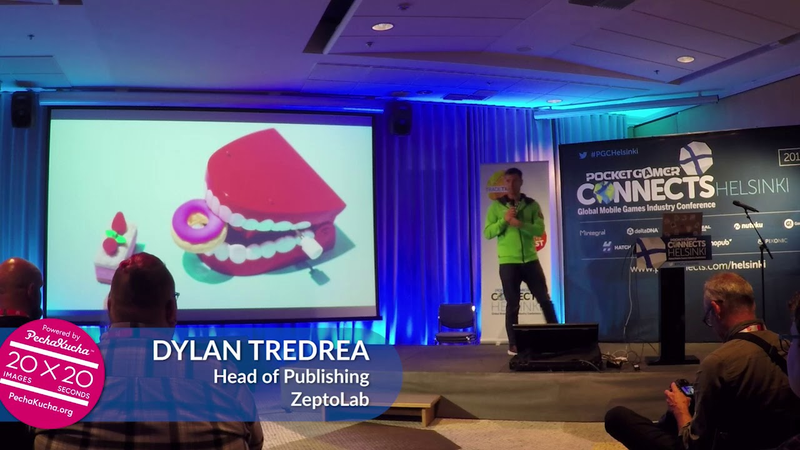
PGC Helsinki 2018 Pecha Kucha sessions: ZeptoLab's Dylan Tredrea
Key insights
6 takeaways- 01Revenue projections are strategic tools for deconstructing game variables and quantifying risk rather than precise financial predictions.
- 02Transparency regarding knowns and unknowns in projections builds trust with publishers and investors, serving as a vital sales document to justify internal investment.
- 03Developers should support their projections by gathering diverse data points and identifying relevant industry analogues to validate underlying assumptions.
- 04Maintaining a balance between rigorous research and simplicity transforms financial forecasting from an administrative burden into a tool for business growth and negotiation.
- 05Effective models should prioritize simplicity by focusing on core metrics like daily active users (DAU) and average revenue per user (ARPU) rather than complex decay or retention functions.
- 06Presenting projections requires contextualizing individual project risks within the broader business model to align expectations between stakeholders.
Ask AI about this video
Transcript
[Music] this story begins when I started coming into the game industry with actually a gentleman that's here right now I finished school and I had no idea what I was gonna do and I really have any skills I couldn't really program design draw things but I could organize write business plans so it was my job to put together a revenue forecast and it was exciting and really stressful because there wasn't a lot of information online back then you couldn't get how free-to-play monetization works and DA use and ARP Dallas wasn't really easy to put together and especially because everyone was counting on me there was a lot of really talented people that had spent a ton of time building something and now my Excel work is going to justify it and I was petrified that someone would see it and be like oh my
god they have no idea what they're doing what a bunch of amateurs and because of my shoddy work you would mess everything up after 10 years of product management analysis now in publishing it's become kind of a normal part of the job pretty used to it so this is about what I've learned coming from that very stressful beginning to the point we're pretty comfortable with it and what I would tell myself if I was going back way when when I was freaking out in the first question which I heard a lot with projections is it's all just fiction why bother which is actually kind of a reasonable position the game industry is ridiculously hard to predict the outcomes are generally either a super big hit or not a huge hit at all so why bother what's the point and the point is as Eisenhower said planning is not about the plan it's about the process it's about taking apart the machine that you're gonna build and quantifying the uncertainty of each little piece and that's really the trick and I think if
there's anything that leads to success in this industry it's being comfortable quantifying and making decisions based on very limited information and if you can pull apart and work with that you're in a much better position to make all the little and big decisions that involve our industry but you know that's all kind of high level getting back to the thing itself why does it matter to you if you're a small developer why should you be doing this well the first thing is that the game is a bunch of different pieces and some you're quite confident and like say you're very sure that your team can deliver a soft launch build in six months no problem but what you're not sure about is whether it's gonna take three months six months nine months to become profitable for you a this is great this is not a bad thing embrace it jump head in and don't hide this fact like speaking as a publisher the best thing a developer can tell you is we know this we don't know this how can you help us get it done embrace that risk don't be
afraid of your uncertainties and this is the whole point of a revenue projection so you can connect the things that you're certain about to the things you're not certain about now for investors why do they care because they need something even if you're a publisher and you're an expert in games you need a baseline and indeed that's kind of the whole point of why they're working with you is because you have expertise and knowledge that they don't have otherwise they would just do it themselves and okay so that's the high level stuff how do you actually do it you need to find analogues similar games similar data points just like when you're building a school paper to justify your assumptions it's not easy sometimes it can be hard to find the information but don't underestimate just asking people and when it comes to the actual output keep it simple even now when I build revenue projections there's only to a small handful of inputs right well to Maine once the two main
ones rda/us per user so no fancy decay function or retention profile it's not worth it and then if you don't know it if you have no idea embrace it still try to find little pieces that you can justify and can be confident in but high-risk high-reward if a publisher is speaking to you they know that and they know that your project is like this but the best thing you can do in this process and this is where you can turn revenue projection into something that helps your business move forward is use the process to as a great sales manager I once had told me load the lips of the person talking to you if someone at a publisher or an investor is speaking to you often they want to sign the deal they just need your help convincing other people this tool is a way for them to do it and embrace the fact that it's a sales document like there's this great story for an investor going between Europe and us and he has 2 pitch decks well what's the difference one is realistic this this is this is
life embrace it this is a fact it's a sales document even though it's supposed to be all objective and be prepared to put things in context people will generally take these way too seriously or not seriously enough and in both cases be prepared to use it like that well maybe you're focused on some little tiny thing but well please understand how that fits into the whole sense of the game yes this little part of the project is a bit risky but we feel good about other things and when it comes to actually gathering the data together just gather as many sources as you can what did this if you why do we think the da you will be this high why do we think the retention will be this high do your homework so that you can help whoever you're talking to sell it internally so that they can close them but at the same time it is a negotiation and I think the most important thing is to find out their expectations it's happened to me where we were arguing about a projection
and thankfully we found out what they were actually expecting because we were way too high and there's you know you only really want to be just high enough to get signed but what happens if someone does question you someone gets even a little aggressive and it's like well what about this what about that embrace it nerd out on them say yeah you're right so here's what I did I took this I tried to piece this together just tell them what you did embrace the fact and go deep into it almost every time they'll just be like oh yeah fine that sounds good but the last bit of advice is don't overwork it this is the main advice I needed a long time ago just get it done answer the questions that are need to be answered don't add a ton of inputs and a ton of complexity just keep it simple deliver what the with your contact wants and then move on it's very easy to over invest in this thank you [Applause] [Music]
Summary
Revenue projections in the mobile game industry serve as essential strategic tools rather than mere exercises in fiction. While the inherent volatility of game development makes precise forecasting difficult, the primary value of the projection process lies in deconstructing the game into its constituent parts. By quantifying uncertainty, developers can better understand the risks associated with specific variables, such as development timelines or monetization performance, and make more informed operational decisions.
For developers, transparency regarding these uncertainties is a competitive advantage. When engaging with publishers or investors, acknowledging knowns and unknowns fosters trust and allows partners to provide targeted support. Projections function as a vital sales document, providing stakeholders with the necessary data to justify investments internally. To be effective, these models should remain simple, focusing on core metrics like daily active users and average revenue per user rather than overly complex decay functions or retention profiles.
The methodology for building these projections relies on gathering diverse data points and identifying relevant industry analogues to support underlying assumptions. When presenting these figures, developers should be prepared to contextualize their data, demonstrating a deep understanding of how individual project risks fit into the broader business model. Ultimately, the goal is to align expectations between parties, ensuring the projection is robust enough to secure a deal without becoming an over-engineered burden. By maintaining a balance between rigorous research and simplicity, developers can transform financial forecasting from a stressful administrative task into a powerful tool for business growth and partnership negotiation.





















Comments