Mobile reports and market data
Documents
Games Marketing Insights for 2021
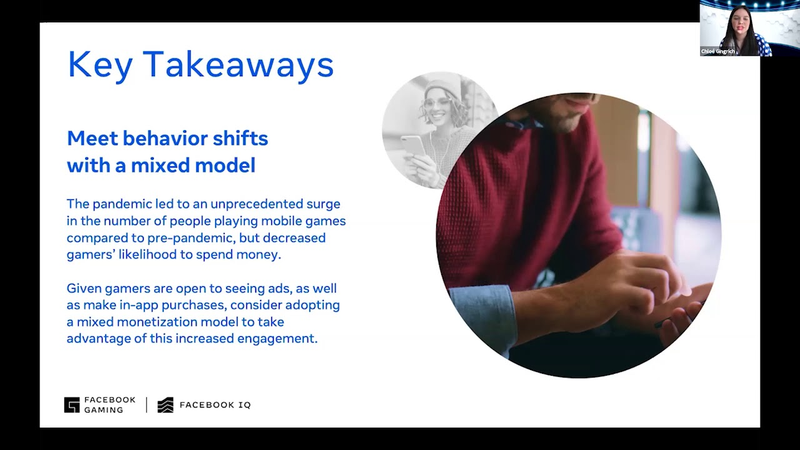
The 2021 Games Marketing Insights report, presented by Facebook, analyzes the impact of the COVID-19 pandemic on the mobile gaming landscape, focusing on shifting consumer behaviors, monetization trends, and the growing importance of community.
- Community engagement is now a primary driver for retention, evidenced by a 91.8% year-over-year increase in live streaming viewing hours, which reached 7.46 billion hours between July and September 2020.
- The pandemic attracted a new cohort of younger mobile gamers who demonstrate a higher propensity for in-game spending compared to existing players.
- While existing players increased their average weekly playtime by 1.5 hours, their overall in-game spending decreased, signaling a need for developers to shift toward mixed monetization models combining in-app purchases and ad-supported experiences.
Keynote: Hindsight is 2020: How to Gain & Retain Your Audience in 2021
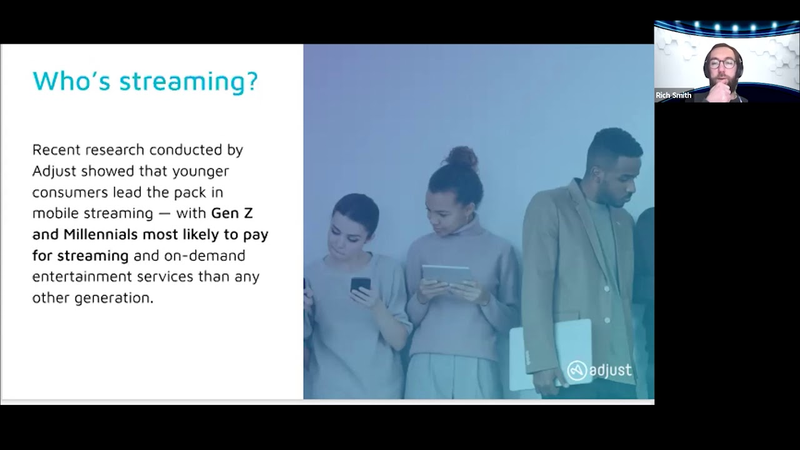
The global mobile landscape underwent a profound transformation in 2020, as pandemic-driven behavioral shifts accelerated digital adoption across all demographics.
- Daily time spent in mobile applications increased by an average of 25 minutes in 2020, driven by pandemic-related digital adoption across all demographics.
- Revenue models have permanently shifted away from traditional ad-supported frameworks toward subscription-based models and in-app purchases as primary drivers of consumer spending.
- Developers must pivot to a retention-centric strategy that prioritizes long-term lifetime value over immediate acquisition metrics to maintain momentum in 2021.
Superstar Session: How to Enhance the Gaming Experience Through Content Micro-personalisation
Micro-personalization serves as a critical strategy for modern game developers to enhance player retention and revenue by leveraging data science and artificial intelligence.
- Micro-personalization leverages centralized player data and AI to transition from generic engagement models to highly tailored, context-aware experiences.
- Studios can manage technical complexity by using behavior-based player clustering, which enables targeted content delivery at scale without requiring individual-level processing.
- Implementation requires a dual-model framework that integrates machine learning with business-oriented rules to provide real-time suggestions, such as gear recommendations or personalized in-app purchase offers.

The Future of Mobile Game Monetisation - A New Revenue Stream to Your Games with In-play Brand Ads
Mobile game monetization is undergoing a strategic evolution, shifting away from disruptive ad formats toward seamless, integrated experiences that preserve player retention.
- Mobile game revenue is currently heavily skewed toward in-app purchases, which account for 90% of total earnings compared to only 10% from advertising.
- The in-play brand advertising market is projected to reach a billion-dollar valuation as the industry shifts toward non-intrusive, integrated ad formats.
- New 'Seamless In-Play' and 'Seamless In-Menu' formats allow developers to embed ads into virtual environments, such as billboards, without forcing users to exit the app.
#ElevateYourGame: How Impression-level Data Can Take Your Game to the Next Level
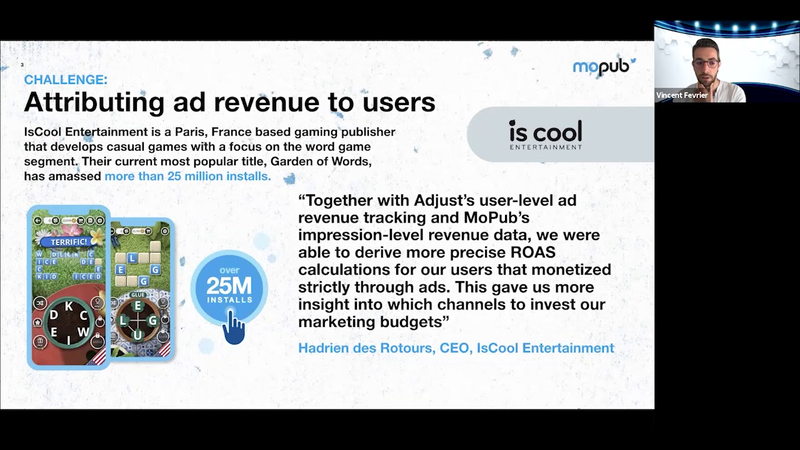
Mobile game developers are increasingly leveraging impression-level revenue data to transition from aggregate performance metrics to precise, user-centric optimization.
- Integrating impression-level revenue data allows developers to forecast long-term lifetime value within one week of installation, enabling faster user acquisition decisions.
- Adopting granular, user-centric revenue attribution has been shown to yield a 15 percent increase in incremental return on ad spend (ROAS).
- Studios are shifting from manual waterfall management to real-time bidding systems to capture monetization efficiency that traditional processes often overlook.
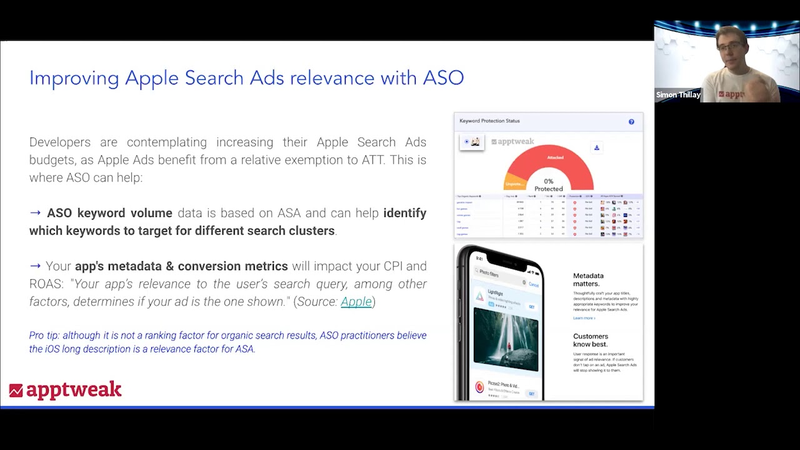
How Mobile Games Can Leverage ASO for Post IDFA User Acquisition
The shift toward privacy-centric mobile ecosystems, specifically following the implementation of Apple’s App Tracking Transparency policy, has necessitated a strategic pivot in user acquisition.
- Apple's App Tracking Transparency policy is expected to cause most ad networks to lose IDFA-based tracking data for over 50% of their mobile traffic, necessitating a shift toward privacy-friendly user acquisition strategies.
- App Store Optimization (ASO) teams can mitigate post-IDFA data loss by using Apple Search Ads keyword volume data to identify high-intent search clusters and optimize targeting strategies.
- Marketers should use A/B testing on store pages—specifically leveraging Google Play Experiments—to test creative messaging and conversion rates before committing to large-scale user acquisition campaigns.

TWIG 120: Supercell CEO Annual Letter, Zynga To Build Ad Network, Bad Robot Getting into Games
The gaming industry is currently undergoing a significant shift toward vertical integration and cloud-based infrastructure as companies navigate a landscape defined by mobile privacy constraints and evolving consumer habits.
- Zynga is internalizing its advertising network to mitigate the impact of Apple’s SKAdNetwork limitations and recapture margins lost to mobile privacy constraints.
- Supercell maintains a 31% profit margin and over five billion lifetime installs, though the company is experiencing a decline in annual revenue and EBITDA.
- Supercell faces internal friction as it attempts to reconcile its traditional small-team, prototype-focused culture with the resource-heavy demands of modern live-service operations.
The Power of an Embedded Community Platform to Inform, Engage, Educate and Retain
Integrating community platforms directly into the game environment serves as a critical strategy for enhancing player engagement, retention, and monetization.
- Integrating community platforms directly into the game environment eliminates friction from external forums, which helped Zombie Gunship Survival achieve conversion rates between 45% and 50% among new players.
- Owning community infrastructure allows studios to bypass third-party social media algorithms, ensuring direct control over brand messaging and audience access.
- Embedded platforms facilitate the collection of high-quality, actionable player feedback, which informs live-ops strategies and the development of community-requested features.
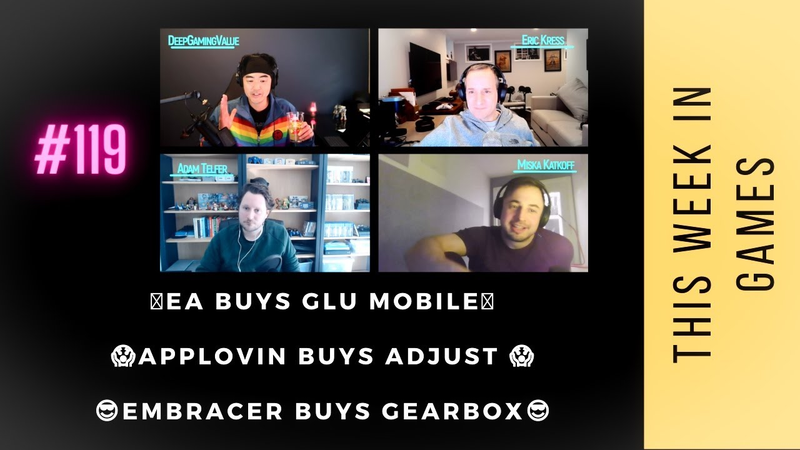
TWIG 119 : EA Buys Glu, AppLovin Buys Adjust, Embracer Buys Gearbox, and Predictions (Shooter, Mktg)
The gaming industry is currently undergoing a period of intense consolidation and strategic realignment, driven by the need to secure mobile expertise and navigate a shifting landscape defined by privacy changes and evolving monetization models.
- The gaming industry is undergoing rapid consolidation, highlighted by Electronic Arts' $2.1 billion acquisition of Glu Mobile and Embracer Group's $1.3 billion purchase of Gearbox Entertainment.
- The mobile shooter genre is a high-growth market that generated $2.1 billion in 2020, requiring deep-progression systems similar to Warframe or Escape from Tarkov to remain competitive.
- The deprecation of the Identifier for Advertisers (IDFA) is forcing a strategic shift away from traditional user acquisition toward reliance on established intellectual property and diversified marketing channels.

Future of Mobile Attribution | What to do Post-IDFA Deprecation!
The deprecation of the Identifier for Advertisers (IDFA) represents a fundamental shift in mobile attribution, rendering traditional click-based tracking methods obsolete.
- The deprecation of IDFA has rendered traditional click-based tracking obsolete, forcing a transition to Apple’s SKAdNetwork and the loss of granular, user-level data.
- Developers must now implement sophisticated internal modeling and complex instrumentation of conversion values to compensate for the lack of precise tracking data.
- To maintain user acquisition efficiency, studios must integrate with Mobile Measurement Partners (MMPs) and accelerate monetization signals earlier in the user funnel to generate actionable insights.

What Successful Product Managers Do Differently in Free-to-Play Games
Successful product managers in the free-to-play mobile gaming industry distinguish themselves by mastering five core competencies that bridge the gap between creative design and business performance.
- Successful product managers own the business side of a game by prioritizing metrics like LTV, retention, and monetization to balance the internal tension between CPI and LTV.
- Product managers can drive significant revenue growth through minor data tweaks; for example, allowing players to repeat events in Angry Birds Match increased baseline revenue by 20% without requiring engineering-heavy updates.
- When data is insufficient to justify a major feature, successful product managers use storytelling to sell the vision to leadership, such as when Clash of Clans successfully entered the Japanese market through culturalization and local partnerships despite a lack of initial localized data.

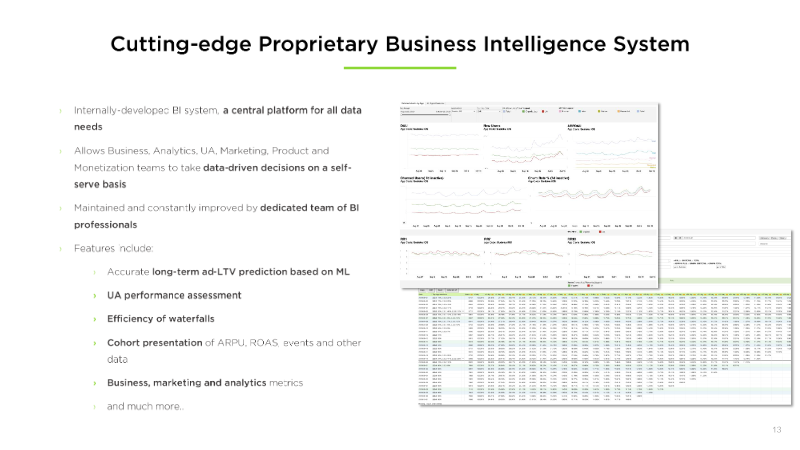

Embracer Group Merger with Easybrain: Investor Presentation
This investor presentation outlines Embracer Group's acquisition of Easybrain Group Limited, a leading developer of mobile puzzle and logic games.
- Embracer Group acquired Easybrain to integrate its specialized mobile puzzle and logic game portfolio, which includes 15 live titles such as Sudoku.com and Nonogram.com.
- Easybrain has achieved over 750 million cumulative installs since its founding in 2016, supported by a workforce of 230 employees.
- The acquisition aims to leverage Easybrain’s proprietary, machine-learning-based LTV prediction models and data-driven infrastructure to scale Embracer’s mobile gaming capabilities.
Writers
Games and companies
Games