1 free read left. Create a free account for unlimited reading + AI research.
Create free account
Keynote: Hindsight is 2020: How to Gain & Retain Your Audience in 2021
Key insights
7 takeaways- 01Daily time spent in mobile applications increased by an average of 25 minutes in 2020, driven by pandemic-related digital adoption across all demographics.
- 02Revenue models have permanently shifted away from traditional ad-supported frameworks toward subscription-based models and in-app purchases as primary drivers of consumer spending.
- 03Brands should integrate emerging channels like connected TV and over-the-top inventory to reach increasingly fragmented audiences.
- 04Developers must pivot to a retention-centric strategy that prioritizes long-term lifetime value over immediate acquisition metrics to maintain momentum in 2021.
- 05Privacy changes, such as those introduced by iOS 14, necessitate a move toward aggregated data and the diversification of advertising partnerships beyond dominant platforms.
- 06Automation tools are essential for managing the increasing complexity of multi-network campaigns within the evolving mobile ecosystem.
- 07Industry budgets are being recalibrated to prioritize high-value user acquisition and robust measurement capabilities rather than reducing total expenditure.
Ask AI about this video
Transcript
this is going to be a key note looking at um how to gain and retain your audience in 2021 with hindsight is so 2020 i love that as a i love hide and like puns so i i love that already um rich thank you for thank you for being patient how are you doing i'm doing very well thanks i can't take any credit for that title that was definitely a colleague of mine but uh i like it too yeah doing well how are you chris yeah not bad it's not bad it's been uh we've had power cuts and a and a few random occasions this morning but we are we're nearly backing up and where are you in london where are you based i'm not i used to live in london but now i live out west um through the cotswolds heading towards wales so our own
country okay nice but it's cold is it is it snowing would be my question everywhere do you know it's just stopped about 15 minutes ago so uh it's not so bad i'm doing like a weather report and a conference at the same time so without uh further ado i'm going to let you crack on so far i've delayed you enough so if you want to yes are you are you ready to go i'm ready to go i'm just going to show you my screen you take your time it's sorry there's no one after you apart from lunch so yeah and you know it's not so so over you two i'm gonna get out of the way and and i'm here in the background if you need me okay good stuff cheers chris so um yeah hopefully everyone can see my screen so give me a shout if not obviously but uh yeah super happy to be here today and thanks very much to pocketgamer and chris for having us along uh it's great to be here with you all so uh today i'm going to talk to you about how we can take lessons from what was a pretty turbulent 2020 and build on those to make a successful 2021 i'm going to focus on three main pillars
so one is media and mobile habits the second is how to adapt to new revenue streams and third is how to plan better than what is probably going to be a pretty uh unusual 12 months for uh for this year as it was for last so to get things started uh yeah my name is rich i had a partnerships team at adjust covering the emea market based here in the uk so as part of my role is i work very closely with our partners both on the solution side so working with some of the big agency groups across the across the region as well as as well as our technology partners also working closely with the likes of facebook google um all of our all of our ad networks analytics platforms and so forth and ensuring that the partnership we have in place is robust so that we can help scale our mutual clients so less about me and more about the content for today so what are we going to cover so first off we're going to have a quick look back at what effect 2020 had on mobile
and really how people shifted their consumption habits across this period second we're going to have a look at what we can learn from these changes and which ones of these are likely to continue throughout 2021 and finally we're going to spend some time on how to plan ahead and set your app up for success so let's talk about the keyword uh so the pandemic had two major effects on mobile it accelerated behavior shifts among users so in 2020 apps that suited the needs of consumers in lockdown such as video streaming gaming of course shopping they got a bump in audience numbers whereas other reps struggled to grow and or retain their customers it also sped up innovation with advertisers exploring new platforms and publishers creating new products to address these shifting behavioral
patterns so as the pandemic plunged economies worldwide into these lockdowns and we had these stay-at-home stay-at-home orders most consumers turned to their mobile devices to either find information entertainment or human connection or be it albeit remotely the pandemic drove mobile consumption so the average adult spent over three and a half hours in mobile apps per day in 2020 which is up 25 minutes from 2019 which was a massive shift and this wasn't just gen zed as we uh sometimes are led to believe millennials and baby boomers spent much more time in mobile as well so jan zed millennials and baby boomers spent 16 18 and 30 percent more time year over year respectively in their most used apps so what about some of the successful verticals within the app economy
so social media apps gained approximately 11 minutes of additional attention just from the average adult which was more than any other activity this was followed by streaming video messaging and of course gaming so other interesting verticals such as health and fitness business education news they all tracked upwards with increased activity since the onset of the pandemic for example fitness app downloads increased 58 by the end of march compared to the 2020 average so despite some recent slowdowns usage for these apps remain elevated compared to the pre-pandemic levels that we saw before so one super interesting growth sector was video streaming so all digital video services types gained but over the top video grew tremendously so premium subscriptions such as the netflix's disney plus hulu's of the world
they've increased their viewing numbers by over 13 percent in 2020 which is significantly better growth rate than was anticipated pre-pandemic and then video streaming surged and about 22 percent of time spent on ott is on mobile devices which is super interesting and also the usage of games on connected tv went up 74 so that beat out all other forms of streaming outside of video so what about the advertisers and the publishers so the big increase in mobile app usage and users however has not led to a huge increase in advertising revenues for many of the apps the economic crisis led to a widespread pullback in ad spending as we all know particularly in the early months of the pandemic and at the same time many of these new app users weren't eager to spend heavily in apps
so due to a drop in advertising the demand publisher revenues have been shifting away from in-app advertising and towards purchases so global app purchases sorry global app revenues from purchases rose over 23 year-over-year so of the 50 billion dollars generated by in-app purchases 36 billion came from within gains which had an over 20 percent year-over-year increase the growth of subscription-based apps has intensifies as users look to their mobile devices for a much more broader array of activities this is also being driven by changing user habit user habits that point to the stickiness of subscriptions so today consumers are more open to sign up for subscriptions and accept hybrid models of monetization which is of you know a combination of iap and in-app advertising consumers have also become more comfortable buying subscriptions
so a survey by delight found a number of u.s teens and adults who had a digital video subscription rose from 73 to 80 throughout 2020 and the biggest jump interestingly it was among baby boomers who went from 54 to 69 just throughout 2020 looking at subscription alone so that's a little snapshot on what we saw last year within the app economy so what is likely to carry over uh across to 2021 so let's kick things off with video streaming and ott as a media channel in general which by now can can no longer be uh can no longer be ignored so a recently marketed report which was titled mobile advertising outlook 2021 explained how mobile is in fact the future of tv with revenue
in the video streaming segment expected to grow over to over 30 billion dollars by 2024 so what does this landscape actually look like so consumers around the world are cutting consumers around the world are cutting the cord to cable tv and migrating their viewing and spending habits to connected tv so sitting at the convergence of tv and mobile phones connected tvs offer an app ecosystem similar to what we come to expect on mobile many consumers can watch shows play games learn a new language they could listen to their favorite music or stream their favorite exercise class for example straight from their tv so advertisers are following suit two with more than half of brands moving budgets to connected tv and often at the expense of other media particularly broadcasting cable so the world of connected tv
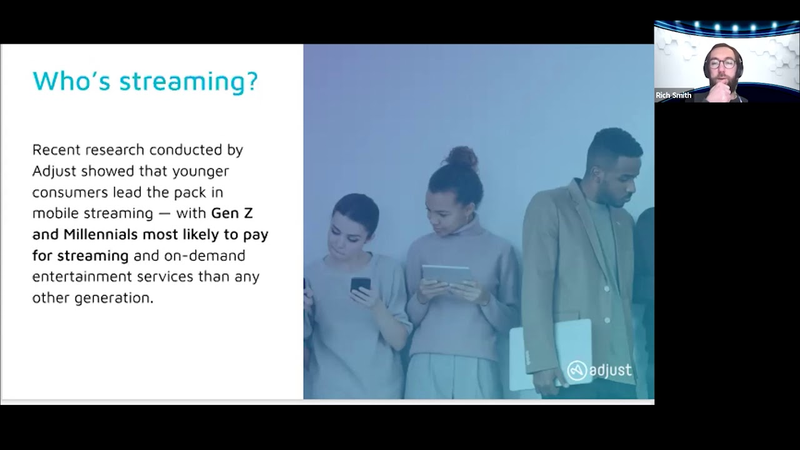
offers marketers a brand new and untapped advertising ecosystem with the opportunity to build creative and custom ads like they've often never done before but who's actually engaging with all of this content and how are they doing it so we at just actually conducted a recent research piece that showed that uh the younger consumers lead the pack in mobile streaming effectively gen z and millennials are most likely to pay for streaming and on-demand entertainment more so than any other generation which is potentially no surprises there but this ultimately demonstrates that the opportunity that ott affords mobile marketers is massive as mobile marketers tap into ott and they like push up their spending on advertising for a ua for example the question for this year is really how they're spending and attributing their users so many companies are investing heavily
in ott and rightly so but often don't have a way of understanding what is driving the true value for their business and that's where robust and accurate measurement is the answer and needs to be considered as a necessity as this media channel grows throughout 2021 so we touched on subscription apps a few moments ago and we actually see apps on all verticals experimenting all moving towards a subscription revenue model throughout this year so despite the comparatively small number of apps that are offering subscription reports show that these account for the majority of consumers spend outside of gaming so hence why we believe more and more apps will be looking to adopt or at least experiment with a subscription-based revenue model this year and according to app annie over 90 of consumers spends from apps offering
subscription outside of gaming so it's a massive massive opportunity and revenue source and consumers actually pay for an average of four app subscriptions per month and spend on average over twenty dollars on their app subscription services but what's super important to know and to keep in mind about this is that this figure doesn't include subscriptions such as netflix disney plus hulu's of the world that people actually pay for outside of the two major app stores nor does it include in-app subscriptions from apps that actually fall outside the top 100 so the opportunity here is tremendous i actually believe that more and more apps will turn to a subscription model this year as regular and forecastable revenue proves to be a massive benefit for the brands and businesses that do that which in effect makes subscription more important than ever and could potentially lead to the
ultimate income stream for a lot of publishers and advertisers this year and beyond so let's plan better for 2021 so in 2020 you either got a bump in audience because your app was fit for lockdown or you didn't and your apps struggled to grow or maintain its audience so heading into 2021 you're either focused on retention or you're trying to pivot and get your audience back more time spent on mobile equals more apps and marketers need to l marketers need to lean more on paid marketing versus organic due to this increased competition if brands want to differentiate and become more competitive on mobile they need to become better in their abilities to use their data so let's look at some ways to be successful throughout 2021 user acquisition so there's been a
significant drop in organic discovery the dominance of the big name brands and studios can hinder the entry of newcomer apps so lean in to paid marketing users are also constantly switching platforms so marketers are spending their budgets across more network partners and running more network experimentation diversify your partnership portfolio and reduce dependency on just one major advertising play as you may have done throughout the previous years you need to be where your audiences gather like for example there were fewer installs on twitter last year whereas like tip top snap google search ads there are much more throughout 2020 and of course each social network requires a different expertise of creative targeting measurement so marketers will need to grow their understanding of these different networks to really really succeed
and as i just spoke about look for ott inventory that is on mobile devices especially in those younger generations if they're your audience this is a great way to reach out for them for pure mobile players in-app ott inventory is extremely interesting channel to explore and add to your marketing strategy however i think advertisers for ott services looking to capitalize on this growth and this new market uh need to be critical of which sources sources are actually generating lifetime value from customers so being able to show performance and of course measure attribution is a crucial element for this area and of course knowing your user's journey is crucial for reducing churn increasing customer loyalty and delivering personalized marketing without being too creepy of course so retention is the
new growth it makes business sense to to move to a more retention based model one that maximizes lifetime value through a mix of retargeting and re-engagement campaigns with a heavier focus on retaining those super important existing users so many marketers are probably just ignoring retargeting only really the shopping sector really focuses heavily on retargeting efforts and i think that needs to change somewhat for this year so for retargeting to work of course there needs to be a dedicated like campaign specific appeal so without a good deal tied to the retargeting campaign it may not work so well users need and expect something extra special to come back to your app and answer questions with your data but track in-app user activity to analyze everything from your acquired user behavior
for all of this in-depth data about your campaigns and your users allows you to optimize and of course spend budgets much more wiser meaning you'll spend the same amount of money potentially but could result in could reach results which would be much higher you could potentially have drop cost of ua you could have more users with higher ltv scores all of these can materialize with just better data access for example you could literally just send like a push notification in periods where you know users are actually active in apps and that just that small little tweak will help drive users back towards your app so three tricks to optimize first off analyze your user base to uncover the user behavior patterns and preferences definitely invest in acquiring valuable users to increase your roi quality and constantly always go hand in hand and double down on what's working
so in order to reduce churn reinvesting channels are bringing those loyal users to you and then of course have the most accurate visibility over your data set so users are obviously unique and complex so in order to reach them and get those high ltv users in your app you need to understand their behavior and once you're able to identify these behavioral trends that are quite specific to your app you can really start to back the decisions that you make with that with the certainty from that data the more targeted your messaging the more targeted your results are likely to be then you can scale that audience and make marketing decisions with automation tools which will ultimately save you time and make creativity your your priority moving forward so the final topic i'd like to speak
about for coming into 2021 is all around automation work smarter and drive better results so research conducted uh last year by census wide which is on behalf of adjust polled over 100 ua managers and digital marketers about their campaign loads it found that on average marketers handled 19 campaigns across 14 different networks so there's a lot of dashboards with a lot of disjointed data which can't always be easy to tell the whole story and when when we asked what the three biggest pain points about the roles for these ua managers the three topics that came up were merging and acting on disparate sources of data individually updating bids and budgets and accurate campaign management 80 of marketers surveyed said that their company was going to increase its marketing or advertising automation
budget in 2020 so that's huge and the potential cost and time savings as a result of these can have an enormous impact on your kpis so take advantage of automation tools and scale fast let's say specific creatives or campaigns are working well react fast and take advantage of that time saved you know ie scale campaign budgets with optimization you can automatically optimize your campaigns that hit your kpis much quicker than you can do manually ultimately just put time back in your diary to of course focus on the more strategic priorities that your app needs in order to achieve so to sum up what we've covered today the pandemic on mobile it was a hell of a year 2020 and that climate isn't going to settle down anytime soon at least not for the first half of this year so get yourself ready consumers are shifting their consumption
habits across various different media channels to take advantage of these new changes and reach these younger audiences as they attach themselves to new media channels and retention is the new growth that paid marketing is going to be critical to succeed in what is always a super competitive gaming market thanks very much oh hello thank you very much thank you very much richard that was great that was great a lot of different um got some questions i'll try and get a lot of different in in insight in there from uh different spaces as well which i think is quite refreshing too because we tend to get very very into the nitty-gritty of of just games and just you know how we can change this one figure by what percentage and you've kind of given us a much broader uh a broader look there which i think was great um i was gonna ask you questions i mean you talked about a lot of different obviously digest monitor a lot of different
apps it's not just games even if games is a huge one you know are there are there a lot of kind of key lessons you think the games industry maybe needs to to learn from other other uh other kind of verticals no needs to look around at cause obviously you've been doing things you know i'm sure that ua managers are looking but do you think there's some specific things we really need to look at you mentioned a few kind of their things trends are succeeding elsewhere yeah i think um i mean often the case of course is is the vertical's learning off the gaming sector because that's obviously at the point well that's what i mean so it's super interesting to flip that round the other way and i think i think some of the lessons that could be like from last year specifically so when we're talking about the pandemic in 2020 is a lot of other verticals struggled like obviously we're in a slightly fortuitous position where gaming had a pretty pretty okay in the mobile space but some of the other verticals obviously around travel and and even shopping at the start of things really really struggled so i think there's a lot of lessons to learn with regards to uh keeping
in the forefront of your customers and your and your users mind so how do you communicate with your users effectively if they're not regularly coming into an app where they were previously um so there's different ways where people or other verticals were using re-engagement which was a very different strategy to just bringing people back to do a certain product it was just to keep them to keep them active in the app throughout the year so i think there's definitely opportunities to learn from there but whether that will never be the case for for the gaming sector hopefully not but uh there's definitely so hopefully not but it's it's good to it's i mean things you know change all the time right you need to so i'll touch a couple of these i mean obviously one of the things you talked about was new audiences coming in and more boomers and different uh different habits and uh a question from the audiences is how many of them do you think can be can be retained i think that's the kind of question obviously the the you know the global situation has kind of caused people to be more you know that maybe weren't before looking at screens and engaging new entertainment but fingers crossed at some point that will will be able to go outside again
um do you think we'll retain a lot of those users i do because i don't think that a lot of these new either media channels or entertainment um areas that people have picked up throughout the last 12 months or so i don't think people are just going to put them down like i think people are going to share them more with their friends people are going to engage with them more than they would have done previously of course yes we'll be allowed to go out and see people but i think users who have lent into different channels or to different products or apps this year we'll likely continue to pursue those and i think we as an industry are quite good at obviously communicating to users that we've gained to uh to ensure that they do you know they do become sticky they do stay where they're at so i think that will hang around no well hopefully so i'm you also mentioned subscriptions a number of times and you know i i subbed up to a million things you kind of only see at the end of the month where all these five pounds and seven pounds disappear out um it's clearly very successful for for in the video space uh and you know obviously gym
memberships over the years has always been the way but i think from a games perspective we haven't really seen certainly not from a maybe we haven't seen a netflix for games type experience working yet i mean apple apple obviously uh you know came out with i've got a service have spent a lot of money investing but haven't shared any data uh google likewise and and you've got small kinds of game club that haven't really really sort of come out and said this has been a a vast success do you think i guess you could have subscriptions within game which is complete this is a different thing but those broader broadcast netflix you type subscriptions like you know pay your five pound get all the content you want hasn't really hasn't really sort of worked yet on mobile anyway um but but maybe yes is the most important word like i think that the reason i wanted to talk about it a little bit today is to take these learnings from other verticals to understand like is there an opportunity for games to really pursue this model um i personally think yes that it's going to be a super tricky road to to go down of course um and i think
some of the changes that are coming to you know within the industry uh may lean more towards subscription base and looking at those loyal users and keeping them retained so i definitely think there's a major opportunity for gaming within subscription um how that actually materializes yet let's let's see but um we've seen such success with other verticals that it surely can be replicated it does it does seem it must be i mean i i see it within games on a certain level you get you know you sign up for you know models that you kind of get extra gems and whatever goes back and i think that that seems to work but you've already got the user in there right you're very quick but yeah that's uh that's good um there's a question here what are the current campaign automation solutions in the markets bit broad and how do you see them evolve in 2021 i don't know if that's something you can answer or not but it's uh it's coming from the audience sure yeah i can give it as i can give it a stab i think i mean there's there's a multitude of campaign automation solutions out there it's about how you feel the data within those solutions um so whether that be through you know
your uae campaigns or your attribution provider whatever it might be there's a suite of tools out there how how i see it evolving um i think it's just having a broader um accessibility to different networks i think a lot of the campaign automation tools focus on a couple of the big platforms and it'll probably evolve to focus on more and more of the more niche you know ad networks dsps whatever it might be moving forward so it's in effect making more automation at scale because i think within some solutions today it's a little bit limited fair enough uh final question we'll leave you with um is is yeah obviously we've got with ios 14 coming in this is you know an idfa it's going to be changed you know that is going to have some impact like today the it's gone from interesting opportunities to the end of mobile marketing you know it so i i imagine that the the truth lies somewhere in between do you think that's there's going to be an impact but do you see it more about you know something that's going to that's going to sort of drain some money or is it
more about moving where that spend is it is spent so to speak that that marketing spend is that gonna move yeah i don't see it draining any money to be to be very honest and i think you're right i think some developers will shift money to other platforms at least potentially in the short term uh but i lean more towards the opportunity side and not the end of the world side that some people might might focus on i think we as an industry will just have to take a step back and understand the changes that are coming obviously and adhere to some of the new frameworks that are going to be out there so it's going to be interesting to potentially move a little bit more away from the user side and more more towards the aggregated side but i don't i certainly don't see money like flittering away i think it would just get slightly redistributed the world the the sky is not falling then fair enough that's a chance yeah it'd be nice it'd be nice to know what early spring means from a date perspective i'm sure well that's true we all will go
thank you so much very informative uh yeah a really good way to end the morning session lots of some different perspectives and and a broader look forward so thank you for your time you
Summary
The global mobile landscape underwent a profound transformation in 2020, as pandemic-driven behavioral shifts accelerated digital adoption across all demographics. Daily time spent in mobile applications surged by an average of 25 minutes, fueling substantial growth in the gaming, streaming, and fitness sectors. While the initial onset of the crisis caused a temporary contraction in advertising revenue, publishers demonstrated resilience by pivoting toward subscription-based models and in-app purchases. These revenue streams now represent the primary drivers of consumer spending, signaling a permanent move away from reliance on traditional ad-supported frameworks.
To maintain momentum in 2021, developers and marketers must transition toward a retention-centric strategy that emphasizes long-term lifetime value over immediate acquisition metrics. Success in this competitive environment requires a sophisticated, data-driven approach to re-engagement and personalized marketing. As the industry navigates significant privacy shifts, such as those introduced by iOS 14, the focus is shifting toward the use of aggregated data and the diversification of advertising partnerships. By moving beyond dominant platforms and integrating emerging channels like connected TV and over-the-top inventory, brands can effectively reach fragmented audiences.
Ultimately, the path to sustainable growth lies in the adoption of automation tools to manage increasingly complex, multi-network campaigns. Rather than anticipating a decline in total expenditure, the industry is recalibrating its budgets to prioritize high-value user acquisition and robust measurement capabilities. By leveraging these strategic insights, companies can better navigate the evolving mobile ecosystem, ensuring they remain agile and capable of fostering deep, lasting connections with their user bases in an increasingly digital-first economy.





















Comments