1 free read left. Create a free account for unlimited reading + AI research.
Create free account
#ElevateYourGame: How Impression-level Data Can Take Your Game to the Next Level
Key insights
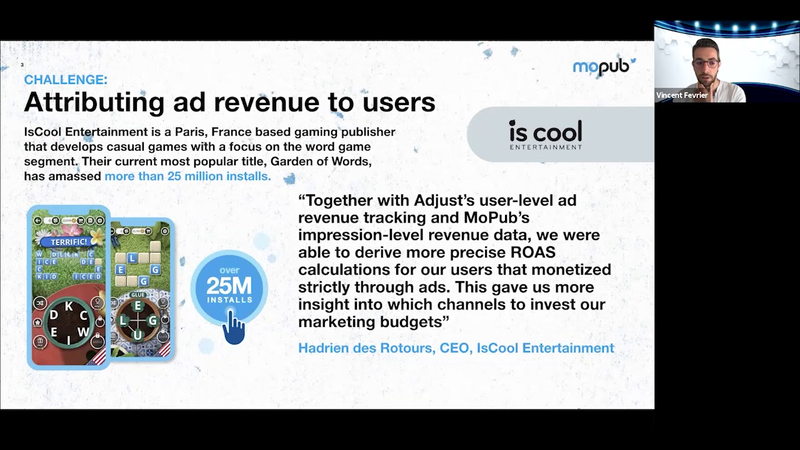
6 takeaways- 01Adopting granular, user-centric revenue attribution has been shown to yield a 15 percent increase in incremental return on ad spend (ROAS).
- 02Integrating impression-level revenue data allows developers to forecast long-term lifetime value within one week of installation, enabling faster user acquisition decisions.
- 03Strategic operations now utilize a hybrid model that combines high-level platform automation with deep-dive analysis to identify and eliminate unprofitable traffic sources.
- 04Studios are shifting from manual waterfall management to real-time bidding systems to capture monetization efficiency that traditional processes often overlook.
- 05To navigate privacy regulations like Apple’s App Tracking Transparency and SKAdNetwork, developers are moving away from fingerprinting in favor of robust internal benchmarking and data analysis.
- 06Granular impression-level data is essential for studios where advertising accounts for the majority of total income, as it enables precise optimization of individual player value.
Ask AI about this video
Transcript
be looking next to how impression level data can take your game uh to the next level that's the topic uh for discussion um and we're gonna be discussing that in the company of vincent feverier i hope i said that right from mopub and uh hadrian rator of uh is cool entertainment so i believe that they're slowly coming into the to the room and i shall say hello to them we've got so much great stuff on this it's gonna be a great tour we've got so much great stuff lined up we can take you all the way through to to one o'clock with this hello hello how are we oh straight into sharing there we go there's no messing about um how are you guys vincent how are you very good here thank you how are you looking very good you're looking very well groomed so i may say so look at i feel i feel like i feel like i should i
should put more product in i'm looking counterfeit i'm not but thank you it's good um okay so um vincent and henry are you are you uh you're all good are you ready to just launch in you seem to be chomping at the bit to uh knowing so uh yeah um i think we we've got a lot of content to cover so we're just going to be on time we're starting a little bit late you get your time don't worry don't worry it's all relaxed it's all virtual here there's no nobody going to come with a big shepherd's crook and pull you off stage so i'll i'll hand it over to you and i'm here in the background as and when needed and i'll come in with some questions and stuff at the end so over to you guys thank you so much and we are super excited to um to be here today um let me actually oops my bad let me come back to the main screen yes so um hello everyone and thank you for uh joining us on this webinar session with adrienne so today we'll talk a little bit more about many topics but especially how impression level revenue data can help
you elevate your game um let me introduce myself quickly i'm vincent ferriere i'm a senior publisher account director here at mopub i've been with mopa for about two years uh and i cover all partnerships uh for the uh french israel spanish and italian market so a lot of gaming publishers on this region a big focus on hyper casual as well as you know today our mobile gaming and mobile advertising economy is changing at an incredible speed real-time bidding automation user-level data and just to top up this ios 14 are coming in so all these topics are evolving very quickly and requiring our developer and their teams to adapt every week in order to keep up with the competition as well it's also very competitive uh market um so this way today's talk is going to be very important for you guys we're gonna we're going to learn how we can embrace and adapt to those new practices uh
through precious advice sharing tips to master your monetization and your user acquisition so that's why today i have the chance i'm the lucky person to have the perfect guest for that who is adrian de rotou he's the co-founder and ceo of school entertainment it's a paris-based studio they are one of the leaders in europe for world games they launched in 2011 and they were acquired couple of years ago by the asset group so the the school team has been working with mopab for a bit more than a year now as their only uh mediation platform uh so we learn a lot from them as they have been uh able to to master uh mob at the best way um so yeah i'll i'll uh quickly uh introduce uh um adria uh he will he will introduce brooklyn himself and his company um but uh rapidly uh i can i can mention that he was very helpful last year because he detailed
us how he was using impression level revenue data through a quite concrete and precise case study that you can find on mopab website uh it was in partnership with adjust which is the attribution that uh that they are using um but yeah but jumping in quick into the the content now because uh we we do have a lot to cover today um adria uh first of all thanks so much for joining us on this webinar uh for taking the time here today for for being such a great partner with mopab can you tell us a couple of words about uh your games that is cool and and how impressionable revenue data has helped you reach about 15 of incremental return on that spend on your user acquisition campaigns yeah of course thank you ransom good morning versailles thank you for inviting me good morning everyone i'm very happy to be here and share some some of our experience at e-school so well in my company so it's cool
we are currently focusing on the world game genre so before answering your question let me share just some of the things to know about our world games so in a world game we keep players engaged with the game on the long term to give you an idea 50 percent of our daily active users have played the game for more than 6 months and 30 percent for more than a year so it is long-term business and as a consequence a long-term return on advertising spends so we we do have positive return on investment with a good margin but we have to play on the long run so here we are not talking about a genre where you can expect positive return on that spend after seven days or very short term here we're talking about six to eight months uh or sometimes more
so this clearly means that we have to to to to to have a very really good understanding of the lifetime value at the user level to be able to monitor your user acquisition campaigns now monitoring revenue per user is quite easy when revenues are in-app purchase because you get the revenue per user okay but when it comes to advertising revenues it is much more difficult just because attributing advertising revenues at a player level has always been difficult so as our revenues are made of let's say twenty percent of in-app purchase and eighty percent of advertising uh this is their problem that we had to tackle at his school so the first solution we had developed a few years ago was not so bad um it consisted in counting the impressions and attributing the same revenue
for all impressions let's say for on a format in a country this wasn't bad but we know this wasn't accurate enough because each impression actually has a different value and that value depends on the player of course but it also depends on the number of impression on the same player we all know that the first impression is usually better paid than the following ones and it also depends on the seasonality things like that so when uh you and mopab came with the impression level revenue data we welcomed the innovation because it now gives us the true value of each impression and we can send it to our analytics this means that now we can build and we are now very confident about the revenues per player and so we are very confident on what we measured on as a return on investment so back to
your question how did we achieve a plus 15 return on that spent using impression level revenue data because that was a question well it's easy i mean it's just by measuring a true revenue per user which gives us a a true return on that spend pursues which was different uh from the one we had before and this allowed us to cut unprofitable sources and push profitable sources um so basically that was the the right decision and so we achieved a better return on investment globally speaking very nice understood yes so you can definitely filter at the user level which campaign and source to push thanks and that's so you said you have a let me follow up we have a long term ari for your campaign so how do you optimize your your company do you wait six months to know the lifetime value of the users before doing some optimizations uh well um not exactly we
so we usually have a positive return on advertising spend let's say after six months or more but we of course need to take optimization decisions much earlier so for that what we have done is the following we have models to do long-term lifetime value prediction with only three days or seven days of player activity which means that we are pretty confident with the return on that spend only after a few days after the installs so even if the return investment is on the long term we will know it after three or seven days and this was feasible of course because of good modalization skills but also because of more accurate data coming from impression level revenue data very nice very interesting so in within three days of the install you already can predict like what's going to be the value of the user six or 12 months ahead that's uh yes
and it's pretty it works pretty much well nice well that's very strong prediction in here and model interesting to know that um so so now that you have all these data impression level revenue data per users um how granular do you go in segmenting those users from that you acquire so about the granularity so as we have all data at the player level we can have all granularity that we want we can do it at a network level we can do it at a campaign level we can do it at a creative level at the keyword level at the source level so we can do everything so to be a bit more precise when we work with facebook or google universal app campaign as a lot is automatized on their side we mostly run analysis at a campaign level so we don't deep dive into so much granularity but when it comes to ad networks
let's say iron source unity or uploading or when it comes to keywords with for example apple searches clearly we deep dive in return on that spend at the source or the keyword level and and that is that is necessary to optimize the campaigns okay very very interesting yeah there's a lot of granularity sometimes you probably could get lost probably so what about the the creative because i know now creative is being the big topic we understand that this is what really making the difference in uh in some user acquisition campaign do you also look at this granularity uh well there is a paradox because creative is so important for user acquisition this is clear but usually we don't we don't look uh at granularity per creative as we consider that the winning creative mostly gets 80 percent of the campaign budget so if you look at the campaign level it's okay this said it is not a bad idea to have a look at
it sometimes um well all developers sometimes make creative that you might think they have nothing to do with the game right and these are the ones you should actually take a look at why is that because even if you have a better cpis they might have sometimes a lower return on investment so sometimes you you have to deep dive and go to the creative granularity okay yeah i understand so what uh what are the examples for you today uh in a specific case of what game that are that you consider high performing creativity well well that's creative so it's not easy to say but well to give you an answer what we see today is best-in-class creatives at the moment are pushing the idea you know of improving your brain or or keeping your brain very young or or keeping your brain smart or measuring
your iq so we have a lot of stuff like that at the moment you know all about a making your brain work better yeah we all want to keep our brain younger and younger again so again that's something attractive to me as well if i want to play ward games it is a foreign value proposition very nice well thanks for bringing that to the people actually i think i love scrabbles but playing games is a good way to to keep young so good points um nice so moving on i had this question now um as we we touched on a little bit on all the changes was about more about automation so what do you do today is to kind of make the life of your teams simpler easier and what do you do for automation on the user acquisition and the monetization side um so well automation is an important topic for user acquisition um there are some companies that have
products offering ua automation and to a certain extent a company like google with the universal app campaign has developed the concept of automation as you just have to upload creatives and set a goal and then it does everything for you and a bit the same for facebook so that is the that is exactly the reason why i'm not looking for more automation on facebook or google campaigns as it is already automatic automated but when it comes to ad networks or search ads it's a bit different as automation has two benefits first benefit um you don't waste time doing the very time consuming optimization line after line so it's easy you save time and the second benefit is you can find opportunities because you
will run optimization on a more regular basis and as a consequence you will spot early signs of new source or new keywords that can scale okay so back to your question we at school we're not using automation tools for google or facebook but we're developing internal automation tools for keywords or ad networks nice well i i understand so a lot of internal and internalization work about your optimization your lifetime model so uh i think there's a there's a lot of experience and knowledge we can see like that you've developed behind that interesting and uh that's thank you thanks a lot advance that's very useful to understand what about the the monetization now as we know it's always like it's always both going together user acquisition monetization how do you optimize this side of the advertising business uh well we a bit the same we have we have also created internal tools to automate
the update of our waterfalls so we have a lot of internal tools that we are we got a lot when we have drops in revenues increase or more latency or something that doesn't work so this work and in addition and i think and you know that by heart vanco the future is about advanced bidding so we are also now moving to advanced building with the the more networks we can and all networks available in the mob bidding offer so this removes the waterfall management hassle and and so and it works pretty well as you know some of the networks uh already 85 of the revenues generated by some of the networks is made only with the with this bidding uh new offer so so this is very interesting yeah thanks yeah that's that's true we're definitely heading towards a full uh real-time bidding world for the
monetization side so it seems that all networks have been uh thinking about it and preparing last year and this year is really the year where well i think we can expect pretty enough to see all the major networks being available on on main platform real-time building and i think that will change the the jobs of monetization manager because no more waterfall management as you say and and they can move on to more optimization maybe testing of i suppose uh ad frequencies gamepl um now the the million dollar question uh so kind of last question say how you guys uh i think everybody is uh is getting prepared for ios 14 changes in the idea of a collection and and what are you guys doing at the on the school team to prepare for this challenge on the user acquisition side uh well well so i ios 14. so ios 14 is a tricky topic and i'm sure you will have conference today about with a lot of experts about ios 14 but
my feeling is that ios 14 will lead to big changes and it will impact companies like uh isf on both sides as an advertiser and as a publisher and um as a comparison the the impacts will certainly be much stronger than those of laws such as gdpr which yeah that was very low in fact so i will understand europe was it's a kind of key market for you indeed uh but definitely ios 14 is a worldwide impact so it's going to be much wider um and and on the publisher side can you can you tell us uh on the administration what do you feel is going to change as well well of course um as a publisher first we we don't know exactly uh what the impact will be on advertising revenues the only thing we know that targeted advertising won't be possible
anymore with a part of the audience some platforms some let's say advertising leading platforms expect revenues to fall by 50 percent which would force a business model racing so what we have done so far the other company has to just to adapt it's easy i mean we have integrated the apple app tracking transparency framework in our apps and we will start testing this uh app tracking transparency pop-up on a small part of our audience and we will measure the opt-in rate and this will be the starting point of uh to to iterate on what we should do next but i have i i have not a lot more to say for for now but what very important point um as a developer if we have any doubt any doubt about the compliance of some advertising sdks
we won't take any risk and we will remove them from our apps this is very important as we know that some companies will try uh to do fingerprinting which is absolutely prohibited in ios 14 this was announced last week by apple so that's clear no finger printing and as you know the the the risk for an app is on the developer side because the developer is liable for its apps not the sdk companies so we will remove any any sdk with trouble and things like that okay yeah rather not take any risk you're right now the rules of the app stores are becoming much tricksters and i think uh publishers want to uh respect and stick to that rather than take any risk uh thanks so and and as an advertiser now uh how do you see ios story changing as an advertiser the change is big also the my understanding is that the tracking as we have discussed it before in this
interview so say cpi and ltv tracking at the player level things like that this will not be possible anymore on opt-out players only you will get only a sort of a average cpi an average ltv this will be the only thing accessible to us so in some way it is the end of the attribution and marketing as we know it now and as fingerprinting is forbidden we will not be able to attribute opt-out players so on our side again what we have done so far is simply integrating the sk ad network framework to be sure we will still work on a cpi basis with the advertising networks and we have implemented the first version of the conversion value but this will certainly and probably be changed in the future because we don't know exactly how it will work but about ios 14 just a
word on what we think so this clearly let's say this is a big change but this is clearly not the end of the ios activity the business model will be racing but i think that there will certainly be a new business model on ios and we will find new ways to balance cpi ltvs etc okay the the the the thing is the transition between now and the post ios 14 world is a tricky issue for companies like us because we are buying users at today's price it takes six to eight months to get a positive return on investments we think that the ios 14 change will happen during that period so if the revenue is full then there is a risk that we may never get our return on investment on those players so we have to be careful so as a consequence and i'll say at the conclusion on my side we are very cautious
uh we wait to get learnings and benchmarks and um and and i have to say i am personally very very surprised by the huge uncertainty and the fact that so much remains unknown and unanswered um it it is very surprising when you talk to leaders from advertising or attribution companies um you'll see that they are still in the dark and there is huge uncertainty uh with only a few weeks left before big changes so um so we will see i mean time will tell but we we are ready but we don't know exactly how it will uh happen yeah wow thanks thanks for those details yeah that's for sure for an industry that is very based on analytics data and forecasting uh those those changes brought in by apple is definitely uh putting everybody on on a fight mode and being ready to adapt as soon as possible
uh that's that's a very uh very big things to come in the next month and to keep an eye and i think every developers are talking together to to get that but thanks so much adrian uh getting to impressionable revenue data uh to understand uh your management of user acquisition and monetization company at the granular level and getting your insight on ios 14 was a very very precious uh feedback and testimony today so i'm sure the audience have appreciated that a lot um so yeah thank you thank you here and uh chris uh over here that was brilliant um i mean that was fantastic really great job uh both vincent and andrea um uh i i got chills well he's at the end of the advertising out marketing as it is now i've got oh um i know what you mean there's there's so much uncertainty and we're all kind of just sort of going ahead there's this kind of uh meteor coming towards the industry everyone's just kind of going okay we'll be all right um but but there are you know there are strategies but yeah it's it's a that's a
it's it's good to in a way to hear people being so open about it and and saying yeah this is we don't know and it might raise the question as well of what about android are they gonna try to follow a similar step uh our publishers gonna develop more android a lot of questions yeah well maybe someone from google will pop in an answer uh i don't think so um i've got a couple of questions loads of questions in the chat so you might wanna um or in the in the q a so if if um yourself or um adrian wants to go and announce some of those you can but i'll i'll get a couple through because we did start a bit late so i'll give you a couple before moving on um so there's a question here from from vincent asking about what's uh what's not you for vincent different vincent what retention indicators do do you look at in the early stages of player lifetime so i don't know if that's something that either vincent adrian you want to answer uh what retention indicators we will look um well classic retention indicator so uh
basically uh day one day three the seven des30 we have benchmarks we have targets i mean and so we have a look to that did you mention adrian so that you're looking at the number of level plays for your models that helps you kind of determine yes well um well yes of course the the the main objective is a return on investment so we look at the money we make but of course before that there is the retention before the retention there are the number of level played so we have a lot of dashboards to follow all activities of the players but what is true is that it might be true in a lot of game genre but in the world game i can tell you that um doing like level designing and precise level design is absolutely key to keep players because as you play with the language there is something you know you you have to to for each language you have to to
get the right ones it's not only doing translation it's like having a proper level design for each language yeah um well there's loads of questions yeah you might want to there's a lot of people you've you've picked a lot of interest here um what was the uh what was the most important and crucial insight which you got from impression level data which you were not getting from other data that you were previously measuring was a question here from an indie developer yeah i understand this question so um my answer would be we get granularity because the total revenues the total advertising revenues we we have it we had it for a long time but the the difference with impression level revenue data is that you can get the value of one impression and as you know that this player at this impression you can you can really um build the advertising revenue per user yeah yeah i'm gonna i'm gonna get one more question because i i think the rest
of them um that my smart needs more longer answers might need to be answering so i don't know if you can see the q a but feel free to answer a few of you if you can yeah i'll be happy to to jump after one yeah yeah um the final question i've got is from tanveer uh ahmed who says how often do you refresh sources on the ad networks in what pattern do new top games impact existing sources i don't know if that's a bit of a different question yeah but well it depends on the on the level of confidence we have on on the campaign for example when we launch campaign we need to get learnings and then we need to optimize so it can be quite often i would say once a week we will have a look to that when it when we are very confident with the campaigns and we're running you know okay one different point some of the games they are live for more than three years so we have a lot of experience so some campaigns we ran it for more than three years so there we only optimize maybe once every two weeks we get the look at the source
uh when it when we are launching we are much more frequently looking at that but as i said before we are currently developing automation tools to be sure we get the opportunities because if you do it on a more regular basis you will get opportunities cool um i i could go on i think i sensed we could go on and as i said do get back to those questions but thank you we have to move on we we we've we've pushed over our time i'm getting later all day rather than not back on time but that was thank you so much for being so um so generous and and open with the data and thanks uh hadrian thanks vincent for um thank you so much yeah thank you so much chris we're excited and i'll try to uh jump on the chat to answer a few follow-up questions and thank you adrian so much for all those precious context awesome nice day bye-bye great conference everyone bye
you
Summary
Mobile game developers are increasingly leveraging impression-level revenue data to transition from aggregate performance metrics to precise, user-centric optimization. This shift enables studios to accurately attribute ad revenue to individual players, a critical capability for companies where advertising accounts for the vast majority of total income. By integrating this granular data into predictive modeling, developers can forecast long-term lifetime value within a week of installation, facilitating faster and more effective user acquisition strategies. This data-driven approach has proven successful in practice, yielding measurable improvements such as a 15 percent increase in incremental return on ad spend.
Strategic operations now rely on a hybrid model that balances high-level automation for major platforms with deep-dive analysis for specific ad networks and search channels. This granularity allows teams to identify and eliminate unprofitable traffic sources while scaling high-performing segments. Furthermore, the industry is moving away from manual waterfall management toward advanced real-time bidding, which optimizes monetization efficiency. These automated systems are essential for capturing revenue potential that traditional, manual processes often overlook, particularly during the high-stakes launch phase of a new title.
Navigating the current regulatory landscape requires a disciplined commitment to privacy-compliant frameworks, such as Apple’s App Tracking Transparency and SKAdNetwork. Rather than relying on prohibited practices like fingerprinting, studios are focusing on robust internal benchmarks and rigorous data analysis to maintain performance in an environment of reduced targeted advertising. By prioritizing internal automation tools and maintaining a focus on impression-level insights, developers can maintain a competitive edge and ensure sustainable growth despite the ongoing evolution of attribution standards and industry-wide uncertainty.

























Comments