1 free read left. Create a free account for unlimited reading + AI research.
Create free account
Games Marketing Insights for 2021
Key insights
6 takeaways- 01The pandemic attracted a new cohort of younger mobile gamers who demonstrate a higher propensity for in-game spending compared to existing players.
- 02Marketing strategies must pivot to broaden campaign targeting to reach the new, highly engaged audiences that emerged during the pandemic.
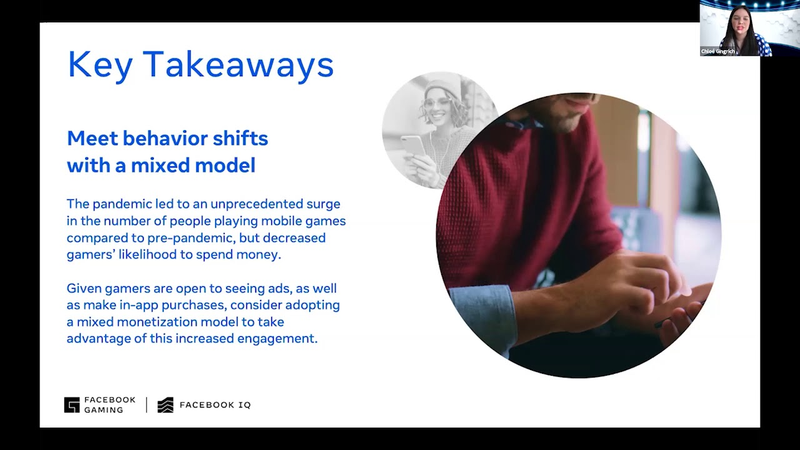
- 03While existing players increased their average weekly playtime by 1.5 hours, their overall in-game spending decreased, signaling a need for developers to shift toward mixed monetization models combining in-app purchases and ad-supported experiences.
- 04Community engagement is now a primary driver for retention, evidenced by a 91.8% year-over-year increase in live streaming viewing hours, which reached 7.46 billion hours between July and September 2020.
- 05Community building should be treated as a core component of long-term game health and user acquisition strategy rather than a secondary feature.
- 06Developers should prioritize out-of-game social experiences, such as forums and live streaming, to align with player motivations for escapism and accomplishment.
Ask AI about this video
Transcript
we have our session today chloe gingrich she's an insights strategist at facebook i'm going to tell you a little bit more about her because she's going to be telling us about games marketing insights for 2021 in her role over at facebook she's responsible for analyzing trends developing insights bringing thought leadership to the market through facebook iq a big part of that no doubt is the new report i hope we're going to deep dive into it games marketing insights for 2021 and that was created in partnership with facebook gaming and facebook iq designed for the gaming industry to understand consumer preferences which is what we need to do right now so with the new research with the insights etc let's introduce
chloe chloe start it out by the way at facebook and this is something interesting i ask every guest every person here something interesting about themselves we do have something interesting because chloe started out at facebook during the beginning of the quarantine shelter and place orders and since then i guess a lot of time to focus on insights because she's been doing her best work certainly while maintaining a little bit of a balance and wellness she's born in porguai south america paraguay and grew up in new york and as i said she's our guest today and i'm taking q a questions and we're going to uh start into your presentation and then kick off with q a chloe take it away hi thank you so much for the kind introduction peggy hi all good morning good afternoon and good evening depending on where in the world you're joining from as peggy mentioned i'm chloe gingrich and i'm an insight strategist at facebook based in new york i work
with a team of researchers marketers and um really wonderful sales people who cover the gaming industry and our goal is to understand consumer behaviors motivations and preferences we're really excited to join you today and to share some of the data that fueled this year's facebook marketing report and this data comes from a study that we commissioned to try and understand the evolving mobile gaming landscape after the onset of the kovid 19 pandemic so as we all know the gaming industry like many industries and many people in the world faced formidable challenges as a result of the onset of covet 19 and we saw an unprecedented surge in consumer demand and disruption um and changes to previous consumption habits as people looked for new forms of entertainment and ways to stay connected and as a result we saw that more people were
playing watching and streaming than ever before bringing in new gamers as well as re-engaging lapsed players and so we saw that developers sought to understand exactly what these evolving gaming motivations meant how to drive new user acquisition to retain player engagement and ultimately to understand how this global macro shift will affect the gaming business health for the long term so to address some of these questions um no shortage of them my team and i commissioned um some research to really understand um what these evolving player behaviors meant and how to address them moving forward so first off we saw that the number of people playing mobile games significantly increased since the onset of the kobit 19 pandemic and in most markets new behaviors um
excuse me the new gamers uh skewed slightly younger than existing players and showed more of uh core behaviors in terms of genre preferences we also saw that the new mobile gamers uh were more inclined to spend money in game than existing gamers and in turn what does that mean for our monetization models relative to these gamers we'll dive right in and then lastly we saw that community was really paramount as people looked for safe methods of engagement and playing with friends and family alike so who are these new mobile gamers um the mobile gaming population has significantly grown uh since the onset of the covet 19 pandemic and for purposes of this webinar we'll dive into four key strategic markets important for developers but we
do have data that covers um nine markets in total so if you're interested in understanding who these people are we can certainly have a chat offline following this presentation um across the four key markets that we'll be covering today we saw that there was a significant increase in mobile gaming audience growth and in the uk alone we estimate that the pandemic has added an additional 8.6 million gamers um which actually accounts for 54 of the total uk population so that's a stark uh growth figure and there's a lot of opportunity to kind of reengage and continue to develop community with these audiences we also saw that our numbers are consistent with other third-party omnibus trackers that measure the size of the mobile gaming population and each of the respective markets
it's always important to just kind of you know validate your own um work and next we saw that the new gamers skew younger across all markets but south korea which is really interesting um we saw that the concentration of this new gaming cohort skewed around 18-24 but in south korea they actually were a bit um older which was really really interesting to us and we saw that the new gamers are spending more hours per week um roughly an hour and a half more which is interesting obviously people are not commuting as much which is uh you know probably a key driver and also looking for safe ways to engage and in this new cohort we saw that they're far more open to multiplayer games and are more likely to engage in social features within game um so things like um you know chiming in on ways and giving
advice to other players on how to pass a level or get better in addition to using online forums and participating in community outside of gameplay and much like the existing gamers we saw that these cohorts are really looking um to play games to relieve stress as a method of escapism and really um we saw across all these four markets that they were stack ranked roughly the same um with the exception of south korea uh one thing that i personally loved was that 34 um are looking to games to help them feel a sense of accomplishment and we also saw that among this uh new gamer cohort that they actually reported spending more money on mobile games than the existing gamers so that's an interesting opportunity um for marketers to really understand how to
kind of continue that steady drum beat and across the four markets we saw that the reasons for spending uh varied by market rather than the cohort and there were um you know similar reasons for why this was the case and some of it was to skip a difficult point or to complete an item collection whereas in south korea and germany we saw that people paid to avoid waiting and to skip um you know difficult points as well which is typical of puzzle games and across both core cohorts we saw that all players preferred ad supported models of monetization and the new gamers were more open to alternative models of monetization um than existing gamers in most markets so the key takeaway here is to really
connect with the new gamers because they're here to stay so design and develop your games with these audiences in mind and more core tendencies um and also to think about how to shift strategies to reach these audiences such as broadening your campaign targeting and developing creatives that will speak to a more broad audience next up we looked at the changes to the existing player habits and so in addition to understanding the differences between new and existing players we asked the existing players to really comment on and describe the impact of the pandemic in their gaming habits in their own words so we saw that people were again using mobile games as a way to supplement in-person meetings and to hang out with you know their friends or family safely and also with shortened work days people
used it to kind of kill time and to you know have a sense of um escapism in their days we also saw that the existing gamers are playing more um since the first onset and first peak of the pandemic so across all markets uh roughly a minimum of one and a half hours more each week which is really interesting again commuter times and whatnot likely feed into this and then interestingly enough we saw that despite their increased engagement that the existing gamers are spending less money on games since the initial peak so the key takeaway here is really to meet these behavioral shifts with a mixed model of monetization
um as we saw the pandemic has led to an unprecedented surge and the number of people playing but the likelihood of them actually spending money in game has decreased so these gamers are more open to seeing ads within game play as well as to make in-app purchases so consider adopting a mixed model monetization um to take advantage of this increased engagement and then lastly we saw the importance of community really come to play as a world you know it was uh trying to find safe outlets of connectivity so i think uh it kind of goes without saying but the streaming platforms like twitch youtube gaming and facebook gaming all clocked record viewing hours and headline grabbing numbers is really one thing but maintaining the momentum is another so the appetite for live streaming uh
remains still strong today and from july to september people watched a record number of hours uh 7.46 billion hours of content across these gaming platforms according to stream labs recorded that the live streaming industry actually grew a staggering 91.8 percent year-over-year which is just such a stark number and as the streaming numbers continue to increase community will continue to be more paramount in fostering meaningful connections between streamers and their audiences so that's certainly something to keep in mind as we start thinking about the year ahead and beyond and on our own platforms facebook gaming grew substantially in the three months following the outbreak um of kovid19
and that was in the sheer number of groups that were created um on our platforms as well as an uptick of activity which include posts shares discussions um within the existing um gamer populations so some of the key takeaways here really to explore opportunities and to create out of game experiences people are taking part in the in-game experience as well as you know looking for a sense of community and belonging when they're not playing so it's really an opportunity to kind of embrace this like steady drum beat of connection uh within your marketing strategies relying on some organic opportunities to really create and foster community after all we're building experiences brands and bringing the community
together in the industry so thank you so much for joining the webinar today and uh for learning more about some of the key findings and what our data uh fueled in the game's insights marketing for 2021 report please download your copy today and if you have any questions please don't hesitate to reach out in the q a or um following the session and lastly i'd love uh just to let you guys know that my colleagues are uh speaking later this week in other pgc sessions um so thank you again for joining and take care oh we got it there we go i love it i love live um so we're gonna take that was a great
presentation by the way it was really interesting the increase in streaming is phenomenal nearly double that that that's incredible and seven point how many billion hours again um so i don't want to miss coke let me just pull up my head but it was it was huge it was absolutely huge such a such a staggering staggering figure um it was 7.46 billion that's tons absolutely so um we're taking of course q and a and there's some also people just uh just so excited they were even just in the chat doing this so um we do want you to put it in the q a but if not that's fine your new stats we have a question here from pierce so pierce your new gaming stats is that was that all new gamers or just mobile gamers mobile gamers mobile gamers okay
and um the time spent gaming slide again mobile gamers all gamers mobile mobile gamers that is incredible i mean you've been doing a lot of research at facebook and i've been watching it i was tweeting all these results i'm sure people are going to be blown away by that you talk about the personas for the um for the new gamers um not just their numbers but the fact that they have they're spending more uh they're spending maybe not more time but definitely spending more money and as i understood it the existing gamers they're maybe not spending the money but they are the ones that you would say how to so so just to be very clear to give some advice some actual advice around how to monetize these two groups differently yeah so i think it all obviously depends on what your objectives are um the sessions later in the week can certainly speak to that um
my colleagues at audience network they're um the ones that are focused on helping advertisers to um really meet their marketing objectives through various facebook solutions um but i think at a high level you know we saw that um people are obviously continuing to play and this will be a steady drum beat i think throughout uh the shelter and place measures that have continued um but looking to reach them where they are and making sure that you have kind of a two-way dialogue whether it's increasing your organic presence on our platforms or beyond and really fostering excuse me community is one very like low hanging fruit way of doing that um and also to glean some organic insights from you know people that are willing to offer their suggestions and you know how they have
uh either beat a level or how they've kind of conquered hard parts in a game um is one way that's very very low hanging fruit in addition to looking at um you know some of our other solutions which i'm sure our audience network my audience networks colleagues would be happy to speak to things like aaa and uh really more tactical solutions i'm glad you bring that up about tactical we have a question from johannes johannes matrimon hi could you please give more details about the out of game community activities that you mentioned what works and for which kind of games i think that is a really great question i think there's not a blanket kind of like one uh recommendation for all it all depends on you know who your audiences are but um things like fostering community in a time where we're forced to be a part i think is one thing that we saw that works really well i mean you step with the the streaming communities online
you know you kind of have these um forces of presence that are you know bringing people together around a certain personality or a certain title um and are really helping to kind of you know uh bridge some of that gap of you know the isolation that we're all uh kind of facing um we're also seeing um that people are more willing to participate in online forums things like uh facebook groups we saw a an increase in you know comments and shares and just kind of having more um ability to connect with one another through online platforms outside of game as well as you know gaming specific um title uh communities where people are you know helping uh advise on how to beat a level or how to unlock new features so there's i think that will be a trend that will likely be here to stay is just the you know social features as
people are looking for more connectivity absolutely because that's what's bringing them there as you said yourself and you showed in the research you know this is about a place to go maybe immerse yourself in a different world that's certainly the best place to do it is in games we have another question um they're coming in what do you think about standalone web games is it a better focus is it better to focus on mobile or web for multiplayer social games thank you jack i think the the answer kind of remains the same i i think it really depends on what it is that you're looking to do um you know within the newer uh player cohorts we're seeing that they are looking uh for the kind of human interaction and escapism in that way uh so they're more apt to play multi-uh player and engage within you know those communities um but i think it really depends on you know your type of game uh that you are you know promoting and
because you looked at the research that was all games together so you didn't at any level split out for genres for example so we do have a report that was released at the beginning of 2020 which speaks to genre and motivation preferences and it does a deeper dive into kind of understanding those more genre level nuances whereas this uh body of work was really focused on you know understanding who these players were the time spent um and we do have a little bit more granularity that's available and i do want to also plug that outside of um the four markets that we covered we the study actually expanded nine countries um but we focused on four key strategic markets for purposes of this report that's really good i mean i saw the very distinct european focus some people
were just in chat saying well maybe the uk has to splash out more cash in the games is what they were saying but you know it's important to see that in in what you've given us as a representative sample but then there's this other huge report to uh to look at as well really exciting i mean what stuck out for me because i i am definitely uh watching personas and the impact on advertising and i did hear one hint of what could be possible here is that if people are interested in a sense of accomplishment then that tells you sort of what your game mechanics or what your game advertising needs to be you need to be perhaps expressing or emphasizing the sense of accomplishment or the or the sense of social since that seems to be coming through yeah yeah i completely agree with that i think that understanding you know the human psyche is so important to really reaching these people in a way
that is meaningful and long-lasting versus kind of that one-off that might you know not really uh reach them in ways that you know you're kind of hoping to um so in understanding you know some of those motivations is really important um i think a lot of us you know our our whole lives have been uprooted so a sense of accomplishment from one level to another unlocking new features you know adds another kind of added dimension to our lives these days and the monetization very very strong because new users um maybe because they're new you know it's like this is the way it's done and it's like oh i need to spend okay that's what i need to do you know it's like the existing users who understand that there are blended uh models as well i'm just looking for some additional questions and encouraging everyone i'm watching everything here i've got the twitter stream the twitter stream the questions the chat encouraging more to come in
and see what we have coming in here yeah we do have quite a number of questions where we were talking about um just the social element is there is this um mobile only or is this sort of like a multi channel because i've looked at some research from facebook looking at how you know second screening is taking on a completely different meaning as well yeah so um i would say there's definitely a plethora of research available uh from facebook but for purposes of uh of this report um we focused on you know our platform data um so that one could assume would be encompassing of mobile and desktop and how people are just engaging with communities at large um but yeah we can certainly follow up if there are kind of like more um tactical questions um related to that yeah it's very tempting i mean if anything i mean that is the data that
is the deck that you want for your presentation i mean it's it's all there we have an understanding of you know new users paying what couldn't be better that says um you know double down in user acquisition do it intelligently understand personas and you have a captive audience you have an audience willing to pay for content which is always good news so on that extremely upbeat note um thanks for sharing um personally very interested because of the live uh aspect the live streaming aspect that's astounding so if anyone was ever on the fence about community or social uh you know get off it because it's definitely here and it's definitely arrived and full force ken thank you enough clay for sharing your insights today and for being here on pocketgamerconnect thank you so much for hosting and take care all and be well absolutely thank you
you
Summary
The 2021 Games Marketing Insights report, presented by Facebook, analyzes the impact of the COVID-19 pandemic on the mobile gaming landscape, focusing on shifting consumer behaviors, monetization trends, and the growing importance of community. The research, which draws on data from nine global markets, highlights a significant surge in mobile gaming engagement as users sought new forms of entertainment and social connection during periods of isolation.
Key findings indicate that the pandemic attracted a substantial cohort of new mobile gamers who skew younger than existing players and demonstrate a higher propensity for in-game spending. While existing players increased their weekly playtime by an average of 1.5 hours, their overall in-game spending decreased, suggesting a need for developers to adopt mixed monetization models that incorporate both in-app purchases and ad-supported experiences. Furthermore, the data reveals that community engagement has become a primary driver for retention. Live streaming platforms experienced record growth, with a 91.8% year-over-year increase in viewing hours, totaling 7.46 billion hours between July and September 2020.
The analysis concludes that these behavioral shifts are likely to persist, necessitating a strategic pivot in marketing and development. Developers are encouraged to broaden their campaign targeting to reach these new, highly engaged audiences and to prioritize the creation of out-of-game social experiences. By fostering community through forums, social features, and live streaming, brands can better align with player motivations, such as the desire for escapism and a sense of accomplishment. Ultimately, the report advocates for a long-term strategy that treats community building as a core component of game health and user acquisition.














Comments