Mobile reports and market data
Documents

Panel: Ad Creative Testing for UA – A Look Into the Future
The evolution of user acquisition strategy centers on a transition from speculative creative production to a rigorous, data-driven methodology.
- Authentic content, such as genuine gameplay footage, failed-level scenarios, and voiceovers, consistently outperforms traditional tactics like exaggerated claims or human reaction shots.
- Privacy constraints on iOS have shifted the industry standard toward using Android-based campaigns as the primary foundation for cross-platform user acquisition strategies.
- Teams must move away from manual, fragmented tracking by adopting automated A/B testing tools and standardized data reporting across mobile measurement partners and ad networks.
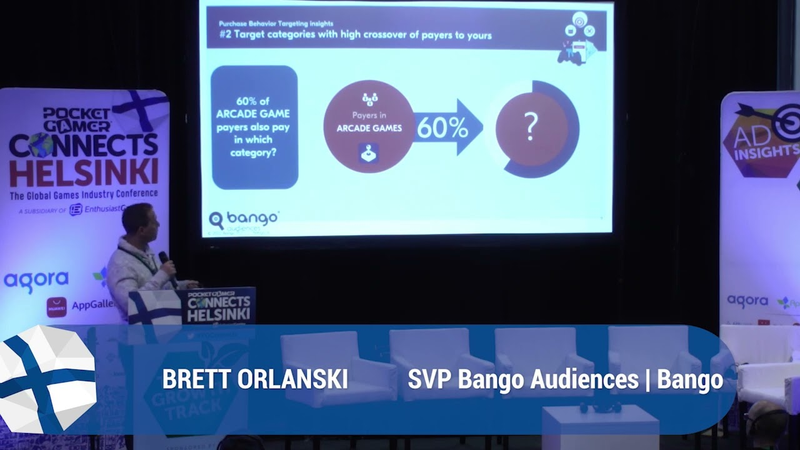
Keynote: Purchase Behaviour Targeting Insights To Scale IAPs in the Age of the App-ocalypse.
The mobile app industry faces significant challenges in user acquisition and monetization due to privacy-centric changes, such as the deprecation of IDFA and increased regulatory scrutiny.
- Purchase behavior targeting serves as a privacy-compliant alternative to IDFA-based tracking by using anonymized transaction data to identify high-value payers without individual user identification.
- Developers can achieve high-precision targeting by moving beyond broad genres to focus on granular sub-niches, such as specific types of casino or blockchain games.
- Cross-category targeting is highly effective, evidenced by a 72% correlation between payers in interactive story games and those in puzzle games.

Panel: Weathering the Storm Insights From Mobile Gaming CFOs
The mobile gaming industry is currently undergoing a significant transition, moving away from experimental growth models toward a framework defined by operational rigor and fiscal discipline.
- Investors have shifted priorities from rapid, speculative expansion to companies that demonstrate financial resilience, sufficient cash runways, and measurable returns on ad spend.
- Rising user acquisition costs, driven by macroeconomic pressures and privacy regulations, have forced a transition toward operational rigor and fiscal discipline.
- Studios must now prioritize shorter payback periods and provide realistic, data-backed roadmaps to secure capital in a cautious market.
Maximise the Efficiency of Your Custom Store Pages Strategy - SIMON THILL, AppTweak
Custom store pages—referred to as Custom Product Pages (CPP) on iOS and Custom Store Listings (CSL) on Google Play—serve as specialized landing pages designed to align store assets with specific advertising campaigns.
- Custom Product Pages (iOS) and Custom Store Listings (Google Play) allow developers to create tailored landing pages for specific acquisition campaigns, moving beyond the traditional 'one-size-fits-all' store page.
- Meta now supports Custom Product Pages for its ad network, enabling developers to align ad creative directly with specific store page messaging to improve conversion rates.
- Google Play's 'custom store listings via URL' feature allows for deep-linked, personalized store experiences, though direct ad network compatibility is currently limited and expected to favor Google App Campaigns in the future.
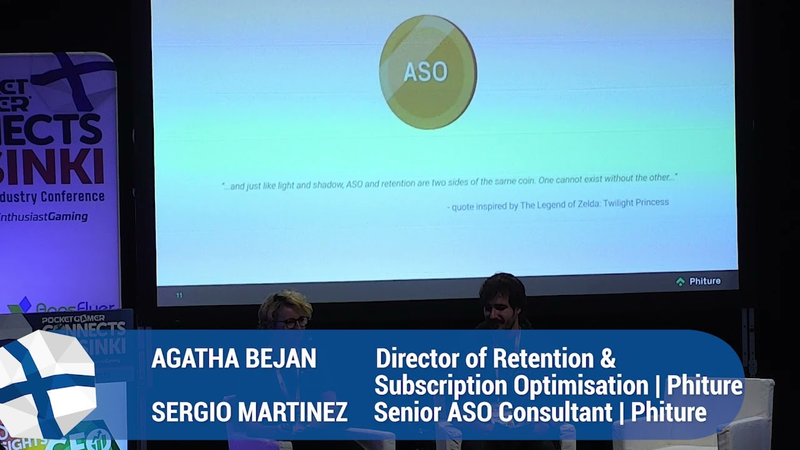
ASO + RETENTION = Game Changer - Sergio Martinez, Agatha Bejan, Phiture
App Store Optimization (ASO) and retention marketing function as interdependent pillars of mobile game success, directly influencing a title's Lifetime Value (LTV).
- ASO and retention marketing must be integrated as interdependent pillars to maximize Lifetime Value (LTV) and signal game quality to platform algorithms.
- ASO success requires a dual-focus strategy: increasing visibility through metadata, localization, and featuring, while simultaneously driving conversion via optimized visual assets like icons and screenshots.
- Retention marketing should be integrated during the pre-production phase of the development lifecycle rather than treated as an afterthought.
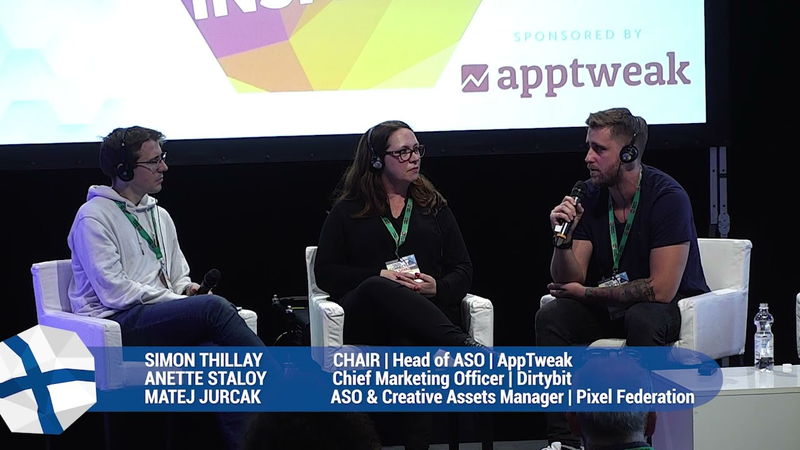
Panel: Using In App Events To Power Up Your Mobile Growth Strategy
In-app events on iOS and Google Play have become a standard component of mobile game growth strategies, primarily serving as a mechanism to maintain store page visibility and foster ongoing relationships with platform curators.
- In-App Events (IAEs) serve primarily as a tool to increase store page vibrancy and engagement, though developers struggle to quantify their direct impact on growth due to limited reporting and attribution data from Apple.
- There is no clear evidence that IAE metadata, such as descriptions or titles, significantly boosts organic keyword rankings or search visibility in the App Store.
- The editorial featuring process for IAEs remains opaque, with developers reporting that even with proactive outreach to Apple representatives, there is no guaranteed correlation between submission quality and being featured.
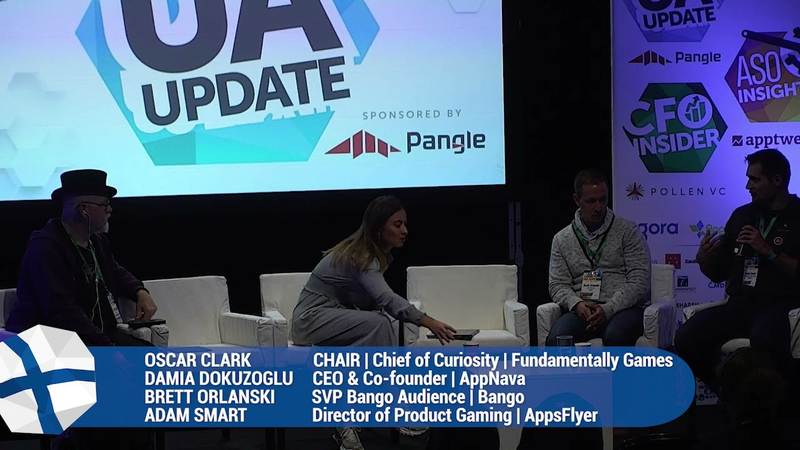
Panel: Are We Over IDFA Tips & Methods To Rebuild Your Data
The mobile gaming industry has undergone a fundamental transformation following the 2021 deprecation of the Identifier for Advertisers (IDFA), necessitating a departure from granular, user-level tracking toward more sophisticated, privacy-centric methodologies.
- The 2021 deprecation of IDFA has forced a shift from deterministic, user-level tracking to privacy-centric methodologies like predictive modeling and cohort-based analysis.
- Developers must prioritize first-party in-app event data to project lifetime value and return on ad spend while remaining compliant with regulations like the UK’s Age-Appropriate Design Code.
- Successful growth strategies now require a cross-functional alignment between data science, product development, and user acquisition teams to interpret anonymized telemetry.
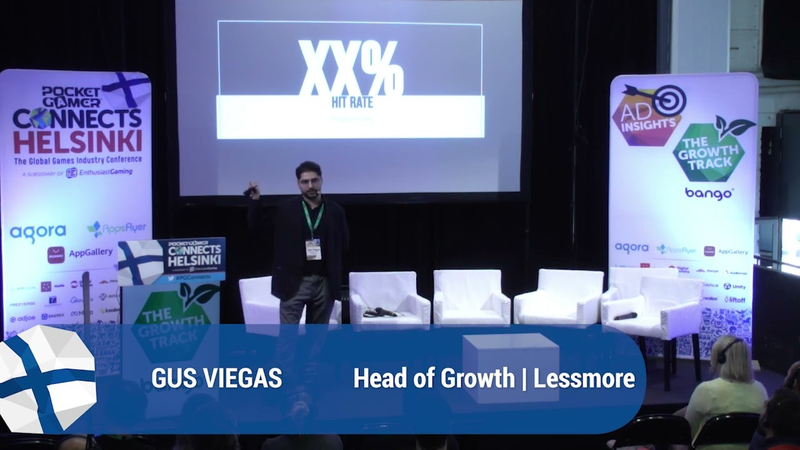
From Hyper to Casual & Merge - Gus Viegas, Lessmore
This analysis outlines strategic approaches to game development, soft launching, and user acquisition (UA) within the hyper-casual, casual, and merge game segments.
- Product quality is the primary driver of success, as user acquisition acts only as an amplifier for games that already demonstrate strong retention and monetization.
- Hybrid monetization is essential; developers should integrate rewarded ads into IAP-focused games and implement battle passes into hyper-casual titles to diversify revenue streams.
- Soft launches must follow a phased methodology, starting with technical stability before testing KPIs like retention and session time at scale to avoid the 'golden cohort' trap.
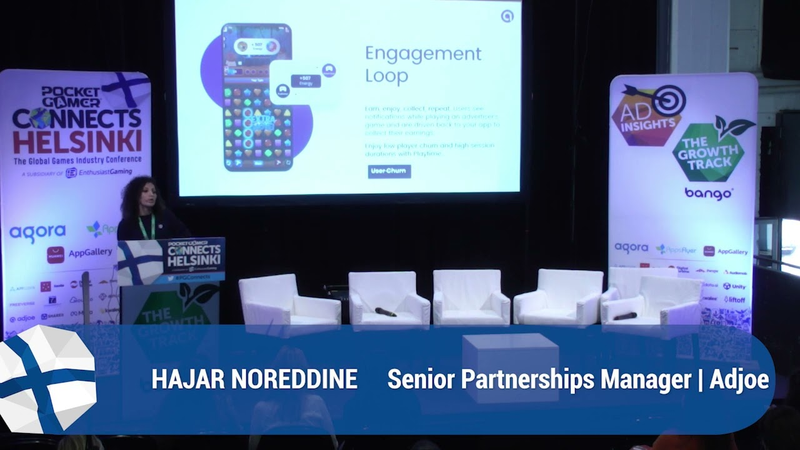
Recharging Your App Revenue with HAJAR NOREDDINE, adjoe
The mobile advertising landscape faces significant challenges, including revenue cannibalization, user churn, and inconsistent eCPMs.
- Implementing the Playtime time-based rewarded ad unit can generate a 20% increase in incremental ad revenue and a 20% boost in average revenue per daily engaged user, according to data from Gameloft.
- The platform utilizes an Android-based SDK to track gameplay duration in real time, allowing for immediate user rewards that scale as engagement time increases.
- An integrated engagement loop uses push notifications to drive user re-engagement with the original application up to 20 times per week.

Panel: Know Your Audience How To Choose Between Subscription or Ad Models -
The mobile gaming industry is shifting away from binary monetization strategies, moving toward sophisticated hybrid models that integrate subscriptions, advertising, and virtual goods to maximize revenue and user retention.
- Mobile game monetization is shifting from binary strategies to hybrid models that integrate subscriptions, advertising, and virtual goods to maximize both revenue and retention.
- Monetization frameworks must be embedded into the early stages of game design rather than treated as secondary features to ensure long-term sustainability.
- Developers should abandon one-size-fits-all approaches in favor of data-driven, personalized experiences that align with specific game genres and player behaviors.
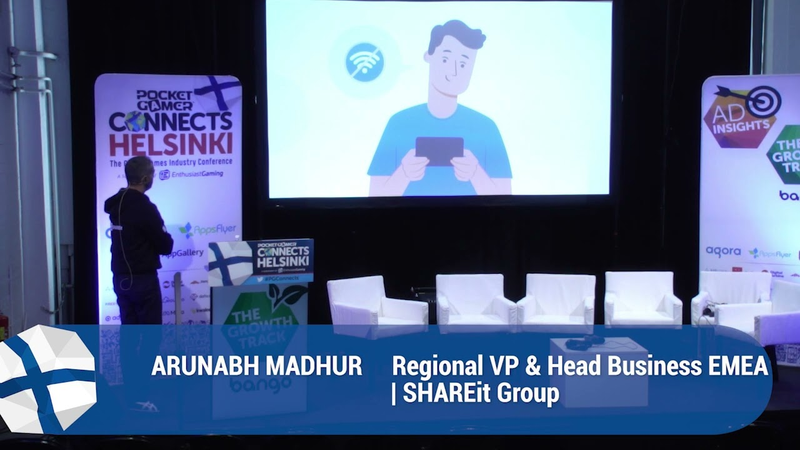
Discovery – Conversion – Retention All at Once! - ARUNABH MADHUR, SHAREit
SHAREit operates as a global peer-to-peer file-sharing utility and content platform, positioning itself as a significant, yet often overlooked, player in the mobile user acquisition ecosystem.
- SHAREit operates a global ecosystem with 2.5 billion users across 150 countries, functioning as a 'day zero' utility for app and file transfers without requiring internet connectivity.
- The platform's 'Game Center' hosts 2,500 to 3,000 titles, including APKs and HTML5 games, serving as a primary hub for user discovery and engagement.
- Advertisers can execute full-funnel campaigns—from awareness to performance-based installs—by leveraging device-specific data and usage patterns to create cohorts based on spending potential and interests.

Panel: Turning Ads Into Success Stories
Successful in-game advertising requires a delicate equilibrium between maximizing revenue and preserving player retention.
- Developers are shifting from intrusive ad models to native, non-clickable brand placements and rewarded videos to protect player retention while maximizing lifetime value.
- Post-ATT user acquisition strategies now rely on continuous creative testing and the use of early proxy signals to forecast long-term player retention.
- Monetization management has transitioned from manual waterfall processes to product-centric, automated bidding systems that utilize granular analytics for better user segmentation.
Writers
Games and companies
Games