1 free read left. Create a free account for unlimited reading + AI research.
Create free account
Maximise the Efficiency of Your Custom Store Pages Strategy - SIMON THILL, AppTweak
Key insights
7 takeaways- 01Custom Product Pages (iOS) and Custom Store Listings (Google Play) allow developers to create tailored landing pages for specific acquisition campaigns, moving beyond the traditional 'one-size-fits-all' store page.
- 02Meta now supports Custom Product Pages for its ad network, enabling developers to align ad creative directly with specific store page messaging to improve conversion rates.
- 03Google Play's 'custom store listings via URL' feature allows for deep-linked, personalized store experiences, though direct ad network compatibility is currently limited and expected to favor Google App Campaigns in the future.
- 04Effective segmentation strategies should be based on internal user data, player personas (e.g., escapism vs. achievement-oriented), or specific user status, such as targeting churned users with new feature highlights versus showing vanilla gameplay to new users.
- 05Performance measurement should utilize store console metrics like impressions and conversion rates, while using Mobile Measurement Partners (MMPs) to track downstream KPIs like retention and ARPU for specific segments.
- 06Avoid comparing custom page conversion rates directly against default page rates, as they represent different audience segments; instead, ensure you are comparing performance metrics within the same target group.
- 07When prioritizing which segments to target, developers should focus on the largest segments that are not already well-served by the default store page, as the default page remains the primary conversion point for the majority of the audience.
Ask AI about this video
Transcript
So you're with the track room three ASO inside track sponsored by AppTweak. Uh, our next session uh, with Simon, Simon Flay, head of ASO at AppTweak. A session entitled maximize the efficiency of your custom store pages strategy. So without further ado, we are bang on schedule, so let's let's keep it up. Um, I'll hand over to you, Simon. Take it Thank you. I'm looking for the clicker. I'm not sure where where to find it.
Hey. Yeah. Thank you very much. Thank you for that. So, uh, thanks everyone for sticking around. Uh, I'm back, so I'll I'll make this quite quick, but we're going to talk about uh, custom store pages and how you can actually come up with a strategy to use them well. Uh, before we get started, uh, if you haven't heard of AppTweak yet, we are the sponsor of this ASO track, but we're also, and most importantly, an ASO tool. So if you're looking for insights whether to optimize your keywords, your visibility, your conversion in the App Store and the Play Store, if you're looking for ad intelligence whether search ads or other networks, um, please come meet us. We we have a booth in the expo and we'll be happy to give you a demo of how we can help. Uh, we also work with quite a few people, so if you just need some uh, names to uh, drop to your CMO for credentials, uh, again, we're happy to uh, brag about ourselves. As for myself, I've been doing ASO for 5 years now. Uh
and uh I've now worked with uh game developers in different verticals, different regions of the world as well. Uh and uh if you have any people in your network looking for a position, I'm also looking for people to hire, so happy to uh bring the game of uh #sharingiscaring and get more people employed. So, we're going to talk about custom pages and the big question we have is always uh how to make them work. But, before that, I'm just going to get everyone on point with uh what we're actually talking about. Um and we'll also talk about how to make sure that they work. So, first, coming up with a strategy and then measuring if it actually works. To get started, what are custom pages? Um on iOS, they're going to be called custom product pages or CPP. On Google Play, custom store listings, CSL. Uh they're both the same thing. They're
basically custom pages, landing pages in the App Store, in the Play Store. So, that when today, what you get is one single page for all of your acquisition campaigns and basically any kind of traffic you want need to drive to the App Store, everyone has to see the same thing today. So, when we look at a game like Small Town Murders, uh and here I have to give you a disclaimer. These are not real custom pages. This is just a thought experiment I've done based on screenshots they have currently on the App Store. We know that they have uh a first ad that seems to focus a first ad that seems to focus on puzzles. So, this matches quite well what they have on the store right now. You see a lot of match-three puzzles. It's fairly evident. It feels natural. Probably the best way to get good conversion from the store to uh the actual download. But now we also have another ad which tells us, "Do you have what it takes to catch a killer?" And here it starts feeling like people
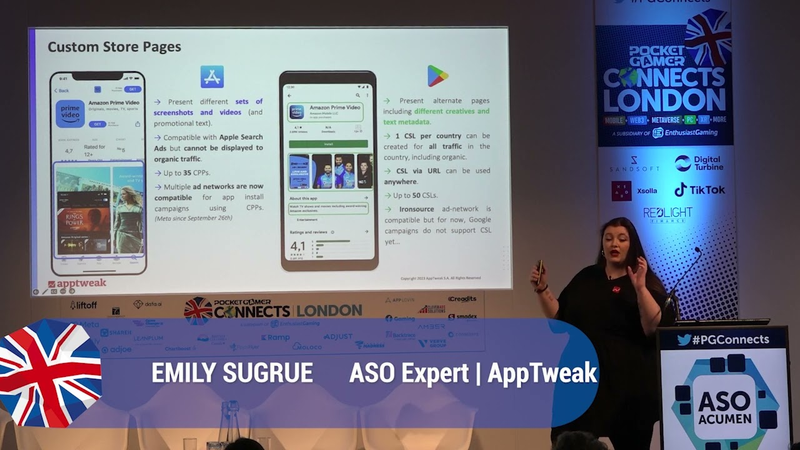
may not be as interested in match three. And it actually happens that the game also has sections with uh hidden object gameplay, sus- suspect interrogation from what we can see in the store. So this is where you may want to create a different page to maximize the conversion of this specific ad. Same kind of logic can be applied to uh an ad promoting romantic murder mystery, if you have any idea what that means. Uh and so here the whole goal is to say, "It's time to do in ASO what we what we're already doing on the web, which is having custom landing pages to make sure that we deliver the right message to the right audience." Couple of uh technicalities, but important to remember. On iOS, you can only change the screenshots and videos. There's also promotional text you can change, but it's very rarely used. Uh and it never appears for organic traffic unless you actually use custom
product pages in Apple Search Ads. The good news though is that you can already use custom product pages with certain ad networks, and the big one is Meta, which became compatible yesterday. So you if you actually want to start making custom pages for your uh Meta Audience Network campaigns, now is a good time to get started. On Google Play, custom store listings have been around for a while on the country version, where you could basically create a country-specific page. But uh now there's also the custom store listings via URL option. And this lets you change anything you want and just create sort of a deep link to the Play Store, which will show people the right thing. Only challenge is that right now no ad network to my knowledge has claimed they were already compatible. This will come and probably come quite soon. And keep an eye especially on Google app campaigns because obviously Google is
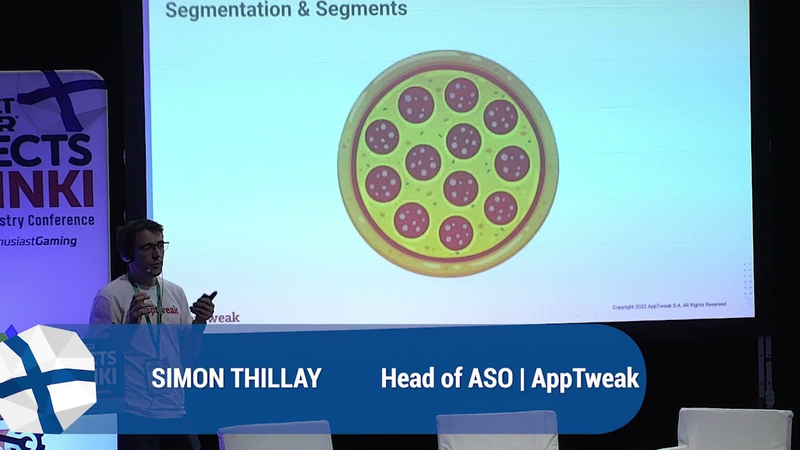
going to favor its own system. So, you'll probably want to have some custom store listings ready for when Google releases compatibility with their ad network. With that in mind, I hope you are convinced into the idea of we should use these new custom pages. And the question becomes where do we get started? So, here we're going to talk about pizza because I love pizza. Uh or more seriously, we're going to talk about how you can actually start looking at your audience as a set of subgroups. And what are the challenges to identify when you want to use a custom page and when you can just keep going with the default page you've had. So, important concepts to talk about are segmentation and segments. And so here is the basic explanation that segmentation is going to is uh way you're going to slice your audience in different uh slices. So, here we have one segmentation and one segment. Seems fairly easy, but
actually let's say that this is how we're going to uh create an audience broken down in age groups. Until now it feels logical, but we may actually want to also look at another way of breaking down the audience because maybe male and female don't expect the same things and we can promote the a different message to both of them for the same game. So, in that case you can end up having segments looking like this. Or if you're an Asterix fan like I am, you also know that actually when we try to uh cut a cake in different parts, in slices, or if we try to look at an audience and create different subgroups, they're not all going to be the same size. And so here is the big challenge to start visualizing what are the different ways of breaking down my audience so that I understand what size is uh corresponds to each segment, which are
the ones that are going to be interesting and when not to go after something because it's just not worth my time. So, uh main types of segmentation, there's a lot of segmentation that already exists today and that you can use um fairly easily. You could think as segmentation per demographics, we already talked about age groups or um gender. We could also talk about gameplay. So, if you're familiar with a game Manor Matters, uh that game offers multiple types of gameplay. You have match three, you have hidden objects, you even have sort of design like in Matchington Mansion and so on. So, in here, you're going to think, "Okay, if I have multiple game plays, maybe I want to have different custom pages because it's going to be very easy to uh appeal to different kind of players." Somewhat similar but not exactly the same would be looking at the persona. And so here, I always love to look at
the uh persona segmentation that was created by Game Refinery where the same uh a player attracted to the same kind of gameplay may want to do this because of their need to find something to distract themselves while they're uh let's say on a bus ride to somewhere. Uh or which would be escapism, whereas some people just want to play the game because they like to master and achieve get all the achievements. Other options as well, use a status. This one is uh very sneaky because it's been available for a while thanks to Apple Search Ads and it's just the option to now say that if you want to target a user with uh different messaging depending on whether they already know your game or they're fairly new, it's possible, it's very easy to do, and you can just have one version uh a default page that will highlight kind of the vanilla core gameplay that you offer, and a custom
page that will highlight the latest features, the latest levels that have been uh released for the people who have downloaded the app already and possibly even churn but may be interested in new content. We can push this further with uh options for segmentation per event, per offering, per influencer. If you're running influencer marketing, maybe you want to work with your influencer to have them appear on your store page. After all, it can be very reassuring for people to see that this uh game was um endorsed by their favorite influencer. So, this is everything you can start thinking just in terms of broad strategy and it can apply to a lot of games. Where you're going to have to make choices though is when you're going to go from the segmentation part to the segment part. Excuse me. So, looking at segment, the first thing you want to do is look at your own data. Always start from your
own data. Uh as was mentioned before, games tend to have a gold mine of data. So, start there to know what your users are uh appealed by and use that to determine who wants to hear about what. But, if you're not sure or especially if you're trying to size a potential audience, you can also turn to ASO tools for instance or other data partners to find uh specific data point that can help you determine where to get started. So, I I highlighted here two data points you can find in an ASO tool. The first one is keyword search volume. And so, if we're looking at uh a racing game and focusing on a racing game about race cars, maybe we want to have we still have different cars available in the game, different race modes. And so, looking at the volume of Formula 1, NASCAR, and drag racing in the US
helps us determine what actually makes sense to target first because this was is going to be the largest uh slice of your cake. Another option would be to look at user reviews uh because again, when you want to know what people are interested, sometimes the easiest part is to ask them or to look at their own solicited opinion, which happens to come off very often in the reviews. Uh and here, my special tip to you guys is to say that user reviews can be found in ASO tools, but also check on Google Play specifically. Uh Google shows review topics whenever there's enough reviews to generate them. They're algorithmically generated, but this can help you identify whether in your own game or in your competitors' games, what people talk about, what are the features that they focus on. And this will then help you identify which segments need to be given a specific message because they don't recognize themselves
in the default page. So, from then on, then on, you should have an idea of which page to create first. And again, remember, Meta is doing this since yesterday, so today is a great day to get started. Here we go. And the question is then going to be how do I make sure that what I did actually had an impact? So, you're going to want to measure this. Uh your first data points will be uh the store consoles, which will provide you with certain metrics, impressions, downloads, conversion rate. Uh on iOS, you will even have retention ARPU. On Google Play, you won't have the last two, but you will have a benchmark of your custom page versus the general page of your competitors as a benchmark average on 28 days. Um Remember as well that if the goal of a certain uh custom page because custom page is here to serve a specific purpose, usually a specific campaign.
Maybe your goal is to drive revenue. Maybe your goal is to drive retention. You can also check your MMPs for that. You're actually going to be able to track this fairly easily. So, as long as you don't have any issues with ATT, at least you're going to start seeing specific numbers. And you can compare those numbers to the default situation. But, this is also where I have to warn you about comparing apples to apples. Um when you're going to look at console numbers, you're often going to get a comparison between the let's say conversion rate of your custom page with the conversion rate of your uh default page. And there's one problem with that. The problem is that your custom page is the conversion rate of a specific segment of your audience who sees a specific page. The general page it's everyone in your audience and the default page they see. So, it's not the same audience seeing a different thing. So, if you want to just practice a a
very basic AB test situation, what you need to do instead of this is make sure that you create what I call a custom default page, which is basically a custom product page, a custom store listing that is a replica of the default page, but just use that one as the A version to your AB test in any kind of campaign to see if the audience uh if the reason why the custom pages works better or or worse than the default pages because the audience is better qualified or worse than the average or if it's actually because the creatives you put on have been providing a nice impact and giving you an uplift in the metric you want to optimize. So, I think I'm almost out of time. We should have time for questions hopefully. The last thing I want to bring though is remember that you shouldn't use custom pages all the time. Remember you have a default page
for a reason. And so here if you come back to the question of which is a segment I should target first, usually I want to target the largest segment possible because it's going to have the largest impact. With one exception which is if my largest segment is 80% of my audience, then I don't need to create a custom page. I just need to optimize a default page and then I will look at the 20% remaining and for these 20% I will look who is the most qualified segment, the largest segment and actually build a custom page for these people. But so custom pages are going to be great to start measuring more granular with more granularity how certain segments of your audience behave. But remember as well that the custom the default page is still optimizable as well and we have great tools for that. That will be it for me. So, thank you very much and if there's any questions I'm happy to take them.
Dave. Thanks for that Simon. Any questions from the audience? Okay. I have a question. Um one example, one really good example that these guys should all take a look at where they got it right. What would you point them at? Um so it's kind of hard because right now we don't yet have the all the URLs of everyone but one very basic thing I I've seen recently was from a music streaming company called Deezer where they were just doing they just looked at the fact that they had music and podcasts and basically the core of their audience is music so they had that default page set to music and they created a custom for podcast. This is a very basic example but if we if we were to turn the games you could apply the same sort of logic and otherwise I think it's really about showing the content to the same to the right person. So I'm looking for a lot more examples to share next time. I know that we're starting to already see couple of use cases pop up and so
hopefully some numbers in the next event at PGC. Okay.















Comments