1 free read left. Create a free account for unlimited reading + AI research.
Create free account
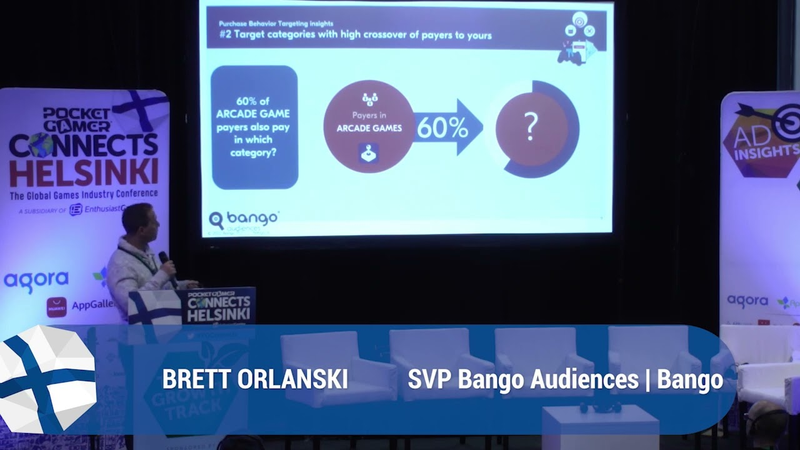
Keynote: Purchase Behaviour Targeting Insights To Scale IAPs in the Age of the App-ocalypse.
Key insights
6 takeaways- 01Purchase behavior targeting serves as a privacy-compliant alternative to IDFA-based tracking by using anonymized transaction data to identify high-value payers without individual user identification.
- 02This targeting methodology is effective for both one-time in-app purchase models and recurring subscription-based revenue streams.
- 03Developers can achieve high-precision targeting by moving beyond broad genres to focus on granular sub-niches, such as specific types of casino or blockchain games.
- 04Cross-category targeting is highly effective, evidenced by a 72% correlation between payers in interactive story games and those in puzzle games.
- 05Maximizing return on ad spend requires prioritizing categories with proven high lifetime value and purchase frequency, such as solitaire and webtoon applications.
- 06The implementation of this strategy is frictionless because it involves sharing custom audiences directly with ad platforms, requiring no SDK integration.
Ask AI about this video
Transcript
[Music] thank you [Music] it's a keynote speaker to start things off I'd like to welcome to the stage to talk more about purchase Behavior targeting insights uh Gretel landscape from from Bango thank you uh there's Mike let's flicker thanks hi everybody can you hear me okay yeah oh great cool uh it's nice to meet you all thank you for joining us today I I'm Brett orlanski from Bango uh Bango is a
company based in the UK I'll be telling you more about uh what we do and how we work with purchase paper targeting but that's the focus of my presentation today is using purchase Behavior targeting to scale your internet purchases in the age of the Apocalypse um the apocalypse is sort of the theme we have our zombies and the comic books you see what's going on why do we call this the apocalypse I mean it's supposed to be sort of a tongue-in-cheek reference to the situation that we all find ourselves in the zombie apocalypse well go back a few years ago before idfa was deprecated finding your users was never easy but it was easier it was never cheap but it was cheaper it was a little more straightforward and conventional you could find the users that you wanted you can monetize with them better but things have changed right the the lovely app Avenue that we all used to live on and do our business on has now changed and we're left with the uh the zombies of our users that cannot be found this is the apocalypse this is sort of the
situation that we've got like I say find ourselves in but we didn't really just discover this ourselves we didn't really announce it we kind of wanted to ask the community to say is this really as bad as we think it is so we asked a few folks we ran a survey and it's pretty rough it's pretty rough out there and I know this doesn't doesn't come as news but to quantify what we're talking about of the advertisers that we uh we polled 60 of them this is on the left here said that the recent changes uh have made it harder to acquire paying users and I think depending upon the way a question could be asked it's probably even worse than 60 percent uh you can see the quote from The Verge that uh that the The Prompt that Apple now puts puts uh puts up has cost meta 10 billion dollars in in Revenue alone and of course it's not just that you can see the decline in the Facebook stock price so this is really really having a tragic impact on the industry again not news
but we can quantify it 27 of the apps that we spoke to the app developers actually expected that they're going to totally shut down their business because of this so it's it is pretty ugly okay so what do you do right that's the situation that's the environment that we're in what can you do about it because the situation that you need your alternative to scaling out of this has to be of course idfa and cookie free and gdpr and CCPA compliant it has to be regulatory compliant brings us to the point of what Bango is all about purchase paper targeting is a method it's a strategy it's a different type of data that can be used to build custom audiences that do not require idfa that are CCPA gdpr compliant and are incredibly scalable it's truly novel not based on psychographics or demographics it's based on like it sounds like things that you actually purchased and so far it seems to be a pretty convincing argument that we're making a lot of advertisers are using this this method so what is this what
does this come from this is kind of comes back to what Bango does at our core Bango company we're based in in the UK created on the London Stock Exchange we are at our core a payments processor an alternative payments processor we process literally billions of dollars of in-app purchases across hundreds uh billion dollars per year globally across millions of apps in the major app stores collectively we take this data we segment it anonymize it and put it into audiences this is what our product is it's a bingo audience built on purchase Behavior targeting now this is data that we uniquely have that shows um what what a user buys own cares in what an individual user buys but collectively if all of you bought the same type of thing in the same type of app now we can put everybody into an audience of payers and this is the big distinction because we're talking about payers rather than new users um this reveals insights and patterns that can only come from purchase paper
targeting or purchase Behavior data in the first place and this is what um our company does using this data to scale your way out of uh this apocalypse is what we're all about and there's been some Trends and findings I want to share today that we have discovered amongst our data that I think it actually is extremely applicable to um to this apocalypse situation that we're in there's three tips I want to share with you today this is the first one and I think the right way to think about all this is sort of cocentric circles radiating out so let's start in the middle excuse me the very beginning sort of a tight Circle somewhat obvious but Target users who pay in similar apps to your own right stay in your lane and it's also really important to do this at a very granular level don't just say well I make a casual game I should Target other casual games that's true but you want to get more narrow a lot more focused um get as in fact get as specific as you can if you make a social casino game
it's a poker app Target other poker apps if it's a blockchain based game Target other blockchain based games really try to get specific think about your competition the kinds of results you can see we have three little case studies here that show what happens when you get really really tight and really specific Upland is a partner of ours they make a metaverse blockchain based property trading game they didn't just do blockchain games or metaverse games or casual games they got very very specific to property trading games and you can see by using purchase Behavior targeting significantly higher row as much lower CPA and lower cost per unique purchaser really really good results by getting specific Nexon uh another partner of ours actually launching uh their their game counter side very very specific in RPG apps very very strong results higher OAS lower cost triwin is a Social Casino developer but again they make a Slots app focusing on
slots that's the way that they got these really strong results not just all social casino apps not just or even adjacent ones really really specific onto uh slots apps so that's lesson one target your apps getting in in your in your own category and being specific let's go out one wrong out when you Target in your own app that's good but it turns out that there are adjacent and overlapping categories of purchasers that are not immediately obvious finding those overlapping or adjacent categories is really really important the way I visualize this is if you put sort of like a an orb in the middle a circle in the middle and that's your app category there's an overlap of other payering categories that will overlap to a certain degree those other adjacent categories are extremely important to Target although they might not be super relevant for you so you can come and work with us or talk to other folks in this industry and identify
those types of categories I got a few examples here to share in arcade game apps there's a 60 overlap with what other category well I don't know casual games okay not too far away it makes sense in interactive story games 72 percent of of payers will also pay in what category puzzle games totally unrelated and yet there they are huge overlap 72 percent of payers in interactive story games will also pay in puzzle games puzzle apps that's a category that if you make an interactive Story game you also got to be targeting puzzle games well what about puzzle games go the other direction strategy games huge overlap you can imagine two circles overlapping by forty percent that's that's the degree to which payers occur in both of those overlapping groups brain training games well I don't know 57 of what metaverse based games
the point I'm trying to show here I'm trying to illustrate is that these are these are two categories that are unrelated but yet and yet you see commonality between the payers and their groups bubble shooter games 70 over lap has with bingo games cool who would have known if you're a bingo app game developer if you're a bubble shooter game app developer you never know these things you gotta gotta find these overlapping payers of overlapping categories and Target them in your campaigns dating apps 45 of payers in dating apps go where action games cool some of these uh some of these are these correlations are obvious many of them are not blockchain games one more after this action survival and finally this in racing games there's a 43 overlap with marble-based IP games like the comic book Marvel games so the again the point find your payers in the app category that you're already their app is in obviously that makes
sense go out the next wrong and find the overlapping and adjacent categories sometimes it's obvious unfortunately sometimes it's not okay so now third final rung out of this marketing strategy that to use in that purchase excuse me by using purchase paper targeting to scale your in-app purchase is to focus on the high lifetime value app categories because unfortunately not all of these overlapping categories are as high value as other ones some of them are in fact better and by doubling down on where the not only the overlap is but also the highest value that's how you're going to make the most in solitaire games of the of the users that make payments 20 of them will make seven payments or more a month it's very very high purchase uh purchase frequency so to the extent that you're in one either you're as a social a solitaire game app developer or it's a category that's adjacent don't ignore it really really
high purchase frequency casual games 28 of payers and Casual games will make five or more payments per month again very high purchase frequency webtoons games 30 of those payers will make four more payments per month very very important not to Missy so to the extent that you can Target these or adjacent to yours or they're actually your category very high value it's a good place to be Mike sort of radiating concentric circles out again here focus on your app category keep it tight look at your competition try to stay in your lane and don't go overly Broad next up find your crossover app categories they're there sometimes it's obvious unfortunately sometimes not always and then finally of the overlapping and adjacent categories some are more valuable than
others focus on the ones that are obviously more valuable if you don't know yourself if your data can't tell you come talk to us we're happy to help you figure this out and then wrap it up this is a tough it's a tough neighborhood that we all live in these days unfortunately this is the apocalypse um you know I was on a panel earlier this morning and uh one of my co-panelists made the observation this is just the new normal it's not news it's just sort of the situation that we're all in so we have to deal with it but it's not Doom and Gloom and in fact it doesn't have to be in fact many advertisers are thriving because they have great apps and they are diversifying their marketing uh spread their portfolio and they're using purchase Behavior targeting to find their way out this is how we're going to all do it doesn't need cookies doesn't need idfa it's independent of that it's a powerful scalable platform and then once you've decided to get behind it those three steps similar apps finding find those payers in high
crossover and overlapping categories and then try to focus on the high LTV categories so with that um is any questions or any other feedback um thank you lose my headset um thank you very much that was great if anyone has any questions we've got a couple of minutes I can bring a mic to you so we can uh we can all hear the questions I've got a question to get us going um uh how does someone on board what's the process if someone's seen this and thought well that looks great for my game what do they do next oh wow Dave you teed it right up uh well you just come talk to us we're not the only company that does this this is we're one of the more pioneering companies we feel but um we're happy to you know help you figure this out and work with us come talk to me right at bingo come and come talk uh and uh what's the what's the kind of process for a developer is it an SDK is it a is it a SAS thing they do online it's another good question no it's not these are custom audiences we're talking about right it's the way we administer these are as a custom audience that we share
from our ads account up to your ads account so there's no sdks nothing to integrate this is just data that we use to produce custom audiences that I'm sure many app developers are using today often on your own data but now you can use other other purchase paper targeting to build these audiences I thought those insights were great I've got another question for you but I don't want to hog the Limelight does anyone else have a question for for Brett one over here that's good otherwise I'll just keep going good thank you for sharing yeah I just wanted to ask you real quickly about um it was it was quite interesting what you shared over there is is that applicable for um only for IEPs or is that something you see that can be applied for subscriptions as well so your question uh your question was uh does the the segmenting that you're talking about the model that you've said the insights are they also valid for a subscription model as well as just
in-app purchases [Music] uh in a form of an in-app purchase the data that we process is born from subscription uh from subscription apps themselves so yes it's a good question and yes great thank you um uh the question I was going to ask was about the how granular those segments get I I um as you say it's it's a those are categories that lots of people use but but you were getting very quite very specific there with the kind of Social Casino and things I mean roughly how many you know how how Atomic Atomic does it go not all app categories get subdivided like that games is obviously the biggest one and it gets some applicable to the most people here and that's the one that actually gets Atomic as you say yeah um like you know Financial Services apps doesn't go that granular uh but games do okay and and then it's it's like sub subcategory the best example I think is slots excuse me uh Social Casino because that really does get very specific but
again you know that's the point try to get as specific as you can you know there's many different kinds of casual games there's many different kinds of Social Casino Games get specific and um uh the more specific the better that's great thank you um um I think we're probably out of time uh what I would say is I know that it can be uh quite nerve-wracking to ask a question uh in front of everyone particularly with the artificial kind of mic and everything but if you do want to ask questions of Brett the emails are up on the board there or you're probably in mix and match as well right I guess they can find you around the venue absolutely yeah so there you go so if you have any questions from what you've just seen you can track down there but in the meantime thank you very much for that that was great thanks Dave
Summary
The mobile app industry faces significant challenges in user acquisition and monetization due to privacy-centric changes, such as the deprecation of IDFA and increased regulatory scrutiny. These shifts have made traditional targeting methods less effective, leading to decreased revenue and increased difficulty in reaching high-value users. In response, purchase behavior targeting has emerged as a privacy-compliant, scalable alternative that relies on actual transaction data rather than demographic or psychographic profiles. By analyzing billions of dollars in global in-app purchase data, developers can identify and target specific audiences of payers without requiring cookies or IDFA.
The methodology for this approach involves segmenting and anonymizing payment data to create custom audiences. Key findings suggest a three-tiered strategy for scaling in-app purchases. First, developers should target users within their specific app category, moving beyond broad genres to granular sub-niches, such as targeting specific types of casino or blockchain games. Second, developers should identify and target adjacent or overlapping categories where high-value users exhibit cross-category spending habits. Data indicates significant, often non-obvious overlaps, such as the 72% correlation between payers in interactive story games and puzzle games. Finally, developers should prioritize categories with high lifetime value and purchase frequency, such as solitaire or webtoon apps, to maximize return on ad spend.
This strategy is applicable to both one-time in-app purchases and subscription-based models. Because the solution utilizes custom audiences shared directly to ad platforms, it requires no SDK integration, making it a frictionless implementation for developers. By focusing on proven purchase patterns rather than tracking individual user identities, publishers can navigate the current regulatory environment while effectively reaching audiences likely to contribute to long-term revenue growth.
















Comments