1 free read left. Create a free account for unlimited reading + AI research.
Create free account
Panel: Are We Over IDFA Tips & Methods To Rebuild Your Data
Key insights
6 takeaways- 01The 2021 deprecation of IDFA has forced a shift from deterministic, user-level tracking to privacy-centric methodologies like predictive modeling and cohort-based analysis.
- 02Developers must prioritize first-party in-app event data to project lifetime value and return on ad spend while remaining compliant with regulations like the UK’s Age-Appropriate Design Code.
- 03Data architecture must strictly separate sensitive player account information from general telemetry to ensure ethical compliance in a privacy-conscious market.
- 04Successful growth strategies now require a cross-functional alignment between data science, product development, and user acquisition teams to interpret anonymized telemetry.
- 05Marketing portfolios must be diversified across multiple advertising platforms to mitigate the loss of granular tracking, supplemented by community-driven organic acquisition.
- 06The industry is moving toward sustainable engagement models that prioritize brand-focused creative assets over short-term performance metrics to build player trust.
Ask AI about this video
Transcript
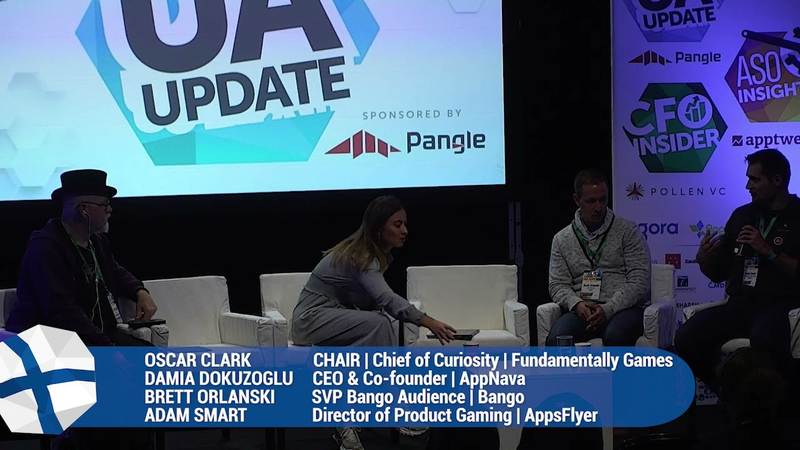
[Music] thank you [Music] let's get on and talk about the Wonders and joys of what's been happening in the um the the advertising in UA world so let's kick off uh do you want to introduce yourself and tell us a little bit about who you are and what you do yeah if you just pick up the microwave hi and welcome and I'm damla I'm the CEO of epnava um and normally I'm doing the managerial things for app now but I'm the data scientist and I I complete my bachelor and PhD degree in statistics and this is
the reason that I'm attending this session to inform you about a little bit information about the data and the predictive modeling and what you can do for your user acquisition strategy yeah this is risk perfect nice to meet you uh Brett uh do you want to tell us a little bit about yourself and what you do thanks Oscar hi everybody uh my name is Brett orlanski and I work at a company called Bango uh we are a producer of custom audiences that run on Facebook Bango is a payments processor at our core we take that payments data we produce it into custom audiences base of payers rather than just new users and we offer them to other mobile app advertisers to to focus their user acquisition again focused on payers and I'm excited to be here thank you all right stuff and Adam uh lost but no means least hi everyone I'm Adam I'm from apps flyer I'm the director of product for gaming looking at the entire gaming offering that apps like I produce great stuff uh okay so if you're kind of wondering what the context is is there anyone in the room who hasn't heard of
the whole idfa thing that happened a couple of years ago and I'm assuming we all have had some exposure to the industry therefore we will know that that wonderful step towards privacy safety and nothing to do with apple um being able to control data for advertising at all no no I didn't say that I wouldn't like to get myself into any trouble um obviously in um I think it was the is it was it 2021 I can't remember what month it was when it actually fully came into Force after a long protracted period of um fear yeah Fear and Loathing and scariness and a lot of changes uh obviously changes came in which meant that we had to have players opt in which is fine um hasn't been the most um useful in terms of data because I think I believe I'm right in saying that something like 20 at the original stage of people actually signed up I think it's slightly higher now around 30 percent of gamers but uh we are talking about a very big loss of of the amount of available data
and available visibility it's had a profound effect I think on almost every platform in terms of um our ability to find and Target users the level of nuances I think there's numbers though the the you know sort of 20 30 really depends on how you're measuring yes and and what you're looking at when you're talking about opt-in because a lot of apps aren't asking anyway so are they included within that number and actually from from apps lowest perspective and the customers that we have we're seeing it for for gaming we're seeing it more around 40 oh okay that's great so a lot of apps won't ask permission to to track yeah and that's a really important point is like in fact I mean I mean let's kick it seeing as you've started Adam I'm going to dump you into it so you're you're you're painting a slightly better picture than the majority of people are saying which I don't disagree with by the way particularly I think if you invite people in a positive way and you
explain why you're asking their permission you set context for that permission you do see slightly higher but even with that it has had a chunk of data that's no longer available to us rightly or wrongly I mean I think personally that's probably not not completely bad from a user experience point of view but it's not great from our ability to track Nuance in particular things like a b testing and stuff like that but I'd like to know what you think from your your perspective is this now changing profoundly the way we work or is it just a bit of extra effort to find people I guess I come at this from two different perspectives so uh before I was at outlier I was at product Madness for about seven years and you know the the entire gaming industry certainly Mobile gaming industry was brought about with user level data you know everything has come from being able to judge what a user does all of the in-app events everything else within the game so yes to answer your question it
has had a negative impact for gaming however I think the way that people look at this moving forward you know there's there is nothing that can be done about this this is a change that Apple's made for the for good or bad you know personally I feel it's for the good of the end user um but it has to we now have to work with that and adjust to the The New Normal I hate that term but it's it seems to have been coined and stuck uh definitely has and I think there's that new normal is interesting for me I think it's what's fascinating about it is it's given new breath for some traditional mindsets being re-invented so the the building up of your brand as a game as a technique is now has some element of of um importance because Performance Marketing efficiency at a user level isn't there so much but I'm talking now and I shouldn't I should be getting you to tell me Tell the lovely audience for your point of view how has this affected things
I think Adam made a good point earlier he said that it depends who you ask is who's the Ben who's the winner and who's a loser um if Apple was here they would say that this is great um this is for everyone's interests this is you know they're I know they're selling more iPhones but they're building a whole ad Network out for this if you ask the end user you know do you feel better about a personally Oscar I don't I'll be super honest I don't really care I don't really think it's made any difference in my life I don't feel like ads are better or worse and all right my privacy is better protected or not so it's kind of like a strange question to think about but if you're if you're really honest with yourself doesn't really matter I'm I'm not so sure it does um but for everybody everybody else in this room it's probably much worse um the industry has taken significant hits we've all had to kind of Juggle our business models and our propositions and our the way we do business to compensate for this and it's I don't know if it's normal it is what it is but it's not easier and I think
it's made a hard job much harder there's mitigation Solutions and things you can do about it but it's definitely more challenging of an environment from the end excuse me from the app developer from the advertiser's point of view definitely harder yeah and I think in particular when you look at it's not just for me being able to Target an Apple user it's also had a profound effect on being able to Target any user um right the if we're going to accept that ads exist and we all do then they should be good at it they should be relevant to you and relevant ads require some targeting some level some user level data and to your early Point as well this is what the this is the lifeblood of all of our marketing is user level data so use it appropriately and use it wisely to make the the experience as best as possible so um I mean you kind of hinted a couple of things in this area anyway in terms of how you can look at data and apply it
differently I mean what sort of things are you finding that as I mean how are you looking at the data how are you understanding the impact of that on the you know the targeting of your content um actually uh a before the idfa test it was easy to to find the players and retarget them it's like a game changer for the industry that is the normal actually and it's starting to getting important for the using the data and analyzing the data and it's like the evolving of the industry that we we find something that then we're changing it and they find another way actually like the Improvement of the technology and we have to adapt the technology we have to adopt analyzing the data part okay maybe it's good for the Privacy for the user side and the actually we were discussing about that before starting is it good or not for my size it's not good because I want to get recommendation about the the my interested area they just recommend me the game that related to Me Maybe the
product that and the discounted version of the product is good for me but okay it's good for the Privacy too there's no any best or Worse scenario for this case the the most important thing that adapting the changing things as soon as possible yeah no exactly and I think it's really difficult to sort of call it bad or call it good um we need monitors here I think for you guys to hear I have my headpiece on maybe we'll grab you some headphones later um so I will talk a little bit more profoundly then shall I uh I'll try and keep the mic away so I don't deafen everybody um so I think you're right it's adapt and survive is something I think that we in the in the mobile advertising space in particular and for those who don't know I was the original advantages on Unity ads so I've been around doing this stuff for far too long which is why they get me to sit on panels and talk to people um so I I'm adapting is essential DNA of anyone who's been involved user position
whether it's formats whether it's targeting whether it's strategies how we monetize all of these aspects what is the sort of um been the most important adaptation do you think since this change is it about the way we collect data is it about the way we target uh you know Adam I'll start with you you know what do you think it's like the the biggest kind of deliberate change that you guys think you've made that had the most impact uh so I guess I can I can talk on behalf of a lot of the clients that we that we work with and I think for me the the I've always been an advocate of re-engagement and in any way shape or form and a the efforts towards re-engagement seem to have come on a hell of a long way um you know the the really fine-tuning push notifications emails SMS Facebook Bots whatever else you can possibly use to be able to bring users back into your game um the other area that's that's really
sort of seems to have taken a jump forward because of this is cross-promotion um I mean companies with multiple different apps are really starting to work out the best best paths that they can use across the entire estate um and I I love that you know I'm a product guy I love that that area of innovation oh it's kind of it feels so weird for me to hear you say that's Innovation given that that's exactly what was the core of what we used to do before we did all this stuff and I think maybe that isn't is this a kind of a hint of hang of some of the wider picture here which is like there's a lot of stuff to direct response and performance-based marketing did to kill off traditional behaviors but are we having to sort of go back to the old um checklists and old booklet you know um skill this yes yeah for sure and you know it sort of it's almost coming back no it's no not not to the same extent but it's almost coming back to the old
sort of brand advertising and really sort of uh you know magazine articles and that kind of thing that that way of movement but yeah I mean it it has taken everybody a step backwards um but I don't know I can't help but feel it's for in a good way yeah yeah so I mean Brad do you think this is a level a More Level Playing Field are we because I think there was an argument that a lot of particularly Indie developers that were walking away from mobile because it was too hard has this possibly created a new opportunity for those teams or is it you know more complicated than that so right once we've accepted this the reality what are you going to do about it and I think the same challenge applies to the Indie developer to the the product madnesses of the world the the large developer Bangles position on this is um is somewhat unique in that we're trying to Pioneer purchase paper targeting as the method by which you can build audiences so the way that we think about this is 20 years ago we were all pushed ads
based on things you searched for through Google 10 years ago you were pushed ads based upon things through your social network things that you you liked and your affinities now you can get ads pushed to you based on things that you've bought and that seems a lot more relevant when the end of the day the experience inside of an app is to monetize through in-app purchase so that's one sort of way out of this it's it's not the only solution it's just but it's a new one that can kind of counterbalance the challenges the the restrictions that we've all been pushed under through this that's one sort of innovative way through this and again it applies to Indie developers that have the same handicap that the large advertisers do as well no no it makes a lot of sense what about yourself do you do you feel that there's being specific things that have changed the way that people worked that has been for the better or those uh forced to try new things um at starting with this whole period and okay we said that the data is
important data is imported to analyze the data and starting the the modeling on your predictive things and probabilities things the first things these Studios have to do that collecting the correct formatting of the events and the data because the in-app data and user level data uh they became more important than the previous version and they always miss to tracking the collecting the event part because they think that okay we have the tutorial complete we have the level complete that's enough but after this period it's not enough to uh we we started to collect more events in the more probiot way actually we designed the taxonomy for the each different game type and the genre and then we recommend then the hey guys you should keep this event and keep your eyes on that event you need to um to use this event for your predictive modeling and privilege things actually then yeah it is an interesting error
because I mean just for some context I did some work with the information Commission office in the UK there's a new data um uh well new issue was September last year um called the age-appropriate design code which you can be fined up to 20 million Euros or four percent of your Global turnover whichever is larger yes I said larger and very few people know this exists but if you're if you're actually doing anything with data in the with any UK customer you are you're liable to that set of regulations and we had to provide some best practice one of some of the key things is about basically understanding what you're capturing communicating what you're capturing and there's some really kind of interesting kind of um consequences to that particularly like you're no longer allowed to assume that somebody is over 18 just because they made a credit card transaction think about what that means in terms of what we're doing so if you're handling your your users data and you're using
event level information that could be attributed to them as an individual your win-win massive risk massive risk now now this is all manageable don't go don't get don't be too frightened it's okay um but what I think is really important is how you handle that data so no no as somebody who works with data do you have any kind of views on you know what the the change in idfa has done and all these other regulations and by the way more regulation will be coming don't you can guarantee that with all this kind of constraint around data with all this kind of view about protecting the user which is good we as we've said which is good what behaviors do you think that developers should be paying attention to to make sure they could have the good use of information without creating privacy risk is that okay you have data you collect data the most important things actually do at the beginning they're asking the right question about the data if you
don't ask the right question to the data you cannot get your answer and for that reason we always recommend these Studios that you combine your user acquisition team and the data team and maybe product team together to ask questions together before designing your data then if they find the the the right question to ask the data they can they go and deep dive in the data and they collect the right part they collect the right format and get the answer actually this is my um the the idea that they come together is not separated from the other units of the the the game studios combine your all part of the the people from the UA product and data and the they will focus together on that topic actually I mean I think one thing that's interesting about this is keeping your a player account data entirely separate from the telemetry and using your Telemetry to understand so if you know that a you've acquired a user from a source there's no reason why you can't pass and
a completely anonymized ID that has a cohort that says they came from that Source they've been playing this for so many so many days that lets me understand as a as an owner of a game what's going on therefore I can see which sources are delivering me the most value and therefore if I'm acquiring users through UA I can basically do my targeting but it's still a lot less sensitive I would argue so Adam from your point of view I mean when you're coming in as that's fine you're looking at um how you know what advice would you give to people about how they use data and how they kind of tap into player audiences given these vast array of privacy regulations that are coming in I I think there's a lot of being able to look at where your audience is coming from and try and tackle it in a a broader sense um so instead of user level targeting starting to look at behavioral targeting and really trying to understand the the
the personas of your audience and how to how to touch those personas so where where those users are coming from their other likes and interests to be able to try and pull them in um so ads become way less targeted but you're still going after the right set of users and and obviously sorry just to add to that one this is a two-parter um or creative creative is another way of being able to appeal using different creatives for different places is a you know tailoring them to the likes and interests of your audience is a real strong way of being able to to pull users in and is there an argument I I tend to feel like I'm less interested what an individual does I'm actually more interested in what the likely group of individuals are to do therefore I can better Target more people who will do the behaviors I want so I think this cohort this kind of persona level analysis is actually potentially more
useful in some ways I I would agree completely yeah so Brett from your point of view do you agree with that on the creative side 100 I think that there tends to be there's a tendency that we all sort of focus and advertise to one archetype that you think is relevant for your particular game your particular app and our research has shown that that well while true there are adjacent and overlapping categories that are completely unrelated to your core game I'll give you an example that um Advertiser players who play in say a bubble shooter game a very very specific niche of of casual games will will also uh buy and play in dating apps totally totally unrelated categories and yet those overlaps exist and you have to kind of look into the data and find these trends um sort of pivoting off that though one in addition to kind of finding those niches the strategy that
we really are seeing a lot of is diversification of your um of your marketing budget so to kind of take a few steps back about five years ago I I was at a different company I saw that ad budgets were kind of really monopolized by Facebook all ads like 50 of budgets are on Facebook and the other 25 on Google and the other 25 scattered amongst ad networks and things like that this shift is really changed today it's like 30 on Facebook it's really really changing now we're seeing proliferation of all kinds of other networks specifically Tick Tock but also dsbs like lift off and things like that and that actually I think is healthy it's a nice Trend I mean from Facebook's point of view it's probably not but um overall it's probably a good Trend to diversify and not put so much weight onto a single Network and that I think is kind of the way that you have to adopt yeah kind of a more portfolio kind of way of looking at the 100 portfolio it's a good way of saying it yeah I know I think it makes a lot of sense I mean one thing I I I find interesting is
because we're in the PCN mobile space we're finding that There's real opportunities in looking at some of the techniques that PC games have used for years so thinking about the kind of social messaging how that integrates with your UA how your in-game activity integrates with that as well so creating a narrative for your game that is driven by the games activity that's experienced in the social media and in the in-game messaging and delivered through the UA is an incredibly powerful way to think about how you build your game in Mobile but we're finding that PC doesn't have that performance technique uh in general I mean okay I'm speaking generally and being able to apply that performance technique with the existing social messaging and so forth again it's starting to become really interesting I think we're going to see I mean if we don't have the same level of like access in terms of rewarded ads in PC I suspect that will come at some point there's a lot of resistance to that
amongst the audience as well so you know we're going to bear that in mind but I think is really fascinating is the fact that we're starting to in fact I'm going to be I'm going to go back to the 80s and 90s when I was learning Marketing in my in my diploma marketing yes I am a chartered Institute of marketing member in the UK uh I don't pay um anyway the point being is that you you learned to think about Synergy you learned to think about integration you learned to think about the balance between performance and brand and I think the thing that we have struggled I think in general historically in Mobile is that we haven't built strong brands at the heart of our process there are a handful of strong Brands but you know we think about Clash of Clans we think about Clash Royale we think about Angry Birds we think about Candy Crush beyond that the actual game is not essentially as much an interest as a brand I would argue but that's because right that these apps are short-lived right the fact that there's I mean think like two million apps in the App Store
and you could probably name on one hand the ones that people remember and I think you just did so building a brand for an app it probably is prohibitively expensive and time consuming you can't really do it and the ones that have broken through I don't know maybe they're they're the lucky few there's some sort of transactional nature about an app that doesn't last terribly long unfortunately and I think from our talking to large platforms like Facebook that's sort of the new trend that apps tend to live longer I mean have you seen this is that sort of the pattern that you're seeing as well I just said yeah okay cool uh I just said there's two different types of app so you've got the games that have the longevity um you know take raid Shadow Legends for instance one one that's close to my heart um you know I've I've personally been playing that for about three years so there is the the apps that have that kind of long-term attraction and then there's this sort of smaller casual apps and so you know games like Call of Duty that kind of thing people will play that
on ongoing for a long long time um so I I yeah yeah 100 yeah yeah yeah um but I would have said yes there is a there is a there are those two camps there is one that is is very short-lived but it's interesting you mentioned raid because of the proliferation of ads that were off the mobile network for that particular time so Domino from your point of view I mean what what do you think about this I mean do you think that we're seeing innovation in in the way that we're promoting the changes of behavior in the way that we're finding users I mean do you have any thoughts yeah as far as I seen that the mostly the creative part is important if you are reflecting the to your game real part and your art is good and you get the the valuable place for your game and then uh if you are faking it it's not very as far as you no no no it's fake as a fantastic we all love them don't we yeah they try some time to time yeah but
it doesn't work and if you have the good creatives and the the art design is good for your game and of course that the the the the iOS part and in the next feature Google will handle the whole the targeting things for our side because they they release that the conversion value and they changed the the previous the new conversion definitions for us actually they try to handle the the all-user acquisition and finding user site for the mobile game studios you just need to fit the iOS and Google part with the right data if you feed them in a good conversion value and that conversion value reflecting your game and iOS and the Google Play will handle for your side actually yeah this is their solution yeah I think that's great I mean just to tell we're going to kind of wrap up in a second but I mean one thing I just want to Chuck in is some of the frustrations that I've seen since I think a lot of AD networks are are trying every technique they can to sort of get that conversion so much so that I
think they're starting to damage the player experience in particular where you have an ad that appears and they shift where the closing button is or they delay the ability of the closing button so much so I think that's actually started to break retention and it's we're you know personally when I see a playable ad I delete the app I just cannot be I just cannot be asked um it's yeah so I mean do you guys I mean I don't want to kind of call anyone out on it because I mean obviously you know there are lots of reasons why people do this and I'm not trying to blame any individual company or team do you think we've got a risk at the moment where some of the ad companies are trying techniques which are short-term kpis rather than long-term kpis Adam what do you think I mean I think this has been going on for a long time this isn't this isn't just happened like yesterday um and people are always going to try and play systems like you know this is this is as long as time you know
um but yeah it's true what you're saying the the I do think there is a distinct possibility that that trust can be damaged now more than ever with the the types of things that are being tried um and yeah it's it's uh it is a concern anyone want to add to that I mean any kind of any trip any tips or tricks that we can try to mitigate against that would be interesting I mean I don't have an answer by the way yeah I mean if anyone has it then you know it's pretty impressive it's the it's kind of like stock investor you have to kind of diversify your portfolio I think you have to diversify your marketing mix that's like you said you're it's a portfolio strategy it's always been the case um unfortunately probably more necessary now than before there was an argument back in the unity um ad days we were looking at the benefit of staying with one network to be able to learn in terms of you know
user behavior and what user interests and then you can consolidate your budget you get more learnings back but without the ability to store that data in a sense in a kind of useful way nowadays that's a bit more complicated isn't it it's like putting all your money on black you know it's it's probably not the best strategy anymore so um let's let's wrap up so uh Donald can you let us know what you think is the one piece of advice you would give to the audience in terms of like um you know managing data and being effective in this modern era of your user acquisition um first of all uh the the keep and the collect the right format of the data on your system don't miss that point if you miss that point you left money on the table uh yeah you you should keep your the right data format in your system and not just for the last 60 days the focus on the keeping as long as possible and for other side actually for the UA part maybe okay you you can do the predictive modeling and the you can do the feedback
the conversion value you can optimize your cpis and marketing budgets of course and the another case that for some specific case and the today's mobile marketing is like a red ocean that is not everyone is lucky and then if you are building the some game like the community-based board games or the the maybe the the social games and the most important thing that the detect the networking of your people that if you detect someone that you're doing the the high retention and inner purchasing them they're buying something that the the all buying before behavior is connected to each other let's say that we are the friends if I'm spending money in the game and I push you to spend more money and appreciate by something and if you detect some nod in your game then not player if you detect their players then you convince them to invite their player to your game it is the best used requisition for your site but just for the some specific game cases not for all
genres and the defer the digital Pub actually they keep your data on your system and try to analyze it as far as you can actually yeah makes sense Adam do you have any kind of one thing that you would share with the audience uh get into modeling not the catwalk type the uh the predictions [Laughter] thank you the Predictive Analytics like it's it's looking looking at seven day LTV that kind of thing roast projected roasts I think that's that's a winning point right now absolutely right I think that using services like yours make a lot of sense right that any little Edge you can possibly find Predictive Analytics that actually will tell you something that you may not see yourself because you're not going to invest in a whole infrastructure to do it I think that that makes a lot of sense just to get that little bit of an edge and insight that you won't normally have
perfect so I think hopefully what we've given you is an indication that life is not over post idfa that there are some real complications there are some issues uh I don't think as a clear winner personally about this even I think the player themselves isn't necessarily a clear winner but we are seeing steps towards sensible approaches to privacy which I think is important for us and for our players and for the trust that we have with those players and I think hopefully we've also given you some indications some thoughts about how to adapt to that with you know smart portfolio planning with use of um uh kind of great creative and really thinking about kind of the personas of your players as groups rather than as individuals so hopefully that's useful information I'd like to thank my panelists for taking part with this thank you very much guys that was fantastic really appreciate your time
Summary
The mobile gaming industry has undergone a fundamental transformation following the 2021 deprecation of the Identifier for Advertisers (IDFA), necessitating a departure from granular, user-level tracking toward more sophisticated, privacy-centric methodologies. This shift represents a move away from reliance on deterministic attribution, forcing developers to prioritize first-party in-app event data and predictive modeling to maintain growth. By integrating behavioral and persona-based strategies, studios can effectively project long-term lifetime value and return on ad spend without compromising user privacy or violating stringent regulatory frameworks like the UK’s Age-Appropriate Design Code.
Success in this evolving landscape requires a holistic, cross-functional approach that bridges the gap between data science, product development, and user acquisition teams. Rather than depending on a single advertising platform, developers are increasingly adopting diversified marketing portfolios and leveraging community-driven organic acquisition. This transition emphasizes the importance of anonymized, cohort-based analysis and the separation of sensitive player account information from general telemetry, ensuring that data collection remains both ethical and actionable.
Ultimately, the industry is pivoting toward sustainable, long-term engagement models that favor brand-focused creative assets over short-term performance metrics. By fostering player trust through transparent data practices and utilizing advanced analytics to interpret actual user behavior, developers are successfully navigating the complexities of a post-tracking environment. This maturation of the mobile ecosystem highlights a broader trend toward innovation, where technical precision in data modeling and a renewed focus on authentic user experiences serve as the primary drivers of competitive advantage in a privacy-conscious global market.


















Comments