Mobile reports and market data
Documents


Serious Narrative Microgames as a Remedy for Gamification Limitations: The Case of the Platform for Making Games for Mobile CBT Therapies
This document explores the potential of serious narrative microgames to address limitations of traditional gamification in mobile applications for Cognitive Behavioral Therapy (CBT).
- Traditional gamification mechanics (points, badges, rankings, prizes) are argued to have limited effectiveness in mobile mental health apps, particularly for users without gaming experience or those with conditions like occupational burnout, for whom these mechanics can feel tiring or off-putting.
- The authors propose interactive, narrative-driven serious microgames as a more suitable alternative for supporting cognitive-behavioral therapy (CBT) through digital therapeutics.
- The Prosoma project produced 16 microgames varying in narrative progression, graphic style, and therapeutic purpose, structured as interactive video episodes depicting characters in real-life mental crisis situations, where users learn CBT tools through their decisions.

Grief in Mobile Games
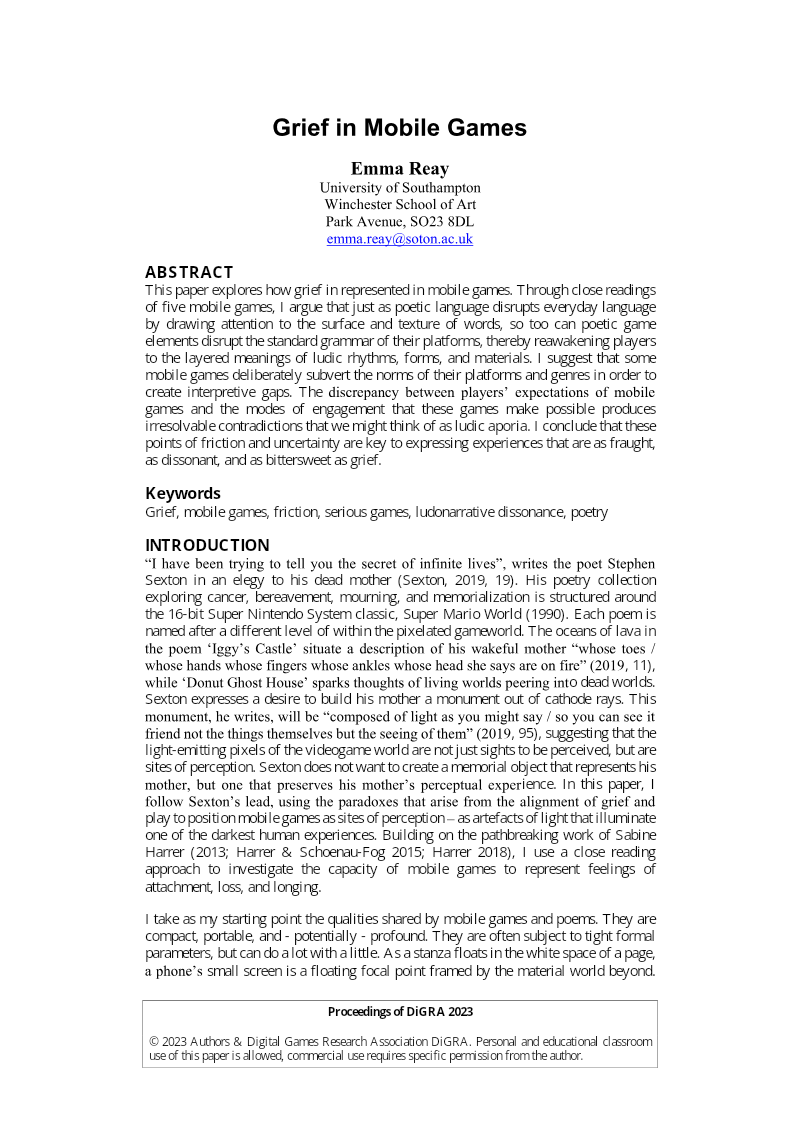
Emma Reay, a researcher at the University of Southampton, presents a close-reading study of five critically acclaimed mobile games published within the last five years that engage with grief: Old Man's Journey, If Found…, The Stillness of the Wind, Florence, and Far From Noise.
- The author argues that the mobile games in the corpus show that loss is connected to attachment rather than skill, with only Old Man's Journey blocking progress until puzzles are solved.
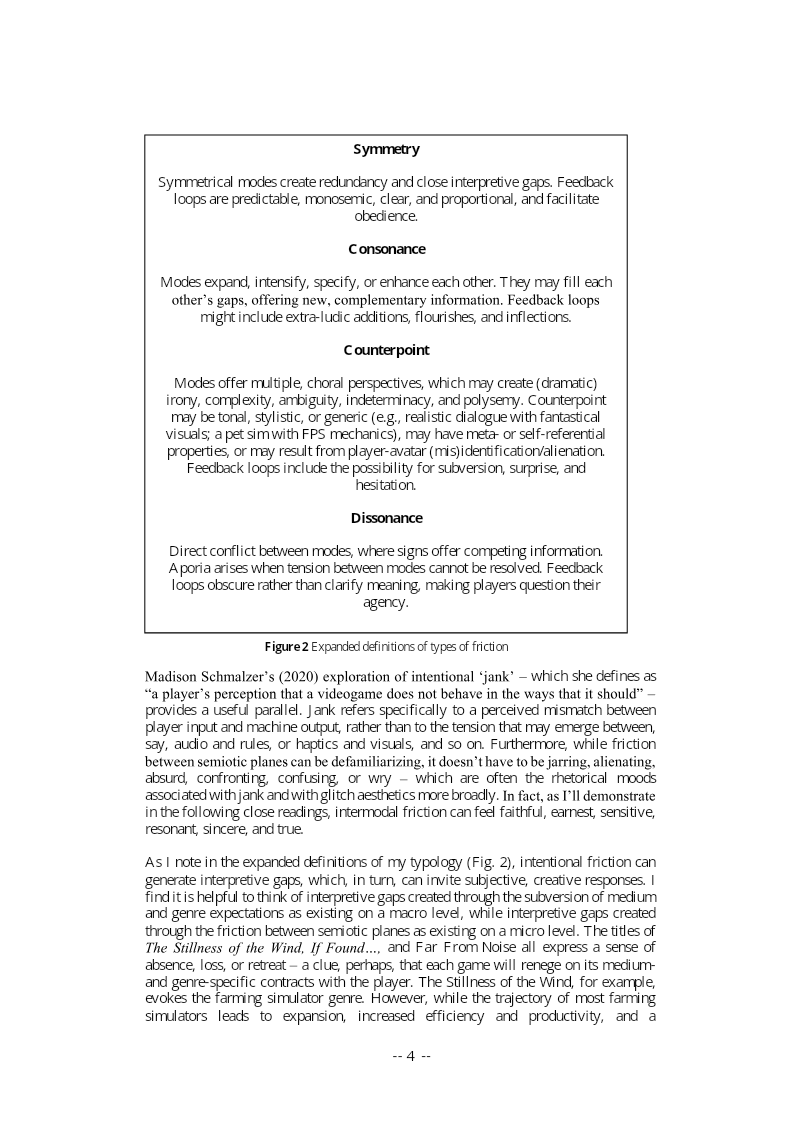
- The author proposes a Typology of Friction with four types, Symmetry, Consonance, Counterpoint and Dissonance, to describe how semiotic planes interact in games.
- The author states that the discrepancy between players' expectations and the engagement modes these games offer produces irresolvable contradictions, which the author calls ludic aporia.



Valletta: Streets of History: Documenting the Process of Developing a Location-Based Game in the Area of Maltese History and Culture
The paper, by a team including authors from the University of Malta and the University of Lincoln, documents the development of Valletta: Streets of History, a mobile augmented reality game about 19th to early-20th century Maltese history set in Valletta.
- The authors say that they used a team-based division of labour during a six-month development phase, with four members on research, design and writing, three on programming, and one artist.
- The team chose AR overlays over QR codes because stickers placed on physical surfaces could be removed by passers-by or the weather.
- The authors state that they selected archival sources on the basis of criteria including being interesting enough to adapt into a story and concerning relatively unknown parts of Maltese history.
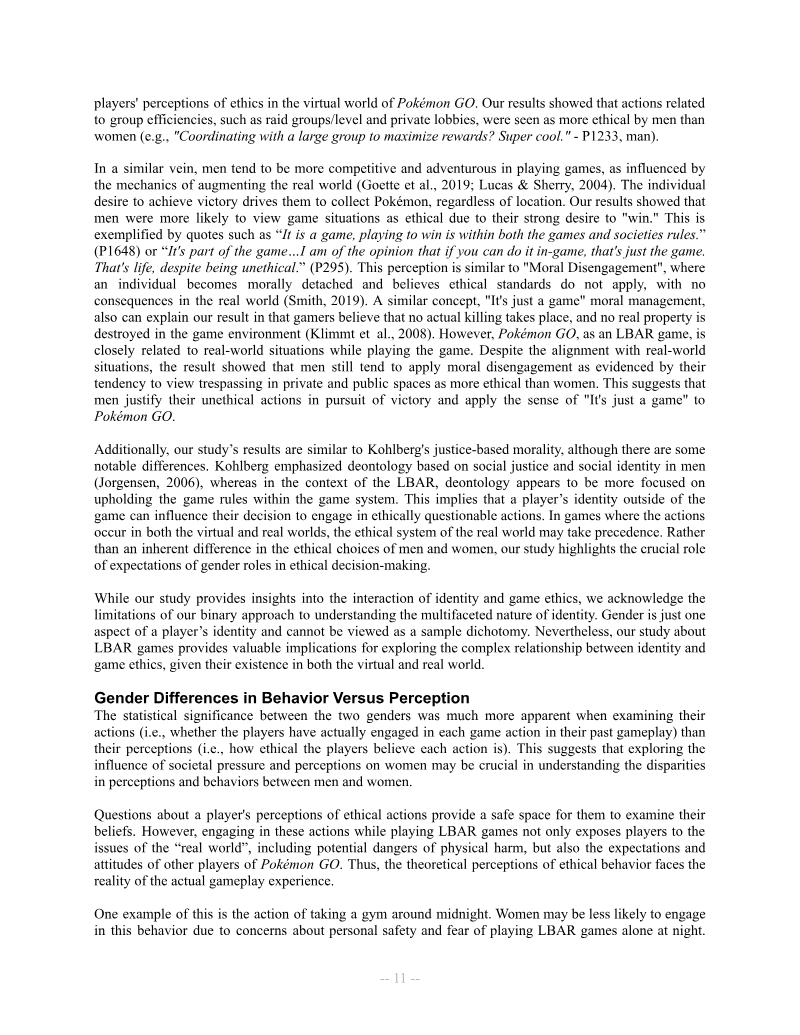

Gender Differences in Ethical Stances for Playing AR Games: The Case of Pokémon GO
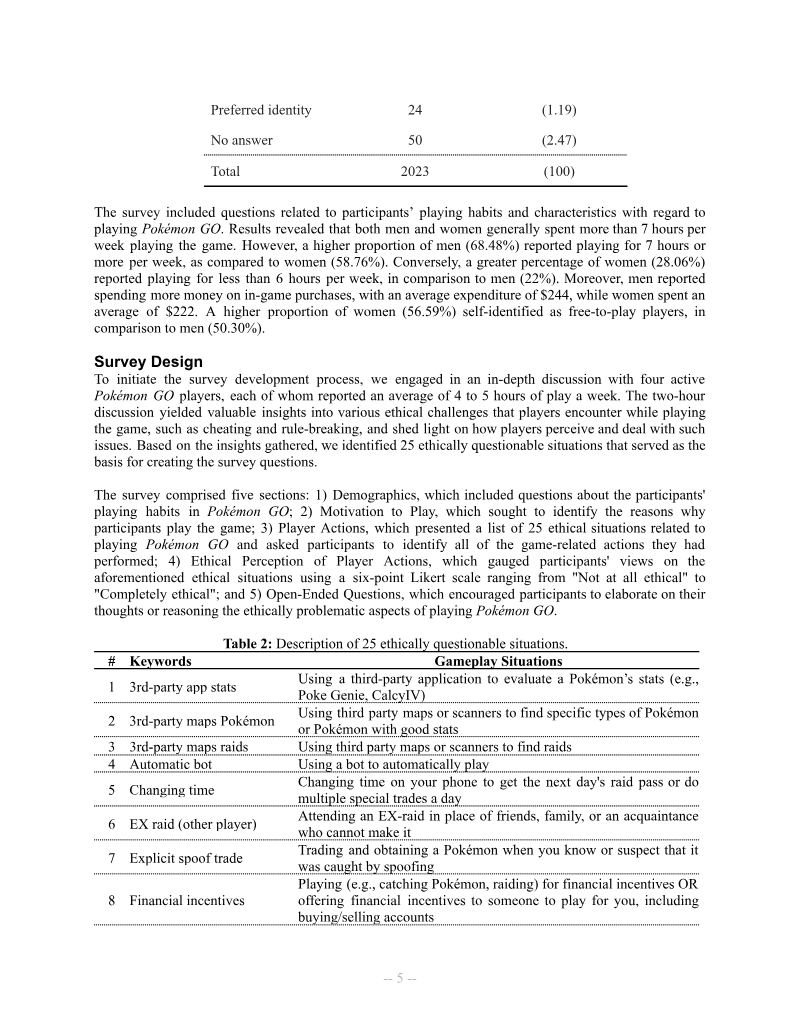
This study examines gender differences in ethical stances and behaviors among players of Pokémon GO, a location-based augmented reality game.
- Men rated the 25 game actions as slightly more ethical than women overall, though the difference was small.
- Gender differences were far more apparent in actual behavior than in ethical perception, according to the authors.
- Of 25 situations, 19 showed significant gender differences in actions performed.

Games For Good
The integration of social impact and physical health into mobile gaming represents a burgeoning shift in the industry, where developers are successfully merging mass-market free-to-play mechanics with corporate social responsibility.
- Integrating social impact into core gameplay loops, such as real-world tree planting, has successfully driven the planting of over 550,000 trees.
- Purpose-driven mechanics significantly enhance player loyalty and organic growth, proving that mission-driven games can be commercially viable when high-quality design is prioritized over didactic messaging.
- Studios that adopt a triple bottom line approach—balancing profit, social impact, and sustainability—are more effective at attracting mission-aligned talent.

Top 5 Mobile Game Launches: Honkai Star Rail, Monopoly Go, Survivor!.io, Marvel Snap, Frozen City
The mobile gaming sector remains a robust and evolving landscape, characterized by high production values and sophisticated live-ops strategies that defy narratives of industry decline.
- Future mobile gaming success is increasingly dependent on cross-platform accessibility and the integration of complex progression systems rather than reliance on traditional app store metrics.
- Monopoly Go utilizes an aggressive, high-spend acquisition strategy backed by major intellectual property, though it faces challenges regarding long-term profitability and extended payback periods.
- Survivor!.io has achieved sustainable growth by leveraging AI-driven creative assets and a balanced monetization model that splits revenue between in-app purchases and advertising.

MENA Region Growth / Supercell’s Dueling Betas / SEC Web3 Actions
The mobile gaming industry is currently undergoing a fundamental transition, moving away from a reliance on aggressive performance marketing and user acquisition toward a model centered on organic growth and product innovation.
- The MENA gaming market is projected to reach 85 million gamers and $6 billion in annual revenue by 2027, bolstered by Saudi Arabia’s Vision 2030 and significant Public Investment Fund capital.
- Mobile publishers are shifting from aggressive performance marketing toward organic growth and product innovation due to market saturation and reduced efficacy of traditional user acquisition tactics.
- SEC legal actions classifying various gaming tokens as unregistered securities have created short-term investment uncertainty, forcing a pivot toward sustainable, utility-driven blockchain models.


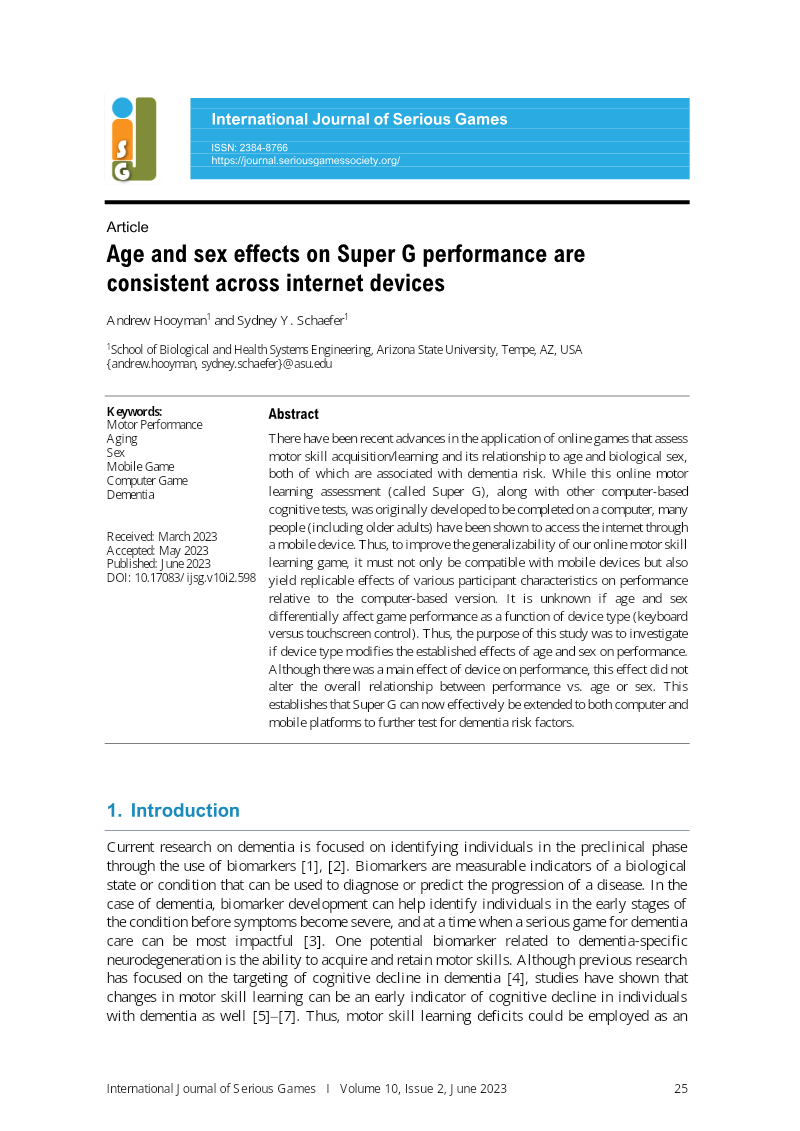
Age and Sex Effects on Super G Performance Are Consistent Across Internet Devices
Hooyman and Schaefer, researchers at Arizona State University, examined whether device type (computer keyboard versus touchscreen mobile device) changes the established effects of age and sex on performance in Super G, an online motor-cognitive game.
- Device type did not change the effect of age on skill acquisition, with no significant three-way interaction between device, trial, and age.
- Device type did not change the effect of sex on skill acquisition, as the device-by-trial-by-sex interaction was not significant.
- Participants on touchscreen devices showed a significant main effect of lower initial performance compared with computer users.
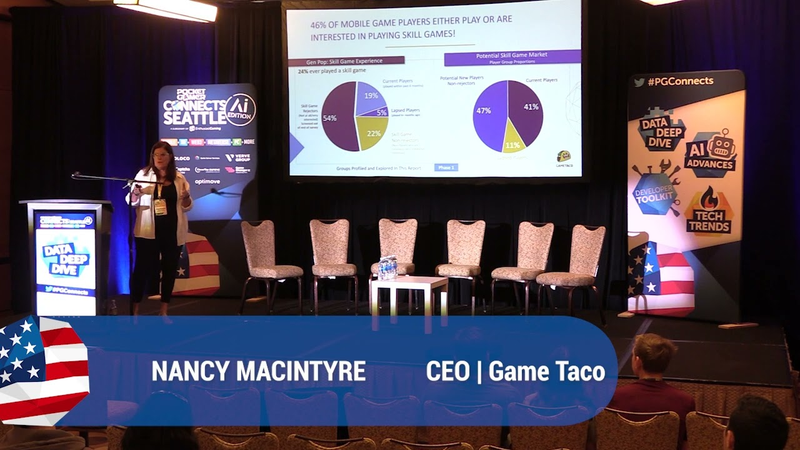
Evolving the Skill Gaming Business for a Diverse Audience, Generation, Gender and Gaming Styles
The skill gaming industry represents a significant, evolving sector of the mobile gaming market, characterized by a transition from traditional casual play to competitive, real-money tournaments.
- The skill gaming sector is a high-growth market defined by competitive, real-money tournaments based on physical or mental ability rather than luck.
- The core demographic is older and female-skewing, with approximately one-third of players aged 45 or older and a majority identifying as female.
- Skill gamers are high-value users who exhibit 'hardcore' gaming behaviors, spending more time and money across multiple platforms than the average mobile consumer.

Session: 'Crossing the Pacific' Lessons Learned - Scott Moscatelli, Devsisters
The presentation examines the strategic challenges and successes associated with launching the mobile game Cookie Run: Kingdom in the United States, contrasting this effort with its initial release in the South Korean market.
- Launching a game in a new international market requires a shift from efficient user acquisition (UA) to brand-building when the IP lacks existing local awareness, as evidenced by the initial failure of UA-only campaigns for Cookie Run Kingdom in the US.
- Successful market entry depends on deep localization and community listening; Devsisters achieved this in the US by aligning their voiceover casting with Gen Z values regarding diversity, inclusion, and representation.
- Strategic partnerships with established brands, such as the collaboration with Sonic and Sega, can provide immediate legitimacy and signal strong investment to new audiences in competitive markets.
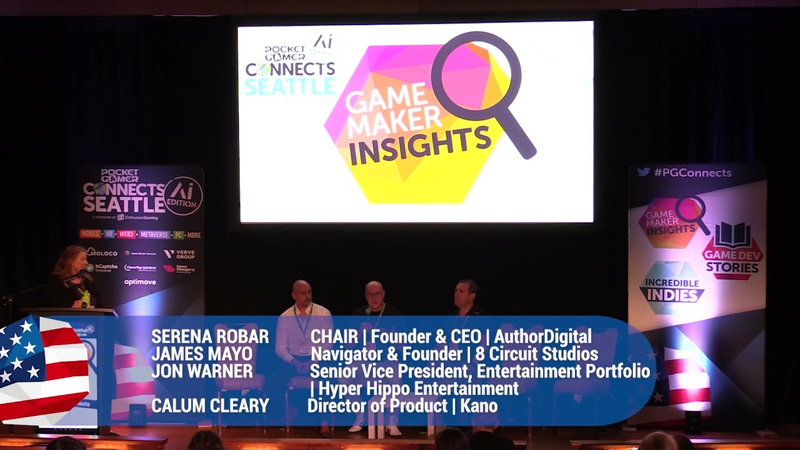
Panel: Playing together is more fun: Is social a must?
Social integration has become a fundamental pillar of modern game development, serving as a primary engine for player retention, monetization, and organic user acquisition.
- Social integration is now a primary driver for player retention, monetization, and organic user acquisition, effectively lowering customer acquisition costs.
- Developers should prioritize collaborative gameplay loops and incentivized referral programs, as these consistently outperform complex competitive systems in driving engagement.
- Community scalability relies on mitigating toxicity through player-led self-moderation, which allows studios to maintain safe environments without stifling expression.
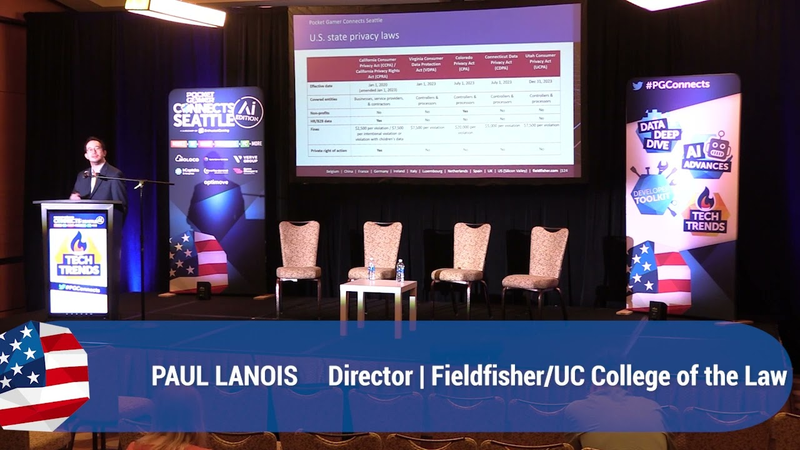
Session: Epic Fortnite Case and More, Paul Lanois, Fieldfisher
Privacy regulation has become a critical operational concern for the global gaming industry, driven by increased scrutiny from regulators regarding data collection, user consent, and design practices.
- Epic Games' $520 million settlement serves as a primary industry benchmark for the severe financial and reputational risks associated with failing to protect minors and utilizing deceptive design patterns.
- Regulators now classify generic information like IP addresses and email addresses as identifiable personal data, requiring strict adherence to privacy protocols regardless of the data's perceived anonymity.
- Under the California Consumer Privacy Act (CCPA), sharing data with third-party analytics providers is legally classified as a 'sale' of information, necessitating clear disclosure and user opt-out mechanisms.
Writers
Games and companies
Games