1 free read left. Create a free account for unlimited reading + AI research.
Create free account
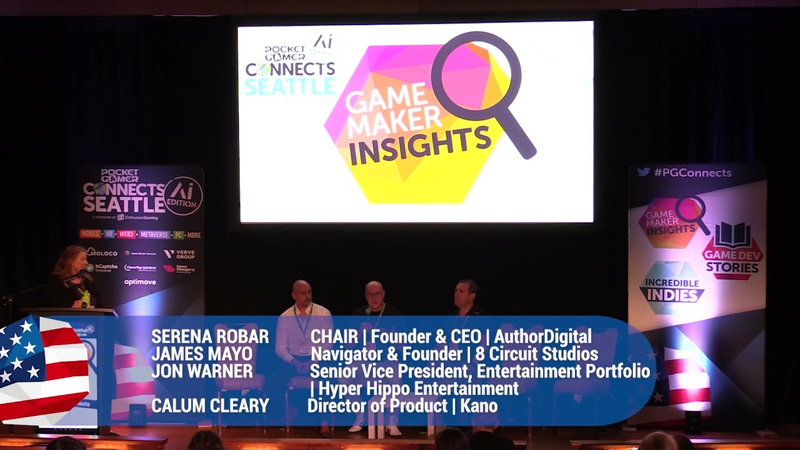
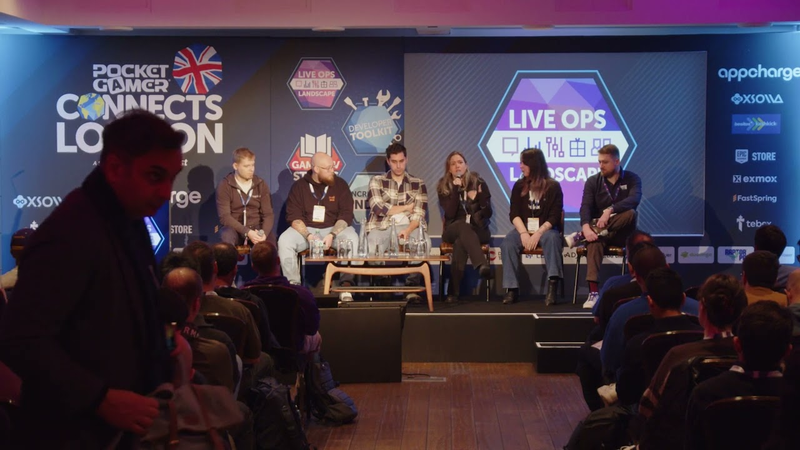
Panel: Playing together is more fun: Is social a must?
Key insights
6 takeaways- 01Social integration is now a primary driver for player retention, monetization, and organic user acquisition, effectively lowering customer acquisition costs.
- 02Developers should prioritize collaborative gameplay loops and incentivized referral programs, as these consistently outperform complex competitive systems in driving engagement.
- 03Community scalability relies on mitigating toxicity through player-led self-moderation, which allows studios to maintain safe environments without stifling expression.
- 04Small teams can manage community toxicity without dedicated budgets by implementing tiered moderation systems that empower passionate community members with authority.
- 05Indie studios should leverage third-party platforms like Discord for social infrastructure rather than building proprietary systems, allowing them to focus resources on core gameplay.
- 06There is a significant market gap for accessible, third-party analytics tools that allow smaller teams to understand player behavior without the high cost of proprietary machine learning solutions.
Ask AI about this video
Transcript
Up next we have what I think is going to be a super interesting panel that I tried to get on to but I responded a little bit too late. But it's going to be about the the importance of social dynamics and play in and game design. We have folks from all you know, a diverse set of viewpoints from all across the ecosystem, different points of the value chain. I'm really excited to hear what they have to say. So let's bring our panel on up for the next session. Playing together is more fun. Is social a must? Hint, the answer is yes. But they'll they'll give you a little bit more color on that. It's a spoiler alert. Sorry.
Good morning. Welcome to the 75th annual Hunger Games. Just wanted to see if you're awake. Just thought I would check that. Hi, my name is Serena Rubar. You are in the panel is social. Is it a must? Do we have to have it? We've got a great panel of guests today. I'm going to let them introduce themselves. A little about me is I started my career over 20 years ago in community management. So I know the joys and the deep deep pains of people just in general, people. I'm CEO of my own company. I'm co-founder of Author Digital. I also am an adjunct professor at DigiPen. So I deeply care about people no matter what how they're acting at the time. So I'm going to go ahead and introduce my lovely panel. James, would you like to start? Certainly. My name is James Mayo. I'm a product development manager at a company called Ace Circuit Studios. I'm actually the founder, too. And uh, my background is in sort of two two chunks. First chunk is in AAA and
I've been working in the game development industry for about 30 years or so. Uh, and then the other half of my career is in the kinds of companies that develop for AAA. So, for the past decade or so I've been working in the indie space and so that's me. Excellent. Hi everybody. My name is John Warner. I'm the senior vice president of our entertainment portfolio at Hyper Hippo. Uh, I've been in the games industry for about 24 years now. I started in AAA as well. I was with Microsoft and Disney. Spent some time at EA and BioWare making some interesting and fun big RPGs. Uh, and now I work for Hyper Hippo up in British Columbia, Canada, which is delightful. And uh, I'm excited to talk about this topic and uh, share some thoughts. And uh, hi, I'm Callan Clary. I'm director of product at Kano.
Um, we're also from Victoria. We're from BC as well, out of Victoria. So, yeah, independent studio um, and been on brains for about 15 years now. And they have a mixture of games that have been going that were PvP that have been going that are for like 15 years and we have a new portfolio of narrative idle games. So, it's kind of a diverse um, player of games and also players that play those games. And uh, for Kano, part of our mission is uh, meaningful connections through social games. So, it is actually part of our DNA that we really um, focus our company around. Actually, you might have noticed we are missing a panelist today. Leanne, unfortunately, from Netflix could not make it up and so we will we will channel her thoughts and we'll we'll just say what we think that she thinks and then totally put us on the for that, cuz that's what she gets for not showing up. Um Use chat GPT Exactly. We'll just every interview she's ever done, and
boom, it'll be perfect. It'll be just like she's here. Um so, let's talk a little about social in general. Uh when we think about games as a whole, um I started uh in in community management, and I launched the Pokémon Trading Card Game Online, uh which is predominantly for children. I was on a super I was a community manager on so on, Marvel Super Heroes What Online, all kids, all COPPA-compliant. And the concerns um are very different than maybe a AAA uh shooter and things like that. And so, those are different things. And then we think about indie games, we think of mobile, and we think of oh, single player, but guilds, and all of a sudden it's a group dynamic that we didn't have before. Um and then there's also like the streamability. Like if somebody's watching someone else play, that's also considered social as well. Um and so, I think as a group, we sit here and we think, you know, it can be very expensive to moderate a community. Um what is necessary and what isn't? And so, I'm going to look to Callum a little on this and say, "Hey,
you see things. You've been around. Uh you know, uh talk to us a little about the pros and cons, I think, of social dynamics within games." Yeah, so I think there's two things that are really key factors for games right now, and that's live ops and social. And, you know, it's a really difficult time right now in the industry, so you just It really is so important to both to retain players over a long period of time. So, for social, the the pros are is that we literally have people in our game that have played for 15 years. They met with that people meet online. We've had Kino babies out there. Um those games still generate huge profits for us and helps with new game development. The The other pros of it is that you can start to build and monetize around those guild structures. So, they work together, they play together, they want to help each other out. They will pay to move up leaderboards uh to to monetize
in that way. Um so it's really the stickiness is a factor for social. And there's also another aspect where they will bring in other people to play with them. And that UA is very expensive and it's not getting cheaper. And for you to have people actively trying to bring people into your game and play with you is extremely beneficial. And I think now with streaming like you were mentioning um or easy sharing with peers, it helps to people bring in. Con side? Yes. So, um it there is some added cost definitely for we have a player success team um that's uh that do have to know the game very well. They actually are in Victoria. They are full-time employees. We don't outsource it. We have a community manager. Um if you have chat in your game, please talk to me. There's there's uh it's if you do have to sort of plan
around things like that um because it becomes toxic and I've actually made quite a bit of changes when I came to Kano for our for we handle chat because it get the point where people will leave the game if it's done poorly. Um but you do have to moderate some of that. Um and the other things that can be a bit tricky to be honest is um things like AB testing. Um if they're talking with each other and all of a sudden they see something different in the game, they might not like that or they might follow up your success and all of a sudden you get a bunch of support tickets and you got to deal with that. So, that could be tricky um as well. That's funny. I just imagine you you're just trying to find out like should the title look different and And you get all these support tickets like "Why are you changing my game?" Can I riff on that a bit, too? No. Okay, great. Absolutely not. Of course. Exactly. Just be great. So, one of the other things that you were talking about, Calvin, was cost, right? And that's one of the things we can make the assumption that probably, unless you're like totally in uh game
development for creative expression, and even then you probably want an audience and that's some form of community that uh the cost that come not just with managing a community, but don't manage it properly, especially if you are uh in in the process or looking forward to uh working with a publisher, if the community is managed poorly, there can be a acidic effect or even if uh you're not consistently keeping them updated, publishers will look at that and see that potentially as a sign of risk for them. Cuz what they're looking to use the community for is sort of validate your product in the market. So, that's another thing to just be aware of. Oh, that's a good point. So, what I'm hearing you say is you have to be mindful and um sort of like have a plan and strategy for a community cuz community will grow whether you have a plan for it or not. And the type of community that grows is very different. Like there's either there's either beautiful flowers in your garden or there's nothing but choking weeds. And so, you have to be deliberate cuz you have a garden whether you want
to take care of it or not. Uh so, you want to take care of it. Um and then it can also affect your relationship with publishers if if if it's an area that needs tending. Um but once a culture is ingrained, it is very hard to change it. Yes. Yeah, just to add one more thing about that point is that we did pivot, you know, to actually have the active strategy for Discord and then started live streaming. And it's our player success and community managers that run that. And it's been so successful. I I really thought it was a bit of a risk, but I thought, "Oh, this is not that big of a risk, right? It's just time. And that I was it humanized our player success team and connected them with the players in a different in a way that which is really beneficial for both sides. And I it's really interesting to get that feedback live from the players as well. And yeah, I would definitely say engaging our communities or having a plan around the communities is definitely a very important.
John, what are your thoughts on that? Um yeah, you know what? I honestly I don't have a whole lot to add to that. I I I think it is vital. We have uh we have a really good player experience team at at Hyper Hippo. Uh where you know, we when people come in with complaints or tickets, we're we're right on top of it. They they turn it around really really quickly, really well. Uh and you know, just people who come in with complaints and and leave feeling, you know, cared for and they they become actually more of a an evangelist. And I think that that concept can be applied broadly to community management as well. Uh I think that I think that one of the things that is important here though is to really think broadly about uh multiplayer, about social. You know, there's a traditional methods and means, whether it be leaderboards or guild activities, uh
chat. I think that if we can think broadly about it, not be super pedantic, and think about just different ways that we can be social with each other. Uh we recently did an experiment with TikTok on their mini game program. And really that was all about capturing and capturing somebody's attention in under 2 seconds. So, when you're looking at a game, it's oh, this looks fun. This looks fun to play. Creating something that is engaging to watch as well as engaging to play, is really that or can be super important to your social strategy. Right? Because if it's fun to watch, then people are going to want to stream it. And talking to the audience of your audience is an important piece for us at Hippo. Where really we're looking to give people a means to build a community, build their own audience using our games as their platform. Another That's another means of being social. And it
it's a way of circumventing if you're really strapped for cash or you have a small scrappy team, that can be a way that you can get that social engagement without the the the gigantic costs that can come along with more traditional means. I guess that's true. I mean, games since the beginning of time are an excuse to be social. It's a reason for people to get together. It's why we have board game night and RPG night. And now you can play them all online together. And so you can still be online and someone can be further away and you can be playing with them. But it's an excuse to be social. But you don't have to have all the the deep multiplayer mechanics in that to do. I I love watching people play games. I don't have the hand-eye coordination that my children do or my husband. And so what I'll do is I'll be on the co-pilot seat, right? And so they'll be playing and then they won't see everything on the screen that they need to. I'm like, "Try over there." And then I grab my my tablet and like, "Let me look up where this is." And stuff. So it becomes this Would you call me a gamer? Well, I would. I mean, I might not be holding
the controller, but I'm definitely a gamer. I'm engaged in what's happening. I'm being social. This is a part of what we're doing together, but I'm not what we used to call traditional, right? Like traditional's gone. Like we're all different types of gamers out there. And we all are social differently. So, you know, we can't just assume we can tell someone how to have fun. This is the only way you can have fun. That's it. No, no, no. I'm sorry. You're not having fun right You can't play this. And that type of thing. But when we think about, I think about a single player sort of situation where if I'm doing a match three or a more casual or a hyper-casual, um and then the guild elements where yes, it's still a a very I don't want to say a very solid It's still a solitary experience I'm doing on my own, but if I'm part of a guild, and I think of Empires and Puzzles. Um but, you join a guild, and and you're like, "Okay, we have to go and do your event," which is a really big deal, and like there are guilds all around like you weren't in your event on time, and you're out. Like they're very very um I don't want to say you know Like well, they're very competitive,
right? I mean, that that's the whole thing if you're competitive or social. Um let's talk a little about maybe those types of experiences cuz I think that for independent for indie developers, that maybe the idea of having a huge customer care sort of situation is is a little out of the realm, right? A little little hard, right? You don't have the money for that. Uh what are different things that they could do for the social side of things to create some stickiness, and uh what I would call the guild mechanic like you talked your mom into playing something, and you're in a guild together, but you're not maybe playing it as much, but you talked her into it. Oh my god, you're not going to not play that cuz she's going to get on you. Um that type of stickiness factor. Positive social pressure. Exactly. Still positive. Positive social pressure, right? Or you're with your friends whether they're uh you know, right next to you or whether they're across the world. Pardon me. My allergies are killing me. Uh and then that pressure to show up and do your part, right? Is uh a powerful
component to getting people to return to your game and keep playing and having fun with their friends, having that competition, and it becomes a really nice loop. The The trick there is having a rich enough meta and enough material to really keep them coming back and back. So, it's a bit of a content treadmill, but uh I think it's can be super effective uh way to keep people engaged in the game and and build organic installs. Ah, the holy grail. Yeah, I would also add to that is if you have an incentive where if you invite a friend in and they reach a certain threshold that you get a a really good reward for bringing somebody in and getting to a certain So, not just anybody, but they actually have to progress in the game and hit it. It's quite a powerful incentive. It has worked on me. I fully admit it. I just looped in some people on an off we go and yeah, it's it can be pretty powerful. It's it's pretty easy to do.
Yeah, John touched on this too. There's something like you know, game development as theater as well. And so, I think that's one of the things that you know, if you if you can't necessarily manage a large community, sometimes if your game shows really well, you can have other people's communities manage themselves as you do development. And so, that is one element that we found has been very helpful. The other thing that we've done is open up our community to select builds of the game. And so, that sort of status elevate elevates them within the community and then they can contribute feedback and direct the course of product development. And so, it that does take a little bit more management. You do have to kind of be careful with that approach, but it can it can yield a ton of benefits for you. So, it is one of the things you have to weigh as a cost though. So, like inviting inviting your players in, what I used to say when I ran communities is that I'd be like, "You're welcome You're
welcome to my home." Or welcome to grandma's house. Now, she's a cool grandma. She was at Woodstock, but you still don't want to put your feet up on her chairs and be disrespectful that way. But, she's going to let you, you know, kind of have fun and be a little rowdy. But, if you train your community and anyone who's playing that that is the the line this way you can do then they train other people. I think it's really nice that people, you know, if you walk into their grandmother's house, you're not going to be disrespectful because, you know, your friend's going to be like, "Dude, not cool. Grandma's not down with this." And so that type of thing, that mentality, and then they you become those advocates, right? We're going to go and we're going to bring other people in here because this is a cool safe place that doesn't have a bunch of in it and so therefore I want my friends or family and stuff to be involved with us that way. I see the follow nodding at me like I'm brilliant. I love it. I love it. Yeah, yeah, yeah. Brilliant and vast. Tell us more. Tell us more. Deep insights. I like it. Uh-huh. Actually getting your your community on your side and helping empowering them to
be the agents who help keep everybody else, you know, behaving nicely. That that's a really nice trick. It's hard to do sometimes, but if you get that core that core group of players who just love your game and want to talk to other people about it and then when people come in and are you know, trolls, they they you know, tend to shut them down and that's that's a nice thing. Yeah, if if if if they don't feel welcome, they're not going to stay and this is both good actors and bad actors. Right. And I I I think that it goes kind of back to the point of of thinking about these things very broadly and not being too prescriptive, right? Everybody has different motivations for how they play, how they want to play with others. You know, I I play lots of games of yeah, all sorts of platforms. I'm very rarely am either vocal on the mic or, you know, vocal in the chat. Not vocal. Uh and that's cool. I still feel like I'm getting social engagement out of it cuz they give me lots of other ways where I can quietly brag. I can humble brag
because I've got the awesome badge. You know, I'm I'm participating in my guild and I'm like number two, number one. And that makes me feel really good about myself. It's like, "Wow, I'm clever. I'm good. I'm participating. I'm helping out." Never pick up the mic. I never type. Uh and that's okay. So, allowing venues, allowing ways for people to be expressive, uh and not necessarily have to funnel through, you know, your brilliant game design, uh I think is is super important. You know, I When I was at BioWare, we we developed um a lot of really intricate matchmaking systems. Uh and then and which was super expensive and it you know, sometimes it worked well and sometimes it didn't. Uh and then games like Wordle strolled up and they're like, "Hey, yeah, social. Here's a button that you can press." And I was like, "Oh, you guys, brilliant." It was brilliant. And then they were able to share on, you know, the platform of their choice, right? So, it doesn't always have to be a super intricate, well-designed,
brilliant scheme. It could be the brilliance of a button, you know, which I think is It doesn't have to be over-engineered. It could just be something, you know, simple that really brings people together. Let Let's switch gears a little bit and talk about Ooh, I'm going to throw the diversity thing out there. Um underrepresented groups that maybe get a little picked on, a little harassed. I mean, I It might shock somebody, but I I have played games in which I was not welcomed or uh treated a certain way. I know it's a shocker. Um we're all such lovely people in the world that we get along so great. Um but how do we How do we create a world where you know, maybe someone doesn't want everyone to know, you know, "Oh, hey, I'm a chick in the games industry." I I I do remember for one company I actually created an alias. Um and he was Dre Roberts. And Dre was awesome. And his avatar, you know, looked different and stuff. And then I had an email with Dre Roberts and I would do everything through Dre Roberts,
who was a cool, badass dude. And Dre would always be like, "I got to check with my boss." On this one, I was boss. Uh he'd get, you know, things from the community and everybody loved Dre, right? And everybody was going to hate me regardless. Like there was no there was no getting around if if you are in a certain type of game and you've got a female community manager that's like taken all the fun out of stuff. So, Dre would go to bat for me and be like, "You know what? She's super cool. Um, she's totally fine but, you know, she just can't let this go by. So, I'm I'm just going to give it to her cuz I think that And then everyone's like, "Dre, you're such a good guy. Man, the way you like look out for us and go to bat, you know, with Dre is awesome." It was me. And I was everybody on that. And so, it was just one of those ways to kind of be like, "How?" And it was Dread Pirate Roberts. Dre Roberts. Hello, Princess Bride fans. Um, and so, that's something that I had to do. And And this was years ago. I'm hoping that wouldn't be the case today. Um, so, how do we deal with that when you when you get such Politically, we're so charged with one another right now. And we do see that
spill over to the social side. So, how how is that dealt with, I guess, for you guys when you have found um, works or doesn't work? We did two things. Um, the first thing that we did that we we Like you were saying, we we could see that the culture was starting to take a turn that was like, "Oh, this is a bit challenging to contend with cuz people's feelings are getting hurt." And I'm a pretty pretty big advocate for free speech, but, you know, within a community, these cultures can ossify and then you're stuck with it, like you're saying. So, one of the first things that we did is just, um, ask people not to participate in political speech. That was sort of the first thing that we did. And then the second thing that we really focus on is just the merits of the behavior that we want to reinforce, which is friendly behavior, good good behavior. And I think, like you guys were saying, you begin to empower your community to, um, sort of police and enforce the the mores that you want to establish. So, So, having a clear guideline of this is acceptable and this isn't. Your code of
conduct. We think about PAX and one of the first thing is is just don't be a dick, right? You're like, "Oh, that's right." Everyone's definition of that is pretty clear. We're all just like, "Oh, just, you know, the golden rule." In other words. So, by doing that you enable your your your patrons and your customers to go back and say, "Hey, just check out the rules of conduct." You know, you can shut it down fairly quickly. Um but how do we welcome? How do we welcome people uh and say, you know, this is a safe place? How How do we let them know uh that this is a place where they can come and be themselves and and hopefully, you know, not get a lot of flak. No, I I think the first step is really knowing your audience. Right? Uh if you've got uh a fairly casual social game and people just want to show up and and, you know, not be in a non-threatening environment, there's not a lot of trash talking that goes on inside there, then, you know, make sure that that's what you're presenting outward, that your social opportunities are geared
towards that kind of quiet participation and supportive, "Hey, you're awesome. You did great." And don't create a venue for trash talking because that's not your audience. If you're creating something that is more competitive, more combative, and, you know, trash talking is kind of part of the fun, then it's really important that you get yourself some good software that will help filter out a lot of the garbage talk. Uh get yourself a good moderation team that can help you uh kind of deal with the the actors who make it through your your chat filters and uh your security systems. Uh and then you can really start enforcing and creating an environment and fostering an environment where your that social behavior is in the zone where you want it to be. Mhm. Yeah, just to add to that. Um the way that we had to handle it was that um so, for the sort of the public chat, we limited what they could write on there as far as even how much
they could post. And it was really to draw them to their own private chats where they moderate that and very explicit of what that group is and then they can moderate as a group and they're actually fairly good when you moderate because then you can leave if you don't want to be there. And then I must say like Discord has been really great as far as like it's very clear that's like a social channel and we're all there to just, you know, share experiences from around the world or talk about the game in a different channel for strategy. You know, it's it's really great you have these tools and so you have now different places where different people can meet and and talk. I think that that really helps um with different groups' needs, hyper-competitive versus social. And I think that was one of the great things that we saw during the pandemic was that people really really relied on those social connections. It might have been the only connections they had while they were on lockdown was the people that they played with and so they can't It was good to have a vehicle for them to be able to communicate with them as well. Excellent. Uh we are at the less than 10
minutes into our talk. We can continue on or we can answer questions early. I hate when I get to the end of something and then it's like, "Oh, I have no time to answer questions." Uh particularly as we get warmed up. Um I will look for the group and be like, "Hm, how are we feeling? Do we thinking questions today? What do you think? What your gut tell you?" I don't know. You want to go to questions? I have a question if you want people to finish their others first. All my notes are on the board. That was good. Oh, appears as I might have missed it. You're just giving us a stick time. I like it. Oh, I thank you. 11, okay, perfect. Uh gentlemen, do you want to go to questions or do you have Have there anything in in particular you want to kind of point out that I might have missed? And I'll cry. I would like to give you bonus points for your Princess Bride. Yeah, thank you. reference that was good. Uh questions, if you guys have questions, I I would love for this to be a conversation. Um Almost a social experience. What you do there now? Questions. I can jump in on one other thing too,
yeah. So, we're in the triple I space. So, we we're actually developing fairly sophisticated complex systems and so, uh, our Could you define what triple I is for those in the audience that might not understand that? basically like triple A, which is like high budget title in the, I guess like you think Nintendo, Microsoft, these are sort of companies that develop triple A titles. We do triple I, which is, independent, but, you know, budget of say 10 to 30 million. It's a little fuzzy this being an indie, but, sort of I like triple I, I haven't heard before. Like I I would hear like double A or something like that, but I like triple I. I like triple I. I'm on board. It's official. So, we So, the first mode of our game that we developed is a player versus player game and it's, uh, when I'm talking about complexity, it's it's technically complex. So, there's the AWS server, which handles our back end stuff. There's the game servers that, uh, make sure that there's no cheating and then there's the client. We use the Unreal system. And our retention rate, we're still, you
know, pre pre alpha, but, uh, our retention rate was something like people coming in, it's about 10 minutes of game play. That was pretty consistent with, uh, each milestone that we released. And then we switched over to player versus environment or you could think of it like, uh, adversarial play. We switched to cooperative play, which is in the past 6 months and it's a pretty significant feature set, but nowhere near as difficult to develop for as like the, uh, competitive adversarial play. And we've been noticing a 400% increase in retention times. So, that's a pretty What is it? Illustrative example that you don't necessarily have to go hardcore complex and, uh, you could focus on features that are more collaborative and cooperative, it is a route to take or at least think about. Nice. Nice. All right. Okay. Sorry. Hot flash. Sorry about that. It's just my world.
All the old people are laughing like, "Mhm, my wife does that, too." Okay. Um And then for the other people, like, "Your mom's doing that. Be nice to her." Um So, let's talk a little uh questions. So, do you want to start it off? Ooh, microphone, too. And feel free to break out the karaoke if you need to. Like, we're down with that. Oh, oh, oh, oh, oh. So, uh you know, just anecdotally, participating mostly as a community member on these, my my general perception is as community size scales, toxicity tends to scale um and non-linearly, like, closer to exponentially, right? As you add zeros to the number of participants. Uh and I'm wondering, have you seen that same phenomena? How do you do research planning around that kind of community scaling relative to your expectation of toxicity? I can add a bit to that. Um so, it seems for us, the magic number is 30. So,
um so, we actually put for the the guilds or that, a max we started at 20, we went to 25, 30, and then beyond that, it became um bad. Yeah. And then for those private chats, we also had to put a limit on that, and we haven't really found the magic number, but we're kind of like 50 or less. So, I would definitely say like, yeah, the bigger the room or Discord, we haven't really had that issue yet as far as a whole bunch of people in there yet, but that's still fairly new platform for us. New being like a year and whatever it's been. I don't know. I don't even have track of time anymore. We've fallen out of that. Uh but yeah, that's it. So, yes, that's a real That's a real problem. Uh so, just having a plan, I guess, to manage that it doesn't become just one giant room where just the loudest people take over is is yeah, something you want to work around. Toxicity. Yes, gentleman in the beautiful blue shirt. Turquoise.
So, with thank you. I'm an actor, so I didn't need it, but so when you're talking about implementing voice chat into a game as like an indie studio, obviously that's a new feature that takes a lot of development time. How much do you feel leaning on third parties like Discord for like your in-game gameplay voice chat is like would that be recommended? Would that Would that be something where you say don't lean on a service like that? Just make sure you implement your own thing because obviously if you have to do the voice chat and the text chat and everything in your game, that's just extra features that can take away from development time that could be spent on balancing gameplay and stuff like that. 100% for us. Off-the-shelf baby. Don't make it yourself if you don't have to. Uh I I was many many years ago when I worked at Microsoft at zone.com, we we did the whole experiment and and and zone.com for those of you who are old might remember it. For those of you who are young, it was basically one of the first places you could go to play a bunch of different games at once. So, you could play Age of Empires or you could play bridge. So, you had this very
eclectic group of people and it was surprising on a few different levels cuz you would have your people who are hardcore bridge or spades players and they also also played Age of Empires. So, you know, the data analytics was kind of fun to be like, "Oh, this is a thing." But one of the things that would happen is we call it T2P. Does Has anyone ever heard that expression before? Time to penis. Yeah. So, we we we were like the first to actually enable and say you should use a webcam while playing bridge, which is a horrible idea because the T2P is about 3 seconds. And so, uh you think about those types of things, do you want to be known for the service that actually says, "Yes, we've been able this and we've spent a lot of resources to allow the TDP to happen." Or you're like, "Hey, you show your own webcam on your own judgment, right? We're not going to advocate." Uh it was a uh short-lived, you know, group divider like, "Oh, you can see who you're playing with. That'll be amazing. These total strangers that just click come into my room and play bridge with
me." And you're thinking of bridgecraft? No one's dropping their trout. No, they are. And so it was one of those things where it was like universally known. Some people were just like, you know, people are awful and the worst common denominator is something's going to happen like that. And then there were those beautiful optimistic flowers that were all like, "No, it'll be awesome. They'll be the best friends and they'll come together." I'm So I think that lasted what, a week? And then we turned that feature off and said, "You know what? Let people do their own webcams if that's what they want to do, but we don't want that to be known in our service." Um so yeah, you you get the best of people and you also get, you know, the surprising other side of people. Um but don't don't pay for that. Don't enable that yourself and pay for that uh when you could be putting money and time into your game. Uh do off the shelf and let people do it, but Discord is good for that. Three minutes. Three minutes, people. Uh yes, over there. Um It's a magnificent beard. I like it. Thank you very much. Uh so as a like a small team of developers with a low budget, how do you recommend getting something like moderators in a multiplayer game or for like chat? Um
obviously we don't really have the budget to pay people to do something like that. So do you just like find evangelists within the community or how how exactly would you recommend a small, you know, indie studio to do that? Yeah, I I I crowd source. Uh yes. Uh lean on your friends. Lean on your your network of of pals uh to who who can hop in there and do you a solid uh until you get things rolling, you know? I think that being scrappy and thinking about it in just ways that it's like, "Hey, uh little brother, you could you could do this for me and that would be awesome." Uh as a way to start at least, right? And then building finding those players in your in your community who are passionate, who love it, who love love the game, those are the the people that you want to help get involved.
Now, one of the things that we tried was uh thinking about community like a game designer. And so, we think about progression, uh we categorized a number of roles for our community. So, there are community members who like to break things, these are our test pilots. There's community members that like to stream, these are our creators. And then we've got community members like to go into other communities, and these are ambassadors. And so, categorized sort of the roles that we thought would be helpful for us. And then what we did is create a tier system so that you could actually progress through um the tiers. So, if you're a test pilot, you're going to go to level one, level two, level three. And as you went up the tier program, you actually are commandeering or empowering people to be moderators or other roles that have more responsibility and they also get more authority. So, those two things are And they get a badge that says they're a badass at whatever level they're at, yeah. So, they can show off to everyone else. Nice. Was that helpful? Yes. Okay, perfect, perfect.
Um over here. Last one. You're it. Make it good or get out. I have a good one. Uh I kind of have a related question. Um obviously, you know, a chat room or anything anything of that nature is going to generate generate more data than your people can possibly moderate. Uh wondering if um there's any thoughts on utilizing technology to actually, you know, drill into that data for more than just moderation purposes, you know, player sentiments, identifying influencers, and so forth. Uh-oh. Yeah, I mean I I'm a fan of big data and using using machine learning and neural nets to help you parse it and and figure out what's going on inside of there. Great idea. If you've got the resource to do it, do it. I think that there's it's a rich trove of data that's in there and and player
insights and player insights are gold. So, I would say that yeah, if you if you've got the resources, you've got the ability to to deploy that sort of system, then I don't see the downside. And a little side for independent game developers too, you know, they don't have the resources to do that. So, if that is a business idea that you have, you're like, "Hey, I'll take all your data and you know, give you predictive things about things that can help with you." I think that's a a great opportunity for anybody if you're looking for a side hustle cuz I think there's a lot of people that'd be interested in that, being able to take that and have insights into their community that just don't have the resources to do it themselves. Um well, Dave is kicking us off. Dave, thank you all for coming and hearing our talk today. We are here. We are available. Come say hi to Lincoln. Come up, talk to us. It's lunchtime. We Well, not lunchtime. Something else is coming up. Never mind. Well, we'd like to talk to you at some time while we're here, but um thank you all and um have a great conference.
Summary
Social integration has become a fundamental pillar of modern game development, serving as a primary engine for player retention, monetization, and organic user acquisition. Rather than relying solely on traditional in-game mechanics like guilds or chat, developers are increasingly finding success by designing for streamability and fostering external community hubs. These social ecosystems act as vital assets that validate product viability for publishers and convert casual players into long-term brand evangelists, effectively lowering the cost of customer acquisition through organic growth.
To maximize these benefits, developers should prioritize collaborative gameplay loops and incentivized referral programs over complex competitive systems, which often yield lower engagement. However, the scalability of these communities depends heavily on the mitigation of toxicity. Maintaining a safe, inclusive environment is essential, and this is best achieved by empowering players to participate in self-moderation. By establishing clear codes of conduct and providing diverse social venues that accommodate both vocal and quiet participants, studios can foster healthier interactions without stifling player expression.
For smaller indie studios, resource management remains a critical challenge. Building proprietary social infrastructure is often inefficient; instead, leveraging third-party services like Discord allows teams to focus on core gameplay while maintaining robust community connectivity. Furthermore, managing toxicity without a dedicated budget is feasible by crowdsourcing moderation through tiered systems that grant authority and recognition to passionate community members. While advanced data analytics and machine learning offer significant insights into player behavior, these tools remain largely out of reach for smaller teams, highlighting a growing market need for accessible, third-party analytics solutions that can help developers better understand and serve their player bases.















Comments