Mobile reports and market data
Documents

Curated Panel: Buying on Rewarded Platforms: The Benefits & Challenges.
Rewarded platforms have evolved into a critical component of modern user acquisition strategies, experiencing significant growth in revenue share across the global gaming industry over the past year.
- Rewarded platforms have become a critical component of user acquisition, showing significant growth in revenue share across the global gaming industry over the past year.
- Profitability in rewarded channels requires aligning external reward structures with the internal player lifecycle to ensure lifetime value consistently exceeds the cost per install.
- Success depends on rigorous data maturity and the precise tracking of in-game events to manage the higher post-event churn rates typical of incentive-driven users.
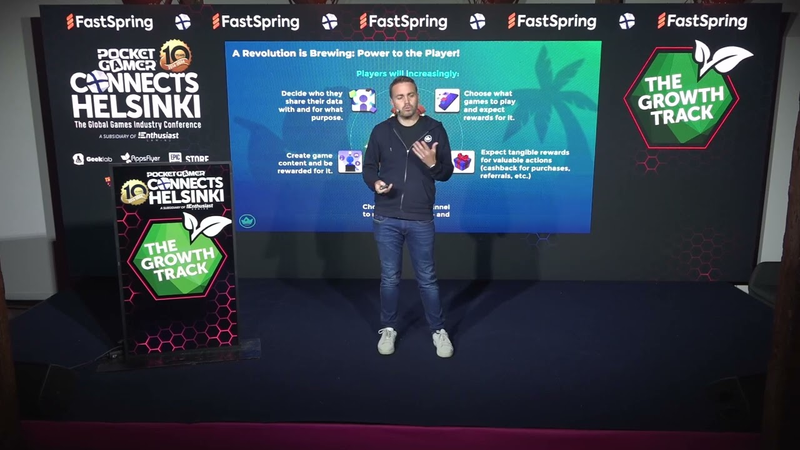
Session: The Rise of Player-Powered UA: How Incentives Will Shape the Future of Mobile Growth.
The mobile gaming industry is undergoing a fundamental shift toward a player-powered growth model, where developers increasingly treat players as partners rather than mere consumers.
- Over 80% of mobile players express interest in games that offer tangible rewards, and 25% of users are willing to switch games specifically to access these incentives.
- Developers are shifting toward value-exchange models that provide in-game items or real-world currency in exchange for player engagement and data to mitigate the impact of privacy-related tracking limitations.
- The adoption of web shops is increasing as a strategic method to bypass platform gatekeepers, capture first-party data, and provide more competitive value propositions directly to players.
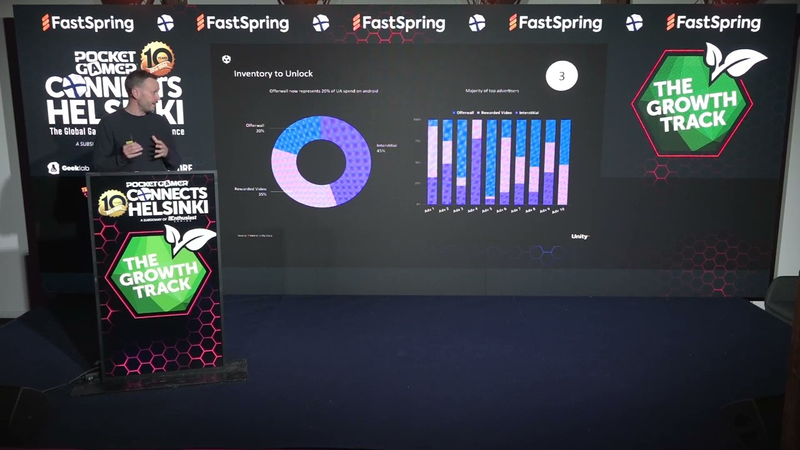
Session: Rewards Unlocked: Accelerating Game Growth with Rewarding User Experiences - Danny Cormack.
The rewarded user acquisition (UA) landscape is experiencing significant growth, driven by a shift toward privacy-centric environments and the performance limitations of traditional UA channels.
- Offer walls now account for 20% of total Android ad spend across all Unity channels, reflecting a significant shift in user acquisition strategies.
- Unity's 'Unity Rewards' web-based solution for iOS is currently in beta and showing strong performance, with 4x the ARPU and 3x the day-7 ROAS compared to Android campaigns.
- Internal Unity data indicates that offer wall users demonstrate superior retention from day 0 to 30 and higher LTV from day 0 to 60 compared to traditional video ad channels.
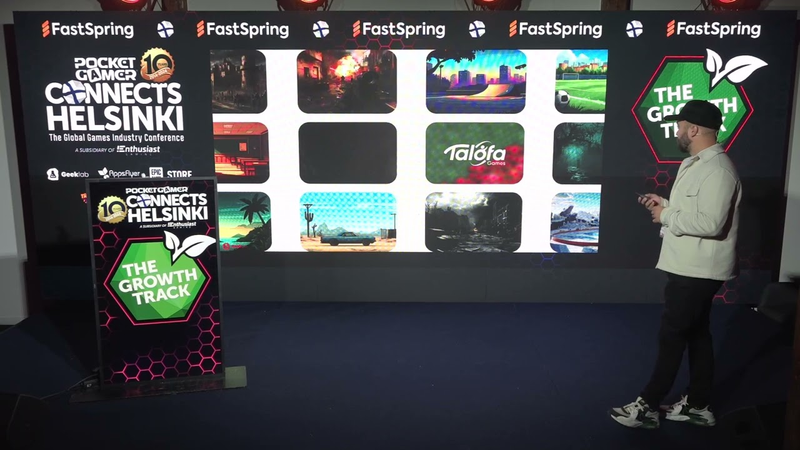
Session: Mastering Game Marketing in the era of Data Privacy - Jesse Lempiäinen, Geeklab.
The game marketing industry faces a significant paradigm shift due to the erosion of user-level tracking, specifically following the removal of Apple’s Identifier for Advertisers (IDFA) and the impending implementation of Google’s Privacy Sandbox.
- The erosion of user-level tracking, driven by the removal of Apple’s IDFA and the introduction of Google’s Privacy Sandbox, has rendered traditional device-based attribution models obsolete.
- Marketing strategies must pivot from tracking individual user journeys to analyzing creative-level performance to maintain visibility in a privacy-focused landscape.
- Implementing creative-level tracking links allows developers to bridge the gap between ad networks and applications, enabling real-time campaign optimization without relying on invasive user data.

Curated Panel: Behind the Game: Strategies for Building the Tech That Powers Today’s Top Titles.
Modern game development necessitates a strategic shift toward early-stage commitment to live-service models, where technical infrastructure and monetization strategies are integrated into the initial prototyping phase.
- Building internal tools carries significant long-term maintenance overhead and documentation requirements, making third-party middleware the preferred choice for most studios unless the technology is a core strategic differentiator.
- Live operations require distinct skill sets and team structures compared to the incubation phase, with successful scaling often necessitating a transition from small, multi-functional teams to specialized groups focused on content, scheduling, and live service management.
- Modern game development requires integrating live-ops and service-experience infrastructure into the project from the very beginning, rather than treating them as post-launch additions.
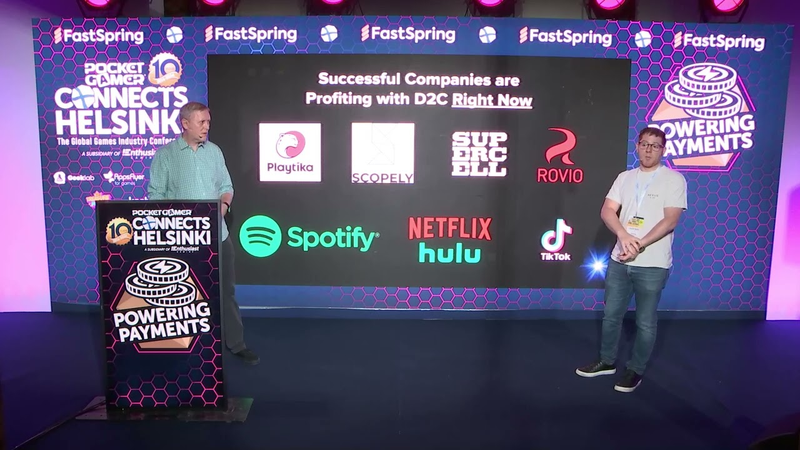
Superstar Session: How to Actually Succeed With D2C Web Shops for Mobile Games.
Direct-to-consumer web shops have emerged as a critical strategic evolution for mobile game publishers aiming to circumvent platform fees and enhance profit margins.
- D2C web shops are primarily a strategy to increase profit margins by bypassing platform fees for high-value VIP players in live-service games.
- Web shops should function as a migration channel for existing engaged users rather than as a broad user acquisition tool.
- Publishers must incentivize the transition to web shops by offering exclusive bundles, bonus currency, or unique rewards not available in the standard mobile app.

Session: How to run Mobile Games as a Service for Decades? Introducing Beacon, Niina Ojala, Rovio.
Rovio’s Beacon platform serves as a comprehensive, internal technology suite designed to manage the full lifecycle of mobile games as a service.
- Rovio’s internal technology platform, Beacon, is a comprehensive game-as-a-service (GaaS) suite developed over 10 years to manage the entire lifecycle of mobile titles, from prototyping and soft launch to global scaling.
- Beacon enables remote configuration of game settings and live operations, allowing teams to update player experiences and run A/B tests without requiring new client-side app updates.
- The platform utilizes machine learning models to optimize player experiences by predicting lifetime value (LTV) and personalizing content, such as adjusting ad frequency or event difficulty based on individual player segments.
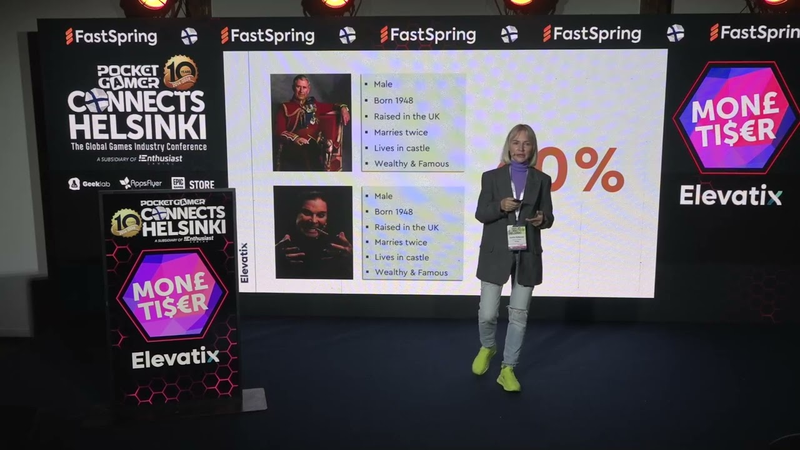
Session: Machine Learning is a new age of Personalized Game Monetization - Kseniia Maiboroda.
Machine learning serves as a critical evolution in mobile game monetization, shifting the industry from broad, demographic-based segmentation toward hyper-personalized user experiences.
- Machine learning enables hyper-personalized monetization by shifting from broad demographic segmentation to individual behavioral analysis, such as session frequency and purchasing patterns.
- Implementing machine learning for personalization can increase conversion rates by 5% to 7% while simultaneously boosting lifetime value and average revenue per paying user.
- In-house development of machine learning solutions is resource-intensive, requiring specialized data science teams and a 12- to 18-month training timeline to reach optimal performance.
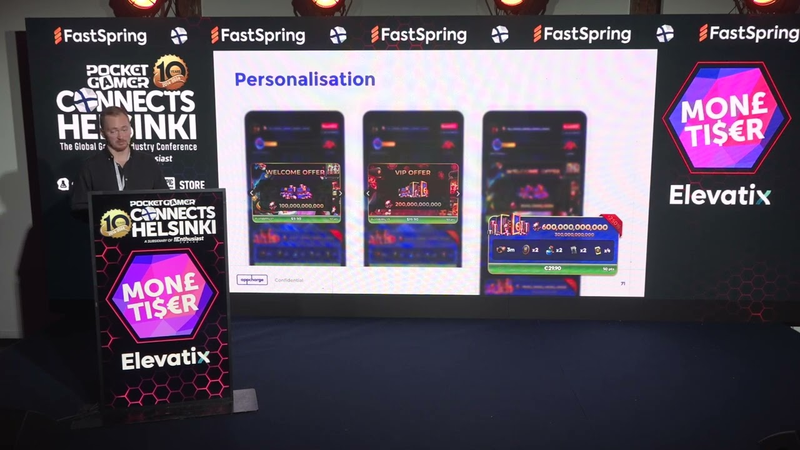
Session: You Built it, but no one Comes: Why Your Players Hate Your web Store - Miikka Luotio.
Web stores serve as a critical direct-to-consumer channel for mobile game publishers, yet they often suffer from low adoption due to friction in the user experience.
- Web stores can generate 30% to 40% in incremental revenue when treated as an extension of the game’s meta-game rather than a static transaction page.
- Personalized offers tailored to a player's progress, spending history, and local currency can drive up to 25% revenue growth.
- Authentication is the primary point of failure in the user journey, necessitating a streamlined process that ideally requires no more than two steps to prevent high abandonment.

Session: Can AI Keep Winning Ads Alive Longer? Zach Van Driel, Miri Growth.
The primary objective of this analysis is to determine how generative AI can extend the lifespan of high-performing mobile game advertisements, thereby maximizing return on ad spend and scaling user acquisition.
- Winning mobile game ad creatives typically experience performance fatigue, characterized by declining IPM (installs per mille) and ROAS, within 4 to 8 weeks of launch.
- Generative AI can extend the lifespan of hero creatives by enabling rapid, low-cost iterations on specific variables like voiceovers, scripts, sound effects, and visual backgrounds to combat auction and audience fatigue.
- Iterating on sound effects for a core ad concept resulted in a 17% improvement in click-through rates (CTR), though conversion rates required further optimization to maintain overall IPM.

TWIG #304 Supercell's Marketing Shakes Up while Web3 Shoots Back!
The gaming industry is currently undergoing a period of strategic recalibration characterized by platform diversification, technical transitions, and a cautious re-evaluation of blockchain integration.
- Stillfront Group has experienced a 96% decline in stock value since 2021, highlighting the severe financial volatility currently affecting established gaming companies.
- Supercell is undergoing significant leadership changes, including the departure of its CMO, following the underwhelming market performance of Squad Busters.
- The industry is shifting toward platform diversification, evidenced by Halo Studios moving to Unreal Engine and Xbox enabling direct game purchases on Android devices.

Session: Hybridcasual Expansion: Succeeding in the Growing Hybridcasual Market.
The hybridcasual gaming market has emerged as a significant evolution in the mobile industry, characterized by the integration of accessible hypercasual gameplay mechanics with the long-term progression systems and monetization models typically found in midcore titles.
- The hybridcasual market has tripled in size since 2020, reaching an estimated $1.5 billion in valuation by 2023.
- Hybridcasual games combine accessible hypercasual core mechanics with midcore-style progression systems and live operations to drive higher long-term retention and lifetime value.
- Development cycles for hybridcasual titles are significantly longer than traditional hypercasual games, typically requiring six months to a year and larger teams to support ongoing content updates.
Writers
Games and companies
Games