VideoPocketGamer.biz
Session: Hybridcasual Expansion: Succeeding in the Growing Hybridcasual Market.
18 Oct 202423 min video
Transcript
[Music] I would like to welcome Antonio and Vanessa from meta Audience Network we're going to be talking about the hybrid casual expansion uh how to succeed in the growing H hybrid casual market so yeah welcome right hi everyone and good afternoon uh thanks for joining this uh session today uh we're going to be talking about the uh hybrid casual uh gaming market so this has been one of the most uh interesting uh developments in gaming uh over the past few years and since 2020 this segment of the market has tripled in size and reached over 1.5 billion
so because of this we we did a a study with in partnership with deconstructor of fund and so we're going to go over some of these results and findings uh today right as mentioned we're from the uh meta Audience Network team and on stage with me is my lovely colleague Vanessa uh and we are strategic partner managers uh at meta right so what we have in the agenda today so we're going to take a look back at how we got here so the evolution the evolution of the the the hybrid gaming market then we're going to look at the design and development of these types of games and then Vanessa will cover the best practices for monetization and also key takeaways and so with that let's get started so first we're going to do a little uh trip down memory lane and look at how we got to where we are today and how this Market has grown so much over the past few years and so I don't think this is news for everyone in for anyone here in the
room but we saw that gaming has been through major ups and downs in the in the past few years especially after uh covid we did see the sort of covid spike in the usage of mobile games um we all then there was extensive privacy changes uh done to the ecosystem that had profound implications and we also saw that consumers they were sort of returning to post lockdown activities and also at the same time uh experiencing a a decrease in disposable income so all these challenges have led to the gaming industry which had seen a really rapid growth over the past decade to sort of have a shift in momentum and face new challenges and so it was with this Spirit of facing these new challenges that a lot of the gaming Publishers uh evolved their their business model to better adapt and one of the key Evolutions uh that we saw was the uh adoption at scale
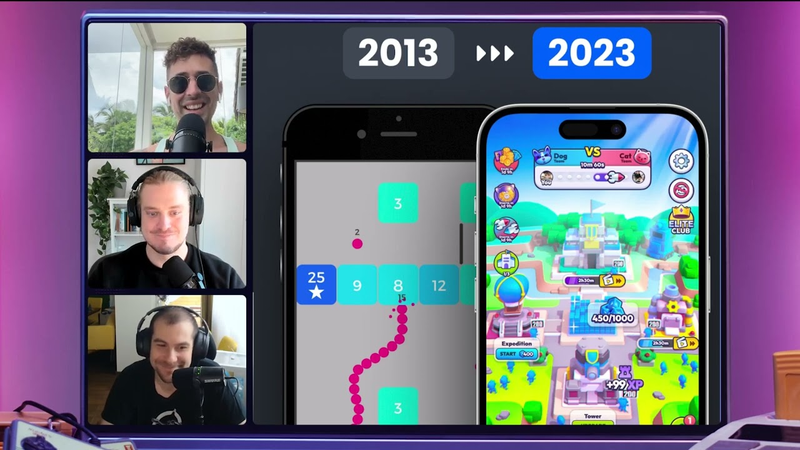
of the Dual monetization model that combines inap ads and inap purchases and so with this hybrid casual was born and games that successfully combine these two types of uh of monetization at scale can be described as the hybrid casual gaming we have the sort of uh unofficial kickoff of this trend in 2019 with the launch and uh success of the game archero uh but we'd actually take a couple more years before hybrid casuals have really emerged as a new trend in the market and became more than just the one hit story and so today what we have is uh really successful titles across a variety of game types and so uh to understand uh hybrid casual games it also helps to uh understand hyper casual games so hyper casual games were uh games that could be developed fairly quickly by small teams which allowed uh sometimes less experienced developers to successfully
enter the uh the mobile gaming business and so with this so hyper casual Publishers they did see the need to adapt to the new business um challenges that we're were facing and they decided to build on the sort of wellestablished hyper casual core and add in particular stats based progression systems that would keep uh uh players engaged for longer and be able to monetize them better and so what we have in terms of design is that the the hybrid casual games combin the highly successful hyper casual cord like game experience with game simple game mechanics with stats based progression systems that are at until then were traditionally more seen in uh midcore titles monetization as mentioned successfully um combines in iPads and in our purchases within iPads uh focused more on sort of the hyper casual element
of the game while inab purchases are better suited for uh in the progression within the game within the metacore game uh and then in terms of uh marketing what we saw is the desire was to kind of how do I say this uh acquire users at scale at a sort of hyper casual um sort of low prices but retain and monetize them better in a model more akin to the sort of midcore and Casual games and so the hybrid casual games can be uh sort of defined by five layers so we have the hyper casual light core then the stat game progression uh then we have the hybrid monetization on top of that we have the live Ops and then finally marketing and so these games are designed to kind of around that hyper casual like core and adding these layers
one by one uh to reach sort of the perfect kind of hybrid casual game in terms of the hyper casual core so the idea here is to keep the same uh tried and tested formula for hyper casual games which rely on uh really kind of engaging gameplay with simpon controls highly accessible uh that uh resonated so well with players of hyper casual games on top of that uh had had the U sort of simplified long-term progression uh systems and features that keep players engaged for longer iaps they're used to mon to monetize sort of um game progression items let's call it that sort of as having new items or uh new skins for the game for example while in app ads are more for like traditional sort of core action mechanics in the game like boosters and extra lives Etc uh in terms of the live oh yep sorry in
terms of live operations so it is an extra layer that is needed to can need to consider about when planning one of these games because they offer on ongoing uh support and engagement to players and in terms of marketing the goal is to um attract and appeal to a broad uh diversity of audiences with sort of the uh as we've seen in the hyper casual um design and so um what we saw in terms of um the adoption and the reception of this this segment of the market is that players really resonated well with this new system they enjoyed the simple mechanics and accessible gameplay that were found in hyper casual game but at the same time enjoyed and uh the sort of more rewarding and progressing systems within hybrid casual games and so even though the gaming industry has not seen a lot of growth since um covid days um hybrid
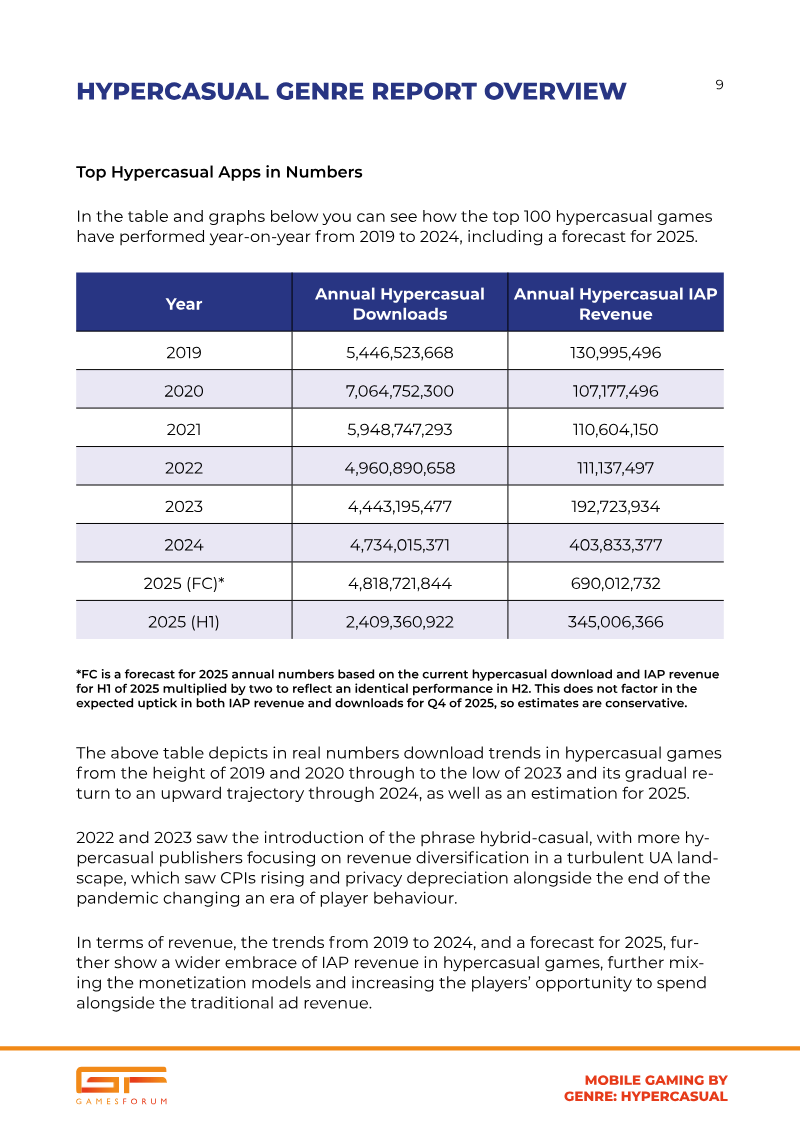
casual games are kind of really been not a savior but like a bright spot in the industry and they have shown considerable growth year on year uh and reaching an estimated $ 1.5 billion dollars in in 2023 and so next we're going to look at the design and development of these types of games so traditionally and in the beginning like I mentioned with the launch of archero The Sweet Spot for um hybrid casual games were associated traditionally with games that offered short but engaging engaging sessions but at the same time that offered almost nearly infinite power progression and these were techn sort of typically found in action and arcade games what we saw which was actually really interesting is that has as the the the market matured and lessons were learned hyper casual or traditionally hyper casual development velers that were moving into the hybrid
casual Market they were able to successfully sort of evolve and uh start doing and releasing really successful games across a variety of game types so for example in puzzle games one common use is that the game restricts the game board size and you allow players to uh expand it or access new new game boards uh by watching ads for example or in build and battle games where you can sort of increase your TR power or accumulate more res more resources by um again watching ads um in Return of that particularly rewarded video and so in terms of the development cycle and process um it does help to kind of think about how hyper casual games were were developed so again like I mentioned in the diagram before they rely on sort of the hyper casual uh like core game experience but they build on
top of that with um with live Ops and stats based progression systems unlike and this is the where the some of the the questions arise so hyper casual games could be could be developed fairly quickly by fairly small teams but what we find is for hybrid casual gamings the cost can be substantially higher um and therefore larger teams are needed so because now you not only have the sort of concept phase and the release of the game with a hyper casual like core but also you need to be able to support the game um for longer with live Ops continuing your players engaged for longer and so what we see from our research is that uh development for the for hybrid casual games can take from like six months to a year or even longer and also what we see is that for some of the best examples and more successful examples of these games you can re reach $100 million manually in Revenue but
also consider that the development is indeed more expensive uh in the hybrid casual uh design in terms of marketing so what we see is that marketing spend uh can start as early as in concept validation then it sort of ramps up in later phases of the uh project as you're kind of testing the game in different markets and then it sort of reaches its peak uh in in spend uh during the liveops phase where in this case you're looking and it's heavily dictated by return on that spend that you're seeing on your game and so what can you expect in terms of metrics uh in terms of retention and CPI for hybrid casual games so this is where things got a bit get a little bit different when compared to hyper casual games so hyper casual games were traditionally known for having high engagement rates U at the beginning like d d D1 D7 but then decreasing the engagement rates as time progressed and
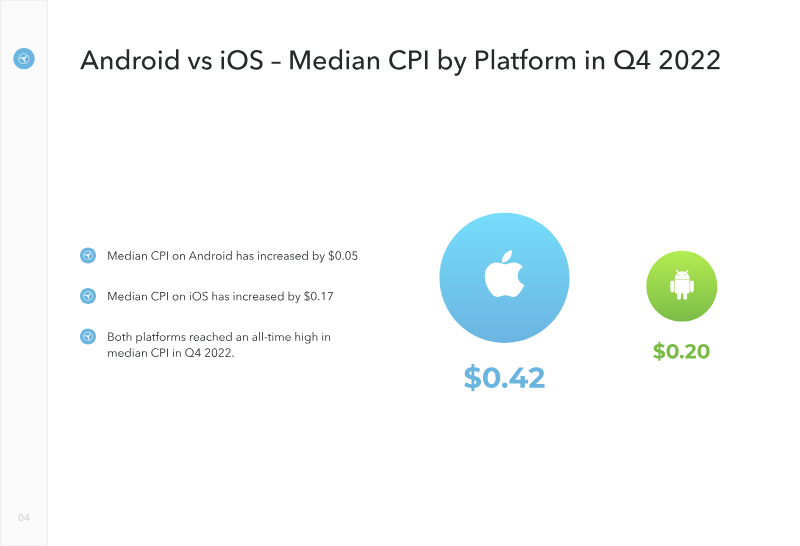
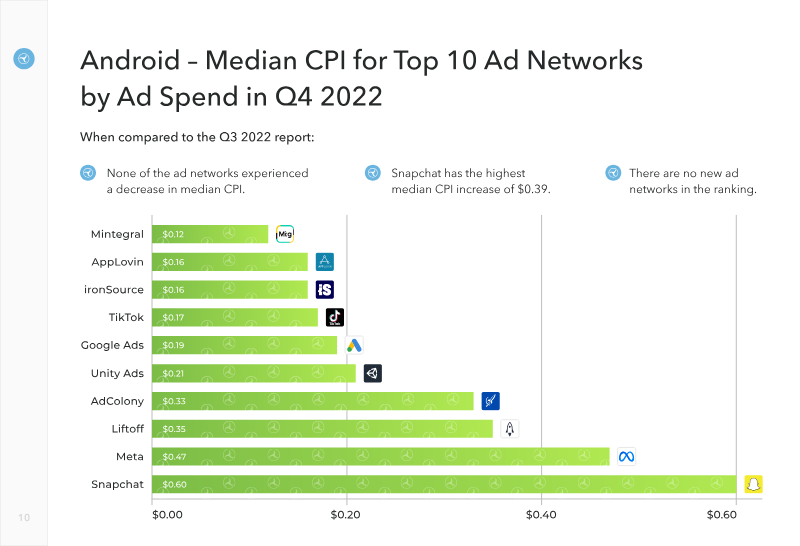
what we see with hybrid casual games is actually the opposite so while the the the engagement in the sort of shorter period initial period can be lower what we see is that you the retention levels are substantially higher uh in sort of long-term um game game um release and and launch and support also to noce that uh CPI costs are fairly higher on hybrid casual Gam as you can see on the slide uh so that's something also to take into account when planning for the the marketing spend on uh on the hybrid casual game and so as we've seen like the hybrid casual games have successfully evolved from uh just being confined to action and arcade games uh and I think that what our research has has shown is that players really like and enjoy and have responded quite posit quite positively to these this new type of
game so they enjoy the sort of snack ability uh aspect of these games it's easy to play either in short sessions or longer sessions they find the sort of the experience with the stat space system highly rewarding and engaging so it it m motivates them to come back to the game more often and see their character or Etc uh grow uh so I think that has been like a success story I think from our research the only um game sort of type that has not that we haven't cracked yet is the sort of player versus player uh type of games but I'm sure that with time some clever publisher and developer will find a way to uh to make the the transition to uh hybrid casual games in that type cool and so with that I'm going to pass the sort of microphone to my colleague Vanessa and the clicker and she's going to take us through uh monetization best practices thank you Antonio so we talk about design
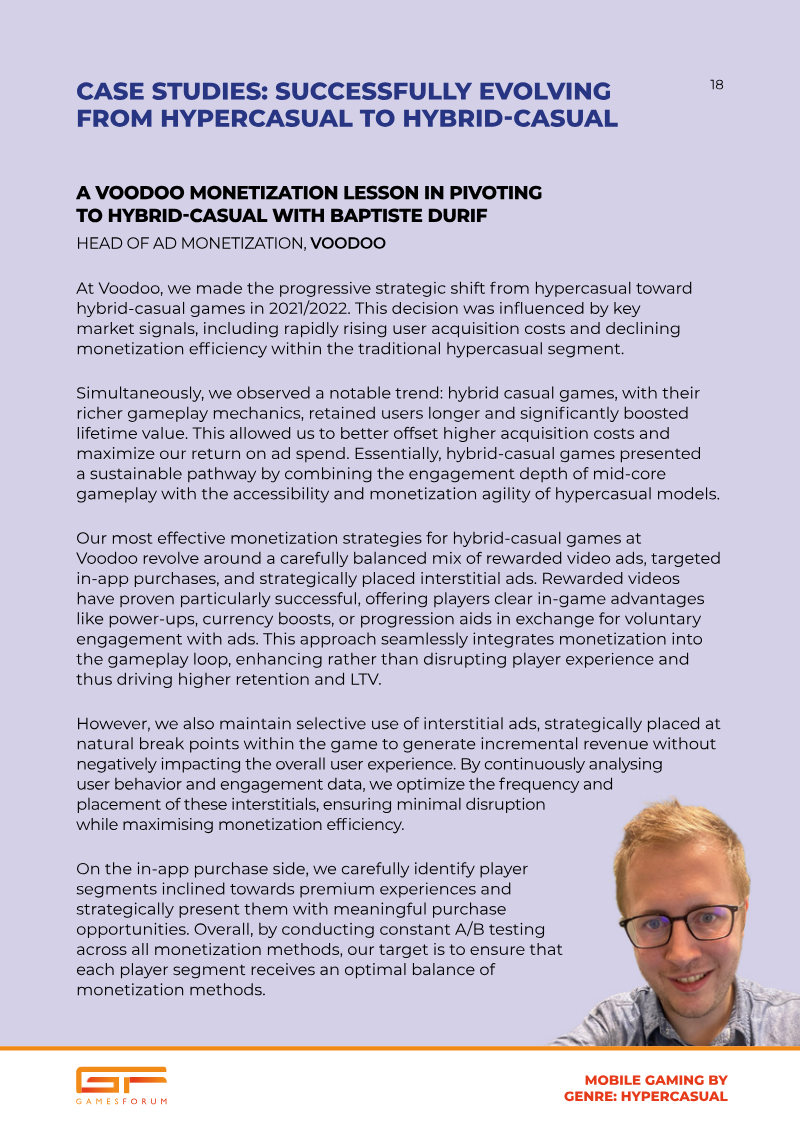
development but that is something very important to consider uh in the early stage of the development of a game is monetization uh in app purchases and ads are part of the game play it will help the user to progress into the game especially in this hybrid casual world where the the game are more difficult and the user need to to progress to increase the lifetime value so it's a mixed on Ina purchases and uh inapp ads you can find hyper casual games Ina purchase is it's the classic like offers that you can check on the store like in item I don't know I'm moving I think it's the mic my hair sorry it's the uh in in game currency or items that will help the user to go further into the game then you have bundles which is a collection of uh of B of um items uh at a special price um generally a bargain price that we try help encourage the user to to try them and battle pass which are some offers that available in
the game at a certain level when the user I completed um uh has has been far into the game so it will encourage the the retention it's here right um regarding ads because it's all about long-term engagement it's important that the user experience is not like the user is not descriptive so and and ads at place like in a strategic moment of the game so worlded video is a good example because it's an opin format where the user choose to see an ad for example we can have like a booster to gain like more currency or an item uh if the user like stopped playing because he died you can get extra lives or if uh the user is stuck because the level is too difficult he can get a hint and uh with the supported V watch rewarded so the different ad units uh
that we have uh for gaming and the most popular is rewarded video ads as I mentioned is an opted format so the user is in control uh he has decided to watch the app to clearly get a benefit and to help him to progress into the game then you have intertial ads which are full screen format can be display or video but can be intrusive so we recommend to place this ads in uh in a moment in the game where it's the natural break for example between levels we don't recommend for hybrid casual games to display an ass at the lunch of the game then you sorry it's noise yeah okay perfect thank you um then you have B banner ads a small format that you can find on top or the bottom of the screen to prevent accidental Creek um it's it's a there are lower CPM for ban ads but you can generate High volumes
offer all is specific to gaming a sort of marketplace when the user can access some offers and you will get a reward when you converted some offers generally it's in-game currencies native ads it's the square format more like a branding format that you can find on some on some apps more non-gaming apps then you have audio and low program but it's less popular into into gaming but the most important thing is like to uh not overload the user with ads especially for hybrid casual games um it's important that you you set some ad frequency and you cap the number of ads per user per session or per day different type of reward video integration that we we are think are good implemented so for example the daily reward multiplayer that's encourage the user to come like to the app every day to get collect a reward can be like a currency uh or an item in game store ads so this is is good to
give an idea of the user that is not willing or not ready yet to pay in a purchases to give a sense of what the Ina store can deliver but you have to be careful about cannibalization um and because with the with the store so you need to as well like cap uh the number of session per day uh with this placement on the old scream is the best because it's high visibility especially for the new players or the players that don't go too deep into the game like they don't go to the store or like they don't like progress uh it will give them a sense of what it is like to get like a reward and to get more protion and retention out of flash very popular as well when the the user like lost and want to continue it will increase the the user seual you have other very popular integration the Boost uh the boosting reals um the end of um game multiplier uh decrease weight time as well and in game hints so all these
placements are has to be like in the in the in the game implemented static stag sorry when the user you feel like he has he needs some help uh to progress and to increase the attention because um all these games hybrid casual games are more complicated than hyper casual games and they are made to be difficult and we want at some point like to decrease uh the pace of the user to make them either buy an in a purchase or to watch an ad to increase the the revenue of the app so the best practic for harmonization something very important first is segmentation don't display ads to everyone you have some user that are willing to pay so don't uh display ads to this user the non-payer display ads to the the user that you think like you will never uh pay for example using like uh um spender prediction models and machine learning it's great to to Target this kind of users and then even when
you create some segment just try with AB test start on 5% of the of the user based uh and then you scale you you you look at the Matrix so uh average revenue per daily active user user uh sa lens uh the churn all these metrics and you optimize with ADD frequency or segmentation and then you expand to to more user you can segment as well depending on like countries if you want special offers for example let's say in the US you want to do like some special offer for Super Bowl or if you want to wait to a certain level to display some ads there are many things to do and constantly segment segment and try and test with IB test add unique priority of course depend of your gain economy but rewarded video is the is the best format that we uh recommend to start with early in the development of the game it's very important right to balance I AP and inaad ideally 50 50 50 50% sorry is the
best but it will depend in the game economy as well when you try some new rewarded video at placement it's important to do some AB test and to compare as well the value of the reward that you offer with the IP and the combined revenue to see if it is worth it or not and then I think onon mentioned ad operation it's very important for hybrid casual Gates because you need to uh the game has to be more and more so you need to add uh some levels some progression uh to increase the the retention uh over the past month and then I will finish because I think we are out the time so the key takeaways is that uh these hybrid casual games are low development cost compared like to casual or midcore games uh they are based on power progression then the user are to has to progress into the game and on hybrid monetization you will progress than to ads or uh Ina purchases some player for example we never uh we never pay for Ina purchases so they need to be like defined identified and to
offer some rewarded video ads uh to conare them to maybe later on as well some in ades regarding marketing and user acquisition because it's both like this game is both based on I AP and IA you can try some different type of campaign but it's important as well that to test and to do some uh some iteration especially on Creative to prevent like creative fatigue with this to get a better iOS so the future for hyper casual games look great uh it's not it's much more complicated to from hyper casual you need to create like 100 of prototypes to go to a game that will go like to General lunch phase or even to be profitable but at the end it's worth it um because hybrid casual games will generate less download but we monetize better
[Music]
Auto-generated captions from YouTube — names and numbers may be misheard.
Key insights
Distilling the key insights…
Ask AI about this video
Cite this video
Citation
Generating citation…















Comments