VideoPocketGamer.biz
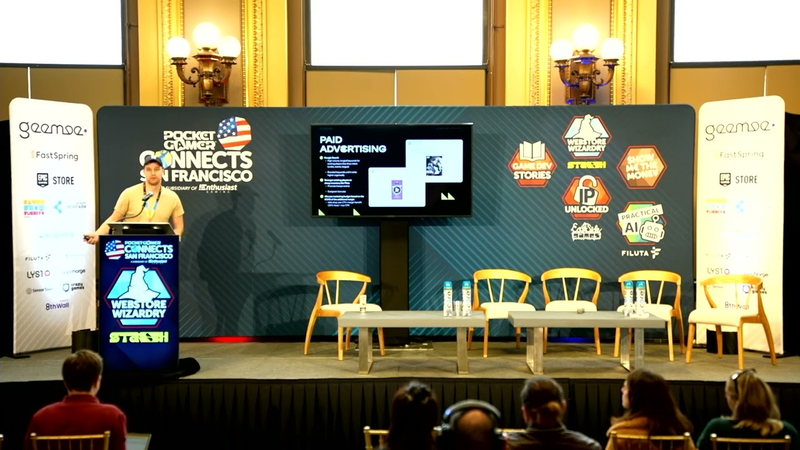
Session: You Built it, but no one Comes: Why Your Players Hate Your web Store - Miikka Luotio.
18 Oct 202420 min video
Transcript
And next up, monetization is also about monetizing your app elsewhere, and we're going to hear a great talk, "You Built It, But No One Comes. What Your Players Hate Why Your Players Hate Your Web Store." And it's Mika Luicho. If you come to the stage, VP Europe at Appcharge, and I will give the stage to you. Welcome. Hello, everybody. Nice to be in Helsinki. Uh
Great to see some familiar faces here. Um huomenta, good morning, as we say in Finnish. So, um today uh going to be talking about uh web stores and some reasons why your players might hate it and and uh some ideas how to uh make them hate your web stores uh less. Okay, so a few words about me. Uh I see, like I said, some familiar faces. Uh so, some of you may already know me. Um I've been working in the mobile gaming industry for uh over 20 years now. I work I started at Digital Chocolate right here in Helsinki uh working with various publishers like PopCap, Flare Games, Rovio, Wooga. List goes on. And just previously working at uh Xsolla and uh just before now starting uh for 1 year uh as the VP of Europe for Appcharge.
Okay, so a brief introduction about the company I'm representing, Appcharge. So, we're we're a direct-to-consumer platform specializing in working uh with mobile game publishers. And that's that's that's our focus. Uh we cover a range of products as you can see um from web store monetization, payments, and more working with some pretty pretty good partners, uh awesome awesome people, uh huge games, Product Madness, Superplay, and and much more. I joined the company a year ago. Really fell in love with the team uh when I first met them because their background comes from making mobile games. Most of our product team being from our ex-Moon Active people, and I just felt at home uh right away when I met these guys uh because their background matches mine, so um and that was that was a that was a beautiful uh start for the relationship. And um just recently we were awarded uh as the best payment provider at Pocket Gamer Awards at Gamescom. So, I'm
I hope that uh uh uh that that says something about uh our our methodology. Okay, so let's dive in. So, uh web store expectations. So, first of all, everybody's always touting big numbers like you're you're you're looking at 30, 40% incremental revenue, uh huge conversion rates um as as they they would be seemingly achievable with web stores. But, the truth is it's it's a real journey to get there. Uh and that's not going to be easy. Uh these can be achieved and can be aspired to, but normally we see that it takes about anywhere for uh like over a year and a year and a half to really get to the point where you're starting to see these numbers. So, it takes It's lot of iteration, um a lot of trial and error. You need to be very data-driven and test a lot of stuff to to really nail it.
So, you need to prepare for a journey. It's It's It's not going to be instantly you're looking at these numbers. There has to be a lot of iteration in between releasing features into your web store. Okay. So, what is the player journey actually for a web store? So, some people might think, "Yeah, just go to a web page and buy stuff." Like, that's simplifying it. But, it's actually four different steps. So, it's it starts with login or how players get in in order to authenticate their player account so they can actually buy stuff. And that's a big difference from you know, when you're looking at mobile games where people are quite often already logged into the game because they installed the game and they're playing it and they can buy stuff, right? I mean, the only thing they need to make sure they have an Apple account, which you know, obviously they or Google account they need to download the game. But, in the case of web store, you need to be able to log in
in order to buy in the first place. And then, when you enter the store, you you kind of start seeing the offers. And that's what what's we we would call like personalized view. So, who you are as a player, what's your level, what's your spending level. So, the the store should really greet you based on your progress and stage in the game. And the for for the repeat journey, after you actually managed to buy something and you do a checkout, it's pretty much the same process. In many cases, obviously the login is remembered by cookies in a browser so you don't have to re-login. But, it it pretty much is the same journey. So, which part of your web store is actually broken? Let's Let's look into that. So, first of all, starting with the login. So, the usual feelings that players when they actually get into the Web Store because it's a new paradigm for a lot of players and they they are they they're not used to this. Um so, many of them
are still kind of encountering this in their favorite games when uh they get into a Web Store first. So, how the hell do I log in? This is a lot of effort. Like, is it going to be worth it if I log in and find my player ID and etc.? So, those are all valid questions that you need to realize your players are asking when they first come to the store. You have to authenticate and that's uh that can be frustrating for a lot of a lot of players, depending on what the flow is going to be and how you're going to help them guide into the process of uh uh logging in into the Web Store. Okay. So, here's a example uh from one game called Mob Control. And this is pretty standard, actually. This is uh standard process as we see we see this a lot, actually, out there. And this is a very I would say the most common progr- process of flow in terms of login that we we see here. So, from from the first screen, you actually are told that you have to find your user ID as a
player. Like, what what is a user ID? Many players don't even know that they're they have such a thing. Um in in a lot of games, they don't have email accounts. They're not like asked to log in in that sense. So, and as the next step, you you actually have to you're told that you have to go to the game. So, you go open the game. And inside the game, obviously, you won't see your ID right away because your ID, obviously, usually isn't actually your player name. It is actually a code string. Um so, as in the next screen here, you can see that you have like this tiny little tiny tiny little code string here that you have to copy paste into the website to log in. Now, I mean, it doesn't take a rocket scientist to say that that's going to turn out most of your players even before they get to buy anything. I mean, that's not ideal, right? But, the truth is
most of the authentication login methods on the web stores that we see is pretty much this. So, there clearly is room to improve. Um another example login done better, and this is, you know, just one example, Supercell. But, there's many other publishers um out there that do similar that they have basically their publisher ID. So, players are required to create their account essentially across multiple games. So, when when you have the capability to do this, you can kind of shorten it to four steps, really. So, the first step being you you go into the store, and essentially you have a two-factor verification where you actually get a code sent to your email, so you have to go to your email, you copy the code, and boom, you're you're shopping. So, that's this is better, but what we've actually done recently at App
Charge with a couple of our partners that I mentioned earlier is that we found a way to reduce that to two steps. Um and I want to this is a little bit of a tease, but if you want to know more about it, you have to come to me because this is like early information, and we're happy to share in a private meeting, but yeah. Come talk to me later about that, but we managed to reduce it for two steps. Um so, that's that's pretty exciting. Okay. So, personalization. In terms of personalization, one of the most important things is uh for the players' feeling. When they go into the store, how do they feel? Do they feel that they're like a very high-level player? Are they you know, do they get this feeling that they're catered like a VIP? Uh are they catered for their level of progress? Because if they see like basic offers like $0.99, $1.99 offers, like that's not
going to interest your like high-level players that are spending a lot already in your game. So, you know, why are where's the added value? Um and um why are these prices not in my currencies? Also, a big factor. Because if obviously if you have to do the currency conversion math, that's not ideal as a player. Because really you should do that on behalf of them, so they don't have to figure out euros to dollars and Canadian dollars to US dollars and etc. That uh that's not fun at all. So, personnel season done right really gives you the feeling that your status and progress within the game as a as a player is recognized. Um and that you your local currency that you're you're from, the country that you're from, and where you're comfortable spending is immediately shown in in this screen. So, it it feels like it's not disconnected from the experience that you have in the game. So, it's very
connected and this is something that when you do done it right, we've seen as much as 20% revenue increase uh with some of our partners. So, it's by far the most impactful feature. Um yet at its best feels invisible because it just feels natural to the player, right? So, that's something that um needs to be needs to be stated that it's one of the key factors in driving revenue uh for the web stores, what we're seeing. And it essentially should be part of your minimum uh viable product for the web store. Okay, so let's talk about your D2C meta game. I'm actually coining this term myself. It's not a familiar term yet, but really the the main motivation here from players having problems with your web store would be they find it simply boring. Like boring. This doesn't feel or look like the game
that I'm playing at all. Why would why would I even buy from here? And what's the challenge? What's the goal? There's no there's nothing for me to solve as a player here and no reward for solving that. So why am I like what's in it for me? What's what's the fun here? So just displaying your offers is really is is really you know obviously the basis of of a web store because that's the essence of it, but it should be the extension of your meta game. It should be the extension of the fun that your players are having in your game. So when they enter the store, they feel that this is a place where I can continue to have fun and I will have mechanics there as well that it's not just boring. So how to do this right? I mean obviously the best web stores we've seen they give players clear goals and challenges. So some of the examples that we've seen
and and we're working with and many publishers are doing and and some of them more successful than others range from anything from daily bonus. So when you get to the get to the web store, you always get something for free like a little reward to reward you from going there in the first place and coming back. Obviously a progress bar that rewards you with something the more you purchase things there. So, it's almost like a if if you have your core gameplay, you have your meta game, if you start thinking your direct-to-consumer or your web store as the third layer of of of that experience for the players, that's when you're really getting into the zone where you're entertaining your players uh even outside of the game. And I think that's that's really vital for success. So, one of the interesting examples that I just recently I just wanted to highlight um Supercell in their store, they they just
uh kind of did a preview of a upcoming character. So, they were drawing attention from the players to go to the store and get notified um for for accessing their accessing this character kind of early in a sense. So, the it's store exclusive experience, not necessarily exclusive content, but you you feel that you get that experience when you enter the store. Um yeah. So, that that's interesting and I think those are interesting things to experiment and I can see a lot of publishers going more into that dimension. So, they're adding content also as a part of that experience. So, lastly one of the number four reason, your players not trusting the the the checkout and the purchase experience. And this is important because it has to do with the has to do with the fact of your players obviously not finding their favorite payment method from the checkout page instantly
because they're comfortable buying in things like Apple Pay, Google Pay, PayPal, credit cards. That's like they're comfortable using something, they want to see it. Or Klarna, I don't know. Or something something that's familiar and local to them. So, you should always obviously offer that. Um and then obviously there's the age-old nobody likes to put their credit card information again somewhere. So, that's that's something if you can streamline that or offer options that are faster, that's going to help you a lot. Um and then ultimately, this feeling of who am I really buying this stuff from? So, it should really feel um that the player in spite of using another merchant of record or something like that where the player is technically actually buying the item from, but it should really feel that the brand trust is the game publisher, the developer of the game. It should feel that um it is uh you as a player, you're buying it uh directly from the publisher
because that is a the trusted relationship you want to you want to foster. You don't want to introduce another company there and say like, "Trust these guys instead. Uh they're doing payments for us." You It you should really put your brand there in the front, your customer support in the front, um and work with uh uh payments company to who can really white label that for you. And that's uh that's really important, creating a long-term trust of of of for the in terms of the payments. Okay, so key takeaways. So, four key takeaways. So, in terms of login, uh login can be as uh large impact as 10% in the revenue. Obviously, uh it's immeasurable if your players can't find their ID, you're going to lose most of them. So, you really uh make should make sure this your whole funnel isn't broken from the top. And that's that's where the login needs to be. Ideally, no credentials needed
that you could in a in a authenticate in a way that is either through social media and other interesting innovative ways to reduce it to just couple steps. So, personalization, uh like I said, amounts to So the largest amount of of their revenue increase and improvement that you can see if you introduce personalization into your web store. That's uh upwards of 25%. So segmentation being the biggest modifier for success in in web stores. And uh that's a little typo. The D2 3 meta game 20% revenue uh increase that So if you really make your store fun, uh I think that really makes a huge difference. And it's not like uh a rocket science. If your players are still having fun when they leave the game and they're they're having uh they're buying things and they're trying to achieve things, you're introducing those goals, you're introducing challenge for them to solve, they're going to have more fun.
And then finally, to improve conversion, you need to reinforce that trust that your players have on the brand. And that's it. Uh if you have any questions, I'm happy to take any. Um Yeah, or um obviously, catch up with you to get that tip about how to remove friction from the journey. That's exciting. Um we are running a little bit behind, but we could take one very, very quick question if we have one quick question for Mika. We have one quick question in the back. Thank you, Mika. This was amazing, uh super insightful. Uh I have a quick one. Um in order to personalize uh offers to so many players, do you have to provide do you have to pre- design, pre-compile the product feeds super huge, or how does it being created, like randomized? Can you explain a little bit?
Yeah, so uh just to answer simply, like most mobile games, at least at a scale, uh tend to have some sort of segmentation already built in, free-to-play especially. And um if you're looking at a web store as another output of that I would say you like there's two choices. You find a partner who supports pulling your segments with an API. That's going to make it easy so you don't have to redo your segments that you can just display different offers for them on the web store but use the existing segments you already configured. Or then you do it yourself. So I would say that's like the the choice you have to do as a publisher when you're building web stores. Excellent and they can of course ask you. You're going to be around during the breaks Mika? Yeah. Absolutely and yes get in touch with him. He does have the secrets those tips of how to take two steps out of the journey that's very important. So thanks again Thank you. to our speaker.
Auto-generated captions from YouTube — names and numbers may be misheard.
Key insights
Distilling the key insights…
Ask AI about this video
Cite this video
Citation
Generating citation…


















Comments