MMORPG reports and market data
Documents
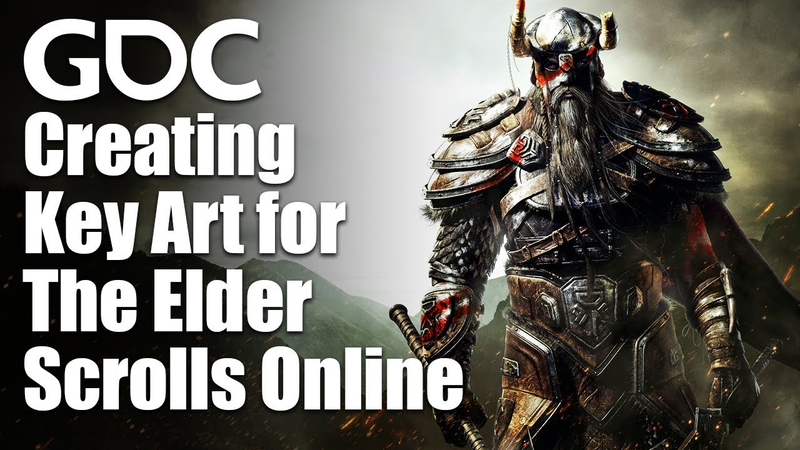
Illustrating Tamriel: Creating Key Art for The Elder Scrolls Online
The creation of high-resolution, hand-painted key art for The Elder Scrolls Online serves as a critical marketing function, requiring an eight-week production cycle to distill complex narrative updates into a single, compelling image.
- Creating key art for The Elder Scrolls Online is an eight-week process, consisting of two to three weeks of planning and compositional sketching followed by six weeks of production.
- Effective key art must distill the core narrative of an update into a single image, avoiding overly specific quest details in favor of broader role-playing themes.
- To manage the limitations of single-image storytelling, artists can use 'plot reversals' where the viewer knows more than the characters, creating dramatic tension by depicting characters unaware of an imminent threat.

Indie MMO Development with Jason Lee | Game Dev Unchained Episode 245
The transition from AAA studios to independent development represents a strategic shift toward holistic production, where the hyper-specialization of large-scale firms is replaced by agile, cross-functional workflows.
- Indie MMO development prioritizes agile, cross-functional workflows over the hyper-specialization and risk-averse, feature-heavy cycles typical of AAA studios.
- Procedural generation and systemic design allow small teams to scale expansive, persistent universes without the overhead of massive, bloated development staffs.
- Studios are shifting from traditional crowdfunding toward equity-based fundraising, which aligns long-term project success with community investors rather than simple digital asset sales.
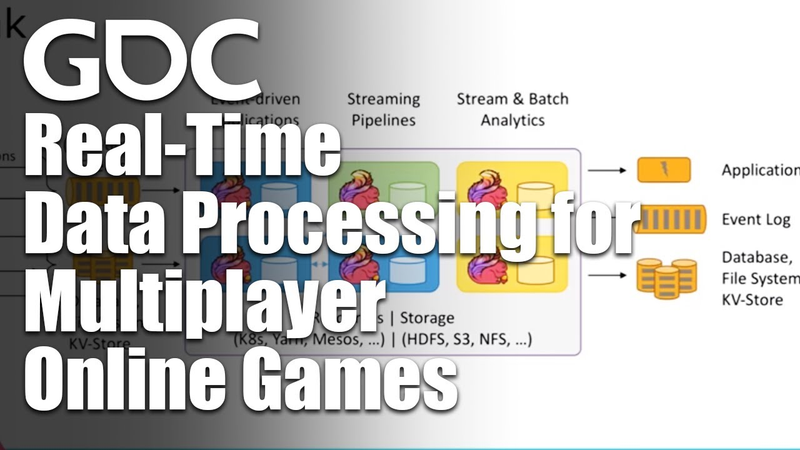
Real-Time Data Processing for Multiplayer Online Games
The primary objective of real-time data processing in multiplayer online games is to provide immediate insights into player behavior, revenue streams, and system integrity.
- A robust real-time data pipeline for MMORPGs relies on a three-tier architecture: Logstash for collection, Kafka as a high-throughput distributed transfer station, and Flink for real-time computation.
- Kafka serves as the central message broker capable of processing millions of messages simultaneously, offering fault tolerance and easy horizontal scaling without server downtime.
- Apache Flink is preferred for streaming analytics due to its 'exactly-once' processing guarantee, which prevents data loss or duplicate calculations, and its checkpointing mechanism for recovery to specific time points.
How to Reduce In-Game Inflation by Monitoring Your Economic Systems
Managing economic stability in complex MMORPGs requires a proactive approach to monitoring and regulating in-game inflation, which mirrors the challenges faced by central banks in real-world economies.
- Developers must treat in-game economies as dynamic systems by balancing time, labor, and currency to prevent price volatility and maintain player confidence.
- The five primary drivers of inflation are excessive currency issuance, insufficient essential item production, declining player populations, market manipulation by bots, and the sudden influx of 'sleeping money' from returning players.
- Teams should implement robust visualization tools to track currency flow, exchange rates, and transaction networks to identify imbalances between currency issued and collected.
Bridging Community Divides in Cross-Platform MMOs
Managing cross-platform massively multiplayer online games requires a nuanced strategy that balances technical parity with the distinct behavioral expectations of players across PC, console, mobile, and VR hardware.
- Developers must treat the player base as a unified community despite technical fragmentation across PC, console, mobile, and VR hardware.
- Community management teams should be integrated into the early stages of development to proactively manage expectations regarding platform-specific constraints and update schedules.
- Transparency is critical when feature or launch disparities occur; developers should provide direct explanations and tangible compensation to prevent perceptions of favoritism.
Creating a Development Culture that Embraces Change
Fostering a resilient development culture requires viewing organizational change as an iterative, behavioral practice rather than a static implementation.
- Jagex transitioned RuneScape from a waterfall development model to an agile scrum framework by piloting changes in small, isolated teams before scaling successful processes to the wider organization.
- To foster a culture of transparency, Jagex makes all individual performance objectives and product data—including conversion, retention, and monetization metrics—accessible to every employee in the company.
- The studio empowers teams by delegating full ownership of feature development, including visual identity, marketing, and release planning, while maintaining control through four core constraints: budget, expected return, quality standards, and player satisfaction.
The Bystander Effect - Standing Up From the Crowd - Extra Credits
The bystander effect is a well-documented psychological phenomenon where individuals are less likely to offer assistance to someone in need when others are present.
- The bystander effect occurs when individuals fail to intervene in emergencies due to the diffusion of responsibility, where people assume others will act, and social mirroring, where observers look to the crowd to determine if a situation is serious.
- In multiplayer gaming environments, players often neglect to assist teammates because they rely on other group members to provide aid or fear their intervention is unnecessary.
- Individual willingness to help is frequently inhibited by personal biases related to race, gender, and socioeconomic status, as well as concerns regarding personal safety or a perceived lack of skill.

When a Game is Too Long - Respecting the Player's Time - Extra Credits
The core thesis of this analysis is that game developers must prioritize player time as a valuable resource, shifting the industry focus from quantity of content to the quality of engagement.
- Developers must shift their design philosophy from prioritizing arbitrary game length to maximizing the quality of player engagement.
- Excessive content padding, such as repetitive fetch quests and artificial grinds, leads to player burnout and diminishes the overall value of the experience.
- Non-engaging tasks like obtuse user interfaces, unskippable technical hurdles, and tedious inventory management act as barriers that should be streamlined to keep players focused on rewarding gameplay.
Building An Intelligent Game Testing System in Netease MMORPG Games
The rapid evolution of large-scale MMORPGs like Justice has rendered traditional manual and script-based regression testing increasingly unsustainable.
- Netease transitioned from manual and script-based testing to an autonomous AI architecture to manage the complexity of over 15,000 quest steps in the MMORPG 'Justice'.
- The system utilizes Markov decision processes, Monte Carlo Tree Search, and Upper Confidence Bound algorithms to autonomously navigate game environments and generate optimal testing paths.
- Integrating Natural Language Processing to extract intent from quest descriptions allows the AI to prioritize player actions, resulting in a threefold increase in search speeds.
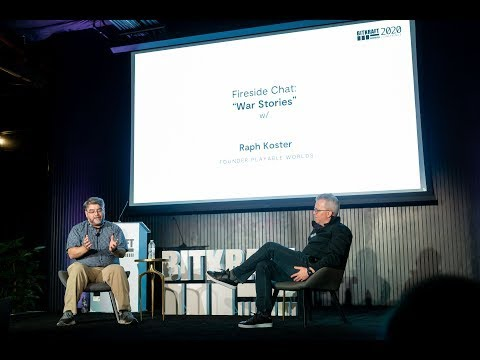
BITKRAFT Summit LA 2020 | Fireside Chat with Raph Koster hosted by General Partner Scott Rupp
The integration of major intellectual properties into game development presents a complex trade-off between market reach and creative autonomy.
- Prioritize evergreen content, such as procedural or user-generated systems, over expensive, rapidly consumed narrative arcs to ensure long-term market sustainability.
- Licensed intellectual properties can double a project's initial user base, but the resulting rigid approval processes and design constraints often compromise long-term player retention and gameplay quality, as evidenced by Star Wars Galaxies.
- Tech giants frequently struggle to enter the gaming sector because their data-centric, algorithmic methodologies are fundamentally incompatible with the nuanced, creative requirements of interactive entertainment.
Representing LGBT+ Characters in Games: Two Case Studies
The development of respectful LGBT+ representation in video games requires a deliberate, research-driven approach that prioritizes the lived experiences of the community.
- Effective LGBT+ character design is built on four core pillars: realism, consideration, explicitness, and respect, ensuring characters are fully fleshed-out individuals rather than defined solely by their identity.
- Narratives must prioritize character agency and consent, allowing individuals to disclose their identities on their own terms rather than through external imposition.
- Studios should integrate diverse voices into development teams and utilize external consultants, such as GLAAD or diversity readers, to ensure authentic and respectful portrayals.
Balancing the Economy for Albion Online
Albion Online operates as a sandbox MMORPG defined by a fully player-driven economy where every piece of equipment is crafted by the community.
- Economy balance in a player-driven MMO is defined as the macro-scale management of all extrinsic reward systems, which function as the primary incentive structure directing player behavior.
- To prevent wealth disparity and provide long-term progression, Albion Online utilizes a tiered equipment system where T4 gear is common and accessible, while T8 gear is rare and serves as a high-end wealth sink.
- The development team establishes price channels for resources by implementing a transmutation system, allowing players to convert silver into higher-tier resources at fixed rates to create a floor and ceiling for market prices.