1 free read left. Create a free account for unlimited reading + AI research.
Create free account
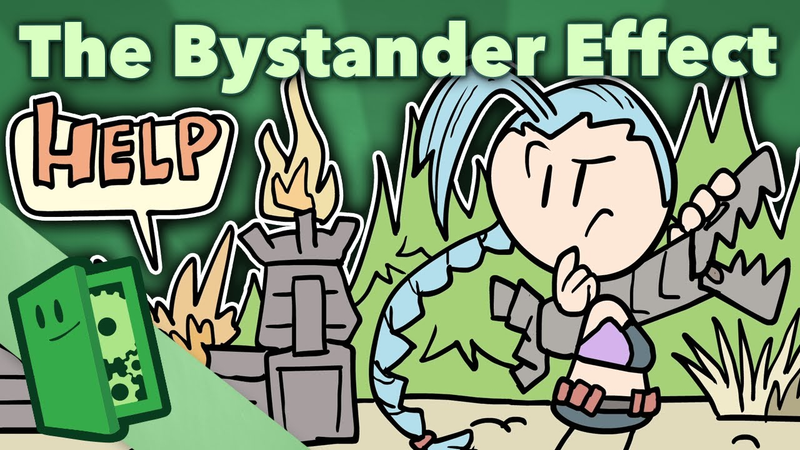
The Bystander Effect - Standing Up From the Crowd - Extra Credits
Key insights
6 takeaways- 01In multiplayer gaming environments, players often neglect to assist teammates because they rely on other group members to provide aid or fear their intervention is unnecessary.
- 02The bystander effect occurs when individuals fail to intervene in emergencies due to the diffusion of responsibility, where people assume others will act, and social mirroring, where observers look to the crowd to determine if a situation is serious.
- 03Individual willingness to help is frequently inhibited by personal biases related to race, gender, and socioeconomic status, as well as concerns regarding personal safety or a perceived lack of skill.
- 04Intervention can be triggered by disrupting group passivity through direct actions, such as acknowledging the victim, establishing eye contact to build empathy, and assigning specific tasks to individuals to create personal accountability.
- 05Educational institutions are increasingly using video games as training simulations to help individuals practice intervention techniques for real-world scenarios like bullying or assault.
- 06Mentally rehearsing intervention strategies within virtual spaces helps individuals build the confidence required to act decisively during actual emergencies.
Ask AI about this video
Transcript
you're hiking a mountain trail you've got your map backpack full of snacks and are enjoying the peaceful solitude of nature then you round the bend and discover a stranger sitting on the other side of the path help they call out i think i broke my ankle no one is around except the two of you so you would probably help that person right now let's switch the scene what if you were walking through a downtown plaza heels clicking on the stone pavement as you move with the crowd then you see a person sitting against the fountain help they cried to the crowd i think i broke my ankle though you're surrounded by people no one around you is responding now what do you do [Music] this episode is sponsored by curiositystream stay tuned until after the episode to find out how you can get a whole year for just 14.99 real quick up top please welcome lane stanley who guest wrote this episode thanks so much lane we might like to think that we would help in both situations but it turns out people are much more
likely to help in an emergency when they're the only person around in fact statistically the more people present for an emergency the less likely anyone is to call for help this is called the bystander effect and you may have experienced it both in real life and even in some multiplayer games and mmos all the way back to everquest for instance if you see a player in need who's part of a guild you might not step in to help well if you saw a solo player in need of a res you might be more inclined but why shouldn't more witnesses mean more calls for aid more heroic actions more knowledge and skill to help the person in need sadly research actually says no but this has less to do with our desire to help someone and more with the way we interact with the crowd often we base the seriousness of a situation on how everyone else reacts so if no one else is acting like an emergency is taking place we are more likely to mirror the crowd's reaction and assume that the situation must not be as serious as we first thought the term bystander effect was first coined in the late 1960s after the murder of kitty genovese when
the case became a huge news sensation not because of the murder itself but because of close to 38 witnesses who didn't step in or call the police when she called for help which brings us to the idea of diffusion of responsibility the more people there are the more each person assumes someone else will deal with the problem top laner getting crushed in league well it's a long walk up there and the juggler will probably handle it playing mystery heroes with four healers on your team and a genji always spamming i need healing well you could go heal them but surely one of the others will get to it you've got some mercy sniping to do between these two factors mirroring crowd reactions and the diffusion of responsibility we have the root cause of the bystander effect of course there are lots of reasons why someone might not intervene whether there's a crowd or not for instance we might fear for our own safety i mean that top laner that's been getting crushed well their opponent's pretty fed and we'll just die if we go up there so we should probably just leave them to their fate we might worry that we don't have the right skills to help for instance if we're not a healer nothing we can do for
that person tanking or we might worry that we're misreading the situation for instance have you ever helped out another player during a fight only for them to be mad at you for stealing their kill and distressingly all of this translates into real life and in real life willingness to help also often depends on the relationship a bystander has to the person or type of person in need studies have found that actors dressed in shabby clothes receive help several minutes later than actors dressed in professional wear male college students who have expressed sexist beliefs are less likely to intervene when a woman is too intoxicated to give consent and we've assuredly seen how a bystander might not intervene in a violent or unfair situation based on individual prejudice towards people of other races sexual orientations or gender identities but most of us really do want to help and that's the beautiful thing there are a ton of ways to help overcome the bystander effect and most of them start by just being aware that we're susceptible to it so even just by watching this you're starting that process because we're always mirroring the reactions of the crowd remember that
disrupting that pattern can make a huge difference you can start by showing the person in need that you see them even if it's just by shouting hey that person needs help or even stop we can change the situation then you can do what's in your power to help the person of course always be safe for instance if someone stuck down a canyon and you are not trained in that particular style of rescue don't try to go down there and help them because you might get yourself stuck so if you can't help directly you can call out to others make eye contact with people in the crowd to foster empathy also calling for specific people to do tasks you in the striped shirt call 9-1-1 can get them moving because it creates individual responsibility some researchers have claimed that people pulling out their smartphones to record violent incidents is a new form of the bystander effect though i'm not sure on that one while this documentation is often incredibly helpful in the long term if you're going to record first make sure someone in the moment has actually called for help or assisted in another way and then afterward offer the footage to the victim or log the video as evidence
also a different form of technology is moving us forward in bystander intervention training the university of new hampshire and dartmouth college are both using video games to train their students to better respond to incidents of bullying and sexual assault players are able to practice privately so they can build up their confidence for if and when the time comes to act publicly in life there's not a quest reward waiting for us if we help others it's often easy to do the wrong thing and hard to do the right one but we can practice how we react to someone in danger in our virtual worlds and train ourselves mentally to not let the bystander effect win so that we're more ready if life calls on us to help so don't wait until you're in the middle of a scenario to think about how you'll react decide now if i'm in a crowd and i see a person who's in need of hell what will i do once again thanks so much to curiositystream for sponsoring this episode home of thousands of documentaries and non-fiction shows on history nature science and more it's the smartest tv for your smart tv and you know after working on this
bystander effect episode i wanted to learn more about the history of human communication and how we think it will evolve which is why i loved their communication episode in their series dream the future narrated by sigourney weaver internet balloons holograms and universal translators oh my and with expertly curated programs and the ability to stream to nearly any device there's no better time to kick-start your learning plus you can get a full year of curiosity stream for only 14.99 when you use the code extra credits to sign up legendary thanks to ahmed ziad turk alicia bramble casey muestia dominic valenciana gunner clovis kyle murgatroyd and oreos1 for helping to make this show possible [Music] you
Summary
The bystander effect is a well-documented psychological phenomenon where individuals are less likely to offer assistance to someone in need when others are present. This behavior is primarily driven by two factors: the diffusion of responsibility, where individuals assume someone else will intervene, and the tendency to mirror the reactions of the crowd to gauge the severity of a situation. When a group remains passive, observers often conclude that an emergency is not occurring, leading to collective inaction.
This social dynamic frequently manifests in multiplayer gaming environments, such as massive multiplayer online games or team-based shooters. Players may neglect to support teammates in distress, assuming other group members will provide aid or fearing that their own intervention might be unnecessary or unwelcome. Beyond these structural factors, the willingness to help is also influenced by personal biases, including prejudices related to socioeconomic status, gender, and race, as well as concerns regarding personal safety or a lack of perceived skill.
Overcoming the bystander effect requires conscious effort and awareness. Strategies for intervention include disrupting the crowd's passivity by acknowledging the victim, making direct eye contact with others to foster empathy, and assigning specific tasks to individuals to create personal accountability. Furthermore, educational institutions are increasingly utilizing video games as training tools to help individuals practice intervention techniques for real-world scenarios like bullying or assault. By mentally preparing for these situations in virtual spaces, individuals can build the confidence necessary to act decisively when faced with emergencies in their daily lives.













Comments