MMORPG reports and market data
Documents
Asymmetric Play - Can One Game Cater to Many Playstyles? - Extra Credits
Asymmetric gameplay serves as a critical design tool for fostering cooperation and expanding the reach of multiplayer experiences.
- Strong asymmetry allows developers to bridge disparate player bases by enabling users with different genre preferences, such as RTS and action-RPG fans, to compete within the same shared game space.
- The primary barrier to strong asymmetry is the high development burden, as it effectively requires building and balancing two distinct, high-quality game experiences that must function cohesively.
- Weak asymmetry forces player cooperation by withholding specific tools from individuals, necessitating reliance on teammates and the use of non-verbal signaling mechanics to achieve objectives.
MMO Economies - How to Manage Inflation in Virtual Economies - Extra Credits
Massively Multiplayer Online (MMO) games frequently struggle with hyperinflation, a phenomenon where the continuous generation of currency through monster looting and quest rewards outpaces the game's ability to remove it from circulation.
- MMO hyperinflation occurs when the rate of currency generation through monster looting and quest rewards consistently exceeds the rate of currency removal from the game world.
- Effective gold sinks must permanently remove currency from circulation without providing tangible goods in return, such as repair costs, auction house fees, and fast travel charges.
- NPC vendors often act as net injectors of currency rather than sinks because they purchase unlimited quantities of low-value items from players.
Quest Design - II: How to Create Interesting MMO and RPG Quests - Extra Credits
Effective quest design in MMO and RPG titles requires moving beyond repetitive combat-focused grinds to foster player curiosity and deeper immersion.
- Shift quest design away from repetitive combat grinds by utilizing environmental storytelling, puzzles, and non-combat challenges to foster deeper player immersion.
- Replace traditional hub-based quest delivery with environmental triggers—such as notes, corpses, or damaged objects—to encourage organic exploration and a more holistic game flow.
- Limit the number of active quests players can hold simultaneously to prevent cognitive overload and maintain focus on current narrative objectives.
Quest Design - I: Why Many MMOs Rely on Repetitive Grind Quests - Extra Credits
Modern massively multiplayer online (MMO) games frequently rely on a repetitive cycle of five core quest types: kill, fetch, FedEx, collect, and escort.
- Modern MMO quest design relies on a repetitive cycle of five core tasks—kill, fetch, FedEx, collect, and escort—which function primarily as navigational tools rather than engaging experiences.
- The current industry standard, popularized by World of Warcraft, prioritizes efficiency and standardized UI markers over the discovery-based exploration found in earlier titles like EverQuest.
- By treating quests as mechanical conduits for leveling and rewards, developers often reduce the player journey to a repetitive treadmill that lacks intrinsic enjoyment.

Fishlabs' Michael Schade talks about Galaxy on Fire: Alliances
Galaxy on Fire: Alliances represents a strategic expansion of the established space combat and trading franchise into the mobile real-time strategy (RTS) MMO genre.
- Fishlabs is expanding the Galaxy on Fire franchise into the mobile real-time strategy (RTS) MMO genre with a 2013 release.
- The game design prioritizes a deep social meta-game by integrating collaborative mechanics, such as resource and ship sharing, directly into the user interface.
- To replace external coordination tools like email or forums, the game includes built-in communication and coordination features to manage alliance activities.
The Future of MMOs - Why Are There So Many WoW Clones? - Extra Credits
The modern massively multiplayer online (MMO) market suffers from a cycle of failure driven by high development costs and a misguided reliance on cloning the industry leader, World of Warcraft.
- The $60 million to $100 million development costs for modern MMOs force studios to prioritize risk-averse, proven formulas over innovation to satisfy investors.
- The market is saturated because MMOs are time-intensive, perpetual experiences that lock players into established social bonds, making it difficult for new titles to displace incumbents like World of Warcraft.
- Developers should decouple the 'MMO' label from the RPG genre to create lower-budget, genre-specific titles like racing or strategy games that utilize shared hub spaces instead of massive 3D worlds.
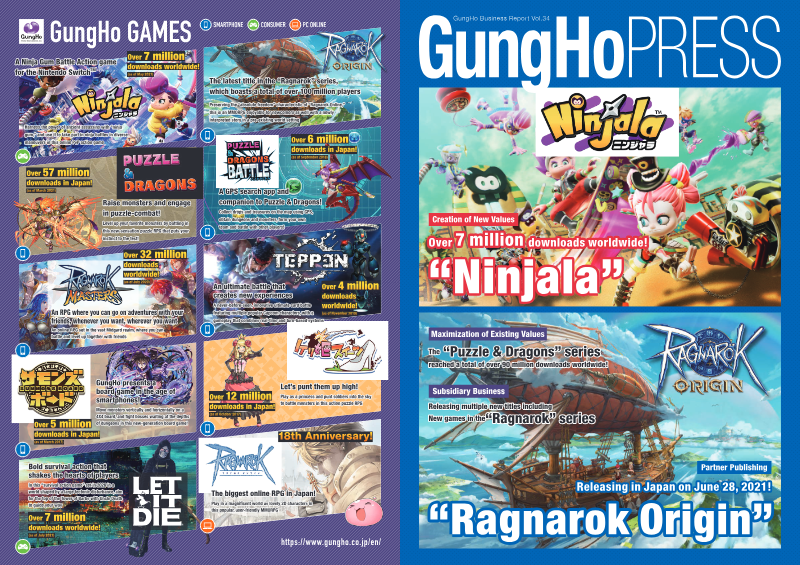
GungHo Business Report Vol. 34
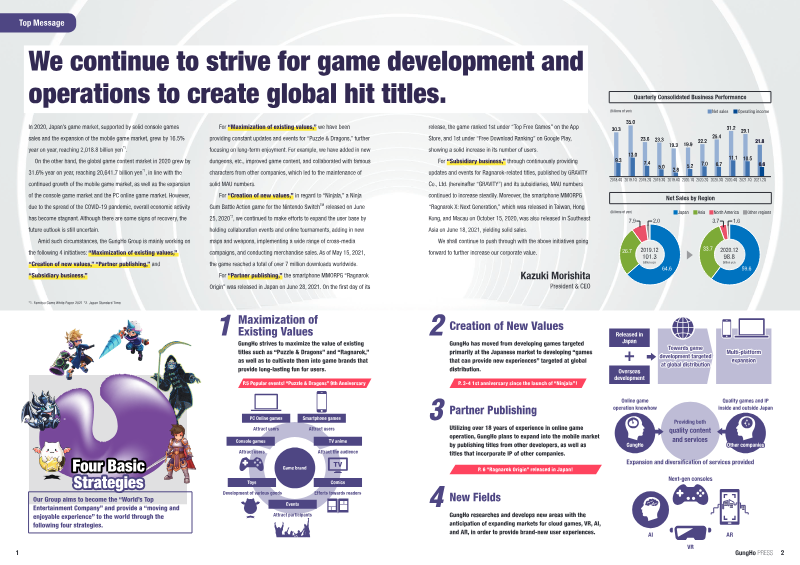
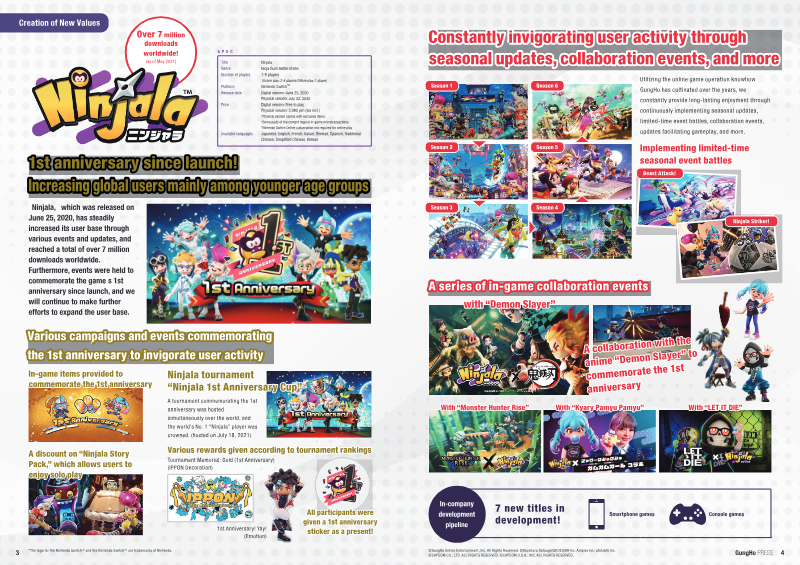
GungHo Online Entertainment focuses on long-term growth through a four-pillar strategy: maximizing existing values, creating new values, partner publishing, and subsidiary business operations.
- GungHo reported 17.2 billion yen in operating income for the first half of 2021, supported by consistent user engagement across mobile and console platforms.
- The flagship Puzzle & Dragons series has reached over 90 million global downloads, serving as a primary pillar for the company's long-term revenue strategy.
- Subsidiary GRAVITY is driving international growth through the Ragnarok franchise, highlighted by the launch of Ragnarok Origin in Japan and the expansion of Ragnarok X: Next Generation in Southeast Asia.