MMORPG reports and market data
Documents

Bringing a Desktop Subscription Model to Mobile
Jagex successfully expanded its desktop MMORPG, Old School RuneScape, to mobile platforms by prioritizing a seamless, cross-platform experience that allows players to maintain progress across PC and mobile devices.
- Jagex generated 25 million in gross revenue and 8.6 million installs by expanding Old School RuneScape to mobile, proving the viability of a cross-platform subscription model.
- To maintain a unified view of user value across PC and mobile, the company integrated internal data with mobile measurement partners, enabling more effective scaling of advertising spend.
- The mobile launch strategy utilized pre-order campaigns on the Apple App Store and Google Play, which drove the game to the top of free-to-play charts in the US and UK within 24 to 72 hours.
Addressing Exploit Abuse in EVE Online with Customer Care
EVE Online operates as a complex, player-driven economy where character progression is intrinsically linked to real-time skill training and the conversion of skill points into in-game currency.
- The 'ghost training' exploit in EVE Online allowed players to bypass free-to-play restrictions and generate massive amounts of skill points, which were then converted into in-game currency (ISK) via skill injectors, threatening both the game's economy and its business model.
- CCP Games identified that the exploit stemmed from a backend calculation error where skill progress was only recorded upon login, allowing players to trigger training for Omega-level skills on Alpha (free) accounts.
- Following a public disclosure of the exploit on Reddit in May 2017, CCP Games investigated 6,036 characters across 119 individuals, resulting in the permanent banning of 796 accounts belonging to 23 primary offenders.
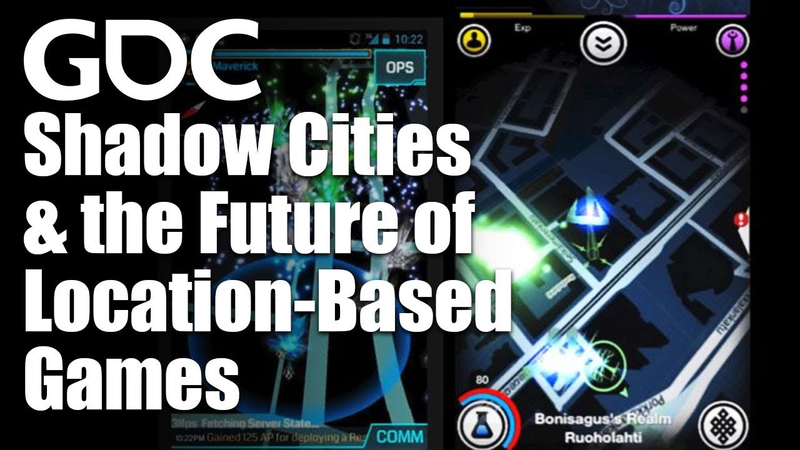
Shadow Cities and the Future of Location-Based Games
Location-based gaming represents a complex intersection of digital persistence and physical reality, where the primary objective is to overlay faction-driven conflict onto the real world.
- Despite the genre's focus on exploration, 74 percent of location-based gameplay occurs from stationary locations like homes or offices.
- Developers must pivot from simple check-in mechanics to deep, long-term engagement models that prioritize high lifetime value over broad, casual reach.
- To maintain fair multiplayer environments, designers must use technical workarounds like map distance abstraction and instancing to overcome geographic disparities and GPS inconsistencies.
MUD: Messrs Bartle and Trubshaw's Astonishing Contrivance
The original Multi-User Dungeon, developed in 1978 by Richard Bartle and Roy Trubshaw, serves as a foundational case study for the importance of simulation-based design in virtual environments.
- The 1978 Multi-User Dungeon (MUD) by Richard Bartle and Roy Trubshaw demonstrates that immersive virtual worlds are best built on robust, logical mechanical systems rather than imitation of existing game tropes.
- Prioritizing consistent internal physics and environmental causality minimizes cognitive dissonance, allowing players to engage in emergent gameplay through environmental manipulation instead of scripted paths.
- The MUD's ten-level progression system was designed as a meritocratic structure to subvert rigid social hierarchies, illustrating that mechanics should function as a purposeful expression of the creator's vision.
Star Wars: The Old Republic - Creating A True Competitor in the AAA MMO Space
The development of Star Wars: The Old Republic was driven by the ambition to challenge the established AAA MMORPG market through a strategy of product differentiation and massive scale.
- To manage the massive scale of Star Wars: The Old Republic, BioWare employed a workforce of 30 producers, 75 designers, and 120 engineers, with 40 of those engineers dedicated solely to platform management and infrastructure.
- The project set a Guinness World Record for the largest voiceover project ever completed, featuring six times the dialogue of Dragon Age and nine times that of Mass Effect.
- BioWare transitioned from a discipline-based organization to a matrix structure to prevent knowledge silos, using 'strike teams' to manage up to 40 concurrent development groups.
World of Warcraft Epidemiology - The Corrupted Blood Plague (And Why It Matters) - Extra Credits
The 2005 Corrupted Blood incident in the massively multiplayer online game World of Warcraft serves as a significant case study in epidemiology and human behavior during a pandemic.
- The 2005 World of Warcraft 'Corrupted Blood' incident serves as a critical case study for epidemiologists because it provided rare, observable data on human social behavior during a large-scale contagion.
- The outbreak was triggered by a programming oversight in the Zul'Gurub raid zone, allowing a lethal contagion to escape containment via player pets and spread into major virtual population hubs.
- The simulation revealed a spectrum of human responses to pandemics, ranging from altruistic efforts like establishing healing stations and informal quarantines to malicious intentional spreading of the disease.
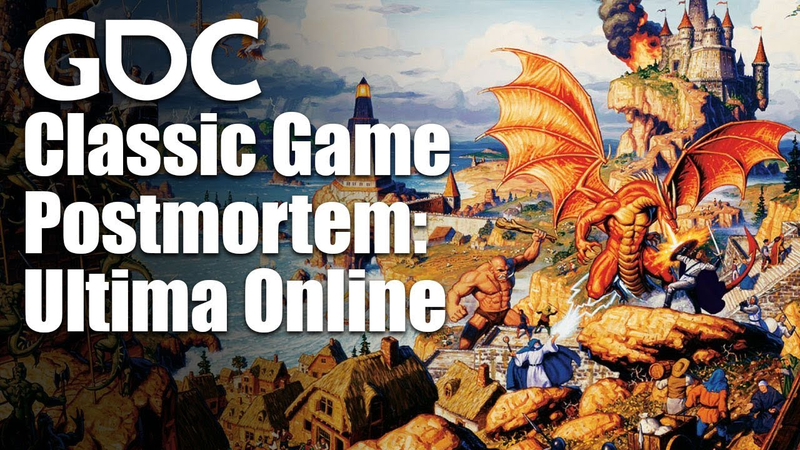
Classic Game Postmortem: Ultima Online
The development of Ultima Online represents a foundational shift in the gaming industry, marking the transition from traditional tabletop and MUD-based social experiences to the graphical massively multiplayer online genre.
- Ultima Online demonstrated the viability of the massively multiplayer online (MMO) market when 50,000 users signed up for a paid beta, far exceeding the initial internal sales projection of 30,000 units over the game's entire lifetime.
- The development team utilized a 'seamless server' architecture to distribute map data across multiple servers in real-time, a technical innovation that allowed thousands of players to inhabit the same virtual space.
- The game was managed through a 'shard' system where individual servers evolved distinct cultures based on player behavior, such as role-playing versus player-killing (PK) tendencies, which provided valuable data on emergent community dynamics.
The Loner: Why Some People Play MMOs Alone
Massively multiplayer online games are increasingly defined by a tension between the genre’s social foundations and the growing prevalence of solo play.
- Solo play is the default state for MMO players, as users are alone upon login and remain so until they actively seek out social groups or dungeon partners.
- Designers must provide robust solo gameplay as the backbone of an MMO experience, as many players are introverted or need time to learn complex class mechanics and interfaces before engaging socially.
- Forcing social interaction too early, such as systems that encourage high-level players to recruit newbies, can act as an unwanted sales pitch and alienate new users.
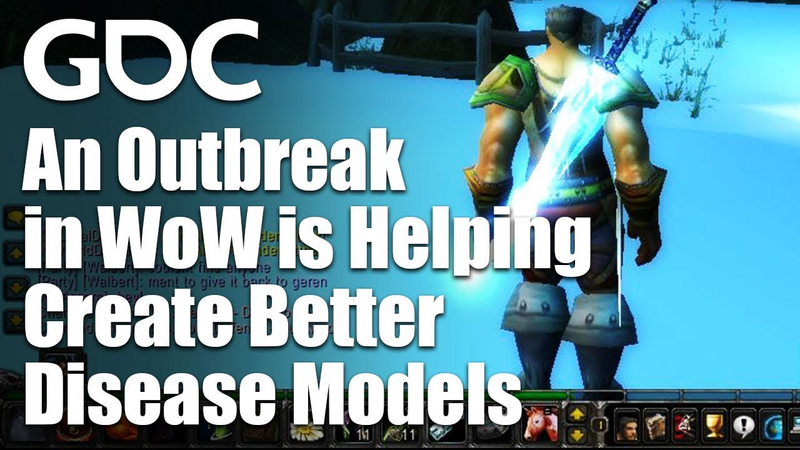
How an Outbreak in WoW is Helping Epidemiologists Create Better Disease Models
The 2005 Corrupted Blood plague in World of Warcraft serves as a foundational case study for modern epidemiological research, demonstrating how virtual environments can provide unique insights into human behavior during public health crises.
- The 2005 'Corrupted Blood' plague in World of Warcraft, caused by a design flaw in the Zul'Gurub raid, provided epidemiologists with a unique, real-world dataset to study human behavior during an infectious disease outbreak.
- Traditional epidemiological models often fail because they rely on static assumptions about human behavior, such as how individuals will react to quarantine orders or emergency information.
- Virtual environments like World of Warcraft allow researchers to observe diverse, unscripted human responses to a crisis, including altruism, curiosity-driven risk-taking, malicious griefing, and the spread of misinformation.
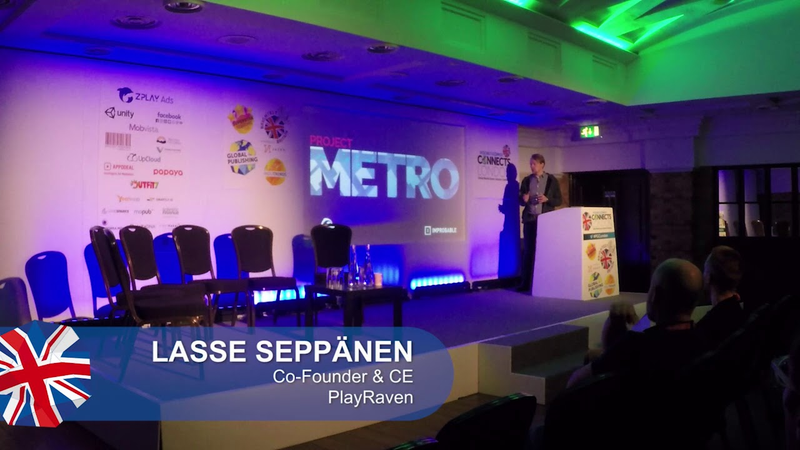
How PlayRaven is working with CCP and Improbable to create next-gen MMO experiences in mobile
PlayRaven is currently shifting its strategic focus toward developing next-generation mobile massively multiplayer online (MMO) games.
- PlayRaven is pivoting its core strategy to focus exclusively on social, multiplayer-driven mobile MMOs, abandoning the single-player mechanics used in its 2014–2016 titles to improve long-term player engagement.
- The studio is partnering with CCP Games to develop a mobile title set in the EVE Online universe, focusing on complex social coordination and resource management adapted for mobile usability.
- Early pre-alpha testing of the EVE Online mobile project with hardcore fans has already yielded positive engagement metrics, validating the studio's community-driven development approach.
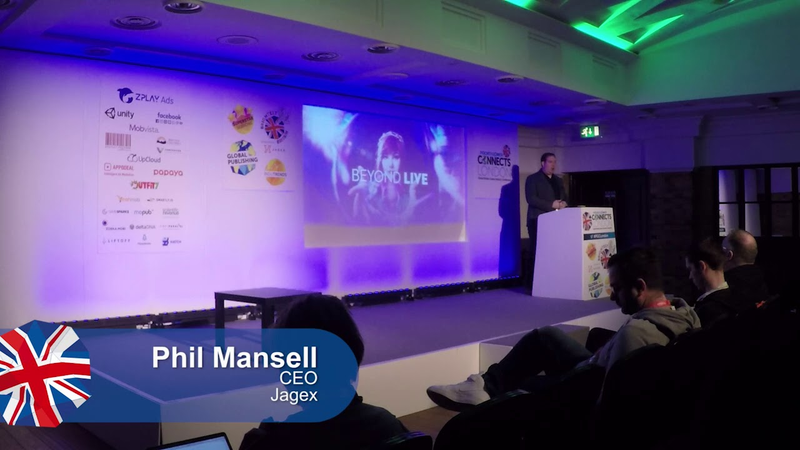
Living games: Jagex, RuneScape and the evolution of live games
The evolution of the gaming industry has shifted from traditional product launches toward the "living game" model, characterized by persistent, social, and service-oriented experiences.
- The 'living game' model prioritizes long-term retention over traditional product launches to offset rising user acquisition costs and capture player investment in deeper, persistent experiences.
- Jagex achieved an average player lifespan exceeding seven years for the RuneScape franchise by restructuring operations to focus on core intellectual property and service-driven engagement.
- Developers can drive long-term retention by integrating RPG mechanics—such as progression, collections, and leveling—into diverse game genres.
Making Release Day Just Another Monday
The transition to a high-frequency update model for RuneScape centers on replacing rigid, siloed waterfall development with a decentralized structure of autonomous, cross-disciplinary scrum teams.
- Jagex transitioned the RuneScape development process from a traditional waterfall model with functional silos to six autonomous, cross-discipline scrum teams to maintain a high-frequency update schedule.
- The studio implemented a strict, centralized release process that ensures game updates are deployed every Monday, allowing the team to avoid the common pitfalls of delayed releases.
- To maintain coherence across autonomous teams, Jagex utilizes 'councils' of interested individuals who focus on specific game aspects like lore, combat, and balance, alongside shared resources like a centralized analytics team.