MMORPG reports and market data
Documents
Why Hard Games Feel Great - Extra Credits Gaming
Effective game design requires a deep understanding of velocity (V) and the change in velocity (delta V) to maintain consistent player progression.
- Game balance relies on managing both velocity (V), the current rate of player progress, and delta V, the rate of change in that progress.
- The 'jerk principle' refers to the second derivative of velocity, representing sudden, noticeable shifts in gameplay pacing that players perceive as jarring or unfair.
- Poorly planned progression curves often force designers to use 'kludge math' or disjointed equations to force balance, which frequently introduces bugs, exploits, and inconsistent player experiences.
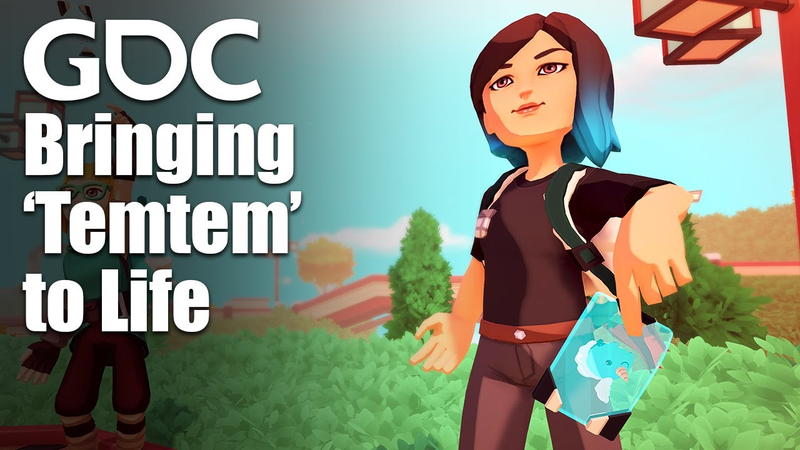
Creating Narrative VFX in 'Temtem'
The development of visual effects for the creature-collection game Temtem centers on a narrative-driven philosophy that treats every combat technique as a miniature cinematic experience.
- The VFX team at Crema treats Temtem techniques as mini-cinematics, with animation lengths strictly tied to gameplay mechanics: zero-hold techniques last 2–3 seconds, while high-hold techniques extend up to 8–9 seconds.
- Narrative impact is achieved by integrating custom battle zone changes, where developers hand-place assets in Unity to create unique environments that reinforce a specific Temtem's signature move.
- Visual storytelling relies on cinematic principles like camera angles—using low angles to convey power and high angles to signify weakness—to guide the player's eye and establish the scale of an attack.
Building a Living, Breathing MMO With Gen AI & Web3 - Taewon Yun, Super Evil Megacorp
The integration of generative AI and Web3 technologies offers a transformative approach to solving long-standing design and monetization challenges in massively multiplayer online (MMO) games.
- Generative AI enables the creation of dynamic, evolving NPC behaviors and infinite, personalized content to solve the industry-wide problem of rapid player content consumption.
- Web3 technology provides the necessary infrastructure to manage complex, persistent in-game economies and monetization models that were previously difficult to scale.
- Developers should adopt an agnostic approach to Large Language Models (LLMs) to prevent vendor lock-in and mitigate risks associated with the rapid evolution of AI technology.
From Passion to Palia: Unraveling the Gaming Industry with Aidan Karabaich of Singularity 6
The gaming industry is currently witnessing a shift toward community-focused simulation titles, a trend exemplified by the development of Palia.
- Singularity 6, founded by Riot Games alumni Aidan Karabaich and Anthony Leung, secured early venture capital funding by pitching the underserved 'cozy' community simulation genre to investors like LVP.
- The studio prioritizes hiring for critical thinking and design talent by treating designers as product leads, requiring them to articulate the fundamental 'why' behind design decisions rather than relying solely on intuition.
- To avoid insular 'groupthink' and culture-cloning, the founders intentionally diversified their leadership and executive teams rather than relying exclusively on their professional networks from Riot Games and Obsidian.
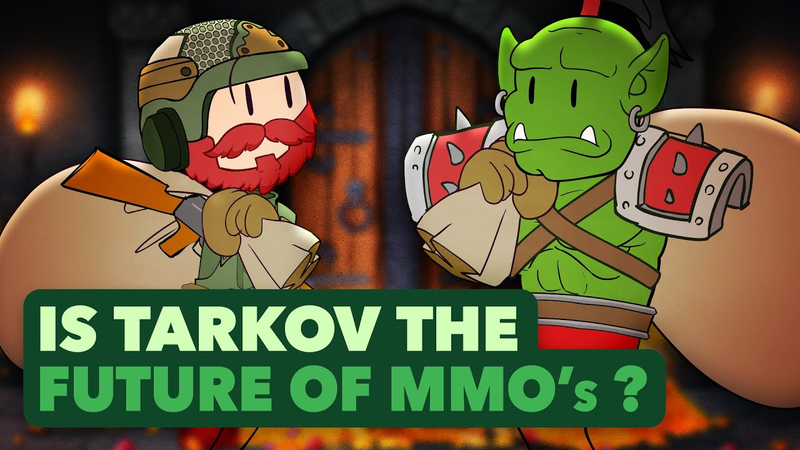
How Extraction Looters Could Save a Genre
The extraction looter genre, characterized by short-session gameplay, risk-based progression, and permadeath, represents a potential evolutionary path for the declining MMORPG market.
- Extraction looters offer a viable evolutionary path for the declining MMORPG market by replacing cumbersome, time-intensive persistent worlds with high-stakes, session-based gameplay.
- The genre successfully bridges the gap between the intensity of battle royales and the long-term character investment typical of survival games.
- To scale effectively, the genre must pivot away from military-themed, PvP-centric designs toward more diverse, imaginative world-building and complex PvE environments.

How to Encourage Social and Emotional Learning In-Game in a Data and Research Driven Manner
The integration of social and emotional learning (SEL) into online gaming environments offers a transformative alternative to traditional punitive moderation.
- Star Stable Online implemented an AI-driven intervention system that reduced harmful in-game messages by 5% with 98% statistical confidence.
- The intervention replaced traditional punitive bans with real-time, non-judgmental prompts that encouraged self-reflection, empathy, and social awareness.
- To ensure accuracy, the team customized their AI model by training it on community-specific data, preventing misinterpretations of game-specific slang like horse breeds or levels.
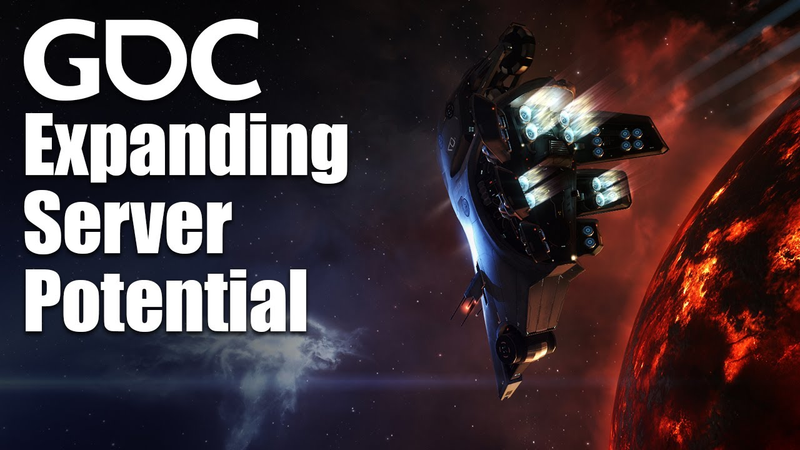
Quasar, Brightest in the Galaxy: Expanding 'EVE Online's' Server Potential with gRPC
EVE Online is undergoing a fundamental architectural transformation to ensure the long-term viability of its twenty-year-old single-shard MMO environment.
- CCP Games transitioned EVE Online's architecture to a domain-service model using gRPC, Kubernetes, and Go to move away from a 20-year-old monolithic codebase that had become difficult to scale and maintain.
- The adoption of gRPC and Protocol Buffers allowed CCP to offload serialization tasks from Python to C++, resulting in an average performance increase of 60 milliseconds in messaging latency.
- By shifting to domain-specific services rather than a single monolithic database, CCP decoupled data ownership, allowing teams to manage specific domains like user, skill, or market data independently.
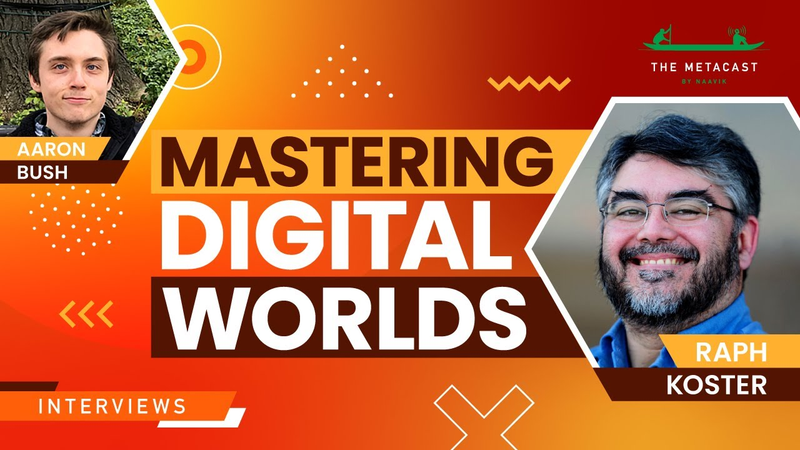
Raph Koster: Playable Worlds and the Metaverse - The Metacast by Naavik
Game design must evolve from a craft of static, handcrafted experiences into a discipline rooted in cross-disciplinary theory, drawing heavily from economics, network science, and psychology.
- Game design must shift from static, handcrafted experiences to systems rooted in economics, network science, and psychology to build adaptable, platform-agnostic virtual worlds.
- Technical architecture must transition from rigid, instance-based environments to dynamic, server-driven infrastructures that treat virtual worlds as flexible data rather than static meshes.
- True asset portability and interoperability in the metaverse are currently blocked by proprietary engine formats and the lack of industry-wide standards for digital ownership.

Blocklords Deep Dive with CEO David Johansson - The Metacast by Naavik
Blocklords functions as a medieval strategy MMO that integrates a sophisticated play-and-earn economy through a generational NFT system.
- Blocklords utilizes a generational NFT system featuring a permadeath mechanic, where heroes age and die to prevent asset stagnation and force continuous strategic legacy planning.
- The game economy is built on four interdependent player archetypes—farmers, warriors, lords, and kings—designed to incentivize long-term investment in regional infrastructure.
- To ensure performance and security, the game employs a hybrid architecture that keeps complex gameplay off-chain while maintaining on-chain assets, rejecting an everything-on-chain model.

TWIG #175 Bored Ape Yacht Club raises $450M for an MMO 🤯
The global gaming industry is currently navigating a period of significant structural transition, marked by aggressive capital investment, technological shifts, and evolving operational models.
- Yuga Labs secured $450 million for a metaverse project, while FRVR raised $76 million for browser-based gaming, signaling continued investor appetite for large-scale digital ecosystems.
- The removal of IDFA and other tracking identifiers has rendered traditional mobile user acquisition methods ineffective, forcing developers to prioritize organic growth and broader market appeal to combat rising costs.
- Studios are facing significant operational challenges, with skepticism surrounding the ability of teams to manage complex MMO macroeconomics or successfully pivot to live-service models.
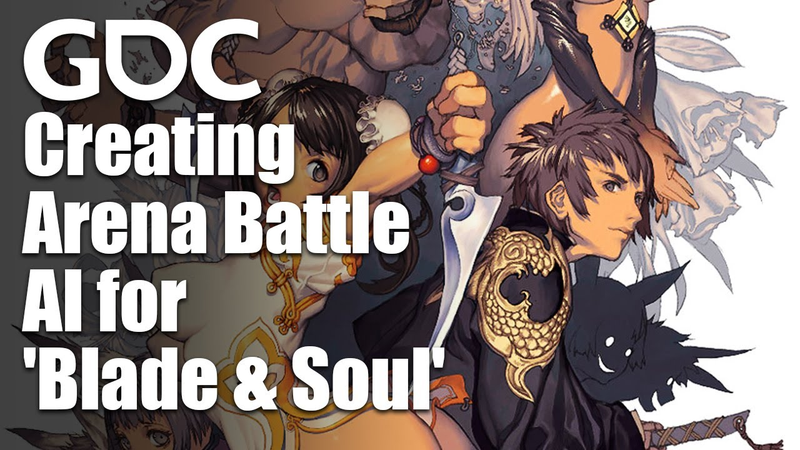
Reinforcement Learning in Action: Creating Arena Battle AI for 'Blade & Soul'
The development of professional-level artificial intelligence for the 1v1 arena battles in the MMORPG Blade & Soul demonstrates the successful application of reinforcement learning (RL) to complex, real-time fighting games.
- NCSOFT replaced traditional hand-written AI rules in 'Blade & Soul' with reinforcement learning (RL) to create pro-level agents capable of strategic, multi-stage combat sequences.
- To ensure robustness and generalization, the team implemented a 'self-play' method where agents were trained against a growing pool of diverse, previously trained sparring partners rather than a single fixed opponent.
- The AI was trained to exhibit specific fighting styles—such as aggressive or defensive—by adjusting reward signal weights, allowing the agents to prioritize either damage output or HP preservation without hard-coded logic.
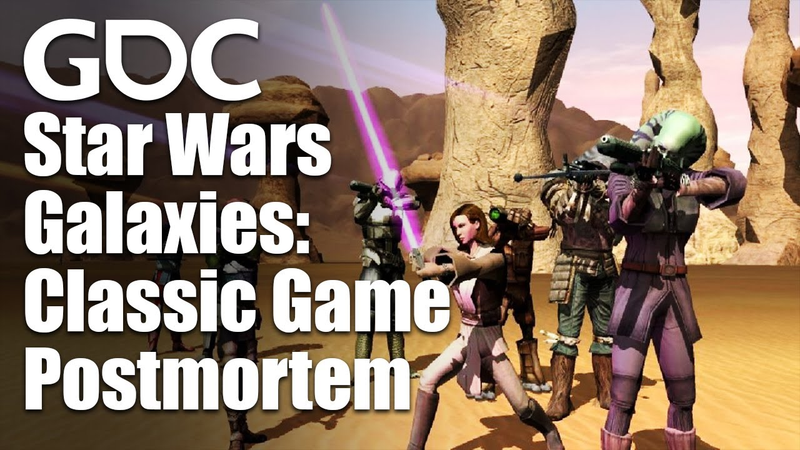
Classic Game Postmortem: 'Star Wars Galaxies'
Star Wars Galaxies represents a landmark experiment in early 2000s massively multiplayer online game design, prioritizing player agency and sandbox freedom over traditional quest-driven progression.
- Star Wars Galaxies suffered from a rushed development cycle, with the team forced to launch the game after only two years and nine months of production, resulting in a poor initial user experience and high player churn.
- The game pioneered advanced technical features for 2003, including a procedural terrain generation system that allowed for runtime building placement and a character customization system utilizing morph targets.
- The game's economy was entirely player-driven, requiring users to bootstrap resources from nothing, which created deep engagement but caused significant database stability issues.