Market Analysis reports and market data
Documents

GameGenetics' CEO Alexander Piutti talks user acquisition
GameGenetics operates as a specialized distribution marketplace for free-to-play games, connecting developers with targeted audiences across browser, client-based, and mobile platforms.
- GameGenetics operates a specialized distribution marketplace that delivers approximately 23 billion gaming-specific ad impressions per month across 174 countries.
- The company focuses exclusively on high-quality, non-incentivized traffic, utilizing closed-loop tracking to convert acquired users into active or paying players.
- The business model centers on building white-label game channels for major partners like Microsoft and Dell while purchasing traffic from large-scale platforms including Facebook and Google.

CEO of Aeria Games Europe Pascal Zuta explains why mobile is important
Aeria Games is strategically pivoting from its established foundation in client-based PC and browser gaming toward a robust expansion into the mobile market.
- Aeria Games is shifting its strategic focus from client-based PC and browser gaming to mobile expansion to overcome market saturation and stagnant revenue growth in the traditional PC sector.
- The company leverages a global workforce of over 600 employees across five international offices, supported by a merger with Japanese firm Gamepot to facilitate its mobile transition.
- Aeria Games maintains a competitive advantage by applying its expertise in localizing Asian-developed titles for Western markets, focusing on specific adjustments to artwork, in-game events, and item economies.

AppGratis CEO Simon Dawlat on building the best app distribution channel
AppGratis functions as a global app discovery and distribution channel, connecting mobile users with curated daily promotions for free or discounted applications.
- AppGratis operates a discovery platform that generates up to 1.5 million app installs per day for developers.
- The company maintains a user base of 10 million total members, including 3 million daily active users.
- The business model focuses exclusively on non-incentivized downloads to ensure long-term sustainability and avoid artificial inflation of metrics.

Distimo's Vincent Hoogsteder on the battle for the #3 mobile OS spot
The mobile application market is currently defined by a significant barrier to entry, as new publishers and developers face increasing difficulty in securing traction regarding download volumes and revenue generation.
- The mobile application market is increasingly difficult for new developers to enter, as securing significant download volumes and revenue on dominant iOS and Android platforms becomes more challenging.
- The industry's most critical trend is the competitive battle for the third-place mobile OS position, currently contested by BlackBerry 10, Windows 8, Amazon, and Firefox OS.
- Amazon is a top-tier competitor in the gaming sector, with data showing that developers often achieve higher monetization rates on the Amazon Appstore than on the standard Google Play store.

Antix Labs' CEO Francis Charig explains its cross platform gaming service
Antix Labs provides a high-definition, cross-platform gaming service designed to function across a diverse ecosystem of hardware, including smartphones, tablets, set-top boxes, PCs, and smart TVs.
- Antix Labs provides a cross-platform gaming service that supports diverse hardware architectures including Intel, MIPS, and ARM across smartphones, tablets, PCs, and smart TVs.
- The platform utilizes a single-binary distribution model to ensure performance and visual consistency, explicitly rejecting game streaming due to economic and technological constraints.
- The service enables offline content sharing and progress synchronization via Bluetooth, Wi-Fi, and Wi-Fi Direct, allowing for gameplay in regions with limited network infrastructure.
Global Games: Brazil - How to Kickstart a Thriving Game Industry - Extra Credits
Brazil represents a significant, high-potential emerging market for the global video game industry, despite facing structural barriers that have historically hindered its development.
- Brazil’s high piracy rates are primarily driven by prohibitive pricing, with taxes and tariffs causing legitimate software and console costs to reach two to three times their international equivalents.
- The country possesses a strong foundation for industry growth, including the largest economy and population in Latin America, a growing middle class, and a robust pipeline of programming and artistic talent from its higher education system.
- International publishers have a strategic opportunity to secure a dominant position in the Latin American market by investing in local Brazilian studios rather than waiting for the market to mature independently.
Essential Facts 2013: Canada
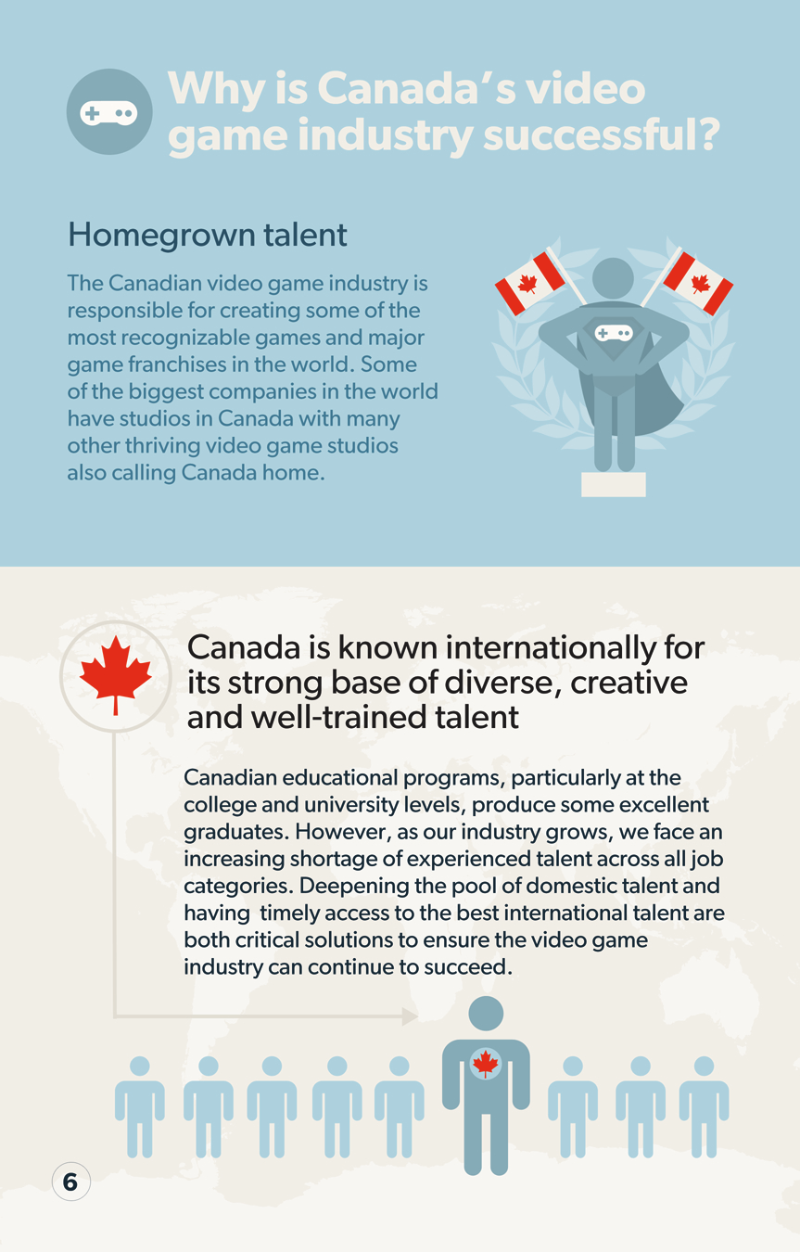
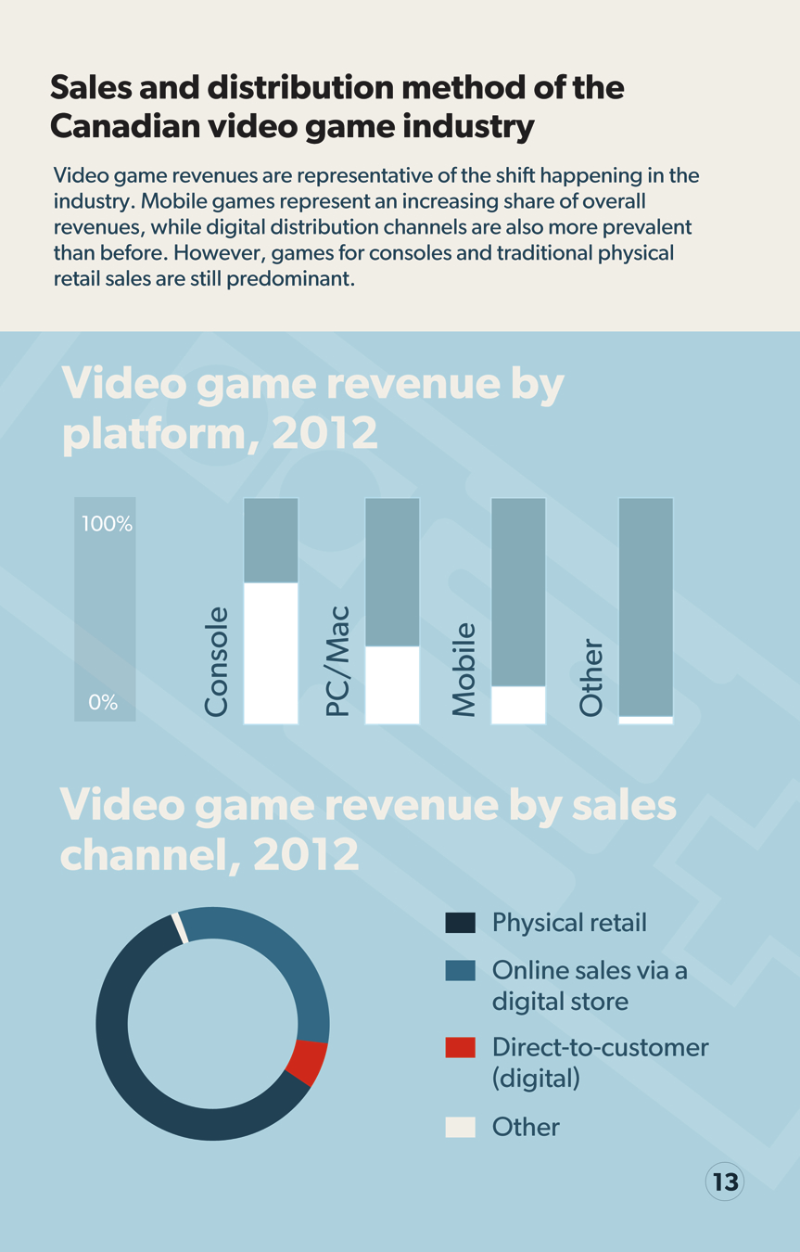
Canada's video game industry is presented as a fast-growing, economically significant sector, ranking third in the world after the US and Japan, and first per capita by employment.
- The U.S. computer and video game industry generated $21.53 billion in total revenue during 2013.
- Consumer spending on game content reached $15.39 billion, representing the largest portion of total industry revenue.
- Digital format sales experienced an 11 percent year-over-year growth rate in 2013.



Faits Essentiels 2013 : Canada
Le secteur canadien du jeu vidéo est présenté comme une industrie dynamique et en forte croissance, qui injecte 2,3 milliards de dollars dans l'économie du pays.
- Canada is the world's third-largest video game developer and leads globally on a per-capita basis, with the industry contributing $2.3 billion annually to the national economy.
- The sector employs over 16,500 full-time workers across 329 studios, with 68% of that workforce concentrated in the 12% of firms classified as large studios.
- Quebec is the industry hub with 8,750 employees, followed by British Columbia with 5,150, while Ontario’s market is defined by a high density of micro-studios focused on mobile and casual gaming.

Game Developer Index: Sweden 2012
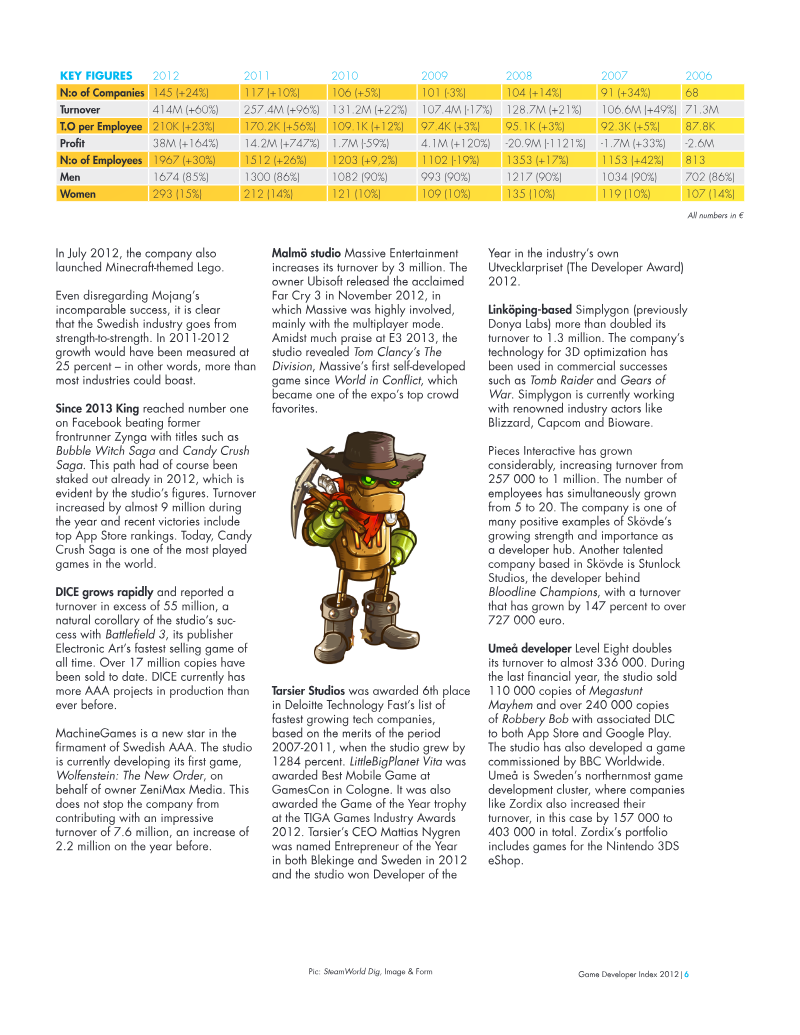
The Swedish video game industry underwent a period of unprecedented expansion in 2012, characterized by a 60 percent increase in total turnover to 414 million euros and a 163 percent surge in profits to 38 million euros.
- In 2012, the Swedish video game industry experienced rapid growth, with total turnover rising 60% to 414 million euros and profits surging 163% to 38 million euros.
- The industry workforce expanded by 30% to 1,967 full-time professionals, supported by the launch of 37 new companies.
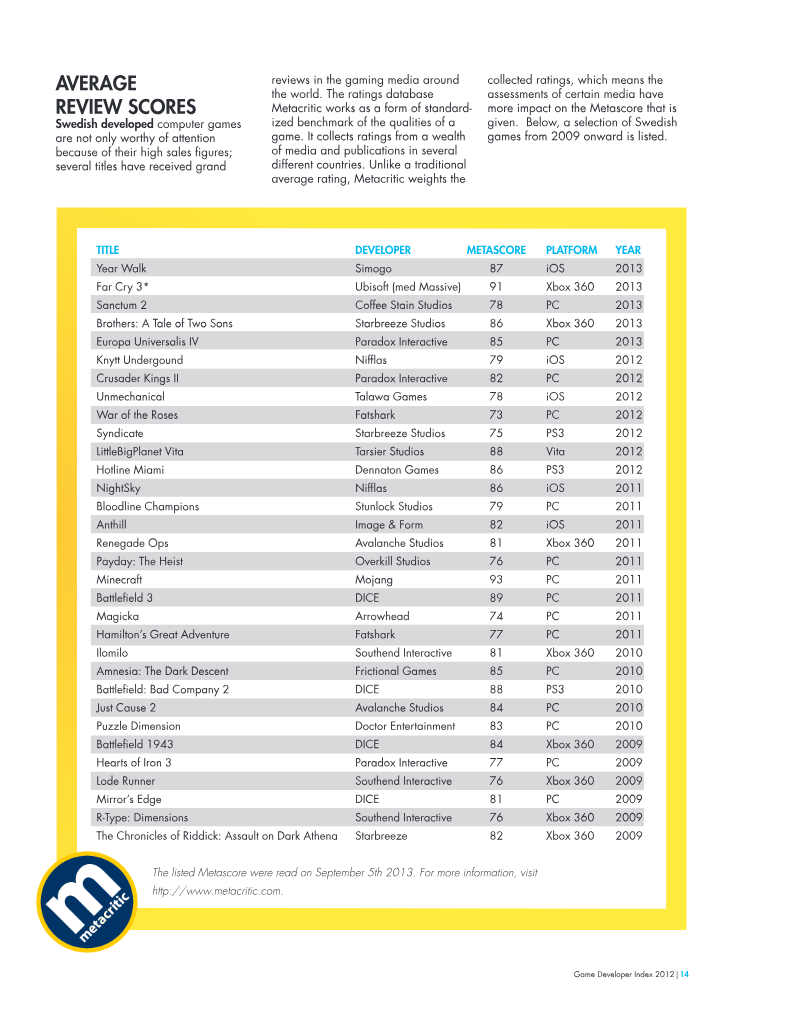
- Market success was driven by global hits like Minecraft and Candy Crush Saga, alongside established AAA output from studios such as DICE and Starbreeze.
Demo Daze - Why Don't Creators Make Game Demos Anymore? - Extra Credits
The decline of game demos is primarily driven by unfavorable economic outcomes for developers, rooted in shifting consumer purchasing habits.
- Industry data indicates that releasing a game demo frequently results in decreased total sales, as demos often satisfy player curiosity enough to discourage a full-price purchase.
- Developing a demo is a poor business investment for most studios because it requires significant time, money, and certification resources that could otherwise be used to improve the core game.
- An analysis of nine potential outcomes for demo releases shows that only two scenarios result in a net positive for developers, highlighting the high risk of negative financial impact.

The UK Games Market: 2012 Summary Report
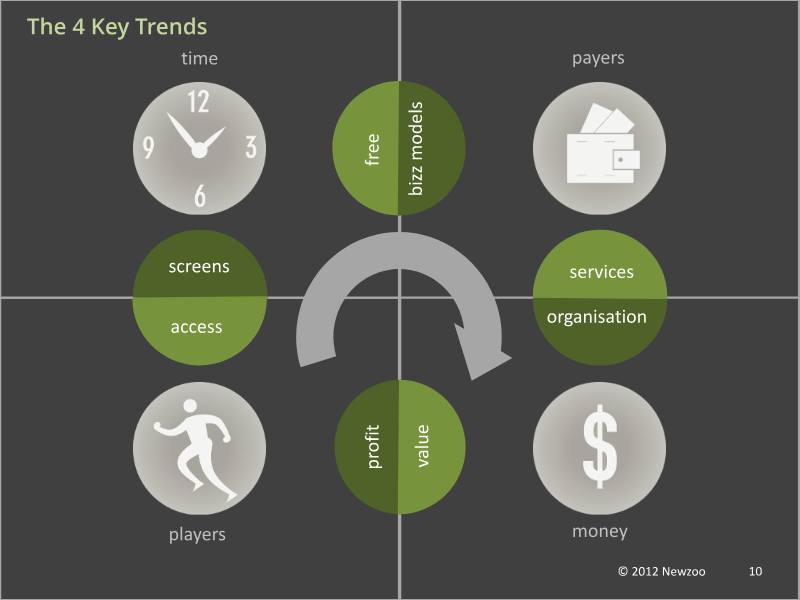
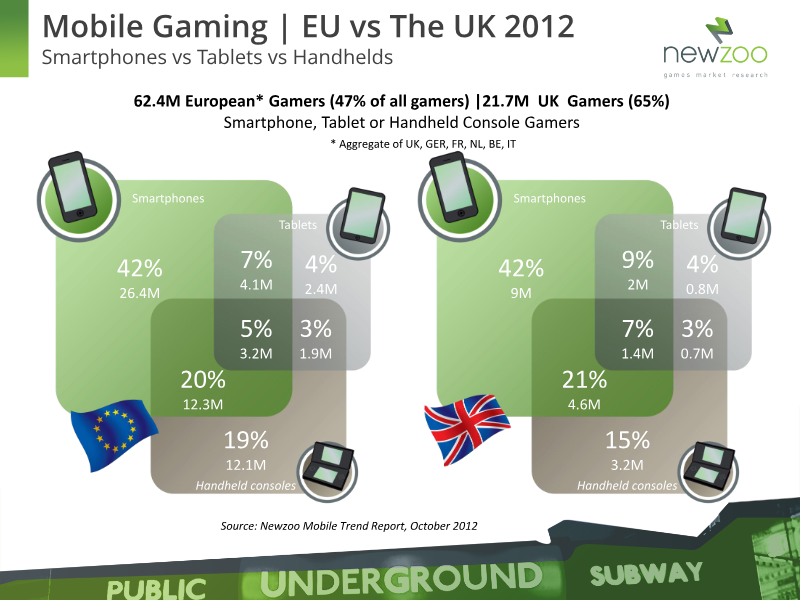
The 2012 UK Games Market report provides a comprehensive analysis of the gaming landscape in the United Kingdom, focusing on player demographics, platform usage, and evolving business models.
- The UK gaming market reached 33.6 million active gamers in 2012, representing a 9% year-on-year increase.
- 64% of the 33.6 million active UK gamers engage in paid gaming activities.
- UK gamers exhibit fragmented consumption habits, with the average individual utilizing 3.9 different platforms.
2012 Country Games Market Summary Report: Spain
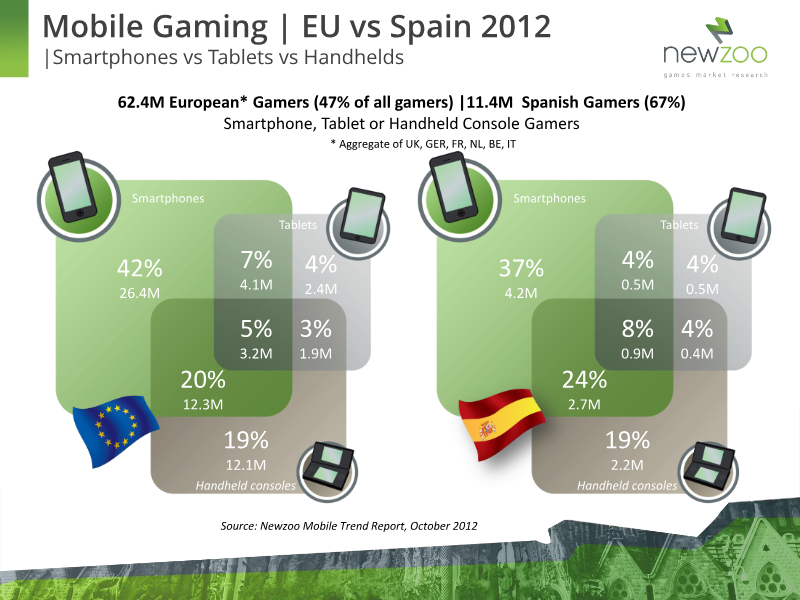
The 2012 Spanish Games Market Summary Report provides a comprehensive analysis of the gaming landscape in Spain, focusing on consumer behavior, platform usage, and market growth.
- The Spanish gaming market reached 1.9 billion euros in 2012, marking a 17% year-on-year increase in total consumer spending.
- The active gamer population grew by 13% year-on-year to 17 million people, with 9 million of those identified as paying users.
- Consoles remain the primary revenue driver at 41% of total market share, though the industry is shifting toward online and mobile ecosystems which now account for 61% of total game time.