The 2012 Spanish Games Market Summary Report provides a comprehensive analysis of the gaming landscape in Spain, focusing on consumer behavior, platform usage, and market growth. With a total population of 46.8 million, Spain supports an active internet population of 24.8 million, of which 17 million are identified as active gamers. This represents a 13% year-on-year growth in the player base, with 9 million of these individuals classified as paying gamers.
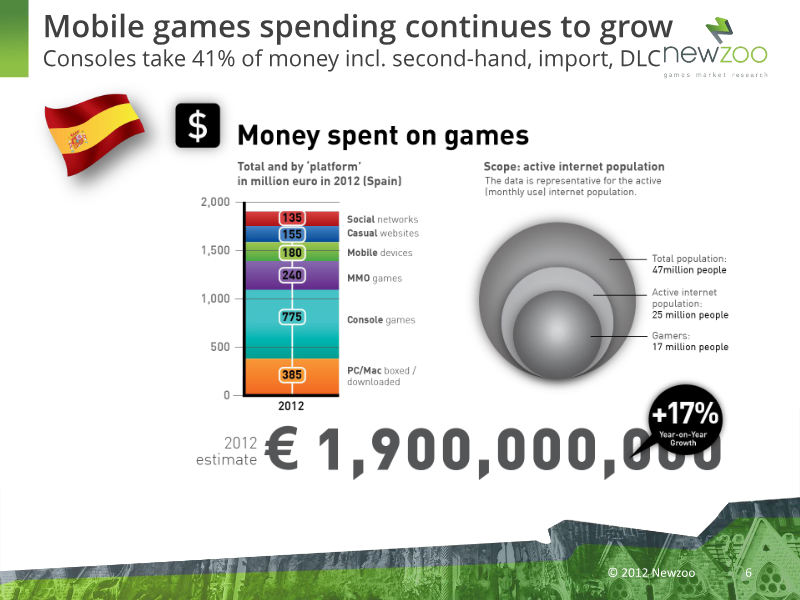
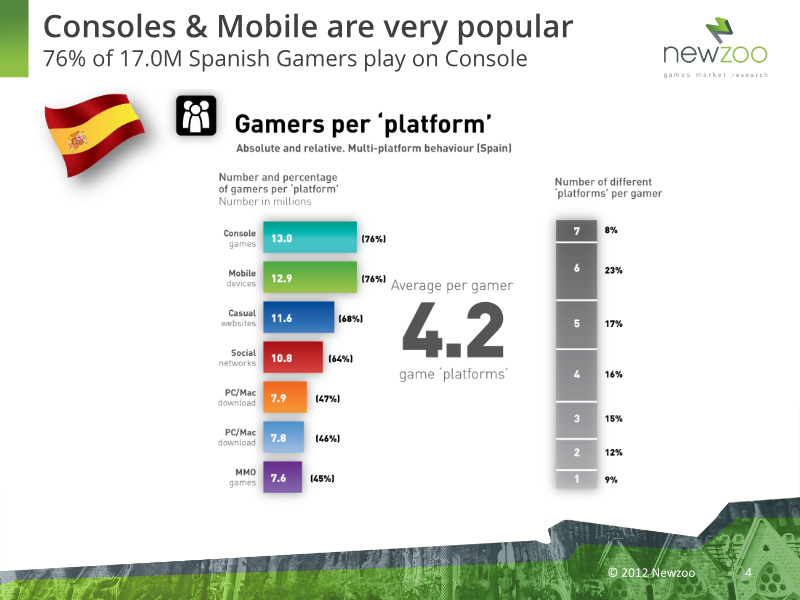
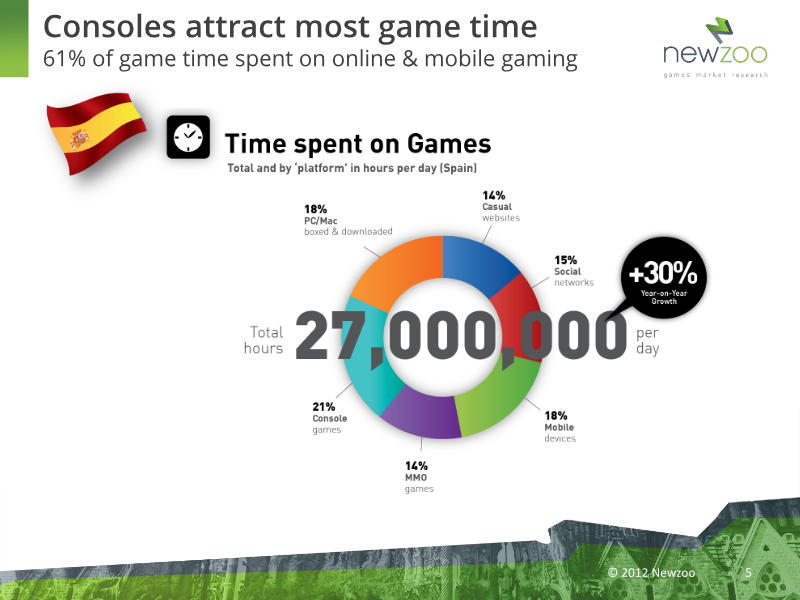
The market is characterized by high multi-platform engagement, as the average Spanish gamer utilizes five different platforms. Consoles remain the dominant medium, with 76% of gamers playing on them, followed closely by mobile devices at 76% and casual websites at 68%. Despite the prevalence of consoles, the industry is shifting toward online and mobile ecosystems, which now account for 61% of total game time. Financial performance reflects this transition, with the total market estimated at 1.9 billion euros in 2012, representing a 17% year-on-year increase in spending. Consoles capture the largest share of this revenue at 41%, though the rise of free-to-play business models is fundamentally altering how companies generate value and manage profitability.
Methodologically, the report integrates consumer, transactional, and financial data to provide a holistic view of the market. It utilizes a proprietary Screen Segmentation Model to categorize gaming activity across entertainment, personal, and floating screens, allowing for a nuanced comparison between Spain and the broader European market. By tracking key growth indicators—specifically player counts, time spent, paying users, and total revenue—the analysis emphasizes that successful industry participants must prioritize accessibility and service-oriented business models to remain competitive in an increasingly fragmented digital environment.