Market Analysis reports and market data
Documents

Cursor's Mikko Kähärä talks about encouraging innovation in Finland
The Start-up and Spinoff Factory, an EU-funded initiative based in Southern Finland, serves as a regional development program designed to revitalize the local economy by fostering a robust startup ecosystem.
- The Start-up and Spinoff Factory initiative supported 25 companies, with 50% of these being game studios, resulting in the creation of approximately 50 jobs.
- Participating startups successfully secured 8.5 million euros in early-stage funding through the program's intensive support and strategic guidance.
- The program focuses on bridging the gap between academic research and commercial viability by partnering with institutions like the University of Helsinki and Lappeenranta University of Technology.

The Waiting Game - Why Weird Games Become Cult Hits - Extra Credits
The emergence of unfolding games, such as Candy Box, Frog Fractions, and A Dark Room, represents a significant departure from traditional AAA game design.
- Cult hits like Candy Box, Frog Fractions, and A Dark Room succeed by using gradual revelation rather than the high-octane, immediate hooks typical of AAA game design.
- Developers can leverage intentional simplicity or boredom to create a sharp contrast, making the introduction of unexpected, complex mechanics feel more impactful and magical.
- Strategic use of time-based delays and waiting periods builds player tension, functioning as a psychological trap that sustains long-term curiosity.
Why the Vita Failed - PlayStation's Lost Gamble - Extra Credits
The PlayStation Vita serves as a primary case study in the failure of overambition within the handheld gaming market.
- The PlayStation Vita failed to achieve market viability, selling only 4 million units compared to the 43 million units sold by its primary competitor, the Nintendo 3DS.
- The Vita’s core failure stemmed from prioritizing high-end, console-quality graphics, which necessitated development budgets that were unsustainable for the handheld market.
- High production costs created a significant barrier to entry, discouraging third-party developers from creating software and leading to a self-perpetuating cycle of low hardware adoption.
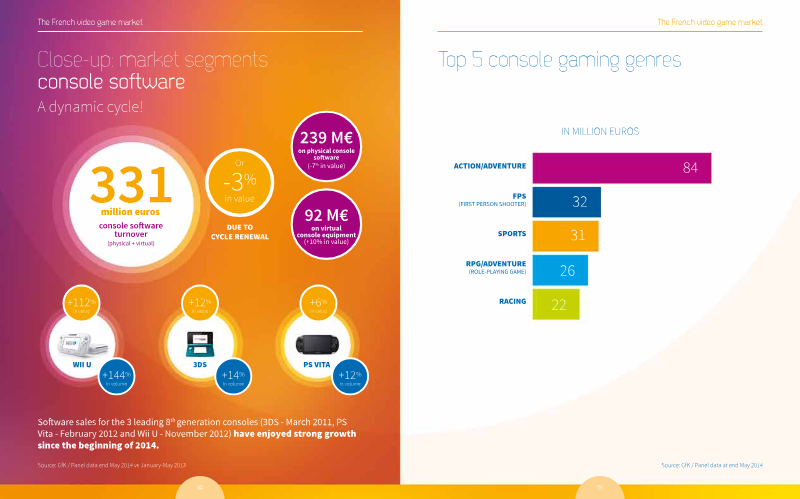
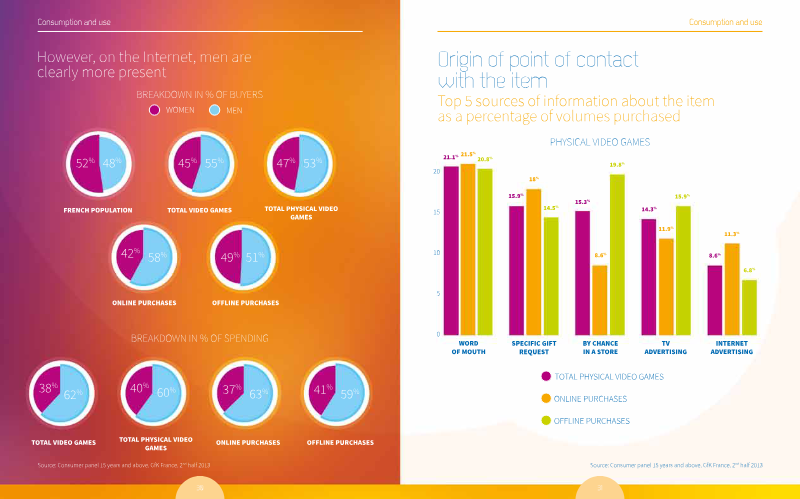

Essential Video Game News: Market, Use, Consumption - France and Europe (June 2014)
The video game industry in France and Europe is currently undergoing a significant transition driven by the launch of eighth-generation consoles.
- European video game industry turnover rose by 20.4% in the first half of 2014, driven primarily by a 67.4% surge in hardware sales.
- Eighth-generation home console launches (Wii U, Xbox One, PS4) outperformed the seventh generation by 14% in value during the first two quarters of 2014.
- As of the end of 2013, the French market maintained an installed base of 15.1 million home consoles and 17.1 million handheld consoles.
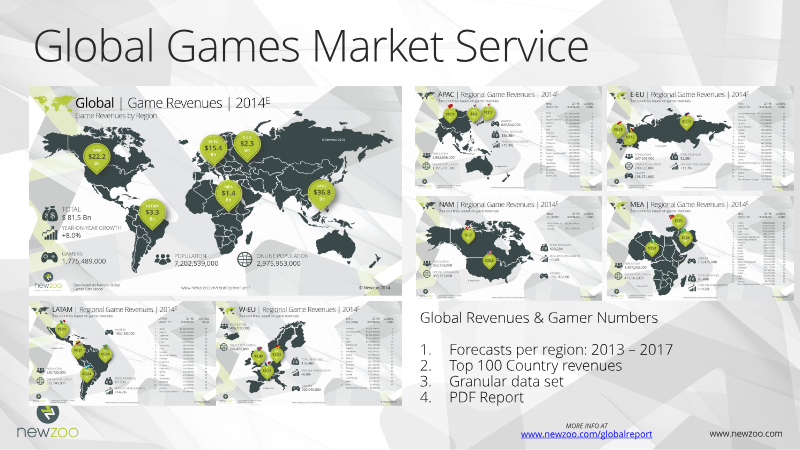
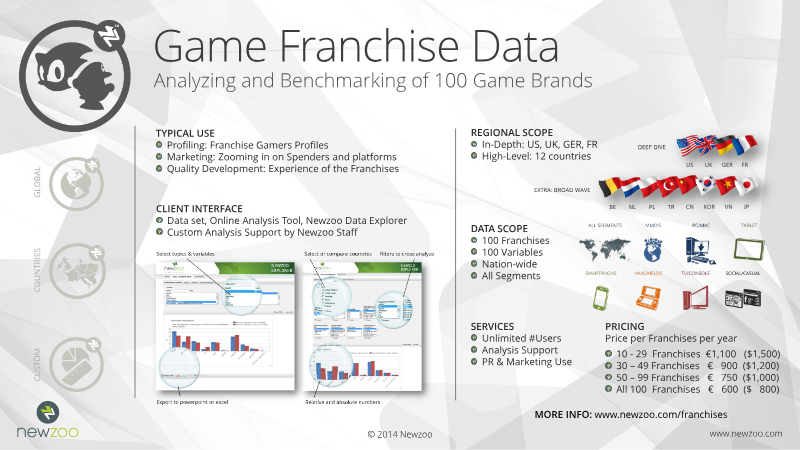

Newzoo Introduction: Matching Your Priorities With Our Services
The global games industry relies on sophisticated market intelligence to navigate rapid shifts in consumer behavior and financial performance.
- The global games market was projected to reach $81.5 billion as of 2014.
- Analytical coverage tracks over 200 variables across 18 key countries to provide a comprehensive view of the gaming ecosystem.
- Specialized tracking services monitor the performance and player profiles of 100 global game franchises.

InnoGames CEO on growth, Asian markets and tax breaks
InnoGames maintains a strategy of sustainable, long-term growth by prioritizing high-quality talent acquisition and product iteration over rapid, speculative expansion.
- InnoGames prioritizes sustainable growth by ensuring revenue increases consistently outpace their annual headcount expansion of over 100 new employees.
- The company maintains a core focus on durable player-versus-player (PVP) strategy games, exemplified by the long-term performance of titles like Tribal Wars, which continues to see record results more than a decade after launch.
- InnoGames is actively diversifying its portfolio by incorporating role-playing and city-building mechanics into new titles to broaden its audience reach beyond traditional strategy games.

App Annie breakdowns the Korean mobile game market
The South Korean mobile gaming market represents a highly mature, high-revenue ecosystem characterized by a dominant preference for the Google Play platform.
- South Korea ranks seventh globally in game downloads but third in total revenue, driven by exceptionally high average revenue per user (ARPU).
- The country is the second-largest market globally for Google Play revenue, reflecting a mature ecosystem where growth is driven by monetization efficiency rather than download volume.
- The mobile market is bifurcated by platform: Google Play is dominated by domestic publishers and the Kakao platform, while the iOS App Store is more receptive to foreign titles from companies like King, Supercell, and GungHo.
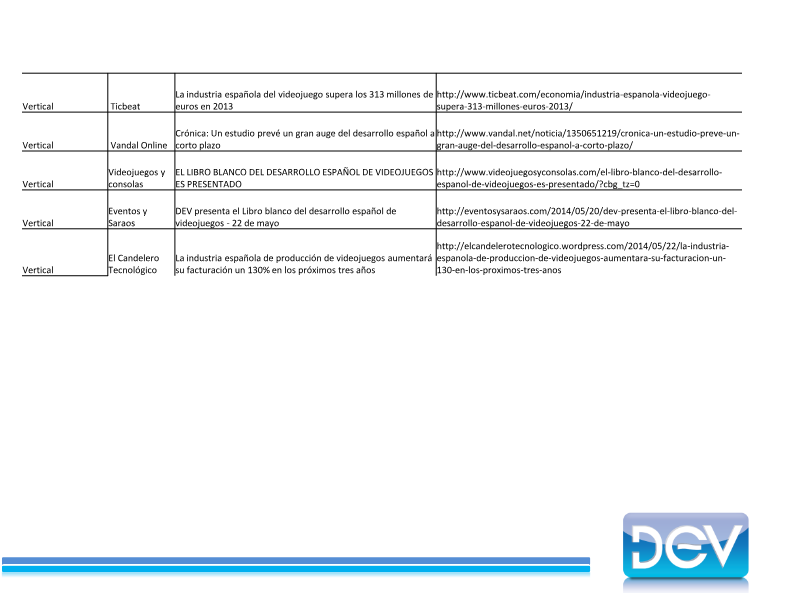
Libro Blanco del Desarrollo Español de Videojuegos 2014
The Spanish video game industry represents a burgeoning economic sector characterized by rapid expansion and a strong shift toward digital distribution.
- The Spanish video game industry is projected to grow its total turnover by 130 percent between 2014 and 2017.
- The sector expects an annual revenue growth rate of approximately 23.7 percent during the 2014–2017 period.
- As of 2014, the industry consists of 330 active companies employing 2,630 direct professionals.

The Game Industry of Finland: 2014
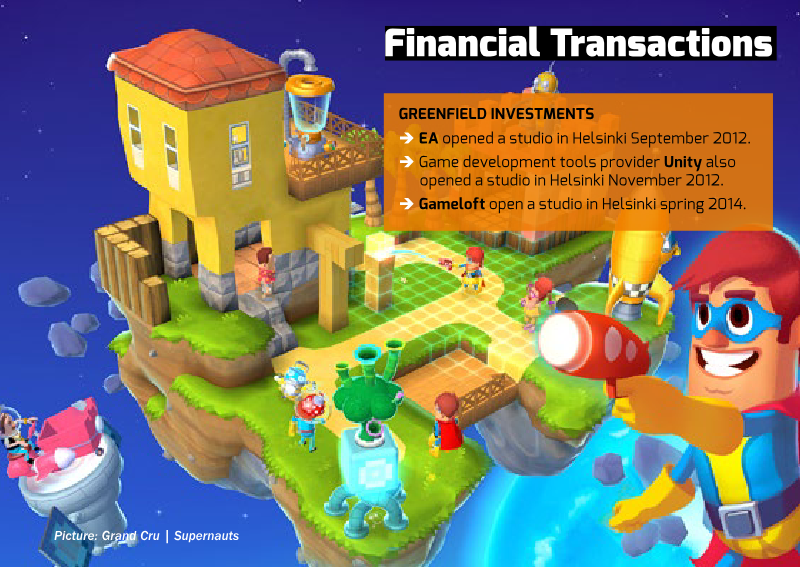
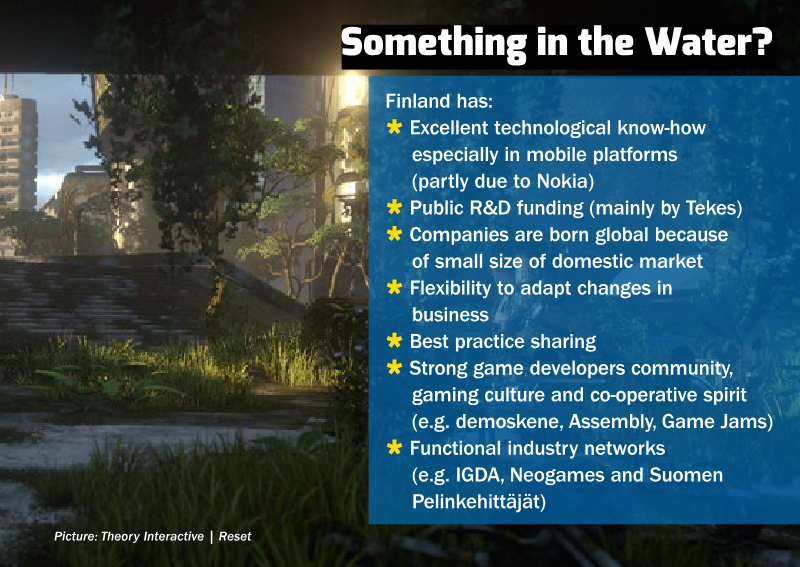
The Finnish game industry underwent a period of extraordinary expansion between 2008 and 2013, transforming into a cornerstone of the national economy.
- Between 2008 and 2013, the Finnish game industry's core development revenue grew from €87 million to an estimated €900 million, with a total economic impact exceeding €2 billion.
- Finland has established itself as a premier global hub for mobile game development, characterized by a highly scalable digital product ecosystem and a focus on high-growth export markets.
- The industry is supported by a network of over 200 companies, including major international players such as Rovio and Remedy alongside a robust community of independent studios.

FunPlus CEO Andy Zhong on taking a global approach
FunPlus operates as a Beijing-based developer and publisher that prioritizes a global market strategy over domestic expansion.
- FunPlus prioritizes a global-first strategy, currently serving 6 million daily active users with significant market penetration in Europe and the Middle East.
- The company integrates international talent into its 250-person Beijing headquarters, with 40 percent of the workforce recruited from Europe and the United States to bridge cultural gaps.
- FunPlus has achieved notable success in France, where 50 percent of the population has engaged with its titles and 10 percent have installed at least one game.
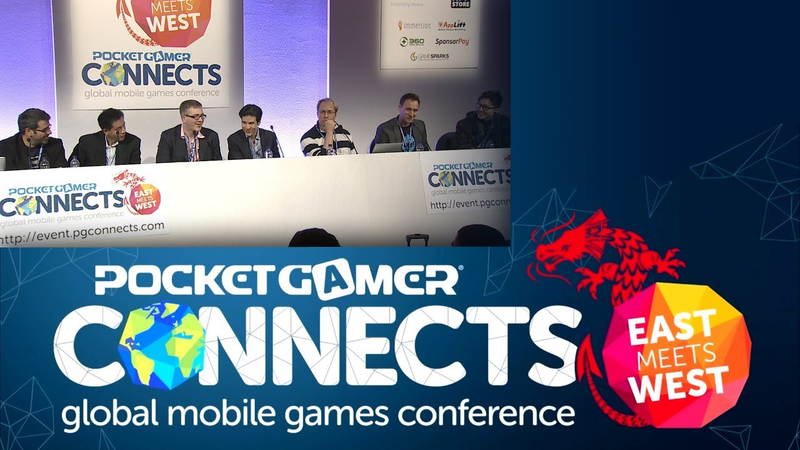
PGC London: China Mobile Games Market Power Panel
The Chinese mobile games market represents a highly fragmented, competitive, and rapidly evolving landscape that requires a strategic, localized approach for success.
- The Chinese mobile market is highly fragmented, requiring developers to implement payment systems for numerous individual channels, such as Alipay and the 360 store, to ensure effective monetization.
- Partnering with a local publisher is essential for navigating the market, as they provide critical services including game localization, server infrastructure management, and technical adaptation for over 100 different Android device configurations.
- Piracy in China poses significant risks beyond lost revenue, as unauthorized versions of games can be bundled with malware or malicious SDKs that may trigger government scrutiny and lead to the blocking of official traffic.
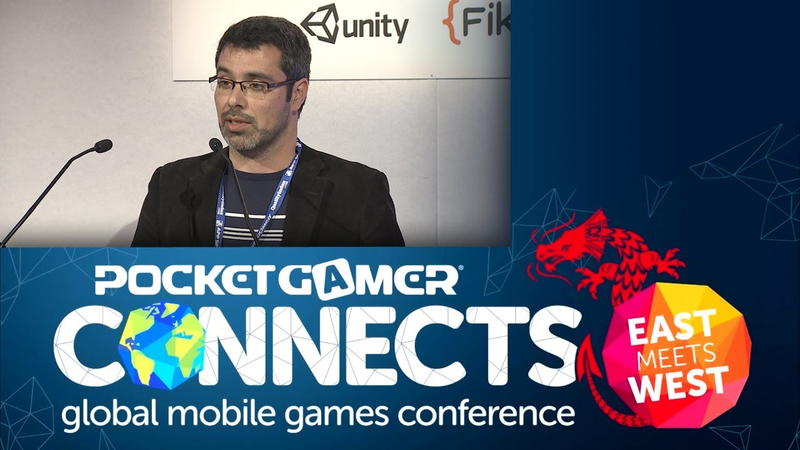
Trust is a big issue for Western developers in China
Western developers face significant structural and cultural hurdles when attempting to enter the Chinese mobile gaming market, primarily centered on the difficulty of establishing reliable business relationships.
- Building trust is the primary barrier to entry in the Chinese market, as Western developers often face communication breakdowns, sudden partner disappearances, and a lack of consistent feedback.
- Biodroid’s attempt to enter the Chinese market failed due to poor partner selection, whereas their efforts in Japan, Thailand, Indonesia, and Malaysia succeeded by securing partners who handled integration and device preloading.
- Western developers must be prepared to dedicate significant resources to support their Chinese partners, as slow delivery of marketing materials or code changes can terminate business relationships.