1 free read left. Create a free account for unlimited reading + AI research.
Create free account
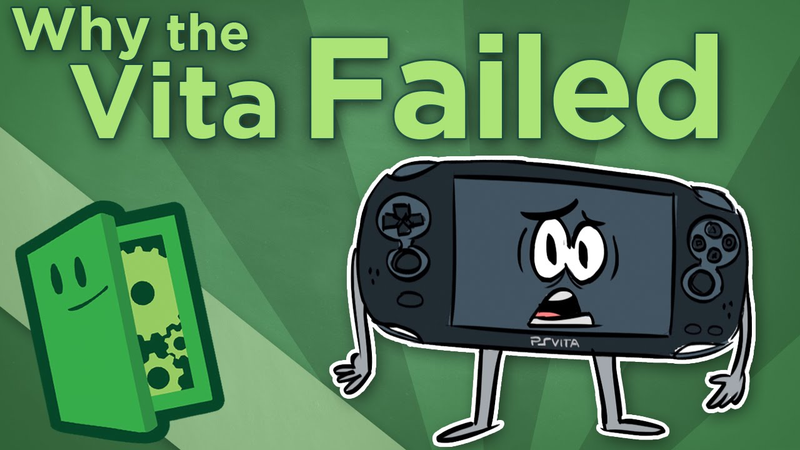
Why the Vita Failed - PlayStation's Lost Gamble - Extra Credits
Key insights
6 takeaways- 01The PlayStation Vita failed to achieve market viability, selling only 4 million units compared to the 43 million units sold by its primary competitor, the Nintendo 3DS.
- 02The Vita’s core failure stemmed from prioritizing high-end, console-quality graphics, which necessitated development budgets that were unsustainable for the handheld market.
- 03High production costs created a significant barrier to entry, discouraging third-party developers from creating software and leading to a self-perpetuating cycle of low hardware adoption.
- 04In contrast, the Nintendo 3DS succeeded by utilizing lower-cost, double-A development cycles that supported a robust and consistent library of software.
- 05The Vita’s performance demonstrates that software ecosystems, rather than raw technical specifications or engineering excellence, are the primary drivers of hardware success.
- 06Sony was unable to replicate Nintendo’s strategy of underwriting development costs because the Vita’s high production requirements made such an investment financially unsustainable.
Ask AI about this video
Transcript
Before we start, big thank you to John for popping in to do guest star again. I think we can all agree that from a commercial standpoint, the PlayStation Vita is a failure, right? I mean, don't get me wrong. I love the Vita and I will play Persona on a handheld all day long, but at this point there's no way we can look at the Vita as anything but a commercial flop. We can only keep saying just give it a few months and it'll turn around eventually for so long. The Vita is a failure. Even all that PS4 interactivity can't save it. The harsh reality is that the Vita has sold 4 million units and its closest competitor, the 3DS, has sold 43 million units. That's not even a race anymore. It hasn't even managed 10% of Nintendo's 3DS sales. So, I think now is a reasonable time to ask, why did the Vita fail so badly? I mean, the PSP didn't come close to the original DS's astronomical numbers either, but at least it still achieved a respectable 80 million units sold by the end. Of course, there's no one answer to this. You could argue that the Vita's high launch price hurt it, though that's
equally true of the 3DS. You could also argue that the rise of mobile gaming took a big bite out of its market, though again, equally true of the 3DS. You can argue that developers didn't know what to do with many of its unique features, but come on, that was true of the original DS, too, and that thing sold like crazy. But in the end, I think the answer is much simpler than all that and a lot more counterintuitive. If I had to give one reason why the Vita failed, I would say it's because the Vita was a way better machine than it ever should have been. I know that sounds strange, but stick with me here. Normally, portable games are sold at roughly 2/3 the price of their console counterparts. Console games tend to go for $60, handheld games often go for $35 to $40. And due to the lack of ability to port between multiple platforms when creating for handhelds, portable systems tend to have a smaller market than console games. But portable games tend to be much, much cheaper to make, so it all evens out. And here's where the Vita failed. Look at the production values in any 3DS game. On that system, the graphics capabilities are somewhere above the N64, but below the GameCube. This is the realm of what I'd call double-A developers working on budgets
below $10 million and with teams of fewer than 20 people. Now, compare that to the Vita. Sony's entire sales pitch for the Vita was that it was going to offer us better graphics than the PS2, perhaps even comparable to the PS3. And holy cow, they delivered. There is no argument. These are some good-looking games for a handheld. But, those visuals come at a cost. Vita games are substantially more expensive to develop than 3DS games, and that started the spiral that killed the system. You see, didn't want to take a risk on the fledgling system because of the difficulty and expense of developing for it. It was just too big of a gamble for people working in the handheld market. Wagering on a Vita game was just not a bet that many of these companies could make without wagering the future of their whole studio, if they even had the resources to make that wager in the first place. This led to a drought of games for the platform. It only takes a quick glance to see that there are a lot more games being released on the 3DS than the Vita's been getting. And without games, a system is nothing. We've said it before, but I might as well repeat it here. Software, not specs, make a system. Thus began the death spiral. There was no software, so
no one bought the system. Because no one bought the system, it became even harder to convince small developers to take the comparatively large risk of developing a Vita game, which meant even fewer studios making software for the Vita, which meant even fewer people had a reason to buy the system, which in turn, with each passing month, made the gamble of developing for the Vita look less and less reasonable. So, in the end, the PS Vita fell prey to Sony's overambition. And when you put it side by side 3DS or even the iPhone, it serves as an almost comically good parable for the fact that players want games, not graphics. Was there anything Sony could have done to save the Vita? Perhaps. Could they still save it at this point? Probably not. I don't think that Sony will, and I don't think it would even be wise for them to try at this point, but they could have done what many console companies do, and in fact, what they do with the PlayStation home consoles, and heavily underwrite development for the system. After all, this is essentially what Nintendo did with the DS. They just did it in-house. They paid for the development of enough quality software for the system to create confidence in the consumer and to boost adoption of the device. With increased adoption came
an increased willingness from other developers to build games for the platform. Of course, the DS was way cheaper to develop games for, so that reluctance was much easier to overcome, but theoretically this could have worked for Sony, too. Unfortunately, I am 100% certain that the folks at Sony are well aware of that option. And I think they tried it to some degree, but given development costs for the system, they probably have decided that shelling out enough money to underwrite enough games to give the system a chance would just be digging themselves into an even deeper financial hole than just writing it off and moving on. I think everyone at Sony, and in fact most of us as fans of games in general, hope that some of the things they're doing with PS4 integration and the PlayStation Shop will somehow turn things around for the system and make it a platform everyone wants to develop for. But at the end of the day, I think it's much more likely that the Vita is headed the way of the Neo Geo, ironically defeated by its own quality. But here's to hoping and best wishes to all of those who are trying to make the most out of this excellent system. Catch you all next week.
Summary
The PlayStation Vita serves as a primary case study in the failure of overambition within the handheld gaming market. Despite its technical prowess, the system struggled to gain market traction, selling only 4 million units compared to the 43 million units sold by its primary competitor, the Nintendo 3DS. While factors such as launch pricing and the rise of mobile gaming contributed to the platform's struggles, the core issue was the system’s excessive hardware capability, which paradoxically hindered its commercial viability.
By prioritizing high-end, console-quality graphics, the Vita necessitated development budgets and production values that far exceeded the typical handheld gaming model. While the Nintendo 3DS utilized lower-cost, double-A development cycles that allowed for a robust library of software, the Vita’s high barrier to entry discouraged third-party developers from taking financial risks. This created a self-perpetuating death spiral: the lack of software led to low hardware adoption, which in turn made the platform even less attractive to developers.
Ultimately, the Vita demonstrates that software, rather than raw technical specifications, drives hardware success. While Sony could have theoretically mitigated this by heavily underwriting development costs—a strategy Nintendo successfully employed with the DS—the high cost of Vita development made such an investment financially unsustainable. The system’s failure highlights the disconnect between engineering excellence and market demand, proving that even a superior piece of hardware cannot succeed without a consistent, accessible ecosystem of games to support it.