1 free read left. Create a free account for unlimited reading + AI research.
Create free account
Trust is a big issue for Western developers in China
Key insights
6 takeaways- 01Successful market entry requires a willingness to localize games extensively, including modifying core gameplay, monetization models, and graphics to suit local Chinese preferences.
- 02Building trust is the primary barrier to entry in the Chinese market, as Western developers often face communication breakdowns, sudden partner disappearances, and a lack of consistent feedback.
- 03Biodroid’s attempt to enter the Chinese market failed due to poor partner selection, whereas their efforts in Japan, Thailand, Indonesia, and Malaysia succeeded by securing partners who handled integration and device preloading.
- 04Technical integration in China is often a 'nightmare' due to a lack of documentation and the complexity of SMS billing systems, requiring developers to have a dedicated team for partner support.
- 05Before committing to partnerships in China, developers should conduct thorough due diligence, as the market is prone to rapid volatility, including frequent company mergers and closures.
- 06Western developers must be prepared to dedicate significant resources to support their Chinese partners, as slow delivery of marketing materials or code changes can terminate business relationships.
Ask AI about this video
Transcript
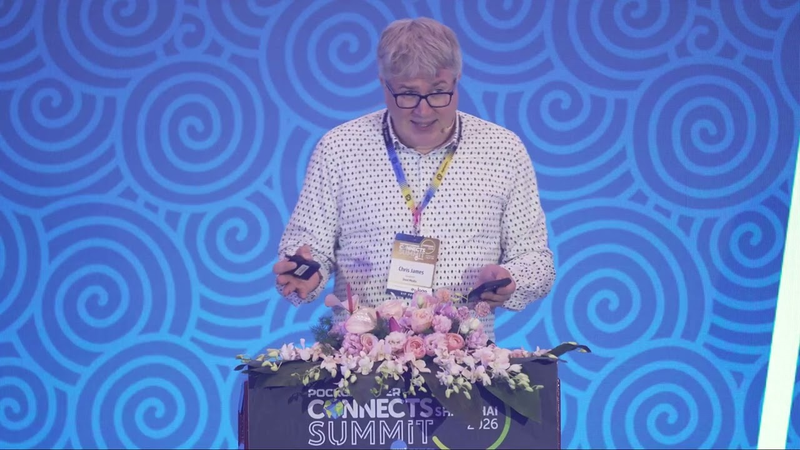
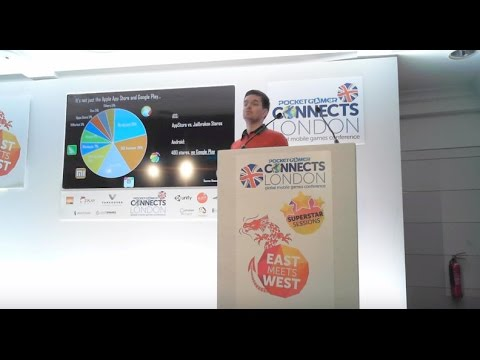
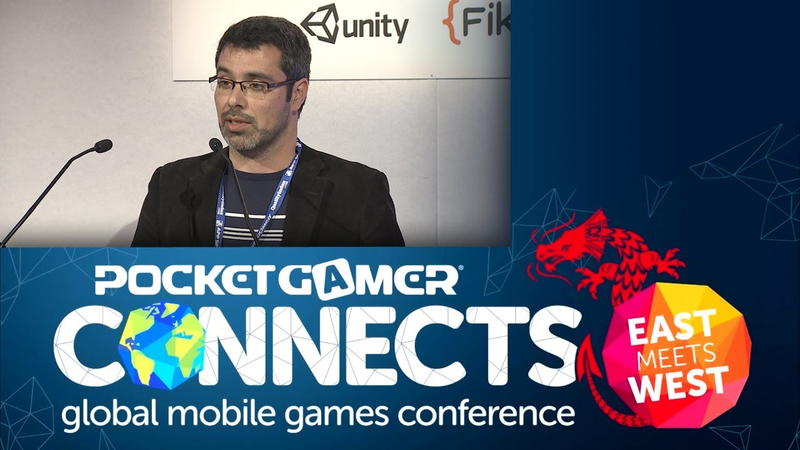
thank you good afternoon I'll try to make this short so we have seen big games we we do games but we do not do many like big numbers download games so it's like a medium company try to go to Chinese Mart in an Asian market so this is us we have been in business for a couple of years now doing mostly Sports and action sports games and our main title has been focus on surf so we've been two titles on surf and the new one coming out this year so I'm trying to focus this presentation on our best example which is the Billabong surf trip game uh it came out first on iOS and then on Android these are the real numbers right now for the
product itself so it's a good conversion rate and a big big rotation rate so we really have a fan community of the game that continues to push us to support the game and keep adding new content to the game so more or less one year ago we tried to go to the Asian market and try to put the game out there and make something with the game out there we did a couple of Partnerships so with the Sony mobile with an Asian only device and Publishing the game preloaded on a device we localized the game and we later on also made a partnership with ZTA the Chinese manufacturer we try to reach local reviewers and try to have new deals of the time in certain countries and try to find new deals in it mostly in China did it work well the numbers more or less speak for
themselves it worked in Japanese Market which work in Thailand Indonesia and Malaysia so where's China yeah more or less nowhere for us we tried everything and we learn a lot in this year also we learned that and this is probably a thing that it's going up when you go on the event and there is a quiz over there checking out what is important it's trust and we find out that many companies that we start talking to they disappeared so that was a problem that we had when we tried to reach Chinese market Trend also the feedback so people asked for the code people asked for us to make changes to the game and then after a while no feedback from them so we end up to know it's Chinese no China
with them to know that there were mergings over there there were companies closing and maybe we're being deals with the wrong Partners at the time then the SMS building integration lack of documentation and if the work will be made by your company as a developer it really could be a nightmare for you you need to have resources then be open-minded but that's really the part that all the other persons speaking here already talked about you really have to listen to and be very open-minded changing your game and changing dual game is monetized heading new graphics to the game it's needed because if it is not suit for China you have to make it if you want to and in the end this is really a quick presentation you must be able to support also the people that will support you in China this is probably the best lesson that we've learned this year we now have a team that does support to
all our partners in Asian markets so if they need marketing materials if they need to change code everything we have a people just for that in the beginning we didn't have and that caused a lot of trouble and all the relationship when you want stuff for one day and you take one week to deliver something it kills the business so we know now that and we didn't know before so this is really what we try to do our experience over there and why it did work on the other markets well basically we find partners that really helped us we find partners that support the operating building and did the integration themselves and became preloaded in a couple of devices so that made the total difference on those markets thank you and our new game will be launched next summer
foreign
Summary
Western developers face significant structural and cultural hurdles when attempting to enter the Chinese mobile gaming market, primarily centered on the difficulty of establishing reliable business relationships. While smaller to mid-sized studios often find success in regions like Japan, Thailand, Indonesia, and Malaysia through strategic partnerships and device preloading, China remains a uniquely challenging environment. The primary obstacles include a lack of consistent communication, the sudden disappearance of potential partners, and a high rate of corporate instability, such as unexpected mergers or business closures, which frequently derail international deals.
The technical and operational requirements for the Chinese market are equally demanding. Developers must be prepared to fundamentally alter their products, including modifying monetization models and visual assets to suit local preferences. Furthermore, the integration of local SMS billing systems and the lack of standardized documentation often create significant technical burdens. These challenges are exacerbated when developers fail to provide dedicated support teams. The absence of rapid, responsive support for local partners—who may require marketing materials or code adjustments on short notice—often leads to the collapse of business relationships.
Successful market entry requires a shift in operational strategy, specifically the implementation of a dedicated support infrastructure to facilitate real-time collaboration with local partners. Rather than attempting to manage the complexities of the Chinese market with existing resources, developers must prioritize transparency and responsiveness to build the necessary trust. Ultimately, the ability to adapt to local technical standards and provide consistent, high-quality support to regional partners is the deciding factor between successful integration and total market failure.