Market Analysis reports and market data
Documents
How iDreamsky made Fruit Ninja and Temple Run successful in China
The Chinese mobile gaming market presents unique challenges and opportunities that require a specialized approach to localization, monetization, and intellectual property protection.
- Ignoring the Chinese market does not prevent piracy; popular games are typically pirated on major sites within one hour of release, with clones appearing within three months and trademarks often hijacked by third parties.
- Chinese players in second and third-tier cities often provide higher lifetime value and retention than those in first-tier cities, as they have fewer entertainment alternatives and less exposure to rapidly changing international trends.
- Data costs are a significant barrier in China, where a 5GB data plan can cost 15% of a citizen's monthly income, necessitating small game sizes and low bandwidth consumption to ensure high conversion rates.
Fragmented Android billing is China's biggest issue
The Chinese mobile gaming market presents significant opportunities for Western developers, provided they navigate the complexities of local distribution and monetization.
- The extreme fragmentation of the Android billing landscape, characterized by hundreds of independent app stores with unique SDK requirements, is the primary barrier to monetization in China.
- Approximately 70% of casual gamers in China prefer offline play, making operator-based SMS billing the most efficient monetization method for that segment.
- Android holds over 80% of the Chinese smartphone market, with hardware manufacturers like Lenovo and Xiaomi driving revenue through preloaded content.
China is already the #3 mobile gaming market for iOS
The Chinese mobile gaming market has emerged as a critical global force, securing its position as the third-largest market for iOS revenue as of late 2013.
- As of late 2013, China is the third-largest global market for iOS gaming revenue and the second-largest for iOS game downloads.
- The Chinese Android market is estimated to be at least as large as the iOS segment and is projected to experience faster growth, despite its fragmented ecosystem.
- Domestic giant Tencent achieved top-tier download and revenue rankings within six months of entering the mobile gaming market.
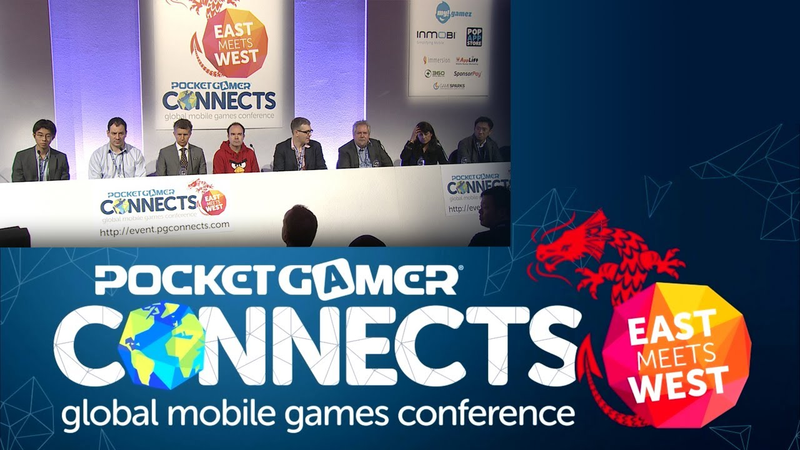
PGC London 2014: The East Meets West Power Panel
Global game development has transitioned from a traditional release-based model to a sustainable live-service framework, necessitating a fundamental shift in how studios approach production and market entry.
- Modern mobile game development requires teams of 10 to 20 professionals and budgets between $1 million and $2 million to sustain the live-service operations necessary for competitiveness.
- Global success is achieved through a strategy of culturalization and territory-specific platform integration rather than uniform global launches.
- Developers should prioritize validating core gameplay loops in familiar markets before attempting to navigate the complex regulatory and distribution environments of China, Japan, and South Korea.
At Tencent, we see ourselves as a platform company
Tencent positions itself as a comprehensive platform company, aiming to facilitate a massive, integrated digital ecosystem for users while serving as a strategic partner for global game developers.
- Tencent operates as a platform company that maintains a neutral, siloed publishing infrastructure to ensure fairness and prevent internal favoritism between its own studios and external partners.
- The company leverages its dominant social platforms, QQ and WeChat, to maintain a 24-hour user engagement cycle within its digital ecosystem.
- Rapid expansion in the Chinese mobile gaming market is primarily driven by the proliferation of affordable Android smartphones priced under $100.
How mobile will boost the games market to over $100 billion
The global games industry is projected to exceed $100 billion in revenue by 2017, a milestone driven primarily by the rapid expansion of the mobile sector and significant growth within Asian markets.
- The global games industry is projected to surpass $100 billion in revenue by 2017, fueled primarily by the mobile sector and rapid growth in Asian markets.
- Mobile games generate over 70% of total global application revenue, outperforming traditional console and subscription models in profitability and development efficiency.
- Multiplayer and player-versus-player mobile games generate up to 13 times the revenue of single-player titles due to superior engagement and retention metrics.
King's Tommy Palm on the growth of global games
The evolution of the mobile gaming industry from a fragmented, niche market to a global powerhouse is defined by the transition from individual developer experimentation to the dominance of large-scale publishers.
- Market power has rapidly consolidated, with the number of companies occupying the top five grossing positions dropping from 26 in 2011 to just 10 by 2013.
- Success in the current mobile landscape requires cultivating direct, long-term relationships with fan bases through social networks and direct communication channels.
- The App Store fundamentally transformed the industry by lowering barriers to entry for developers and simplifying user interfaces, enabling independent creators to achieve massive commercial scale.
Chris James welcomes you to PG Connects London 2014
The mobile gaming industry has undergone a profound transformation over the past decade, evolving from a niche market focused on 2D Java games into a multi-billion dollar global powerhouse.
- The mobile gaming industry has transitioned from a niche market of 2D Java games into a multi-billion dollar global powerhouse.
- Business models have successfully shifted toward free-to-play mechanics, allowing for massive revenue generation despite the absence of upfront costs.
- Mobile hardware capabilities have evolved significantly, now offering performance levels comparable to traditional PCs and consoles.
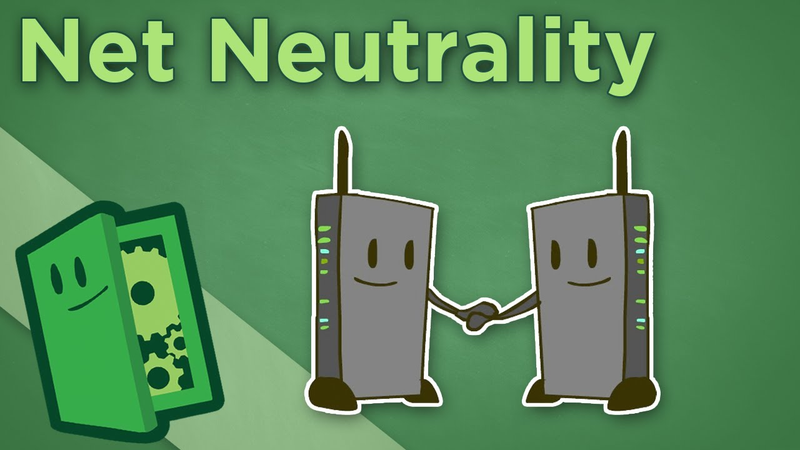
Net Neutrality - What a Closed Internet Means - Extra Credits
Net neutrality serves as a critical foundation for the modern internet, ensuring that internet service providers (ISPs) cannot discriminate in how they allocate bandwidth to various websites and services.
- Net neutrality prevents internet service providers (ISPs) from discriminating in bandwidth allocation, ensuring that all websites and services remain equally accessible to consumers.
- The January 2014 DC Circuit Court ruling stripped the FCC of its authority to enforce net neutrality, creating a legal vacuum that allows ISPs to explore bandwidth discrimination technologies.
- The absence of net neutrality protections threatens the gaming industry by potentially allowing ISPs to throttle competitor services or charge premiums for high-speed data access.
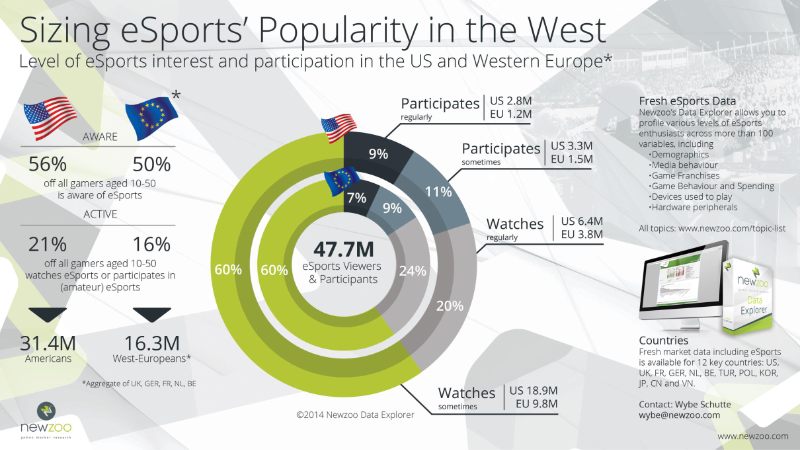
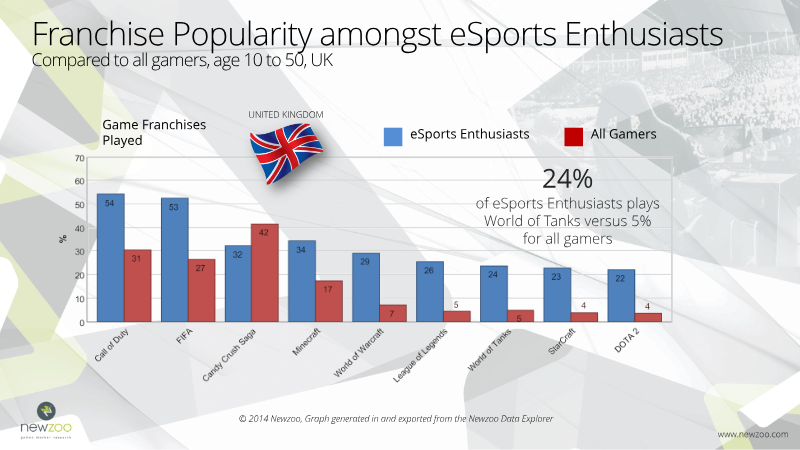

Sizing & Profiling eSports' Popularity: The West
The rapid expansion of eSports in Western markets represents a significant shift in the gaming industry, driven by the rise of free-to-play titles such as League of Legends, Dota 2, and World of Tanks.
- eSports viewership is doubling year-over-year, with the average viewer watching over 10 times per month for an average session length of 2.2 hours.
- Total eSports prize money increased by 350% over the four-year period ending in 2013, with top events like The International 2013 awarding $2,874,381.
- eSports enthusiasts are significantly more valuable to publishers than the average gamer, with 22% of enthusiasts identified as 'big spenders' compared to only 8% of the general gaming population.

GDC 2014: Bo Daly, CEO, Super Evil Mega Corp
Free-to-play business models remain a central, albeit polarizing, subject within the gaming industry.
- Free-to-play business models are shifting from mobile-exclusive to the console space, signaling a move toward more sustainable, service-based monetization.
- The gaming industry is actively converging high-fidelity console development standards with the maturation of mobile hardware to create more immersive portable experiences.
- Developers are increasingly prioritizing long-term engagement models that bridge the gap between hardcore console-style gameplay and accessible mobile platforms.

GDC 2014: David Kalina & Randy Smith from Tiger Style Games
The independent game development sector is experiencing a period of significant growth and maturation, increasingly operating as a parallel force to the mainstream industry.
- Independent game development is transitioning from a peripheral market segment into a robust, self-sustaining ecosystem that frequently achieves major industry awards and commercial success.
- The mobile gaming sector is seeing a strategic shift in monetization, with collectible card games emerging as the primary evolution of the dominant free-to-play business model.
- Developers are adopting multi-platform strategies to maximize reach, as evidenced by the development of 'Spider: Rite of the Shrouded Moon' for mobile, PC, and virtual reality hardware.