1 free read left. Create a free account for unlimited reading + AI research.
Create free account
InnoGames CEO on growth, Asian markets and tax breaks
Key insights
6 takeaways- 01InnoGames rejects the reliance on tax incentives, instead focusing on talent acquisition in Hamburg and reducing bureaucratic friction to drive long-term organizational stability.
- 02InnoGames prioritizes sustainable growth by ensuring revenue increases consistently outpace their annual headcount expansion of over 100 new employees.
- 03The company maintains a core focus on durable player-versus-player (PVP) strategy games, exemplified by the long-term performance of titles like Tribal Wars, which continues to see record results more than a decade after launch.
- 04InnoGames is actively diversifying its portfolio by incorporating role-playing and city-building mechanics into new titles to broaden its audience reach beyond traditional strategy games.
- 05The company is prioritizing success in European and North American markets, viewing the cultural and operational complexities of Japan and Korea as long-term objectives rather than immediate targets.
- 06To manage the transition from browser to mobile, the company utilizes cross-platform play and a design process centered on rigorous prototyping, user testing, and data-driven iteration.
Ask AI about this video
Transcript
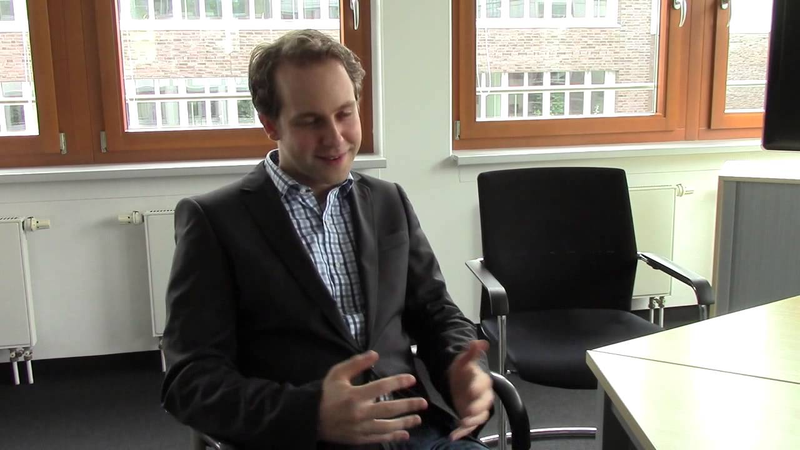
we're here having a lovely time at in games um and uh you just moved into your this lovely fantastic building had a tour it's um beautiful absolutely thank you lovely um so uh why did you decide to move from your old location yeah most simple reason is the old location was just getting too small we have uh also grow plans for the future and now we have space to continue our growth and that's why we looked for different opportunities and the whole city was clear for us all the time we wanted to stay in Hamburg it's a great City best city to develop great games and then we looked around for the best opportunities this city has to offer for us so Hamburg offers um New Opportunities uh what sort of could you give me some more details on what those opportunities are so first of all of course it's a nice place to live there um it's also interesting and uh relevant for people coming from other countries because it's a very International City
um there's also the game stud Hamburg initiative it's a cluster of uh companies in the gaming industry so there's also a good um exchange of knowledge experiences and this also helps to move forward the whole industry in Hamburg so lots of different reasons um also very good reachable um good train connections that's lot of reasons why it's a great place okay um so I want to touch on two of those points um you're talking about you know uh it being a very International city um you expanding I wouldn't say aggressively I would say sort of not slowly either just surely you know surely yes um sustainable yeah sustainable absolutely very good word um uh mobile um which is OB what I'm particularly interested in Mobile has had a lot of phenomenal success stories uh that then turn into terrible failures um is sort of slow growth uh a decision to counter um this this phenomenon or I
mean we are really focusing on Healthy Growth um and we are still growing significantly it means um on the head count level we are growing by more than 100 people this year and we grow our revenues faster than we grow the number of people who work here so it's still a lot of growth but on the other hand um we manag to get this growth uh in a way that it is sustainable that we're not thinking about only what's happening in the next day or end of the year but we were also thinking about okay where do we want to be next year how does the company look in one or two years and and Beyond and how to structure this growth and make sure that everybody is also um growing with within this company that goes up to the management level also for me it's a challenge to to grow with the company um so you had a lot of success I would say early on and you continue to have a lot of success with games that have a they are from a genre that is very
much of the era in which you started out they are you know PVP strategy games very popular in Europe Eastern Europe especially um that sort of thing and we're talking about the future growing that sort of thing um obviously your portfolio very much sticks to strategy and PVP especially in browser and mobile now um are you concerned at all that perhaps like for example let's say something that happened a lot quicker like a Flappy Bird for example which was you know big and then and then went away are you concerned at all that this that this PVP strategy Builder genre might someday start to lose traction with players so on the one hand uh first I don't see that this genre will lose traction it's a genre which offers very very long-term fun especially because of this PVP elements I mean the players are writing the history they are creating the story in some way and this is a great thing which uh of course Flappy Bird cannot offer
um so this is one reason why these games we make um will have also a very longterm they I mean they and the Brows are existing for more than 10 years now um and still growing and we are more successful even our oldest game Tribal wars is more is nowadays more successful than it has been in has been ever so probably this year will be another best year for Tribal wars um it's still growing or oldest game so you see it's it's a really great genre on the other hand um to grow the company as a whole uh we want to extend our our reach and also go to other genres um we already have some aspects which go a bit outside there it's for example West has more role playing character or Forge of Empires has a more um a city building aspect it's not so much about fighting and conquering it's more about building something up so we're expanding our J and I also want to expand our audience M
absolutely um one of the uh companies I would say that you're uh let's say not Rivals but certainly competition with um is a caban for example and um although I wouldn't want you to speak about the state of Kabam or anything like that um those are companies that are very much have a lot of success in Asia how have you found the move into Asian territories or have you kind of tried to stick Asian territories are quite different um so they are for Western Publishers they are quite a challenge to be really big successful there and having success to some amount is possible I think even until now um nobody has really made a big success especially in the Japanese or Korean app stores so it's a tough thing um there are cultural differences um on a short term we are not so much focusing on it right now we first want to be successful in Europe and us but on the long term of course we will also evaluate such opportunities you talked earlier about
International wanting to be International that sort of thing and and bringing in potentially you know new Talent from abroad um and obviously this fantastic place will will will get people to uh to to come over um is that sort of Drive something that is spurred about by a want to move into newer territories do you bring in people from outside so you can approach people on the outside or is it just simply a talent thing it's to be honest more Talent thing um Talent is uh very important for us um our requirements are very high so we have to look on the whole world and focus on Europe of course to really find the best people to work for us um to make sure that we can deliver great games and of course it also helps with International expansion to have people with a local knowledge but the primary focus is uh to get really the best talent available and um finally because this has been very succinct for really marvelous actually um what I'd really
like to come to you about is uh mobile and tablet and you were you know got your your starting browser that sort of thing what what's been the what's been the greatest challenge that you've managed to overcome in the move to sort of portable devices um one very big challenge of course is always the user experience design and um we already did a lot of stuff there but even now and there are still areas where we can improve and it's really it's not only about it's yeah unlearning some old stuff learning new stuff and to really find the best user experience for the players this is a challenging thing we made really good progress there but still um it's a completely different way how to interact with a device and you always have to think about this it's different than the browser do people who use um you know these devices are they different kinds of players do you find or do you find that the two are quite simar sometimes the same players play playing on both
platforms the same game um which makes sense I mean then you can play from your PC and when you leave the office your home you can still continue to play on your mobile device this is great stuff um so it's the same players but they expect to have a Al a great mobile user experience and this is different than the browser user experience and how did you overcome this this this challenge um it's iterating really different prototypes doing a lot of user tests with real user um getting their feedback and of course also when a product is live we also learn from numbers what works what does not work we get the feedback then from the real players what do they like what do they not like and so we have to iterate on the products um to get really the best user experience for the mobile devices um do I have time for one final question yes yes fantastic um uh there was a uh brilliant speech earlier uh that you were part of um from the it's mayor isn't it it's the the mayor first May of H first mayor of Hur and um uh
one of the questions brought up by one of my British colleagues uh was regarding uh tax and breaks and help um obviously you know you've you've you've you've come to a city and you're in a country that doesn't have tax breaks or anything like that um but there clearly is a bit of support here for for the tech industry um are you interested in having these tax breaks as ay do you share the the first mayor's opinion that that that maybe there should be some sort of financial help but um I share his opinion that text should not be the first reason to do a business decision you always have to do what's right for your real uh company Mission um texes are maybe not your company Mission so you first should always focus on what's right um but of course then on a detailed level um of course it helps if you get um better simpler text structures and it's not only about Tex
breaks it's also about making things simple it's also something make bureaucracy lower that's always helpful for us and we don't want to deal too much time on too complicated Tex issues we want to focus on delivering the great games to our players
Summary
InnoGames maintains a strategy of sustainable, long-term growth by prioritizing high-quality talent acquisition and product iteration over rapid, speculative expansion. Headquartered in Hamburg, the company leverages the city’s international appeal and collaborative industry cluster to attract global talent, which remains a higher priority than seeking specific tax incentives. While the company has expanded its headcount by over 100 employees annually, it emphasizes that revenue growth consistently outpaces staff increases, ensuring the organization remains structurally sound and capable of long-term planning.
The company’s core portfolio remains rooted in player-versus-player (PVP) strategy games, a genre the leadership identifies as inherently durable due to the social, history-making nature of player interactions. Despite the longevity of titles like Tribal Wars, which continues to see record performance more than a decade after launch, InnoGames is actively diversifying its offerings. Recent titles have begun to incorporate role-playing and city-building mechanics to broaden the company’s audience reach. While the firm acknowledges the potential of Asian markets, it currently prioritizes success in European and North American territories, viewing the cultural and operational complexities of the Japanese and Korean markets as long-term objectives rather than immediate targets.
Transitioning from browser-based gaming to mobile platforms has presented significant user experience challenges, requiring the company to unlearn traditional design patterns in favor of mobile-first interactions. InnoGames addresses these hurdles through rigorous prototyping, extensive user testing, and data-driven iteration once products are live. By enabling cross-platform play, the company allows users to maintain a consistent experience across PC and mobile devices. Ultimately, the company rejects the notion that business strategy should be dictated by tax breaks, arguing instead that success is best achieved by focusing on core company missions, reducing bureaucratic friction, and delivering high-quality, engaging content to players.














Comments