Market Analysis reports and market data
Documents

Big numbers from Monument Valley, Crossy Road and Minecraft
The mobile gaming industry began 2015 with a focus on monetization strategies, highlighted by performance data from three prominent titles: Minecraft, Crossy Road, and Monument Valley.
- Monument Valley generated $5.8 million in net earnings against $1.4 million in development costs, resulting in a $4.5 million profit from 2.4 million sales.
- Crossy Road’s two-person development team earned $1 million in revenue by utilizing Unity Ads, demonstrating the financial viability of non-intrusive, incentivized video advertising.
- Minecraft maintains its status as a premium mobile outlier, having reached a total of 30 million downloads.

Fulbright Report on the Irish Games Industry
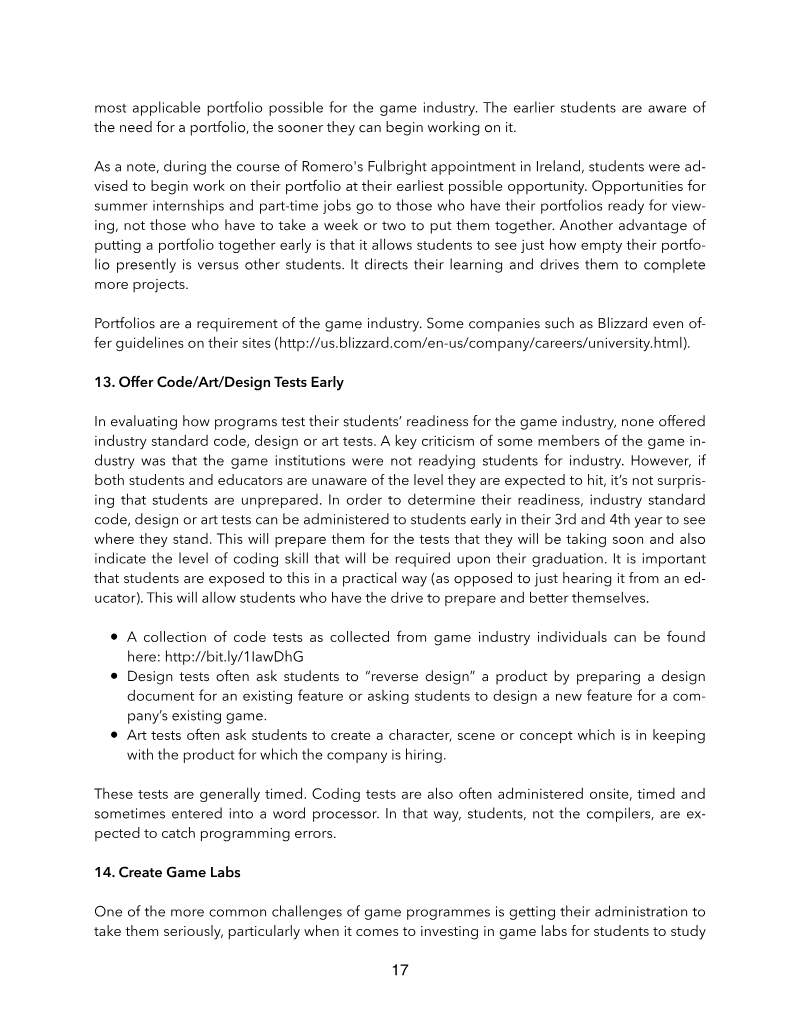
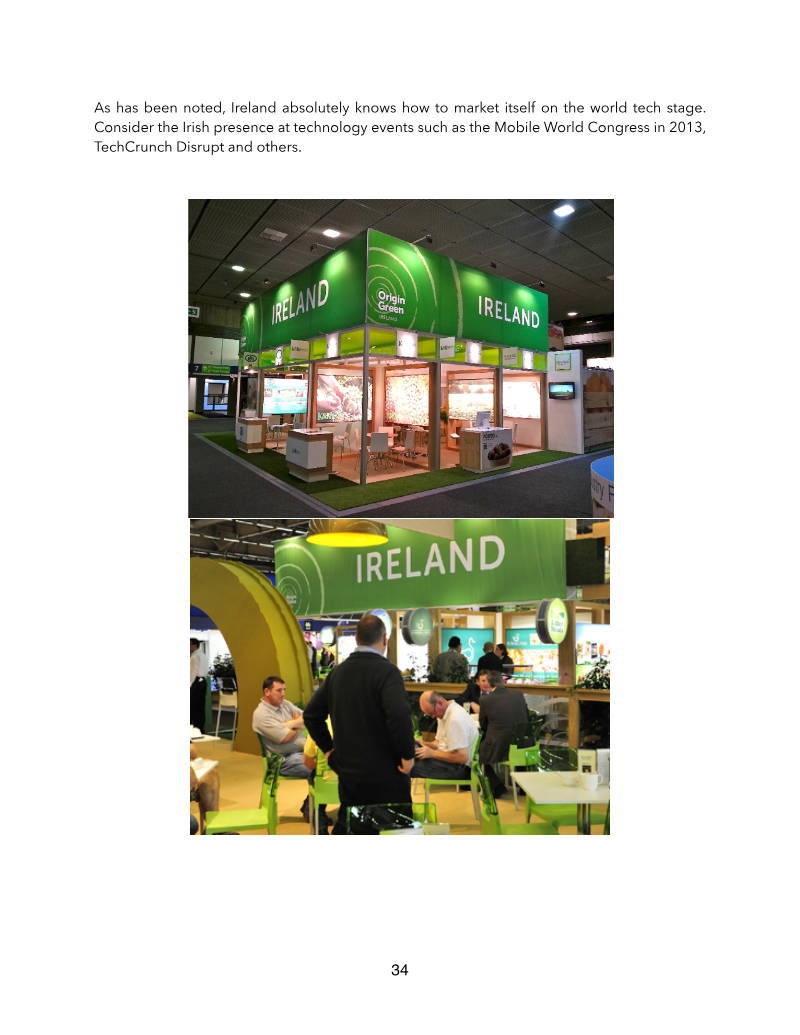
The Fulbright Report on the Irish Games Industry assesses the state and potential of Ireland's game development sector, identifying key challenges and proposing strategic recommendations for growth and global competitiveness.
- Ireland produces many game-development graduates and has an engaged developer community, yet struggles to retain talent and grow its own intellectual property, risking its role as a mere supplier of talent to foreign studios.
- A survey of more than 600 professional programmers found 95 percent regarded C++ proficiency as essential, yet retention-based funding has pushed programmes toward easier tools such as Unity, Lua, and Java.
- Developers are trapped on a "treadmill" of contract work, with limited investment in original IP and a scarcity of junior and mid-level positions driving brain drain.
Monetization of World of Warriors
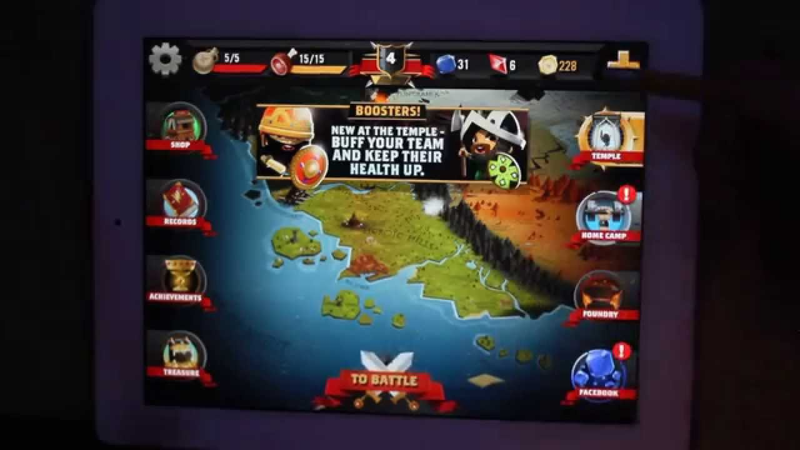
World of Warriors, a mobile title developed by a dedicated team within Mind Candy, utilizes a multifaceted free-to-play monetization model centered on a complex in-game economy.
- World of Warriors utilizes a hybrid free-to-play model built on a card-based collection system, shifting away from the subscription-based structure used in Mind Candy's Moshi Monsters franchise.
- The game's economy is driven by a dual-currency system, featuring gold as soft currency and 'wild stones' as the primary premium currency.
- Premium wild stones are sold in bundles ranging from $3 to $100, with an intentionally low exchange rate designed to prioritize perceived value over the inflated currency figures common in competing mobile titles.



Early Computer Game Genre Preferences (1980-1984)
Between 1980 and 1984, computer game genre preferences were shaped by two distinct audiences, and the sales data reveal a split that later accounts of video game culture tend to flatten.
- Arcade games dominated commercial sales in 1980–1984, accounting for roughly 61 percent of Softalk's monthly Apple II "Top Thirty" best-seller chart entries, while strategy games made up about 52 percent of Computer Gaming World reader preferences from 1982 to 1984.
- The gap between sales charts and reader preferences points to a hardcore hobbyist audience whose tastes diverged sharply from the broader consumer market.
- Wizardry and Choplifter! were the strongest performers across both the Softalk sales data and the Computer Gaming World reader ratings.



Defining the Global Ludo Polychotomy
This paper, presented at DiGRA 2015, examines whether the established East-West dichotomy, originally theorised by S. Meštrovic (1994) and applied to cultural and psychological studies, accurately describes the global video game industry.
- The paper proposes replacing the East-West dichotomy (Meštrovic, 1994) with a "Global Ludo Polychotomy," arguing that regional differences in game design are real but too simplistic to explain market patterns.
- Using the "Three Corners of Reward" model (James et al., 2013), the authors find Western design tends toward fast-paced extrinsic, material rewards displayed through competitive online play, while Eastern design favours personal goals and intrinsic progression with less emphasis on showing achievements to others.
- The analysis covers only six titles released 2007–2013: Call of Duty: Ghosts, Assassin's Creed IV: Black Flag, Pokémon X and Y, Super Mario 3D World, Grand Theft Auto V, Battlefield 4 and Lego Marvel Super Heroes, selected for popularity and seminal status.
Capcom Integrated Report 2015
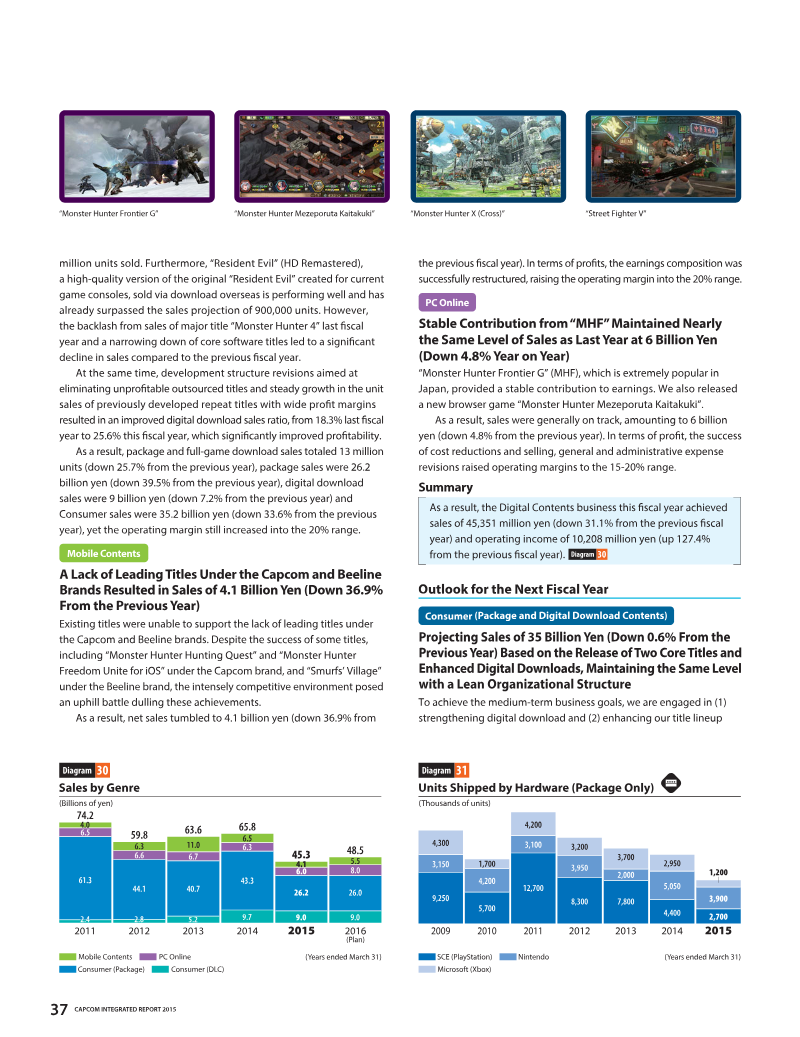
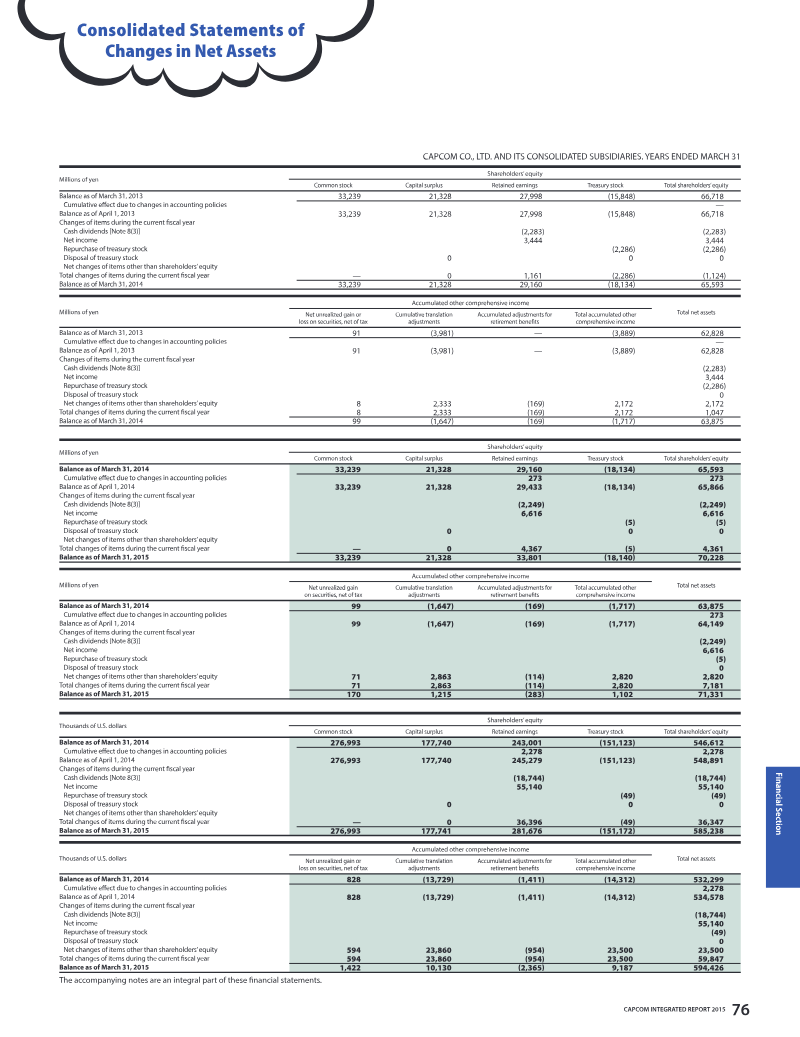
Capcom's 2015 Integrated Report outlines a strategic pivot towards digital content and global market expansion, particularly in Asia, to drive profitability and stabilize earnings amidst a dynamic global gaming landscape.
- Capcom targeted a 20% operating margin by 2018 by shifting toward a 'Single Content Multiple Usage' strategy that leverages in-house IP across console, mobile, and PC platforms.
- Despite a 37.1% decline in net sales to 64,277 million yen in fiscal 2015, net income nearly doubled to 6,616 million yen due to organizational restructuring and reduced R&D costs.
- The company achieved a 16.5% operating margin in 2015 by prioritizing high-margin digital downloads and improving overall cost management.
Casual Games Sector Report: Southeast Asia 2015
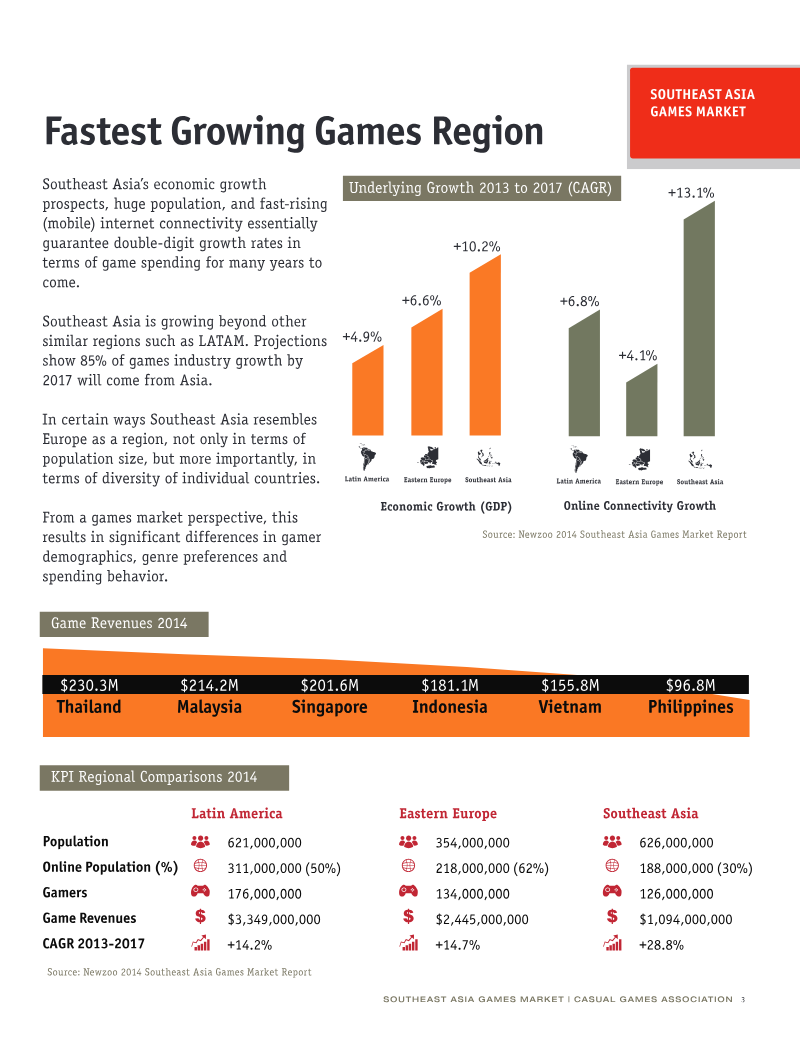
This report analyzes the casual games sector in Southeast Asia, highlighting the region's rapid growth and potential as a key market for global game developers.
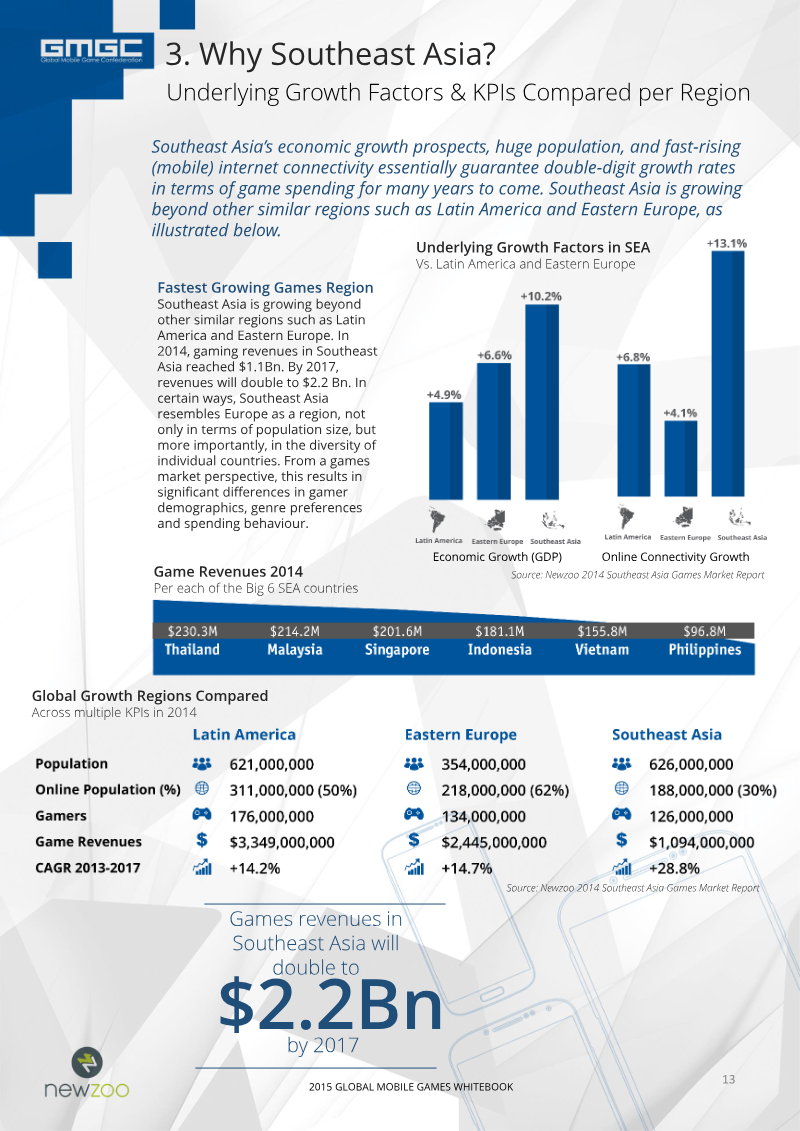
- The Southeast Asia games market is projected to reach $2.2 billion in revenue by 2017, growing at a compound annual rate of 28.8%.
- Mobile gaming is the dominant sector across the region, with Western titles from publishers like King and Supercell consistently ranking among the top-grossing applications.
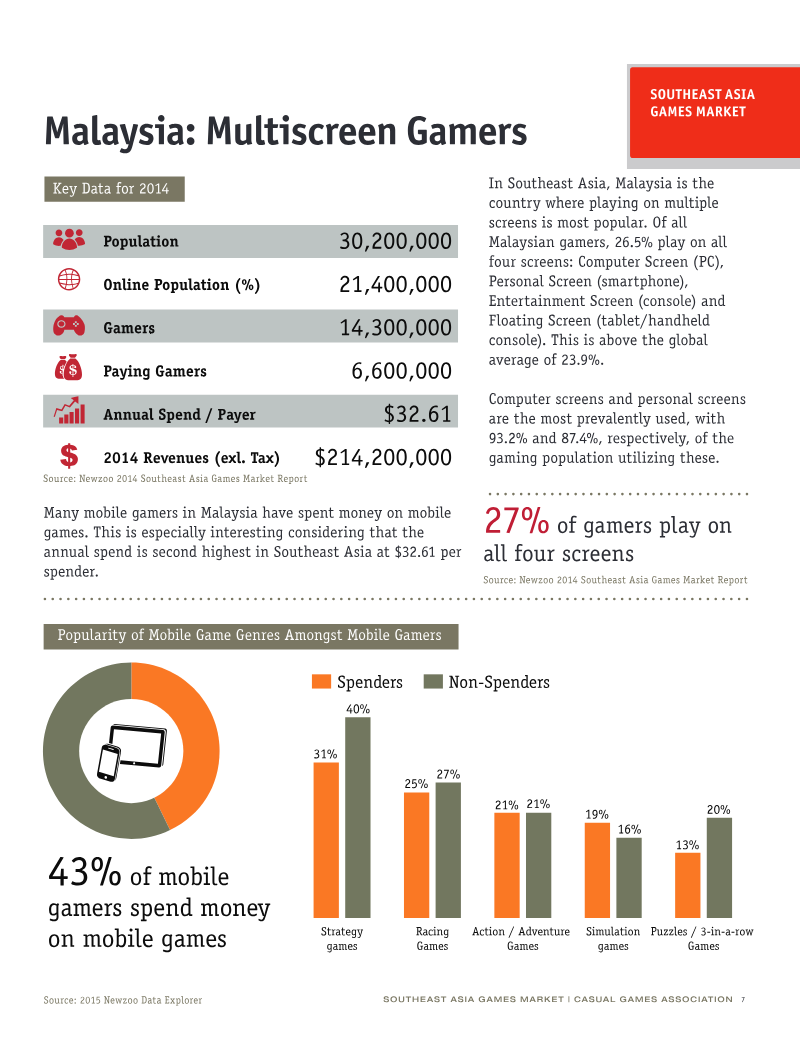
- Thailand currently generates the highest total game revenue in the region, while Singapore leads in monetization with an average annual spend of $189.30 per payer.
The Mobile Gaming Landscape 2015
The mobile gaming industry experienced significant expansion in 2015, generating over $30 billion in revenue globally, marking a 23% year-on-year growth.
- The global mobile gaming market surpassed $30 billion in revenue in 2015, driven by a transition toward unified, cross-platform ecosystems.
- High-profile industry consolidation, such as Activision Blizzard’s acquisition of King, marks a shift toward integrated gaming business models.
- The Chinese market remains distinct and highly competitive, requiring developers to navigate a fragmented Android ecosystem and numerous local app stores dominated by Tencent and NetEase.
Global Mobile Game Industry White Book: 2015
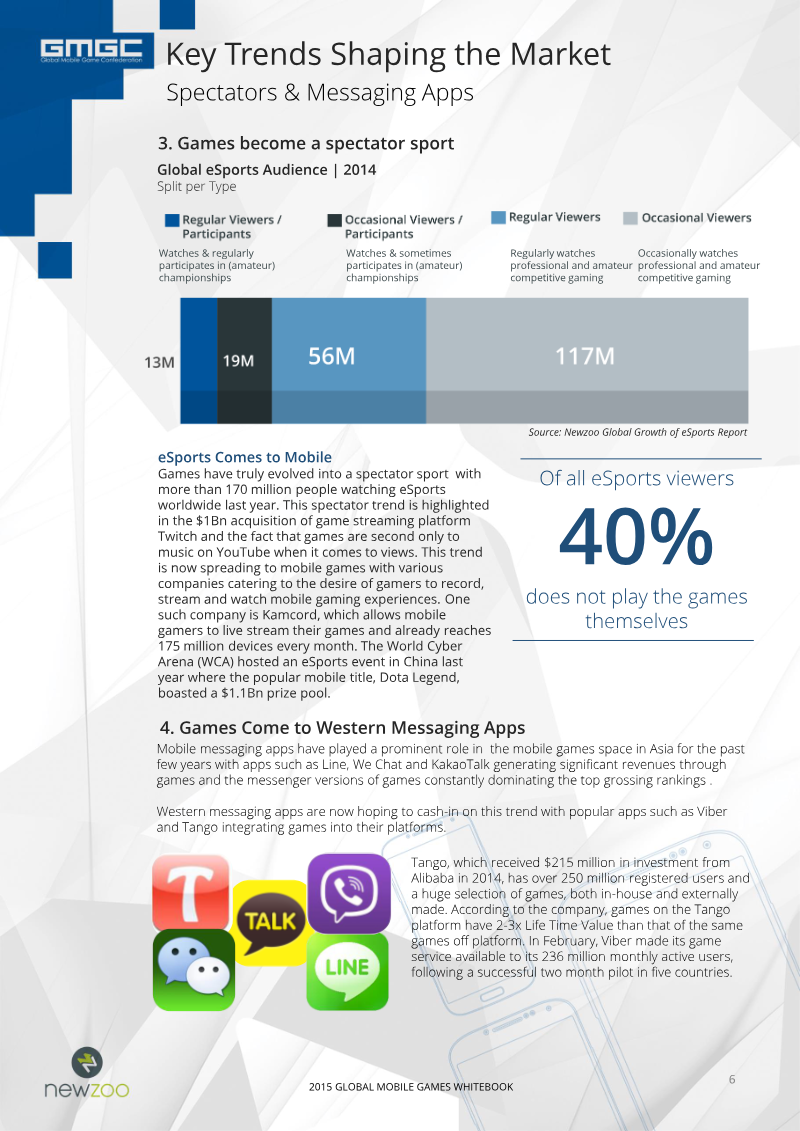
The "Global Mobile Game Industry White Book: 2015" provides a comprehensive analysis of the mobile gaming market, asserting its emergence as the dominant force in the global gaming industry.
- The global mobile gaming market is projected to reach $30.1 billion in revenue in 2015, establishing itself as the dominant sector in interactive entertainment.
- China serves as a high-engagement market where users spend an average of 35 minutes daily on mobile games, primarily favoring card and role-playing genres.
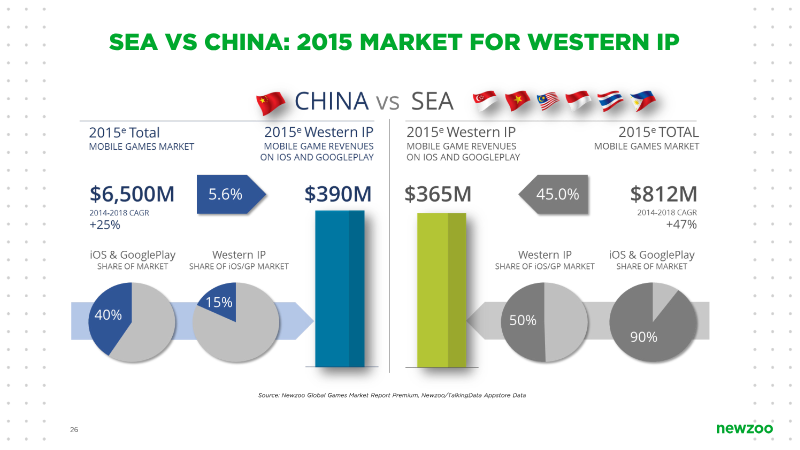
- Southeast Asia is a rapidly maturing market expected to double its revenue by 2017, providing a strategic entry point for Western publishers due to standardized app store infrastructure.
Casual Games Sector Report 2015: World's Top Games Markets
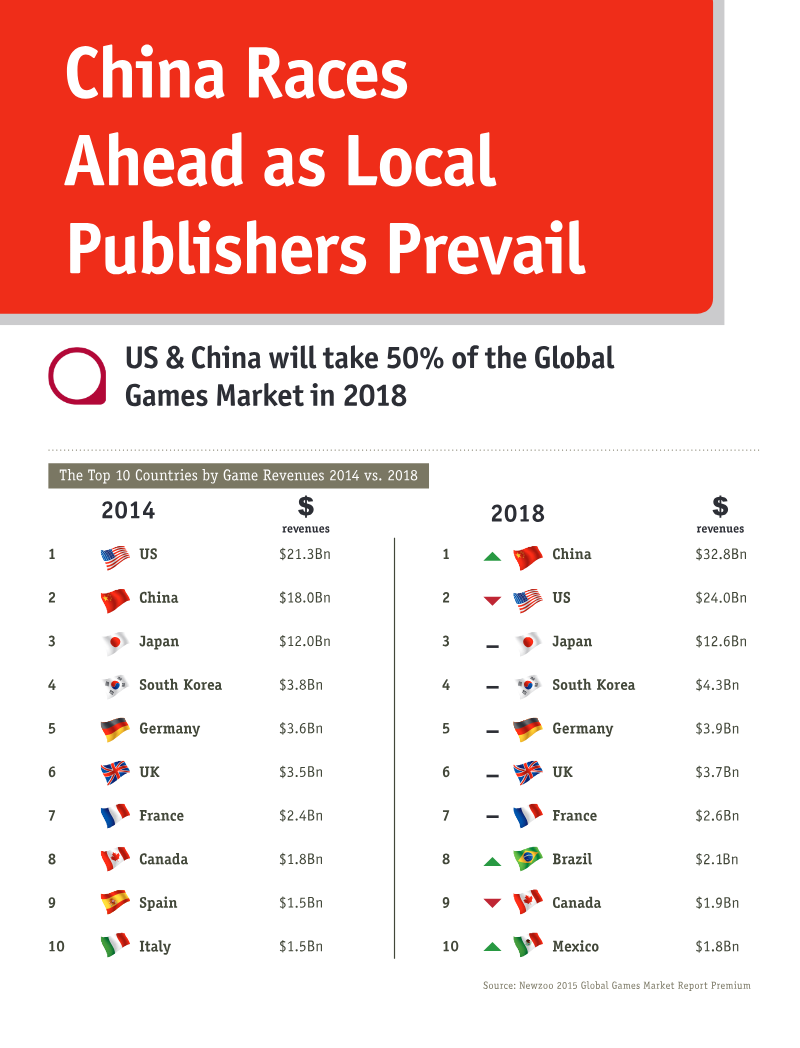
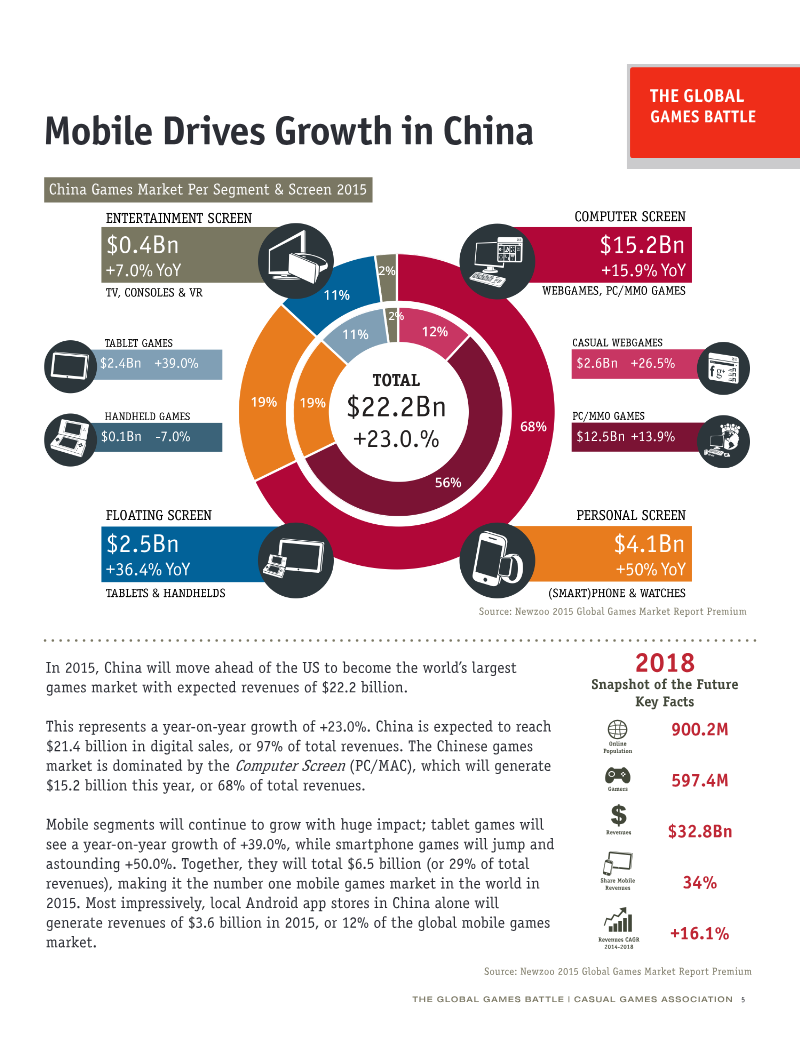
This report analyzes the global games market, focusing on the competitive landscape between the US and China, with projections extending to 2018.
- As of 2015, China surpassed the United States as the world's largest games market, with the two nations projected to account for 50% of global revenue by 2018.
- China’s games market reached $22.2 billion in 2015, marking a 23% year-on-year increase driven by a 50% growth rate in the smartphone gaming segment.
- The US market generated $22.0 billion in 2015, with 45% of its total revenue derived from TV, console, and VR platforms.

Kondycja Polskiej Branży Gierwideo Raport 2015
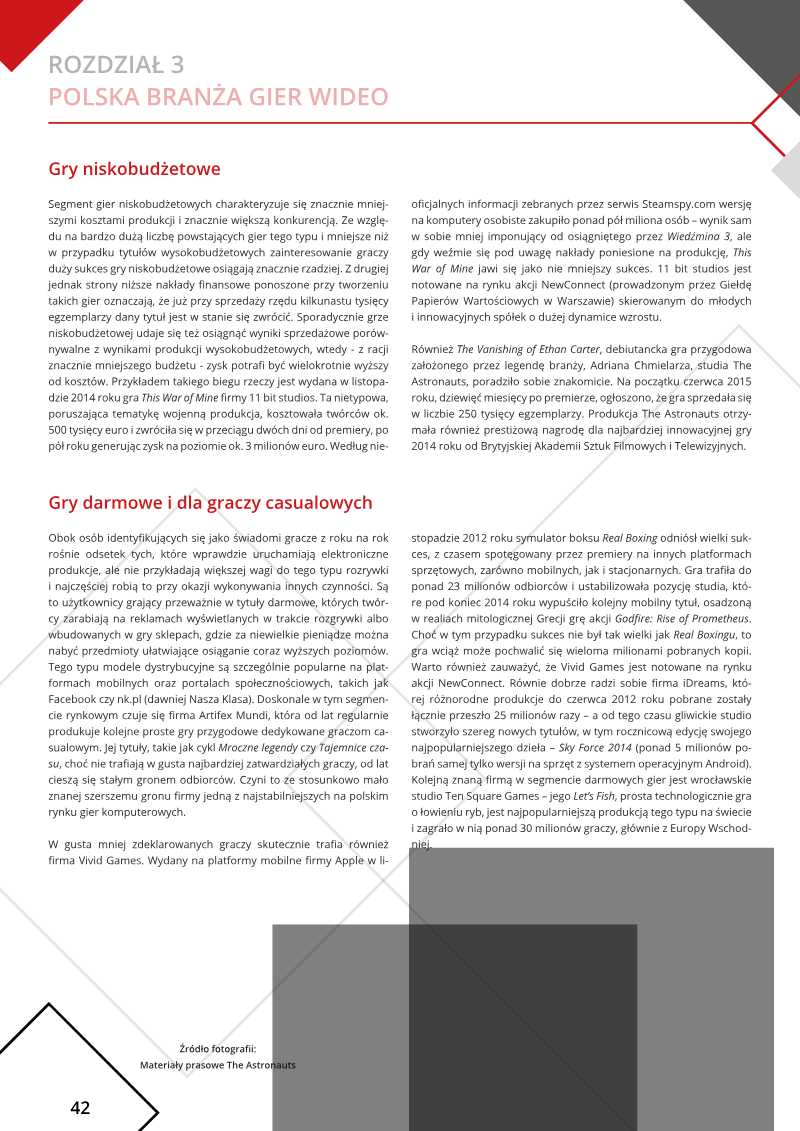
The 2015 assessment of Poland's video game industry, produced by GRY-OnLine, Onet Group and Krakowski Park Technologiczny with public funding, argues that the sector is in its strongest period ever and could become a source of Polish "soft power."
- The global games market in 2015 was valued at $74.2 billion, with mobile games ($22.3 billion) and retail sales ($19.7 billion) being the largest segments.
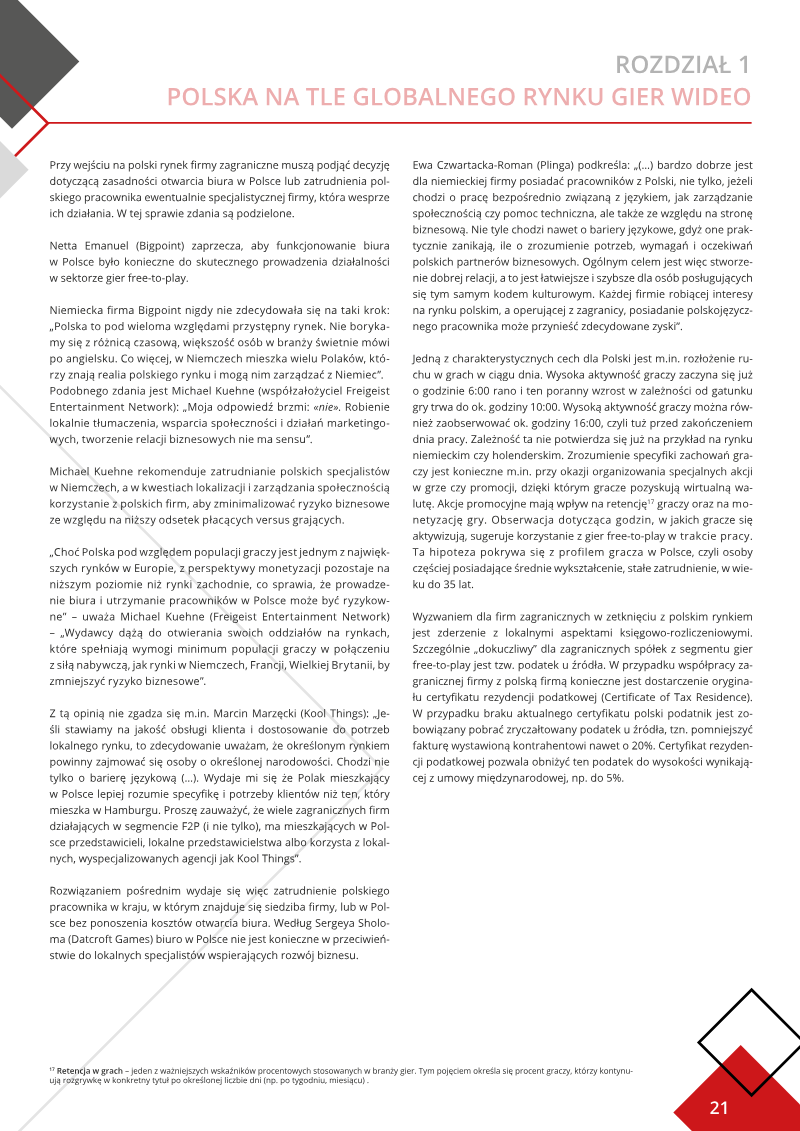
- In Poland, 72% of internet users play games. 42% play games installed on computers, 40% play on smartphones/tablets, and 38% play browser games.
- Action games are the most popular genre among Polish players, accounting for 35% of page views on GRY-OnLine.pl in the first half of 2015.

Le Marché Illicite de la Distribution Digitale de Jeux Vidéo sur PC: France
Ce livre blanc du syndicat SnJV décrit et mesure le marché illicite des clefs d'activation de jeux PC en France, alimenté par des sites offshore sans contrat avec les ayants droit et qui ne respectent pas les règles fiscales européennes.
- The digital PC game market in France is significantly impacted by an illicit market, where game keys are resold at prices up to 60% lower than official retail prices, often before a game's release, leading consumers to perceive official prices as too high.
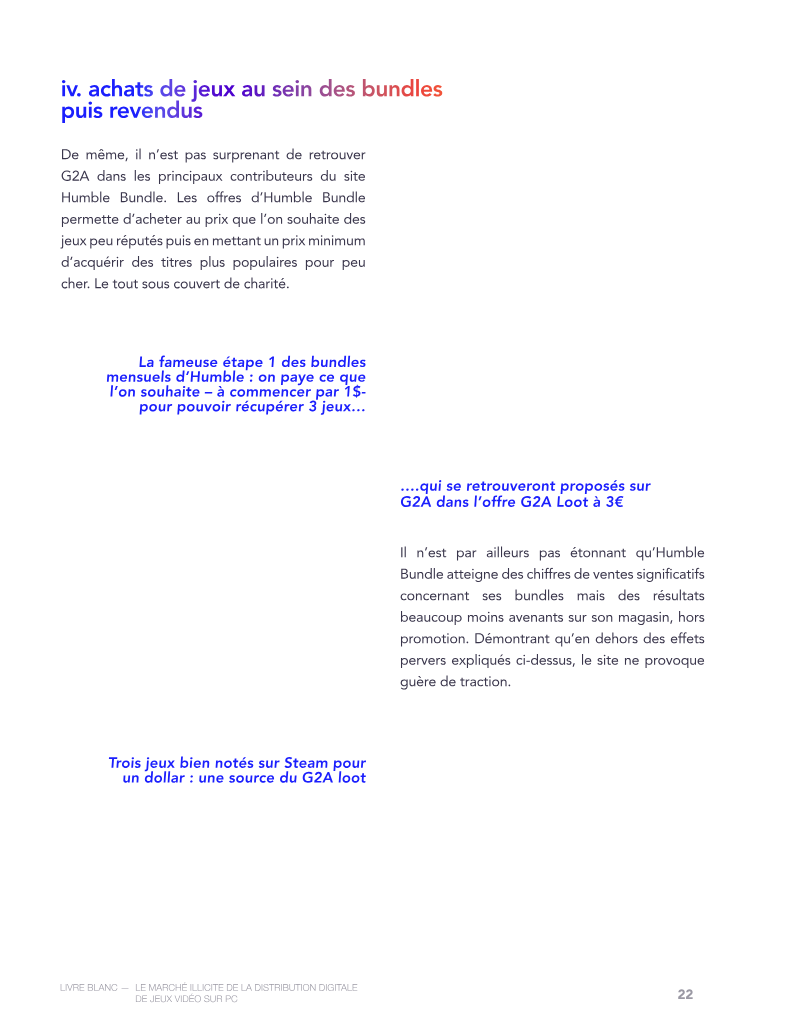
- This illicit market is fueled by geographical price differences (e.g., keys sold for €19 in Poland vs. €49 in France) and physical wholesalers reselling keys from boxed games to unofficial sites, with German wholesaler Gross Electronic GmbH identified as a major supplier to MMOGA.com from 2013-2015.
- Major illicit platforms like MMOGA (sold for €306M in 2015 with over €100M revenue) and G2A operate from offshore locations (e.g., Hong Kong, Eastern Europe) to avoid European VAT and consumer protection laws, despite often having significant European customer bases (e.g., over 60% French audience for some sites).