Key insights
5 slides
Starting point
Ireland trains many game graduates yet keeps losing its talent.
The report finds Ireland produces many game-development graduates and has an engaged developer community. It still struggles to retain talent and grow its own intellectual property.
Core risk. Ireland risks remaining a mere supplier of talent to foreign studios.
1 / 5
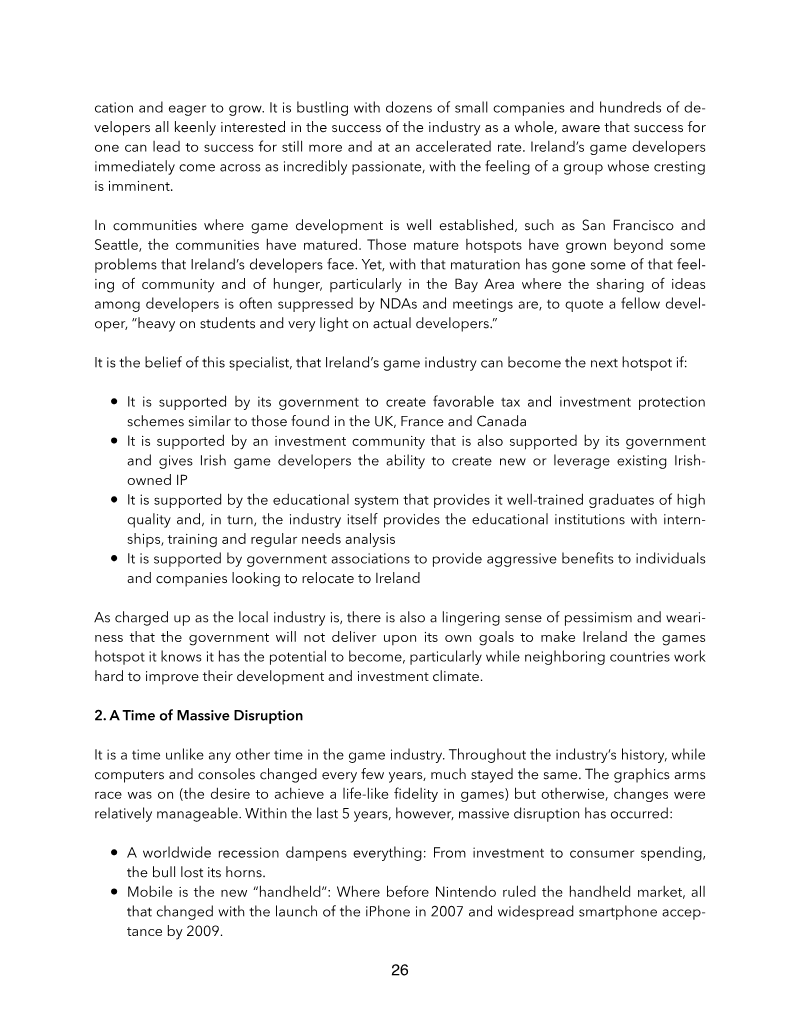
- 01Ireland produces many game-development graduates and has an engaged developer community, yet struggles to retain talent and grow its own intellectual property, risking its role as a mere supplier of talent to foreign studios.See it on page 26
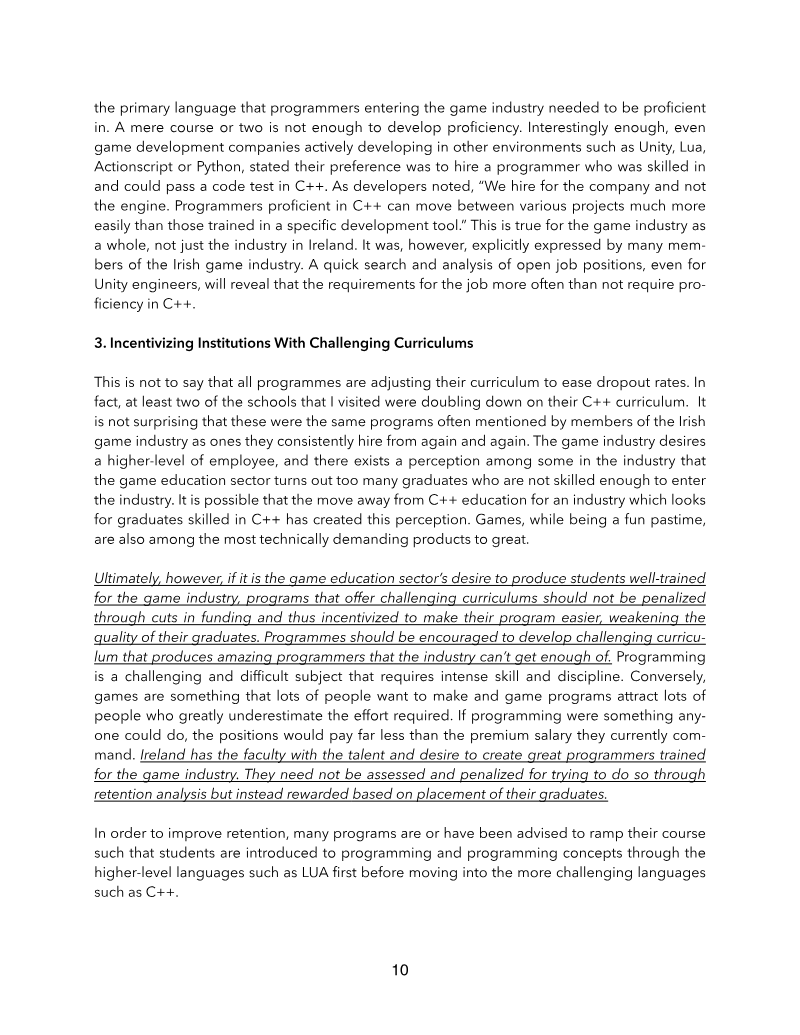
- 02A survey of more than 600 professional programmers found 95 percent regarded C++ proficiency as essential, yet retention-based funding has pushed programmes toward easier tools such as Unity, Lua, and Java.See it on page 10
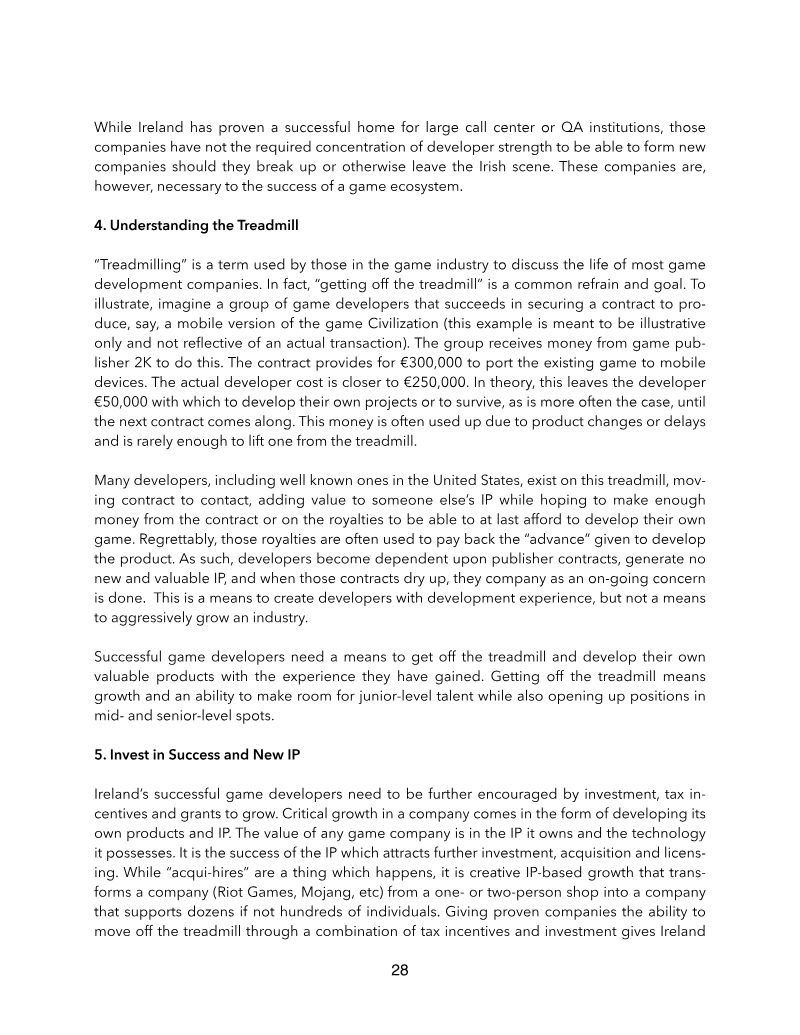
- 03Developers are trapped on a "treadmill" of contract work, with limited investment in original IP and a scarcity of junior and mid-level positions driving brain drain.See it on page 28
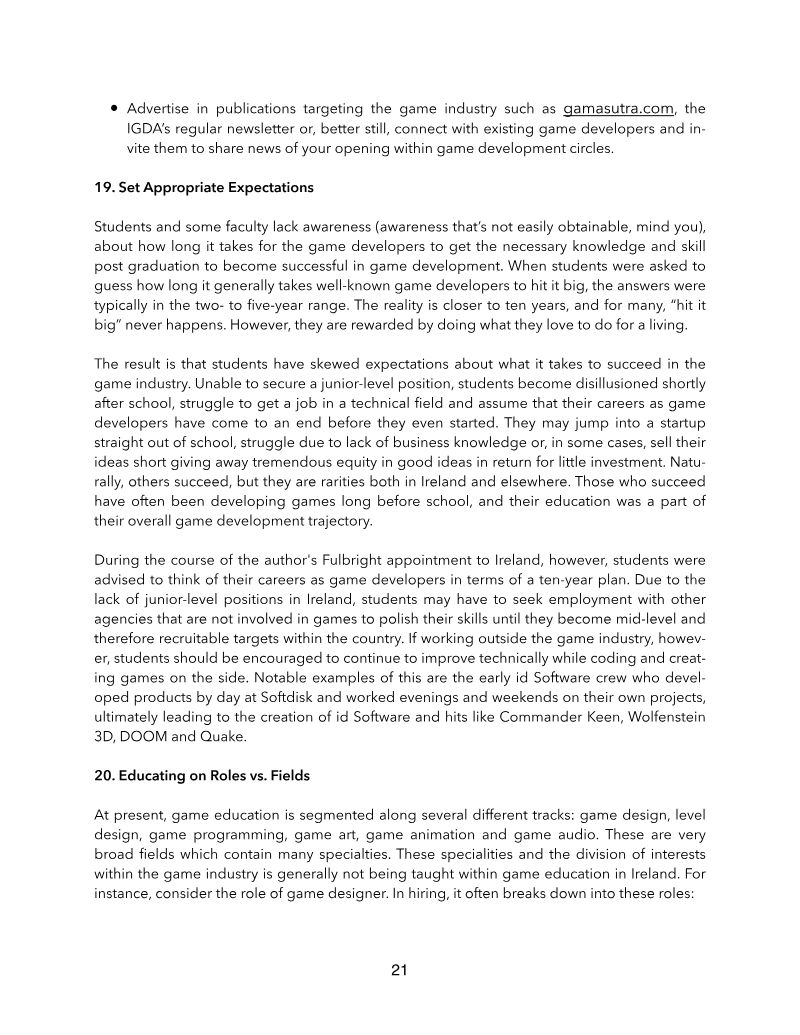
- 04Five specialised fields, including DevOps, server programming, level design, production, and game business, are underserved by current education, and students often underestimate the roughly decade-long path to success in the industry.See it on page 21
- 05Ireland's tax protections are weak relative to neighbouring EU countries, and investor skepticism, limited international visibility at events such as GDC, and a shortage of experienced mentors further constrain growth.See it on page 47
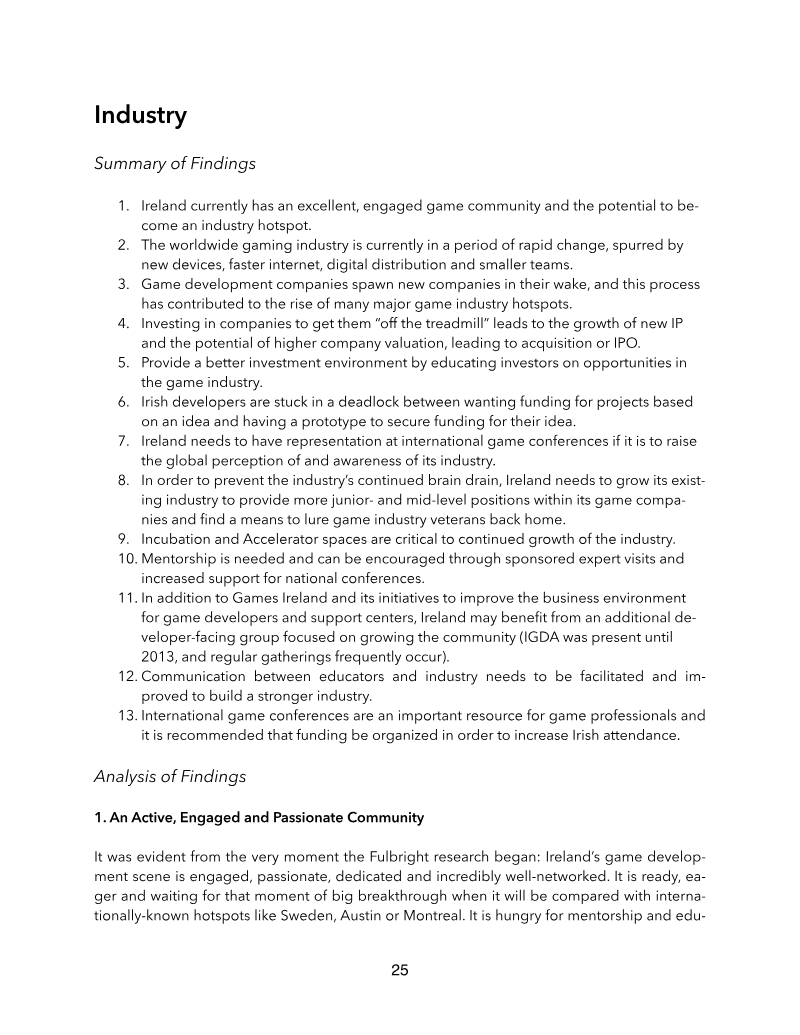
- 06Recommendations centre on tax incentives, investor education, incubators and accelerators, a regular game development conference, expanded support for attending international events, and a one-stop government resource.See it on page 25
- 07The report emphasises supporting established studios that can create junior roles and increasing the visibility of Enterprise Ireland and the IDA among international developers.See it on page 48
Ask AI about this report
Summary
The Fulbright Report on the Irish games industry examines why Ireland, despite producing a large number of game-development graduates and possessing an engaged developer community, struggles to retain talent and grow its own intellectual property. Its central thesis is that the country's game education system, industry structure, funding environment, and government support remain misaligned with the needs of a sector undergoing rapid change, and that closing these gaps is essential for Ireland to become an international hotspot for game development rather than a supplier of talent to foreign studios.
On education, the report finds a persistent mismatch between curricula and employer expectations. A survey of more than 600 professional programmers found that 95 percent regarded C++ proficiency as essential, yet retention-based funding has encouraged programs to shift toward easier tools such as Unity, Lua, and Java. The report recommends earlier programming instruction, portfolio-centered and project-based learning, game jams, dedicated game labs, and stronger industry-education collaboration. It also notes that five specialized fields, including DevOps, server programming, level design, production, and game business, are underserved, and that students often underestimate the roughly decade-long path to success in the field.
The report identifies structural constraints that compound these educational problems. Developers are caught on a "treadmill" of contract work, investment in original IP is limited, and the scarcity of junior and mid-level positions continues to drive brain drain. Investor skepticism, weak tax protections relative to neighboring EU countries, limited international visibility at game events such as GDC, and a shortage of experienced mentors further restrict growth. Its recommendations center on tax incentives, investor education, incubators and accelerators, a regular game development conference, expanded support for attending international events, and a one-stop government resource, with particular emphasis on supporting established studios that can create junior roles and on increasing the visibility of Enterprise Ireland and the IDA among international developers.