Key insights
6 slides
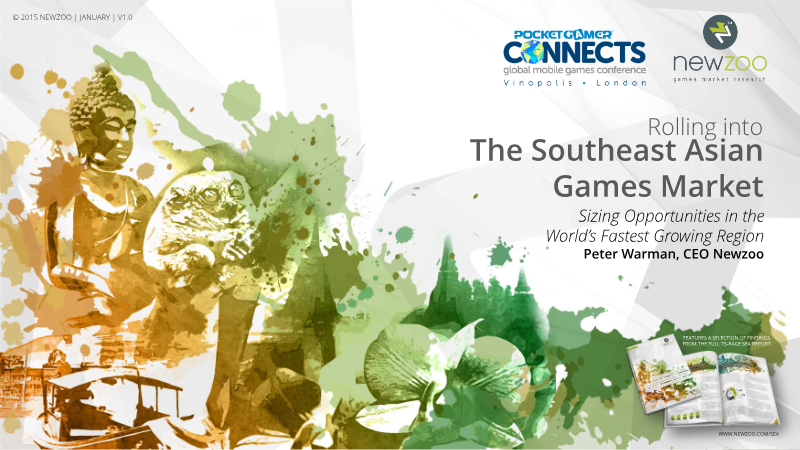
Key Markets
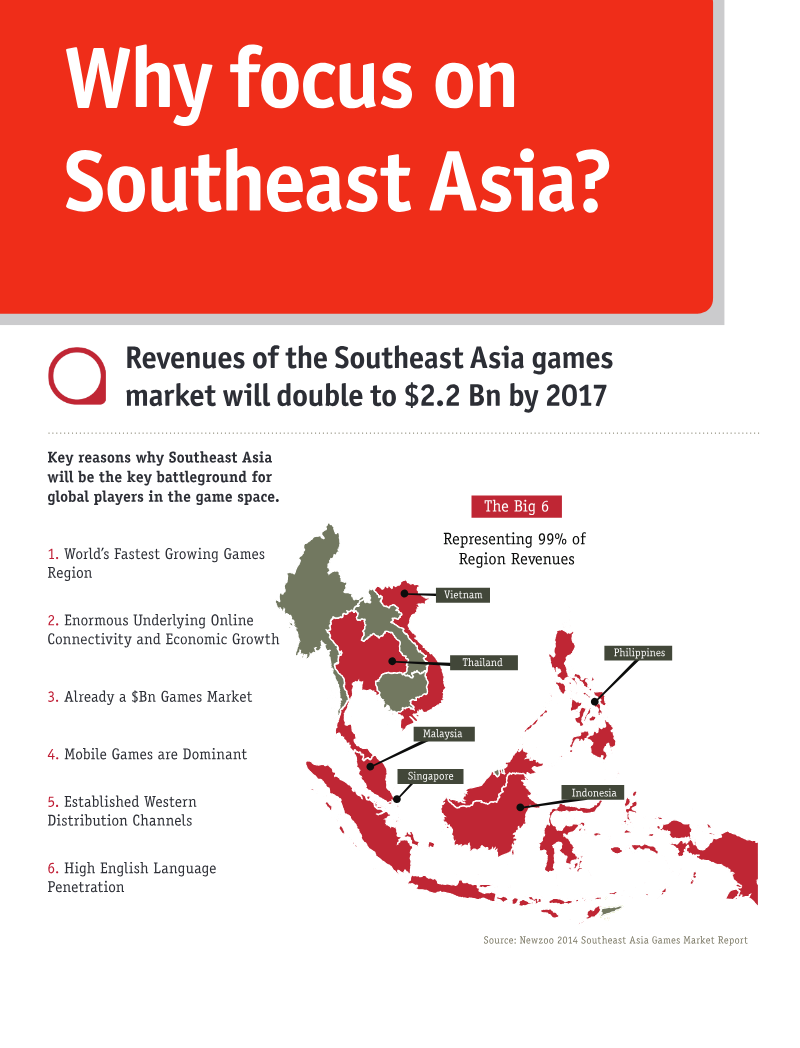
The regional market is defined by the 'Big 6' countries.
These countries are Thailand, Malaysia, Singapore, Indonesia, Vietnam, and the Philippines. Each country has distinct gamer behaviors and economic profiles.
Dominant Platform
Mobile gaming is the dominant sector across the region.
Western titles from publishers like King and Supercell consistently rank among the top-grossing applications.
Page 5 of the reportDominant
Mobile gaming's status in the Southeast Asia games market.
Genre Preferences
Strategy and racing games are the most popular genres across the region.
These genres appeal to both paying and non-paying users. Genre preferences vary by country, but these two frequently emerge as top performers.
Page 11 of the reportStrategy and racing games
Most popular game genres in Southeast Asia.
Revenue Leaders
Thailand currently generates the highest total game revenue in the region.
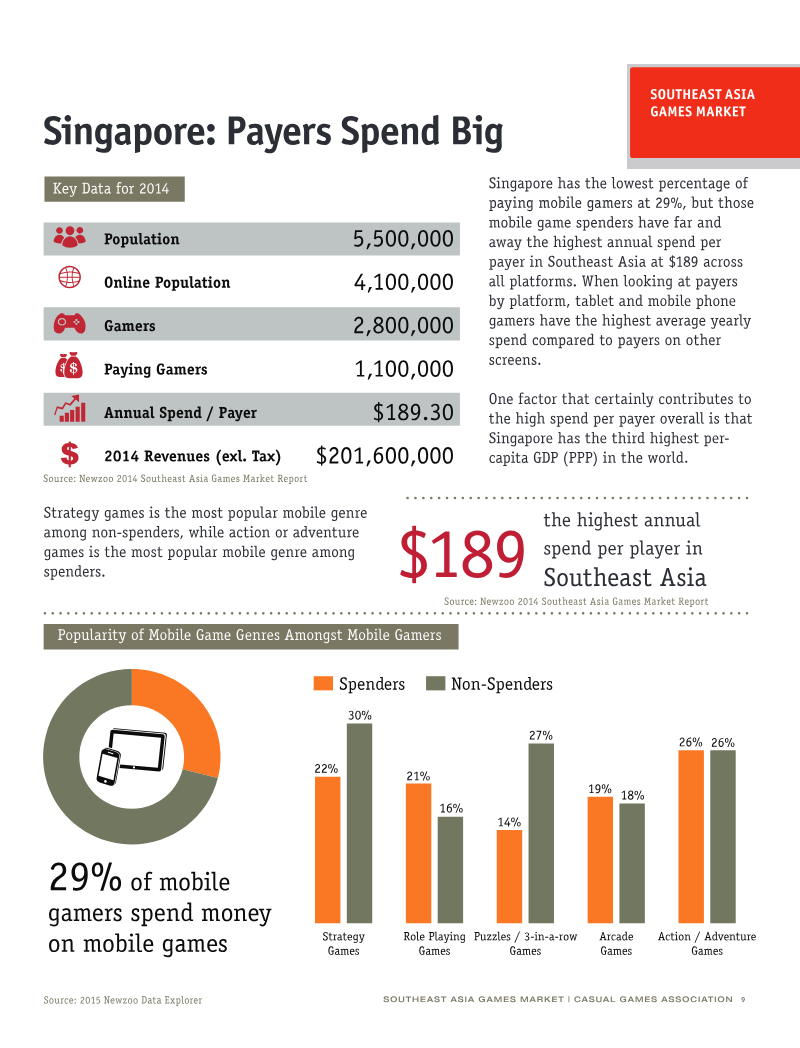
Singapore leads in monetization with an average annual spend of $189.30 per payer.
Fastest Growth
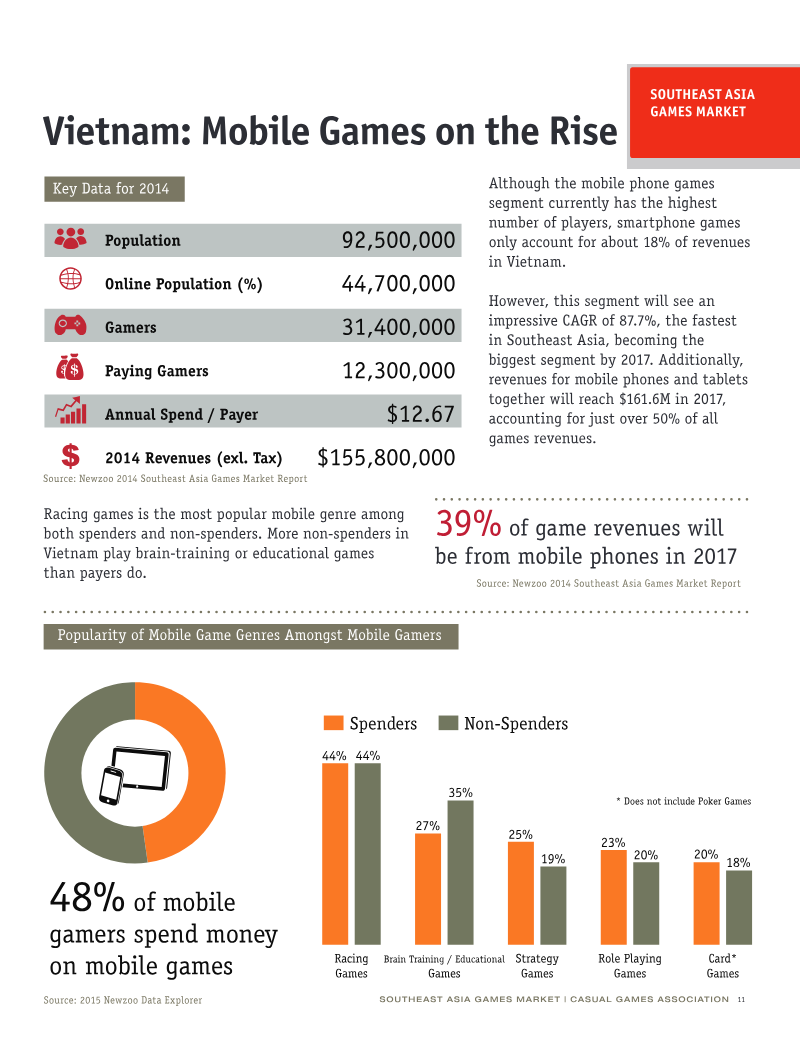
Vietnam is identified as the fastest-growing mobile market.
Smartphone-based revenue is expected to exceed 50% of its total market share by 2017.
Market Entry
Successful market entry requires localized strategies.
This is necessary to account for distinct gamer behaviors, such as Malaysia's high rate of multi-screen gaming.
Like tailoring a suit, strategies must be custom-fit to each country's unique characteristics.
Page 7 of the reportLocalized strategies
Requirement for successful market entry in Southeast Asia.
1 / 6
Ask AI about this report