1 free read left. Create a free account for unlimited reading + AI research.
Create free account
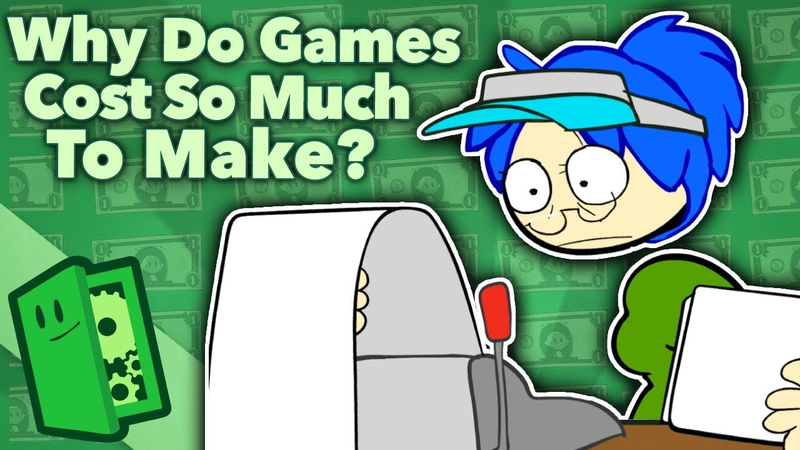
Why Do Games Cost So Much To Make? - AAA Game Budgets - Extra Credits
Key insights
6 takeaways- 01Personnel costs are the primary expense, with an average monthly cost of $10,000 per employee; a 200-person team working for two years incurs $40 million in salary, benefits, and tax expenses alone.
- 02While improved management and the avoidance of poorly conceived projects could offer modest savings, the core costs of AAA production are largely fixed due to the scale required for global market competitiveness.
- 03Total investment for a single AAA title typically ranges from $75 million to $100 million, driven by the necessity of marketing budgets that often match or exceed development costs.
- 04Operational overhead beyond salaries includes significant expenditures for office space, high-end software and engine licensing, middleware, equipment, and professional localization and voice acting services.
- 05Consumer demand for high-fidelity graphics forces developers into a competitive arms race, as visual quality remains a primary driver for both sales performance and critical reception.
- 06The saturation of the PC market makes relying on low-budget, 'lightning in a bottle' hits an unreliable strategy for large publishers, effectively locking studios into high-spend production models.
Ask AI about this video
Transcript
After last week's video on why today's AAA games should be costing more than $60, I am sure that at least a few of you were left wondering, can't we just cut production costs on these giant bloated games? And yeah, I'll admit there are a few notorious cases out there like Destiny or Star Wars The Old Republic where better management could have saved millions of dollars. But on your run-of-the-mill annual AAA franchise like Call of Duty or Assassin's Creed, there's actually not a ton of room to save. So, let's discuss why. Okay, so let's just start basic. Where does the money go when developing a AAA game? The first place is staff. You can't make a game without game developers. The average developer costs roughly $10,000 per month to employ. Programmers cost a little more, QA people cost a little less, senior staff and leadership at the top may cost a lot more, but on average $10,000 per person
per month is the figure that pretty much every studio uses when estimating game budgets these days. And that number may sound high, but keep in mind I'm not just talking about salary. That estimate includes things like health care, any insurance or other overhead for the employees, bonuses, associated taxes, stock compensation, and all that other stuff. So, let's say you are building a AAA title. How many people do you need to hire? Well, Activision has roughly 500 people working on a Call of Duty game basically at all times. And I read somewhere that up to 900 people ended up working on Assassin's Creed Black Flag. But okay, let's say you are a particularly scrappy studio. Your AAA title will only require 200 full-time employees, and you're going to get that game done in 2 years. Right there, that's already $40 million, but we're just getting started. What about your offices? Those employees need space to work in. Now, it's been a while since
James looked into office space for a game company, but last time he checked, that cost averaged about $6,500 per person per year. So, for your 200-person team, that's another two and a half million dollars. And assuming that you want to have any special offices or conference rooms in there, let's just round it up to an even 3 million. Next, there's licensing fees for whatever third-party game engine you intend to build the game in, because developing your own AAA game engine in-house would cost way more. Let's just go with Unreal Engine. Unreal's licensing specifics vary from company to company, but let's assume that Unreal gives you a sweet deal and allows you to pay them $5 million upfront instead of the standard 5% of gross they usually ask. So, now we're at 48 million, and we ain't done. Your team is also going to need equipment. Everyone's going to need a decent computer, usually two monitors, a desk chair, maybe some cubicle walls, a mouse and a keyboard, and so on. You'll also want to keep the studio
kitchen stocked, because you don't want your expensive employees running out to grab a soda and missing 15 minutes of work. And game developers tend to live in their workspace, especially once the crunch starts, so you're going to need a janitorial service, too. You'll also need software licenses for Photoshop, Maya or Max, even things like Word. I don't know if you've looked into it, but high-end game development software can get pricey. Then, of course, you also have to pay for all your games' middleware, like Havok or or Wwise, because the only way you're going to get a AAA looking game finished in 2 years with 200 people is by using a lot of quality third-party tools. The cost of all this stuff really depends from game to game, but I would say $5 million to equip your 200 people is a pretty lowball estimate. And what about voice actors? You got to pay them, too. And if If want some famous Hollywood actors in the mix, you're going to be paying them tens of thousands per day of recording. You're also going to have to rent a recording studio, probably in LA where all of these actors tend to live. You're
probably going to have to fly a few crew members there for the recording sessions. You're probably going to want to hire a union voice director who knows what they're doing. Add it all up and you could easily spend another one or two million dollars here, especially once you remember that you also need to contract out somebody to handle all the French, German, Italian, and Spanish voice over, and maybe Japanese, Russian, Chinese, Portuguese, whatever other languages you need. And if you have to redo any of this voice over or get just a few more lines recorded later, getting voice actors back into the booth at the last minute is even more expensive. So, we are already at around $55 million to make this game, and there are still so many other little costs to factor in. Motion capture, localization, certification fees, and then there's the really big one, marketing. Nobody's going to know that your game exists if you don't market it. And it's actually not all that uncommon for AAA games to have a marketing budget nearly as large
as the entire development budget. But, let's be more conservative. Let's say that your marketing budget is just half again the cost of everything else. Already, our ultra-slim, scrappy little AAA game is running somewhere between 75 and 100 million dollars. Oh, well. And the frustrating truth of it is that there's just not a lot of space to shave things down. Can we reduce that huge marketing budget? Believe me, that'd be great. But, other new games are coming out every single week, and people are not going to buy yours if they don't know that it exists. That's what marketing's really for at the end of the day, making sure that all the people who might be interested in buying your game know about it. And you need enormous marketing budgets to reach the number of customers that AAA games need to make their games profitable. Because remember, the only way to keep selling a game for just $60 these days is by selling it to a lot more people. Well, okay, then can we maybe reduce AAA development budgets by making the games lower fidelity? Uh, probably not in the
console space. Gorgeous graphics are just a huge selling point there. We don't just like good graphics in our AAA console games, we demand them. Remember Mass Effect Andromeda? The only big conversation happening around Andromeda at launch was about how a specific category of its graphics didn't meet our expectations. Now, obviously that's not the only thing that went wrong with Andromeda, but that's the main thing everyone was talking about. That's what happens when a AAA studio tries to cut corners. Because it really is an arms race. Sure, it would probably be better for everybody if all the AAA studios decided to just chill and dial back the graphics to keep costs more reasonable. But we, the audience, we like our graphics. And AAA studios are competing with each other for our money. Having the hottest looking screenshots and trailers of the season practically guarantees success in that environment. I mean, good luck convincing any of these studios to voluntarily have the
worst looking console game on the market. Now, you might argue that the PC scene is a more forgiving environment. I mean, PlayerUnknown's Battlegrounds doesn't have the AAA graphics of a Call of Duty or a Battlefield, and it's doing huge numbers. And that's true, but PUBG's runaway success is kind of a lightning in a bottle event. See, the PC market might be more lenient on fidelity, but that scene is flooded. Thousands upon thousands of games come out on PC every year. Heck, when PUBG officially launched back in December, you know how many other games came out that same day? More than 30. Very few of which you've probably even heard of. For every success story of a relatively low-budget, janky-looking PC game like PUBG hitting it big, thousands of other games languish in obscurity. Their unimpressive screenshots and trailers casually dismissed. Rolling those dice is just not a good bet if you're a publisher or a studio who has to keep hundreds of people employed. And sure,
you could tip the scales by spending more on marketing and making your graphics stand out above the rest, but then you're just back to the same problem you had before. Now with 10 to 20 times as many competitors as you were dealing with in the console space. Look, I'm not saying there's no way cost can be cut. We could probably shave 2 to 3% off of our AAA budgets by avoiding big-name voice actors. Although, their fame does bring a lot of inherent marketing value, so that is a tough trade-off. And I am sure that we could shave as much as 10% off of our budgets by simply being better organized and having better management, but that's true of basically every industry ever. It's a good thing to always strive for, of course, but some imperfections are just a reality of large business. Now, if there's one category we might be able to save ourselves a lot of money on, it would be by making fewer obviously bad bets. See, every successful game a publisher puts out has to foot the bill for all the other games they published
that were total flops. And we green-light a lot of dud ideas. Games that even your average consumer could immediately tell you are going to tank. Now, granted, it's a lot harder to make those judgments based on early prototypes years before launch, but maybe don't green-light that appallingly juvenile concept designed by a 33-year-old with the intention of impressing 14-year-olds. Maybe don't green-light that obvious copycat prototype when the genre it's imitating is already overflowing with quality products. James has a rule of thumb. If you are building a game to compete with a successful game that's already out, you are already way, way too late. If you are building a game that industry buzz is already saying is going to be the next big thing, you are actually still probably way too late. Now, there are numerous AAA studios out there experimenting with relatively smaller projects, and that is great. But, we consumers clearly still want those big, high-polished blockbuster titles. We
want more Witcher 3's and Horizons and Breath of the Wilds and Grand Theft Autos and Red Deads. And, look, I'm glad that Hellblade finally made its shoestring budget back, too. There's a lot we can learn there. But, for most of the AAA scene, you're just not going to be able to make these games for much less. Believe me, if we ever figure out how, we'll do it. See you next week.
Summary
The high cost of AAA game development is driven by a complex interplay of operational overhead, technical requirements, and market pressures. A typical AAA project requires a massive workforce, with average monthly costs per employee reaching $10,000 when accounting for salaries, benefits, and taxes. For a hypothetical 200-person team working over two years, personnel costs alone reach $40 million. Additional expenses include office space, high-end software and engine licensing, middleware, equipment, and extensive localization and voice acting services. These factors, combined with the necessity of marketing budgets that often equal or exceed development costs, push the total investment for a single title into the $75 million to $100 million range.
Market dynamics further complicate cost reduction efforts. Consumer demand for high-fidelity graphics creates an arms race among developers, as visual quality is a primary driver of sales and critical reception. While some suggest that lower-fidelity games could succeed, the PC market is currently saturated with thousands of releases, making the "lightning in a bottle" success of lower-budget titles an unreliable strategy for large publishers. Consequently, studios are locked into high-spend models to remain competitive and ensure their products are visible to a broad audience.
While better management and the avoidance of "bad bets"—such as green-lighting derivative or poorly conceived projects—could yield modest savings, the core costs of AAA production remain largely fixed. The industry continues to balance the high risk of blockbuster development with the consumer desire for polished, high-budget experiences. Ultimately, the current financial structure of the AAA sector is a direct result of the scale required to produce top-tier entertainment in a highly competitive global market.




















Comments