Game Studies reports and market data
Documents
Game Design Guided by Visual Attention
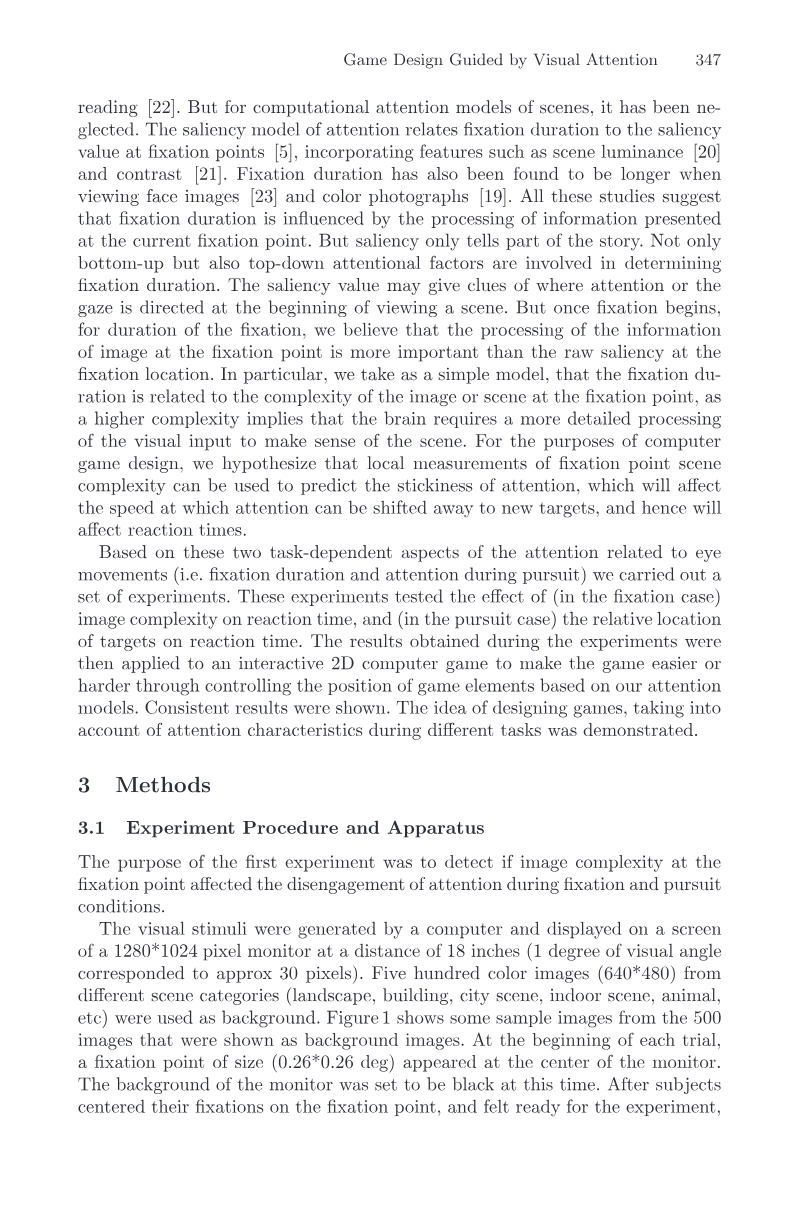
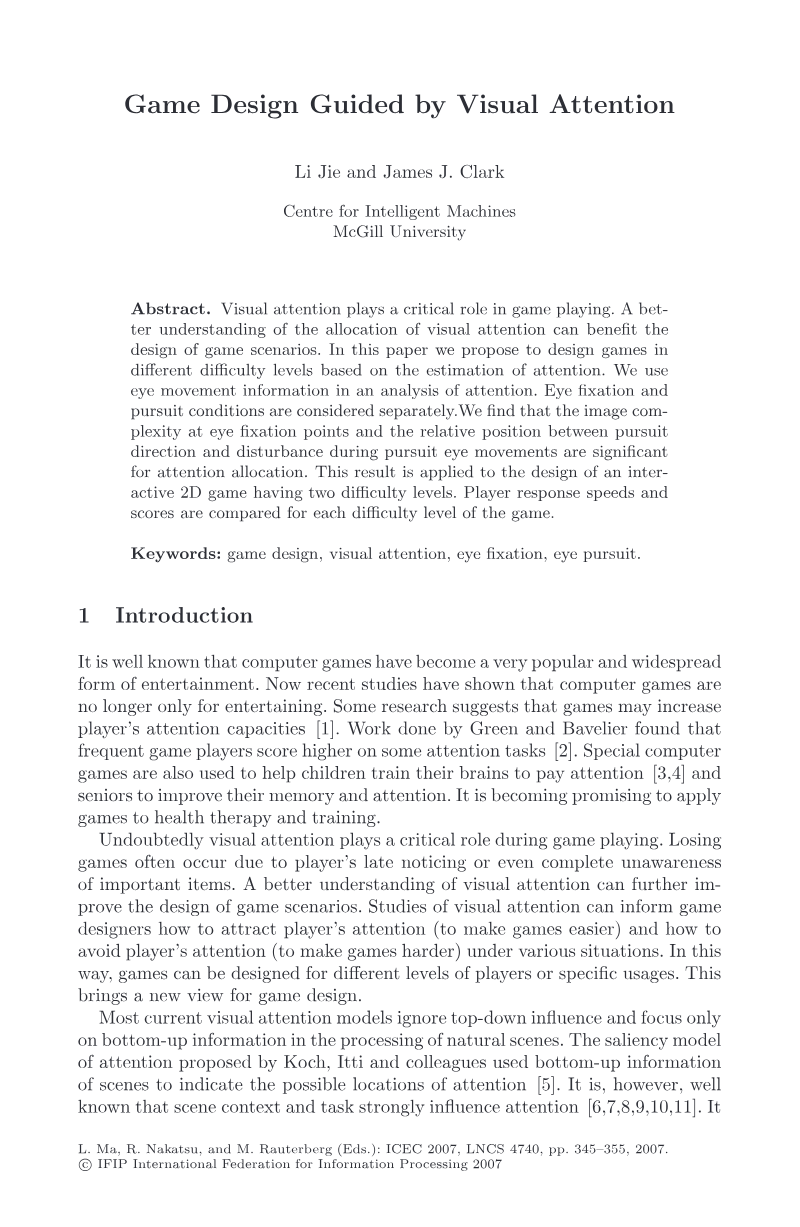
This research explores the integration of human visual attention models into game design to dynamically adjust difficulty levels.
- Integrating eye-tracking data into game engines enables adaptive difficulty by predicting player reaction times based on visual fixation and pursuit patterns.
- High local image entropy at fixation points significantly slows player reaction times, as complex visual environments effectively 'glue' attention and delay disengagement.
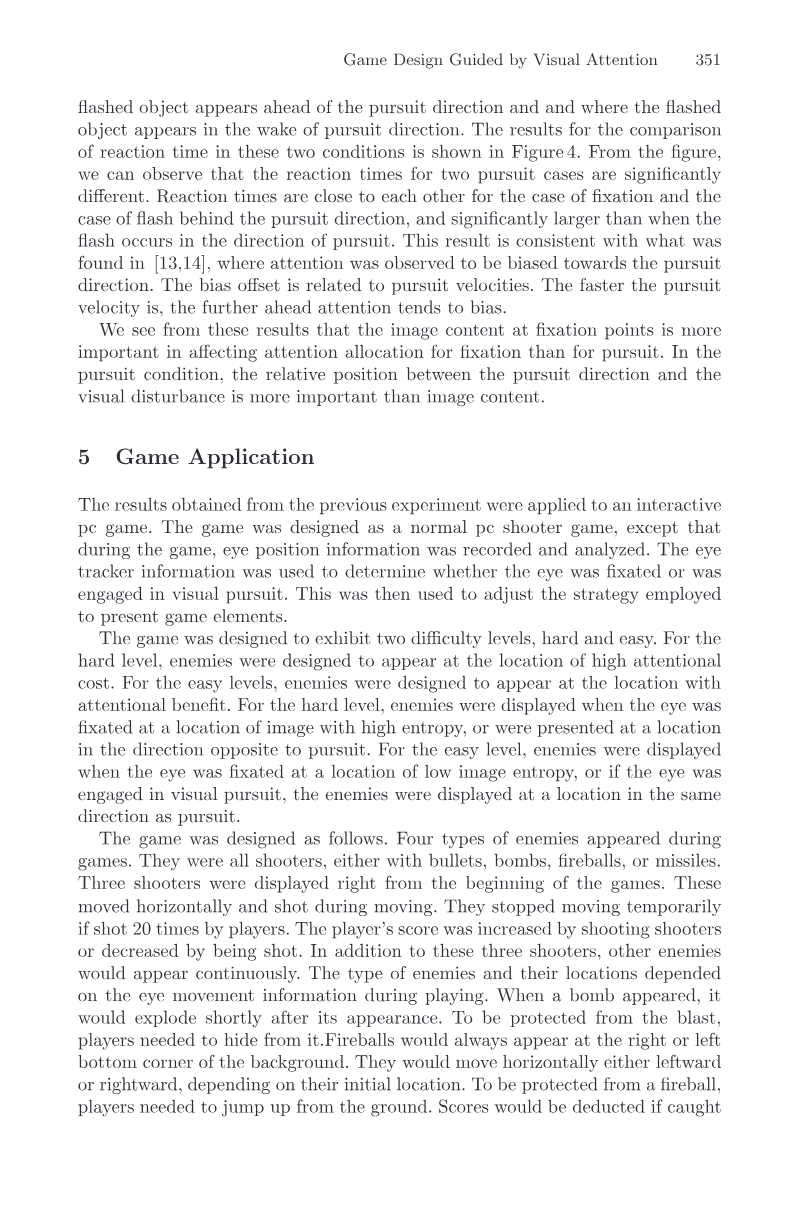
- During pursuit tasks, player attention is biased toward the direction of motion, which drastically reduces reaction times for targets appearing ahead of the pursuit path.
Player Immersion in the Computer Game Narrative
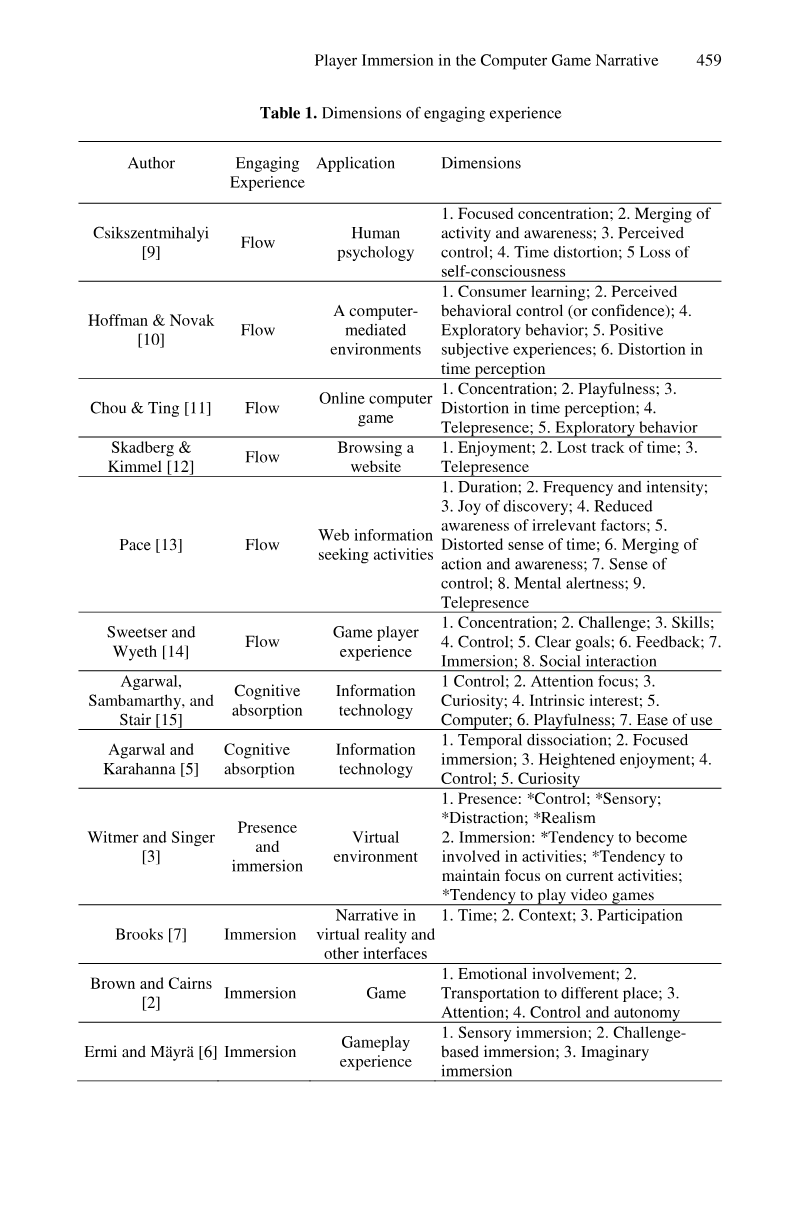
This research establishes a standardized instrument for measuring player immersion within computer game narratives, addressing the unique challenges posed by the interactive and nonlinear nature of modern gaming.
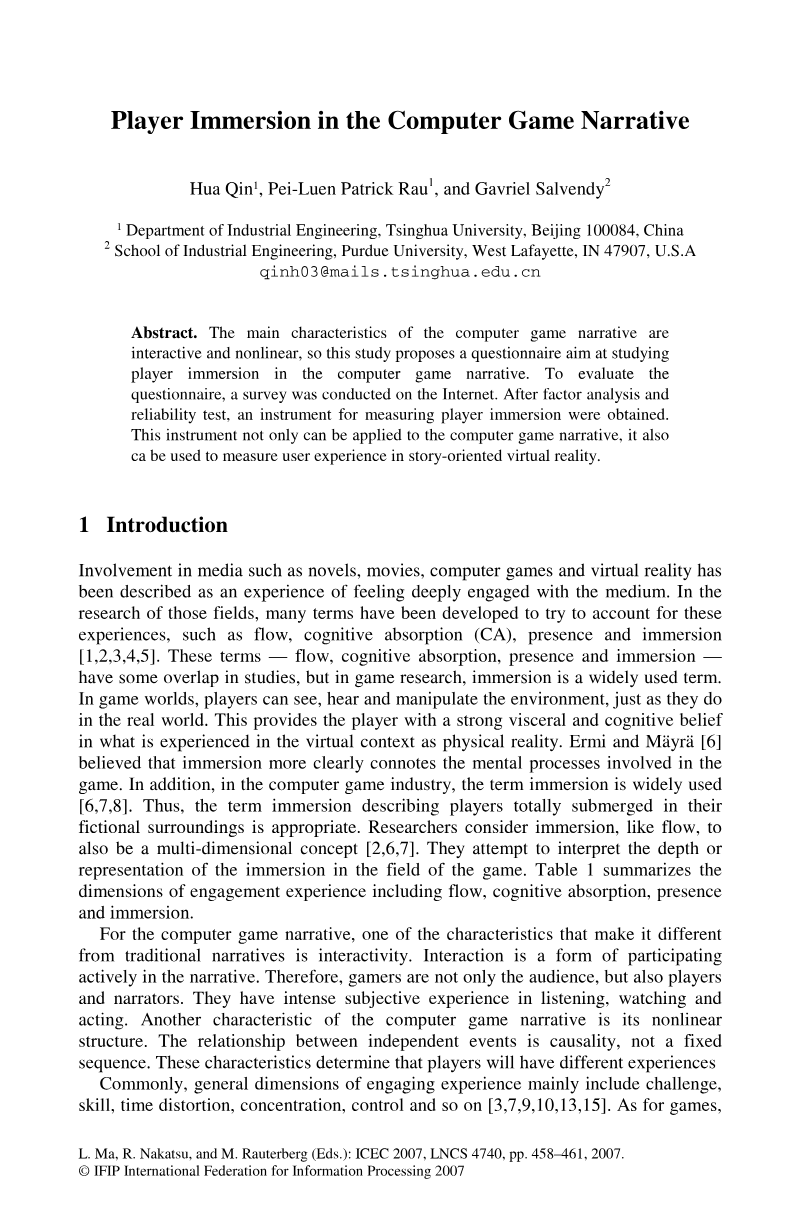
- Researchers developed a standardized 18-item instrument to measure narrative immersion in computer games, addressing the complexities of interactive and nonlinear storytelling.
- The measurement model is built on six distinct dimensions that synthesize psychological frameworks including flow, cognitive absorption, and presence.
- The study validated the instrument through a survey of 309 effective participants, primarily educated individuals aged 20 to 30.
Kansei Games: Entertaining Emotions
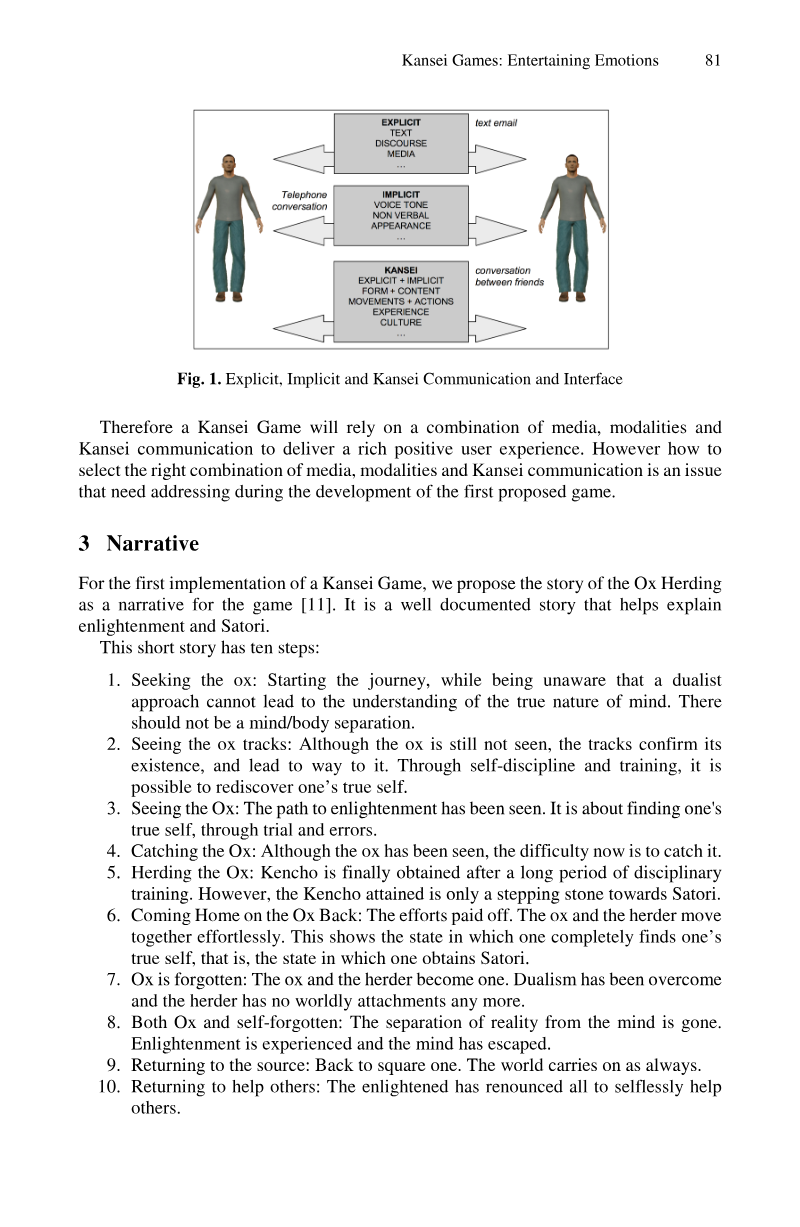
Kansei Games represent a novel genre of interactive entertainment designed to foster positive user experiences, inner balance, and self-awareness rather than traditional competitive goals.
- Kansei Games utilize Kansei engineering to translate subjective human emotions into specific product features, prioritizing user well-being over traditional competitive mechanics.
- The gameplay model replaces external win conditions with a progression system based on the player's ability to regulate their own mood, attitude, and arousal levels.
- The system integrates physiological monitoring—including heart rate, galvanic skin conductance, and body posture—to influence the in-game environment and character attributes.

Virtual Consumption: Using Player Types to Explore Virtual Consumer Behavior
Virtual consumption represents an emerging field of study focused on how players in Massively Multiplayer Online Role-Playing Games (MMORPGs) engage in the exchange of goods and services.
- Bartle’s taxonomy of player types—killers, socializers, achievers, and explorers—serves as a predictive framework for understanding consumer behavior and retaliation patterns within MMORPG marketplaces.
- Socializers prioritize relationship-building and act as advocates or negotiators, whereas killers are prone to disproportionate retaliatory behavior when dissatisfied due to the perceived anonymity of virtual environments.
- Achievers and explorers function primarily as service providers, utilizing their game-specific skills to supply specialized goods and navigation services to the broader player base.
Dimensions of Play: Gameplay, Context, Franchise and Genre in Player Responses to Command and Conquer: Generals
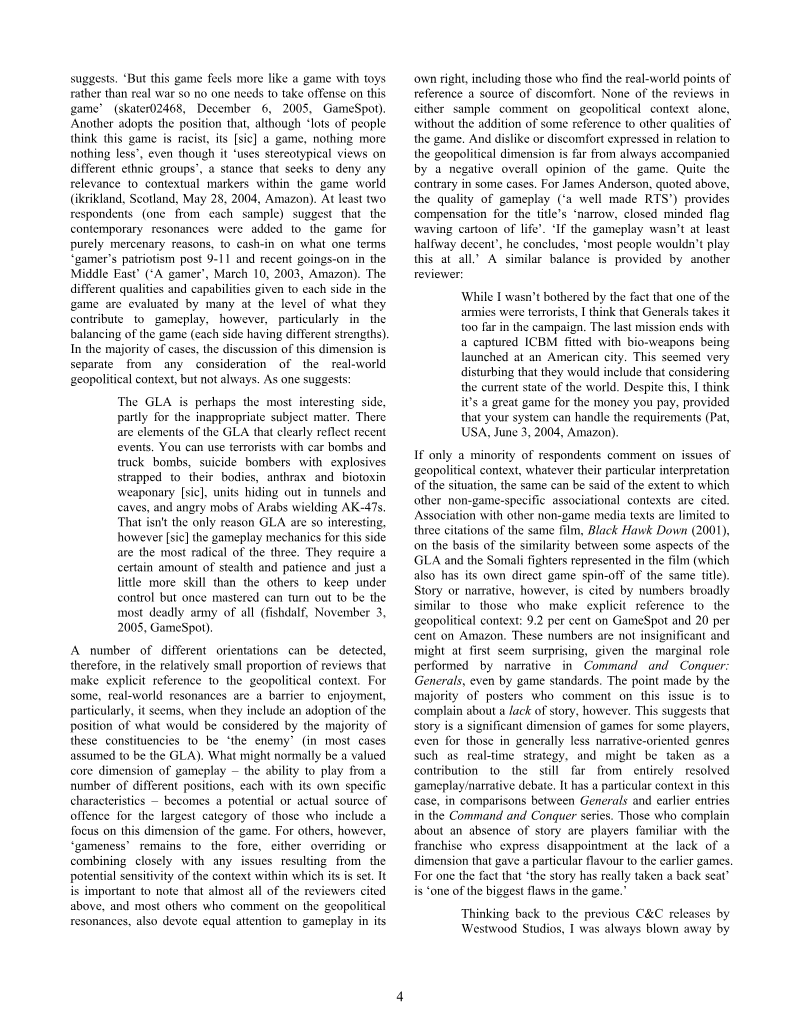
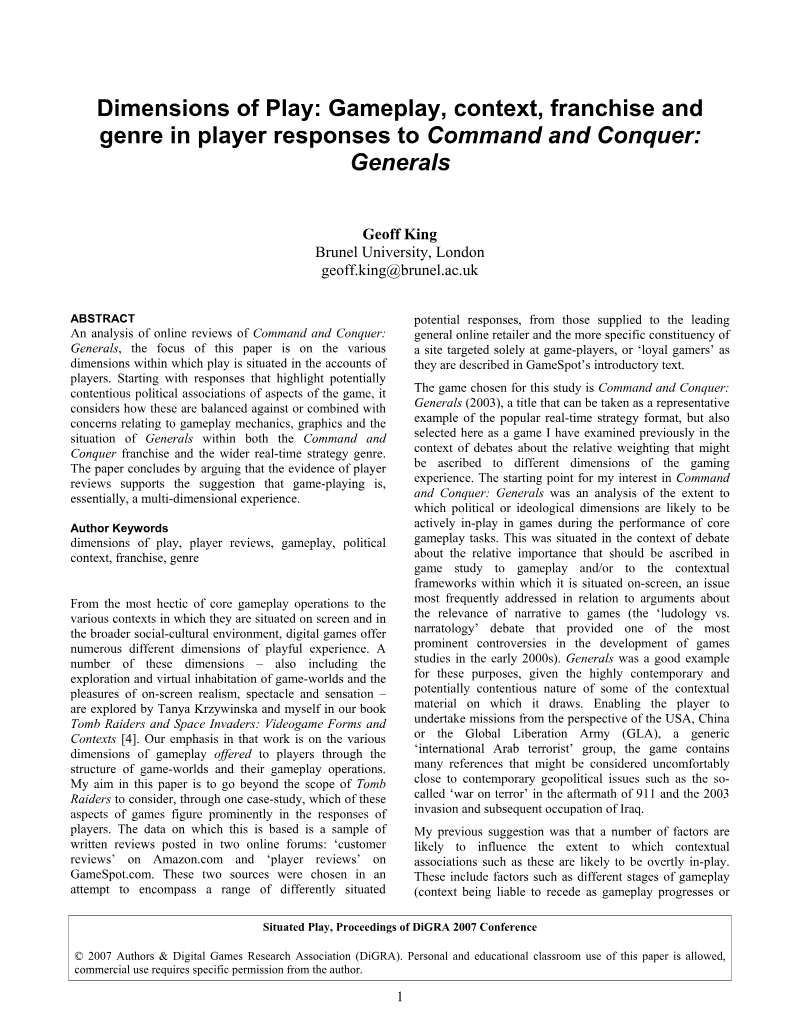
Geoff King's study examines how players responded to Command and Conquer: Generals, drawing on 284 reviews, 184 from Amazon and 100 from GameSpot.
- Gameplay is the dominant concern in player responses, addressed in roughly 58% of Amazon reviews and about 82% of GameSpot reviews, with graphics and comparisons to earlier series entries also prominent.
- The study argues that game experience is multi-dimensional, with players weighing gameplay, graphics, franchise continuity, narrative, technical performance, and geopolitical context in shifting combinations.
- The geopolitical dimension (post-9/11 Middle East resonances and the terrorist-aligned GLA faction) is named directly in only about 9–12.5% of reviews, rising to roughly 21–31% when oblique references are included.
Approaching Game-Studies: Towards a Reflexive Methodology of Games as Situated Cultures
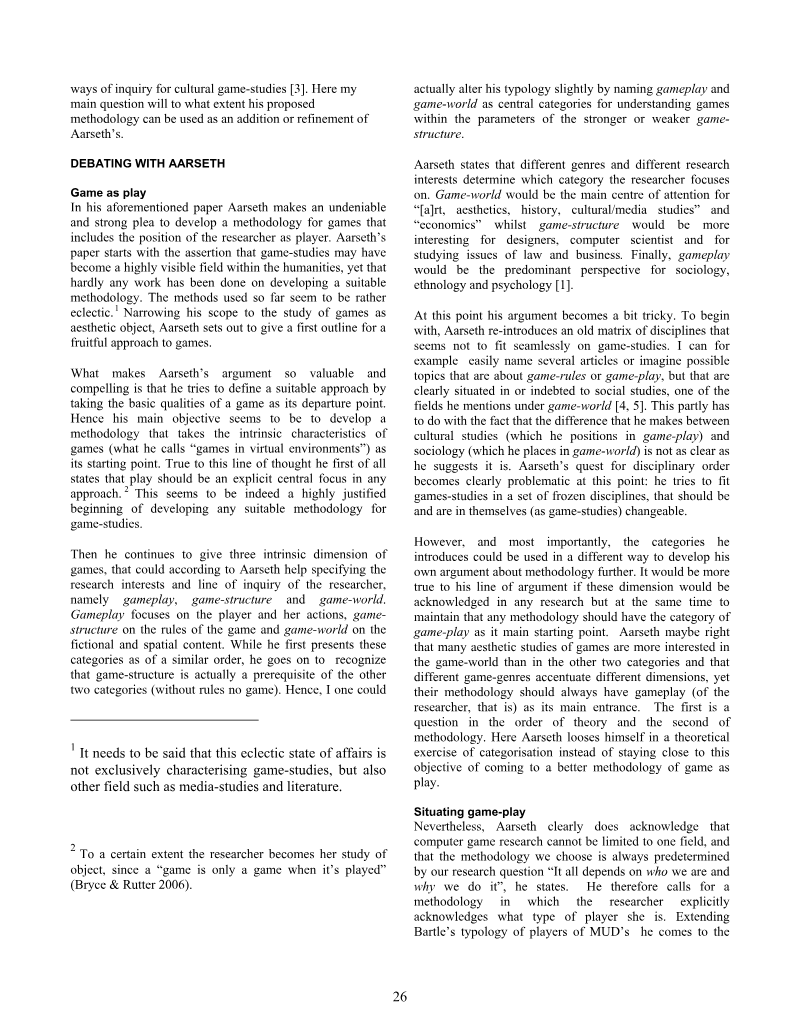
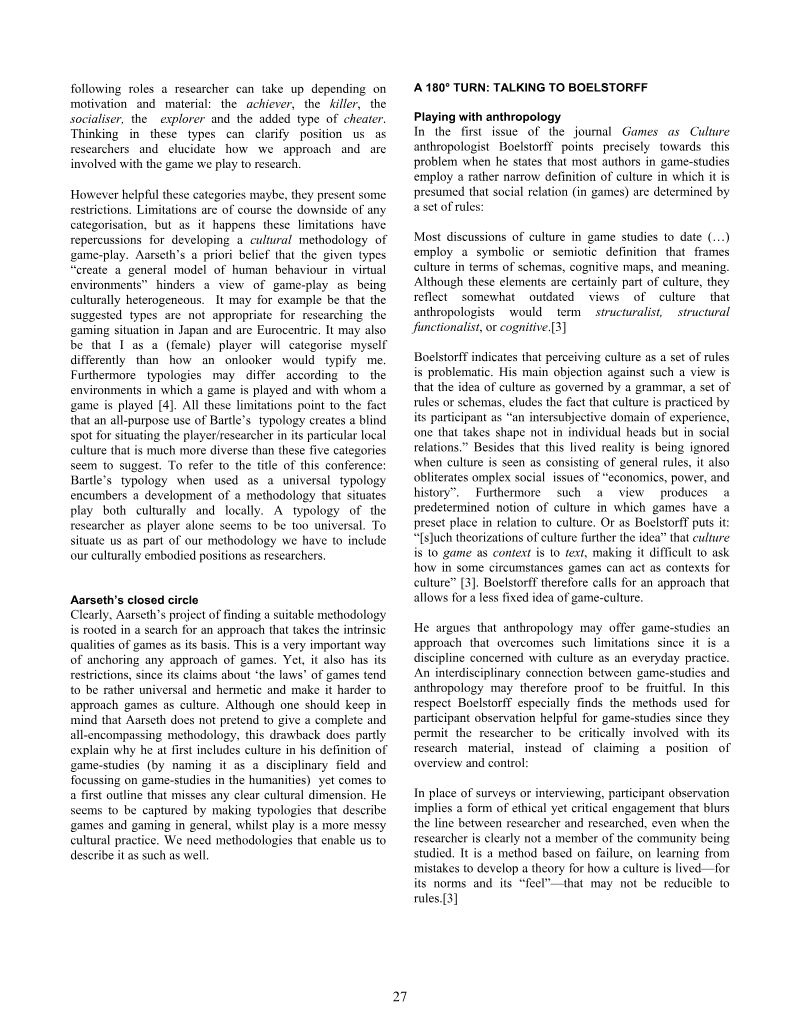
This paper argues that the study of games as cultural practice requires a methodology grounded in reflexivity and situatedness, two complementary tools that together keep play at the center of inquiry while situating the researcher and the game within local and cultural contexts.
- The paper argues that game studies needs a methodology built on reflexivity (making the researcher's involvement visible) and situatedness (embedding the player and game in local, embodied social practice), keeping play central to inquiry.
- It builds on Espen Aarseth's call to account for the researcher's position as player and refines it with anthropologist Tom Boellstorff's advocacy of participant observation.
- Aarseth's framework of gameplay, game-structure, and game-world, and his adaptation of Bartle's player typologies, are critiqued as risking overly universal and Eurocentric categories when applied without attention to local cultural variation.
Narrating Machines and Interactive Matrices: A Semiotic Common Ground for Game Studies
Ferri's paper argues that video games should be understood as "interactive matrices" and "narrating machines" rather than as texts amenable to standard narratological analysis.
- Video games should be analyzed as 'interactive matrices' and 'narrating machines' rather than static texts, as their meaning is produced through the dynamic interaction between the player and the system.
- Standard narratological tools, such as Russian formalism and Propp’s structuralism, are insufficient for games because gameplay outputs vary across sessions and meaning emerges from the act of play.
- The proposed semiotic model treats gameplay, the game-text, and player engagement as mutually constitutive, utilizing Hjelmslev’s content/expression framework and Rastier’s differential semantics.
From Gamers to Scholars: Challenges of Teaching Game Studies
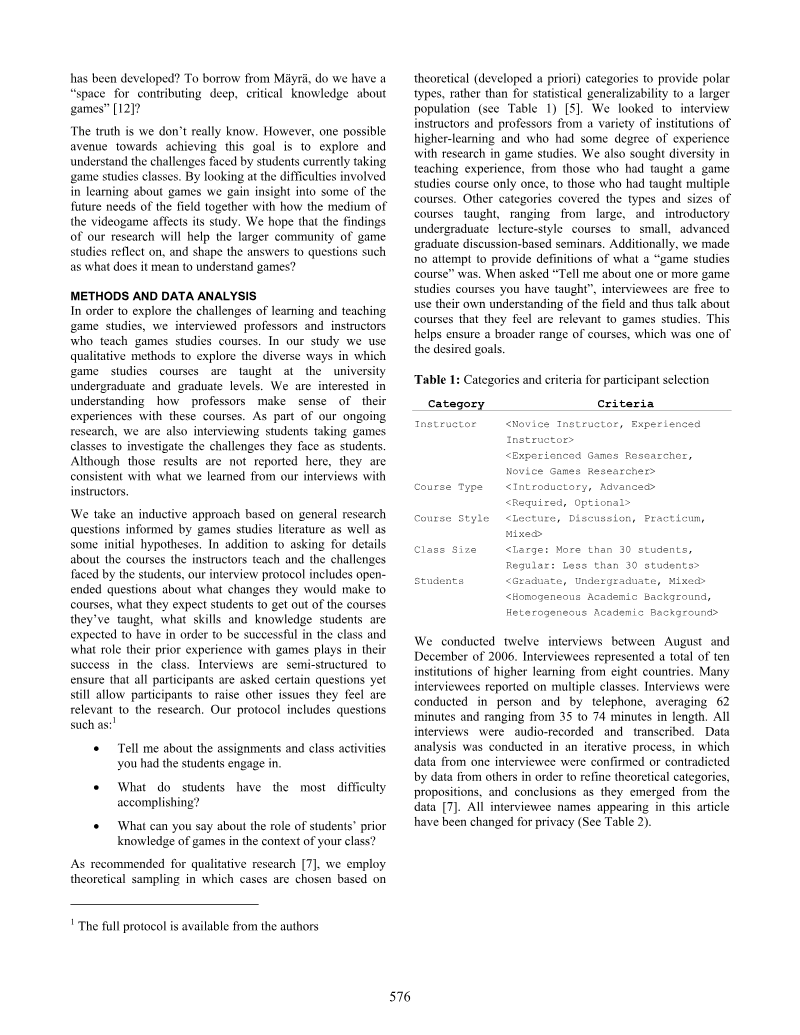
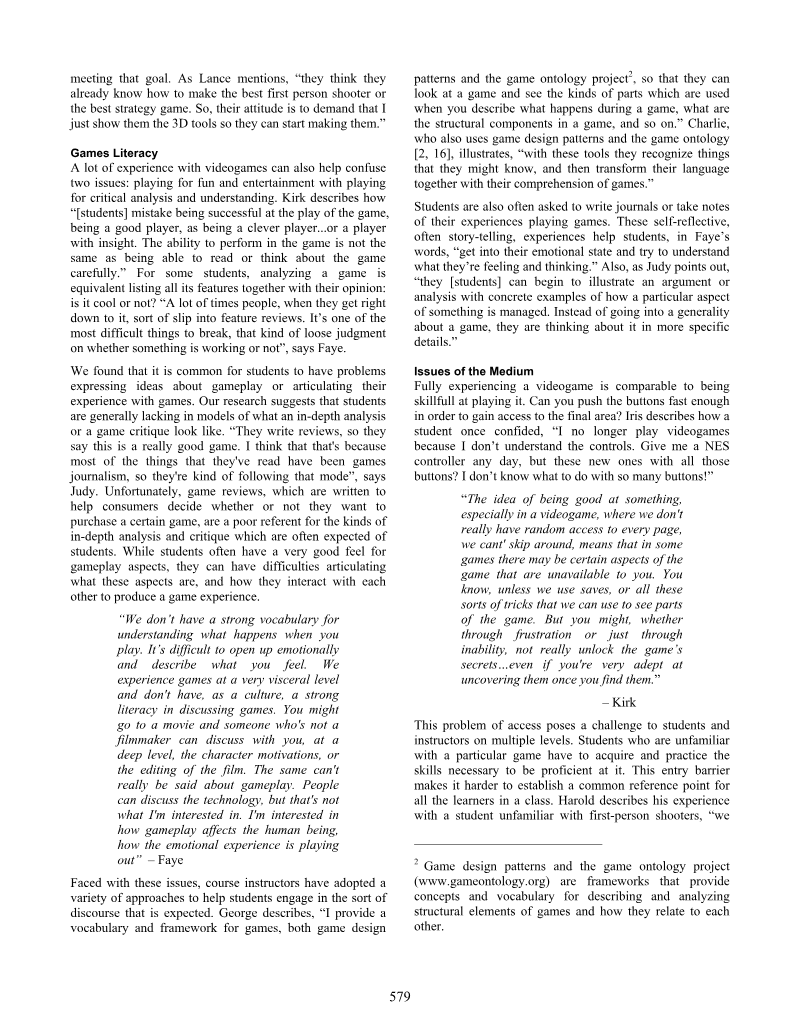
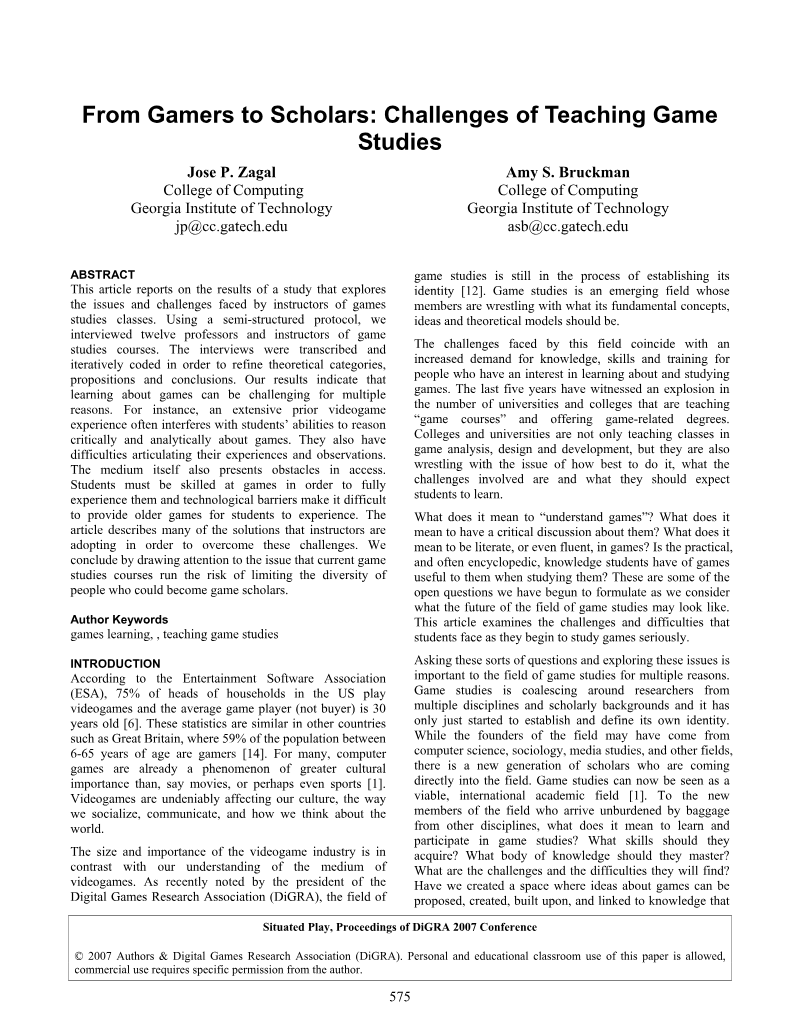
Zagal and Bruckman's paper examines the pedagogical difficulties of teaching game studies at the university level, drawing on interviews with twelve instructors in the field.
- Students' deep but narrow gaming backgrounds can boost motivation and supply rich analytical material, yet they often impede critical reasoning, as learners cling to genre-specific assumptions, dismiss older titles, and conflate skilled play with analytical insight.
- Instructors report that students resist perspectives that challenge their identity as "gamers," which makes it harder to foster the detached, critical stance that game studies requires.
- The field's relative youth, lack of an established canon, and practical access problems (platform obsolescence, time demands, uneven prior exposure) structurally compound the difficulty of teaching it.
Notes Toward a Sense of Embodied Gameplay
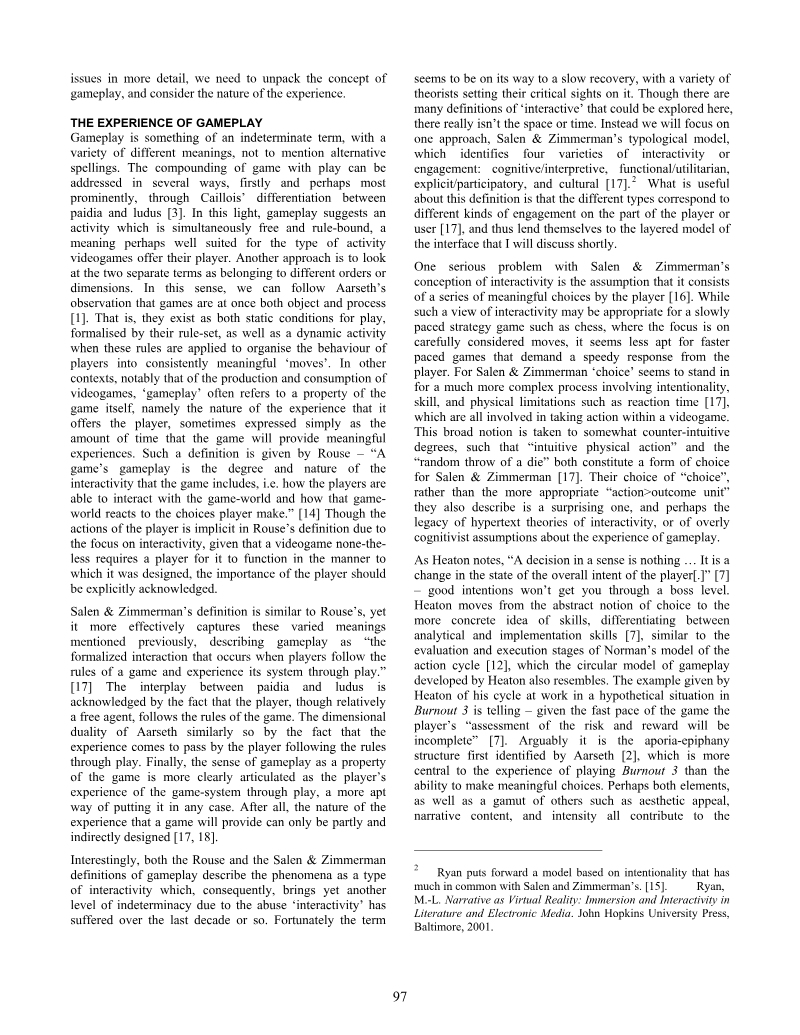
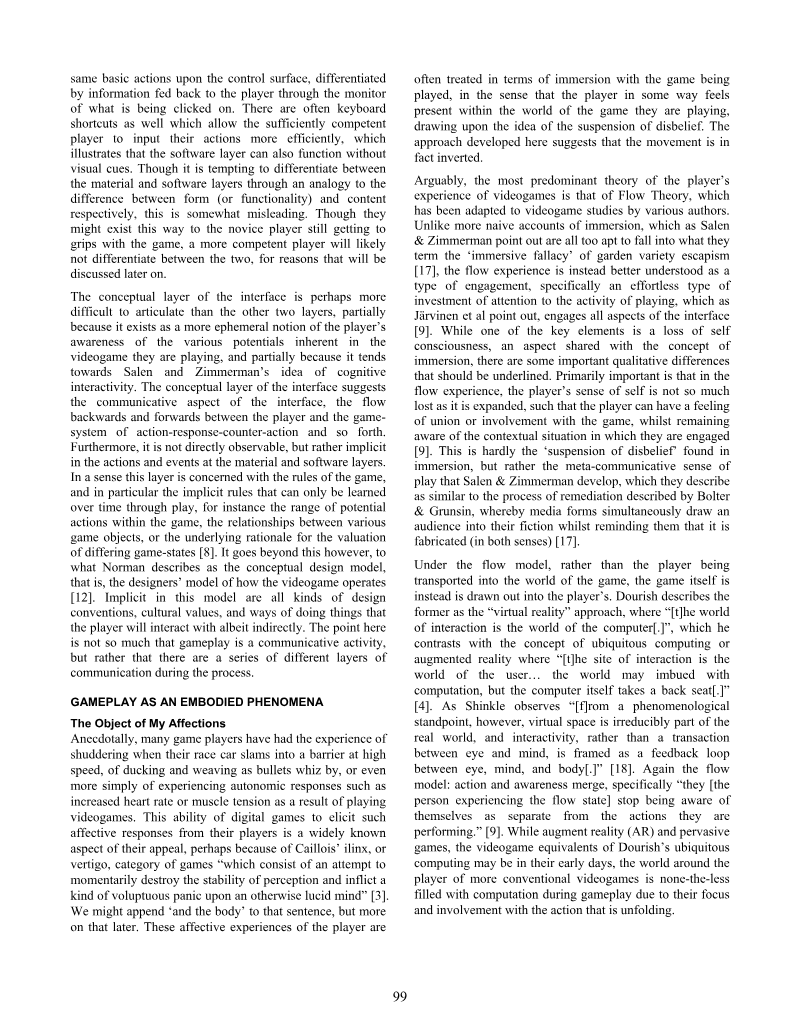
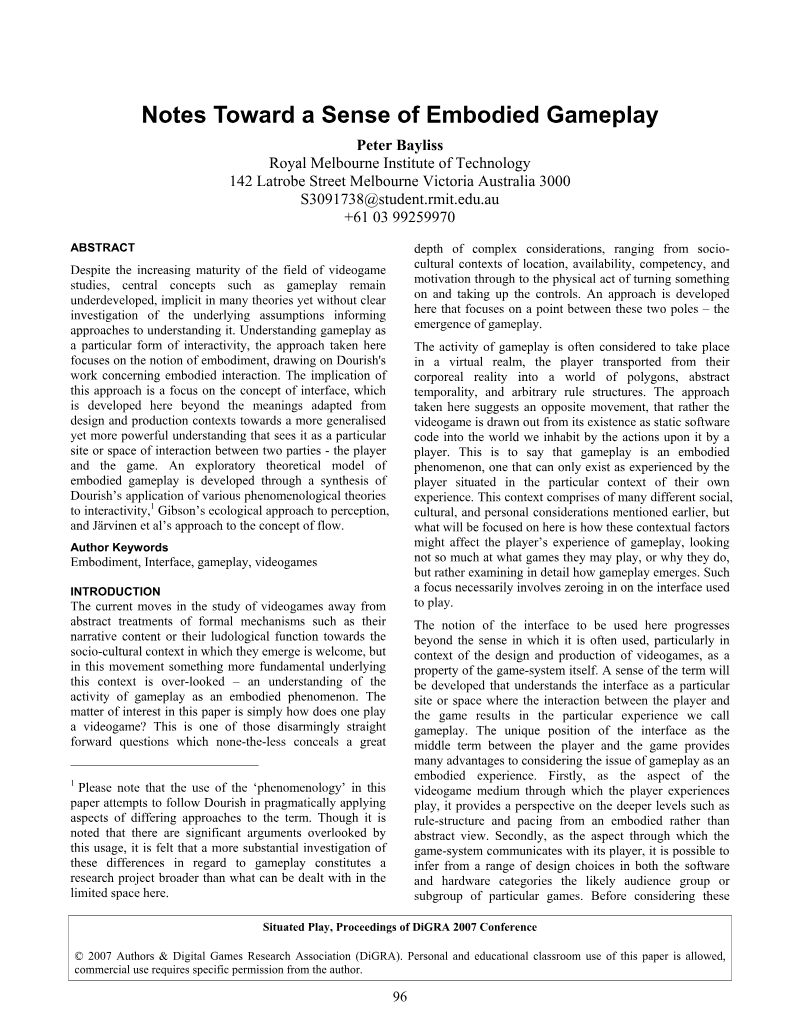
Peter Bayliss's "Notes Toward a Sense of Embodied Gameplay," presented at DiGRA 2007, argues that gameplay is best understood as an embodied phenomenon arising at the interface, the point where player and game meet, rather than as an escape into a virtual world or a purely formal rule system.
- Gameplay is framed as an embodied phenomenon arising at the interface where player and game meet, rather than as an escape into a virtual world or a purely formal rule system.
- The paper proposes a three-layer model of the interface (material, software, and conceptual) and critiques the 'immersive fallacy' that treats play as transport into a game world.
- Flow is distinguished from immersion: flow expands the player's sense of self and draws the game into the player's world, while immersion transports the player into the game's world.


Effects of Team-Based Computer Interaction: The Media Equation and Game Design Considerations
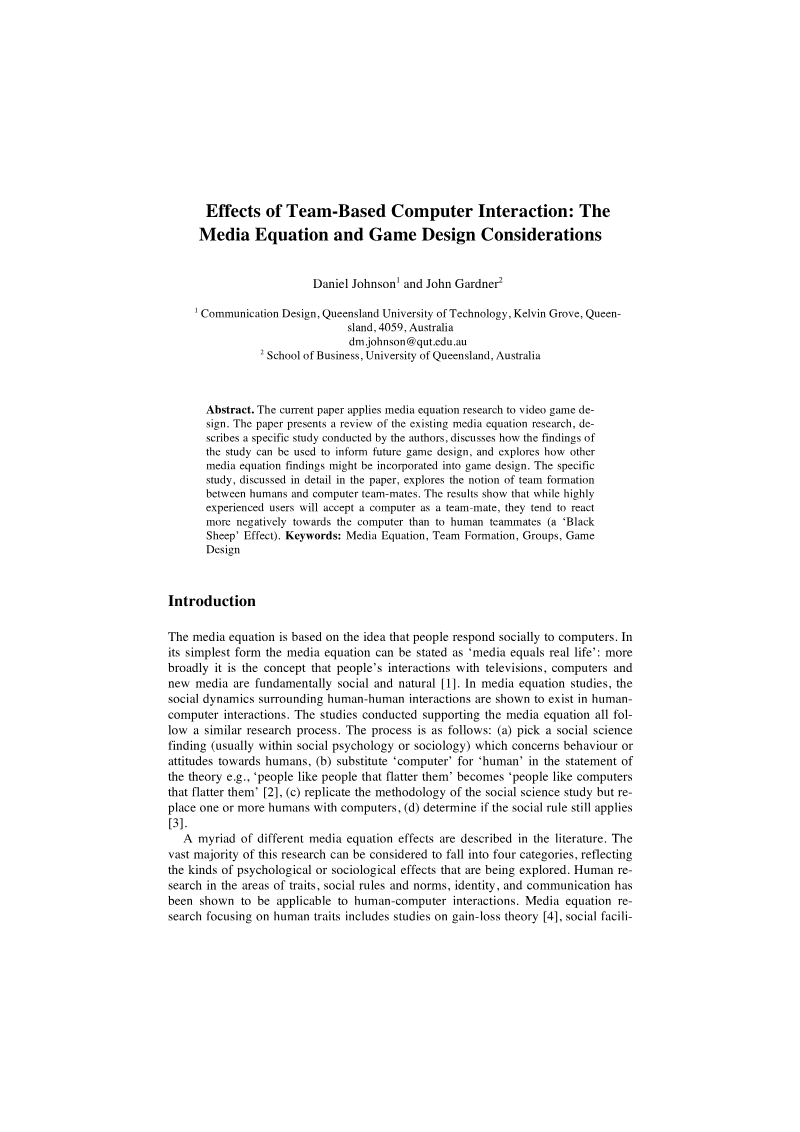
Humans naturally apply social norms and interpersonal expectations to computer interactions, a phenomenon known as the media equation.
- Humans instinctively apply social norms to computer interactions, meaning players treat non-player characters (NPCs) as social actors rather than mere tools.
- Players often exhibit the 'Black Sheep Effect,' reacting more critically toward computer-controlled teammates than human peers to reinforce their own group identity.
- Developers can strategically use NPCs as 'scapegoats' to absorb negative player sentiment, which paradoxically strengthens the social cohesion of the human team.
CameraBots: Cinematography for Games with Non-Player Characters as Camera Operators
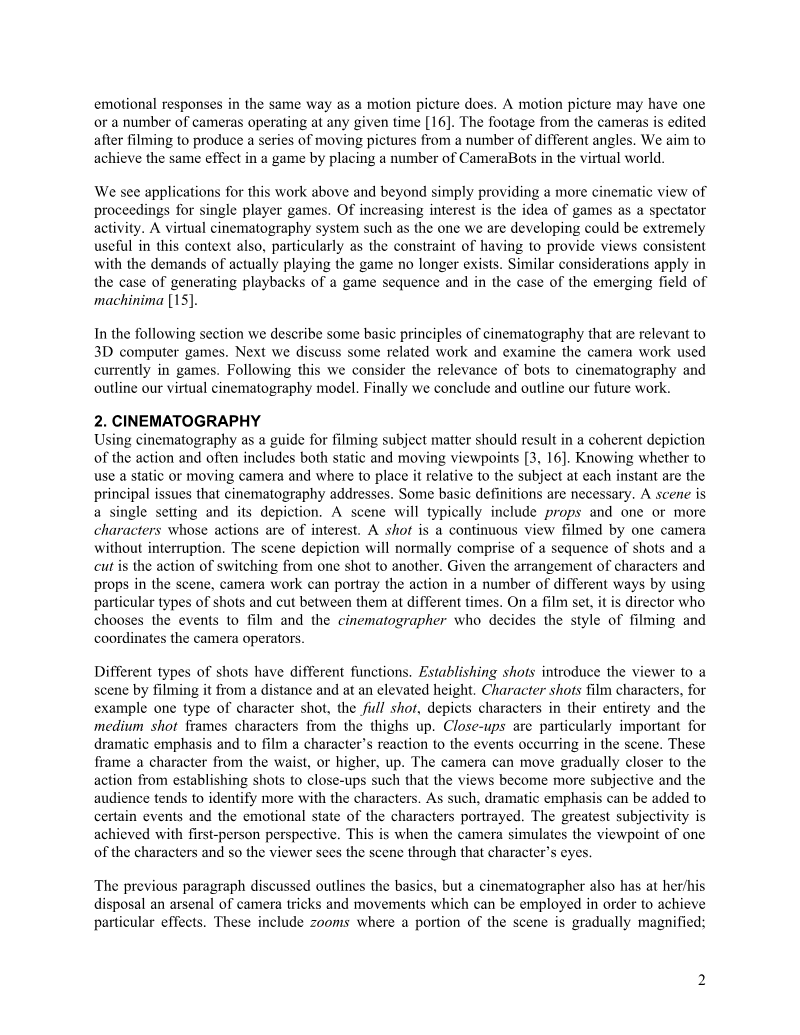
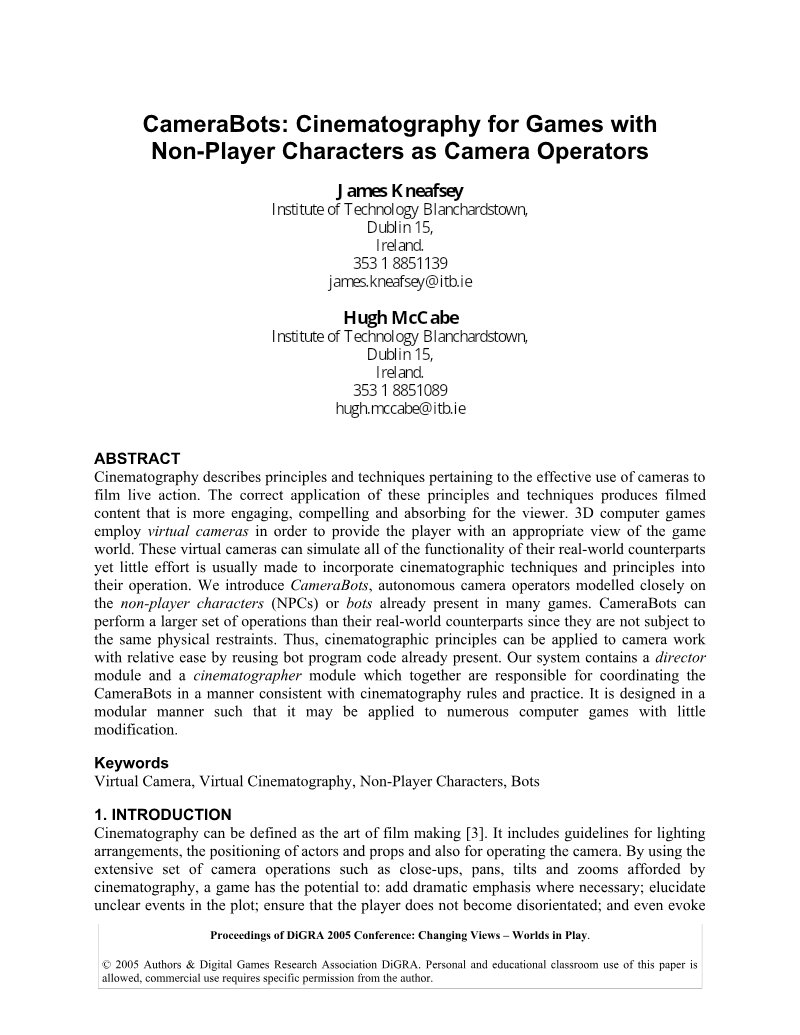
This paper proposes CameraBots, autonomous virtual camera operators modelled on the non-player character bots already common in 3D games, as a way to bring cinematographic principles into real-time game camera work.
- The paper proposes CameraBots, autonomous virtual camera operators built on the NPC bot code already common in 3D games, to bring film cinematography (shot selection, cutting, framing) into real-time game camera work.
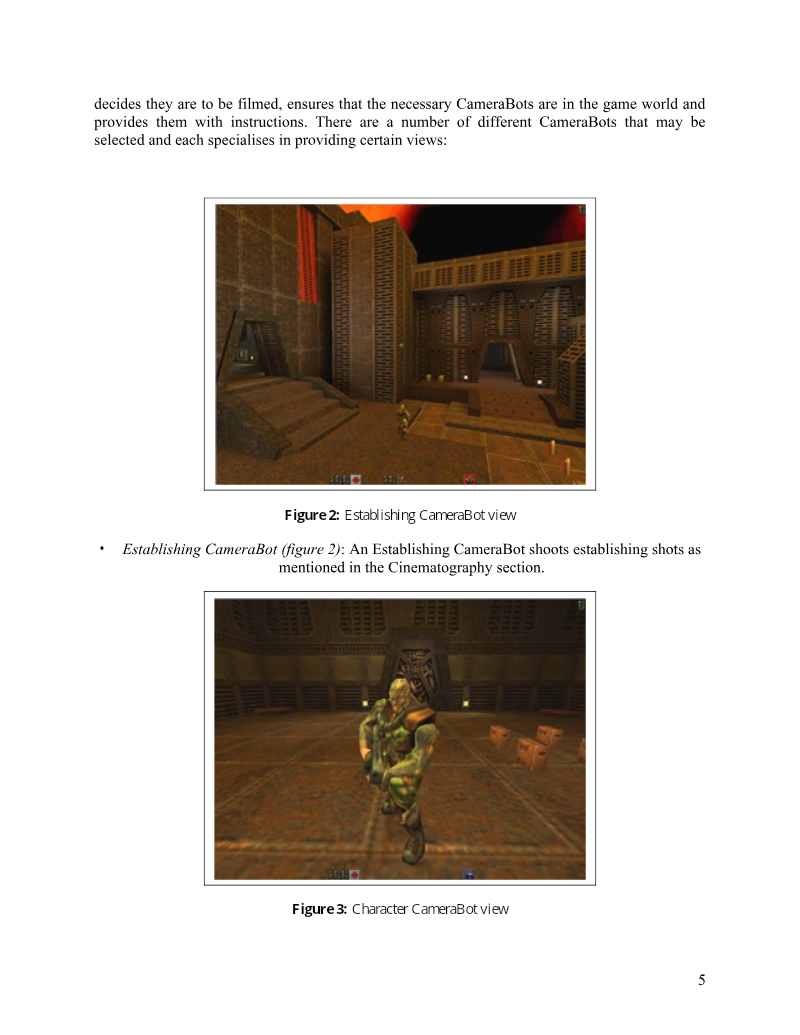
- The architecture mirrors a film set: a director module selects characters and props to film several times per second, and a cinematographer module assigns specialised CameraBots to shot types including establishing, character (long and medium), close-up, first-person, and over-the-shoulder.
- The cinematographer chooses shots based on whether the player's avatar or another principal character is attacking, moving, or stationary, and the modular design lets new CameraBot types be added and the system be ported to other engines via an API.
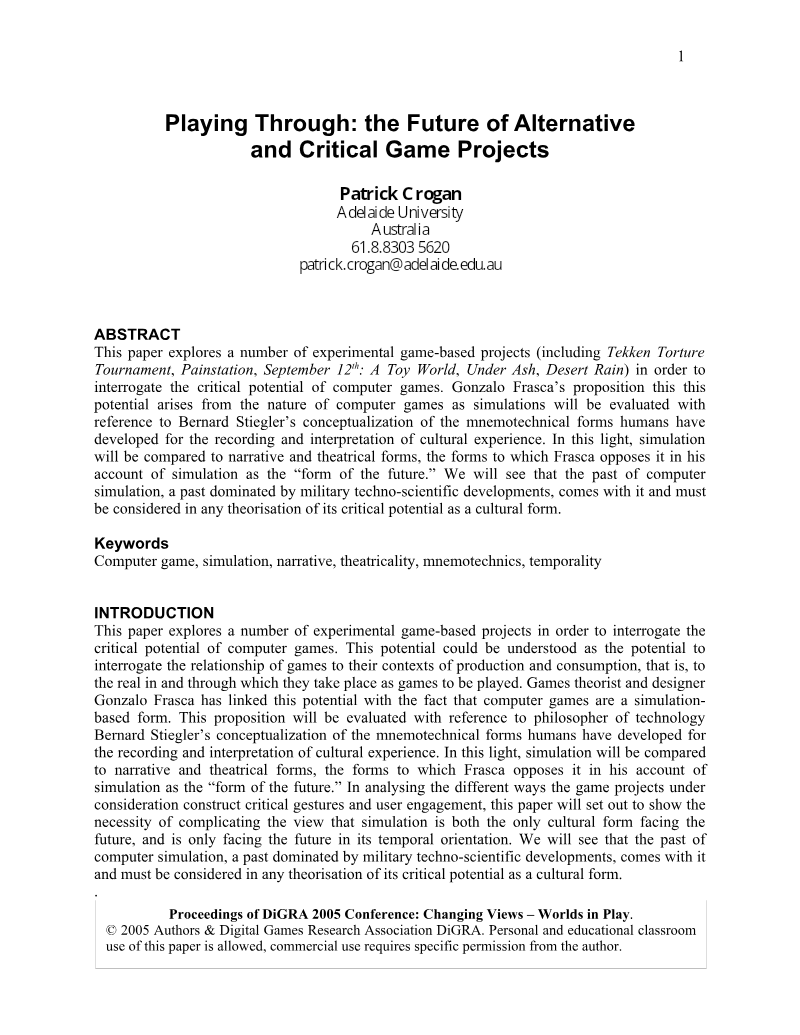
Playing Through: The Future of Alternative and Critical Game Projects
Patrick Crogan's DiGRA 2005 paper, "Playing Through: the Future of Alternative and Critical Game Projects," examines experimental games that disrupt the usual virtuality of play by making its physical and political stakes visible.
- Patrick Crogan's 2005 DiGRA paper reads experimental games such as Tekken Torture Tournament and the Painstation consoles as 'theatres of cruelty' that use real bodily consequences, like electric shocks and whips, to provoke reflection on the technocultural conditions of gaming.
- Crogan's central critical target is Gonzalo Frasca's claim that simulation is 'the form of the future,' positioned against narrative as the past and drama as the present, which Crogan argues is too rigid a temporal schema.
- Crogan argues that computer simulation grows out of military-industrial technoscience and therefore shares narrative's mnemotechnical, future-directed character rather than standing apart from it.
Writers
Games and companies
Games