1 free read left. Create a free account for unlimited reading + AI research.
Create free accountWhitepaperIFIP International Conference on Entertainment Computing (ICEC)
This approach uses Kansei engineering to prioritize user well-being over traditional competitive mechanics. The design focuses on fulfilling a player's needs, requirements, and desires.
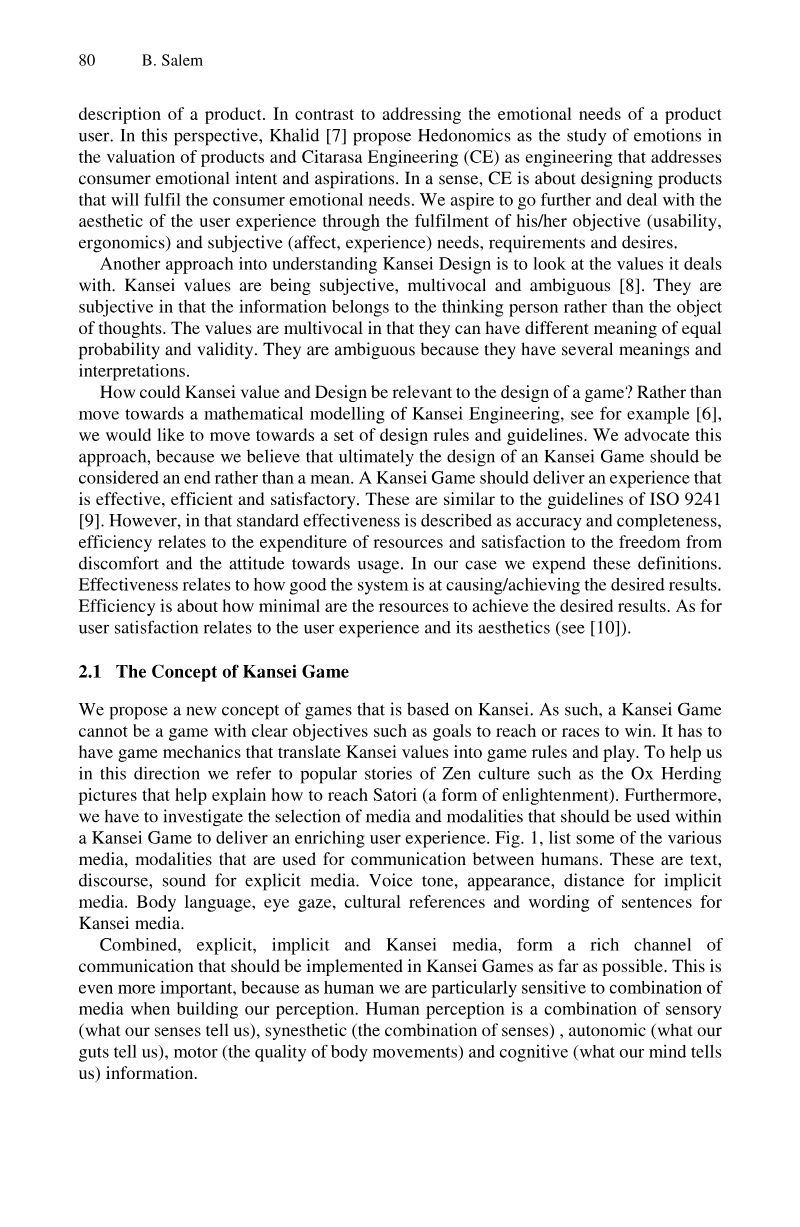
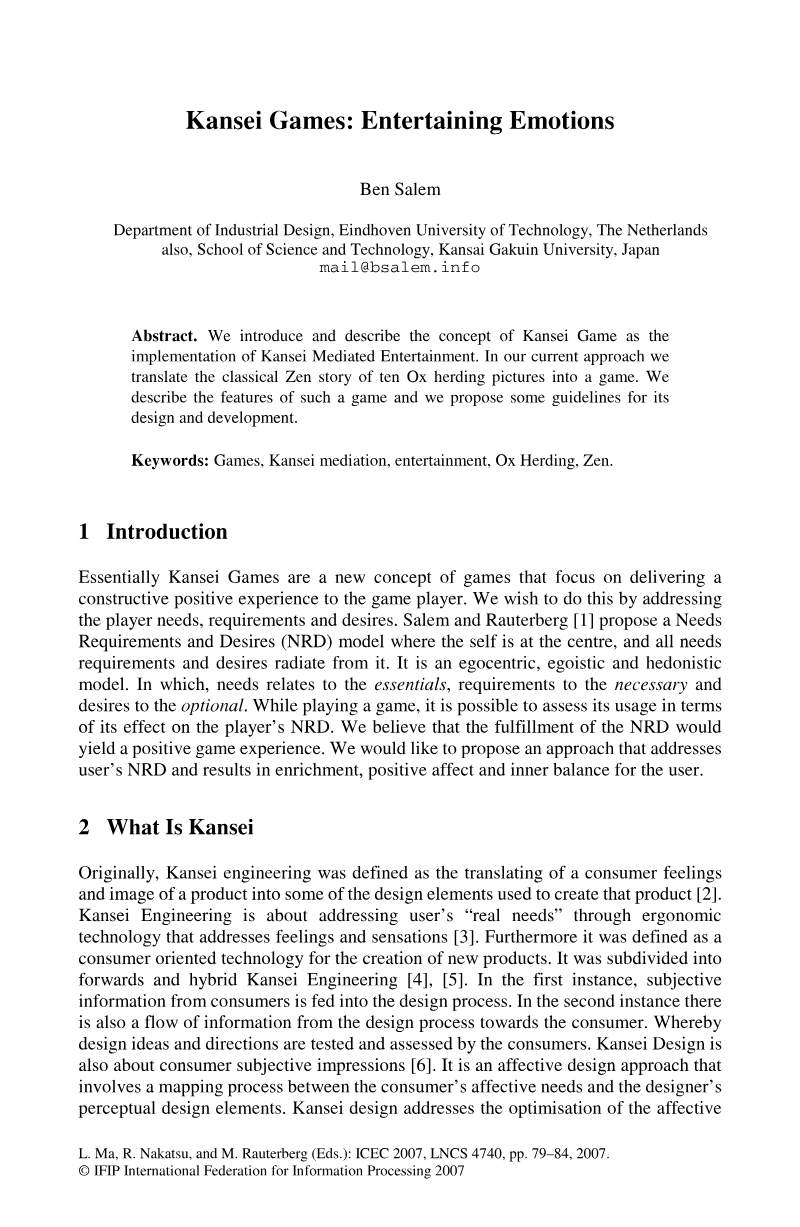
Kansei Games represent a novel genre of interactive entertainment designed to foster positive user experiences, inner balance, and self-awareness rather than traditional competitive goals. By integrating Kansei engineering—a consumer-oriented design approach that translates subjective human feelings into product features—these games prioritize the fulfillment of a player's needs, requirements, and desires. The core thesis posits that by aligning game mechanics with a player’s internal emotional and physiological state, developers can create software that functions as an enriching, meditative experience.
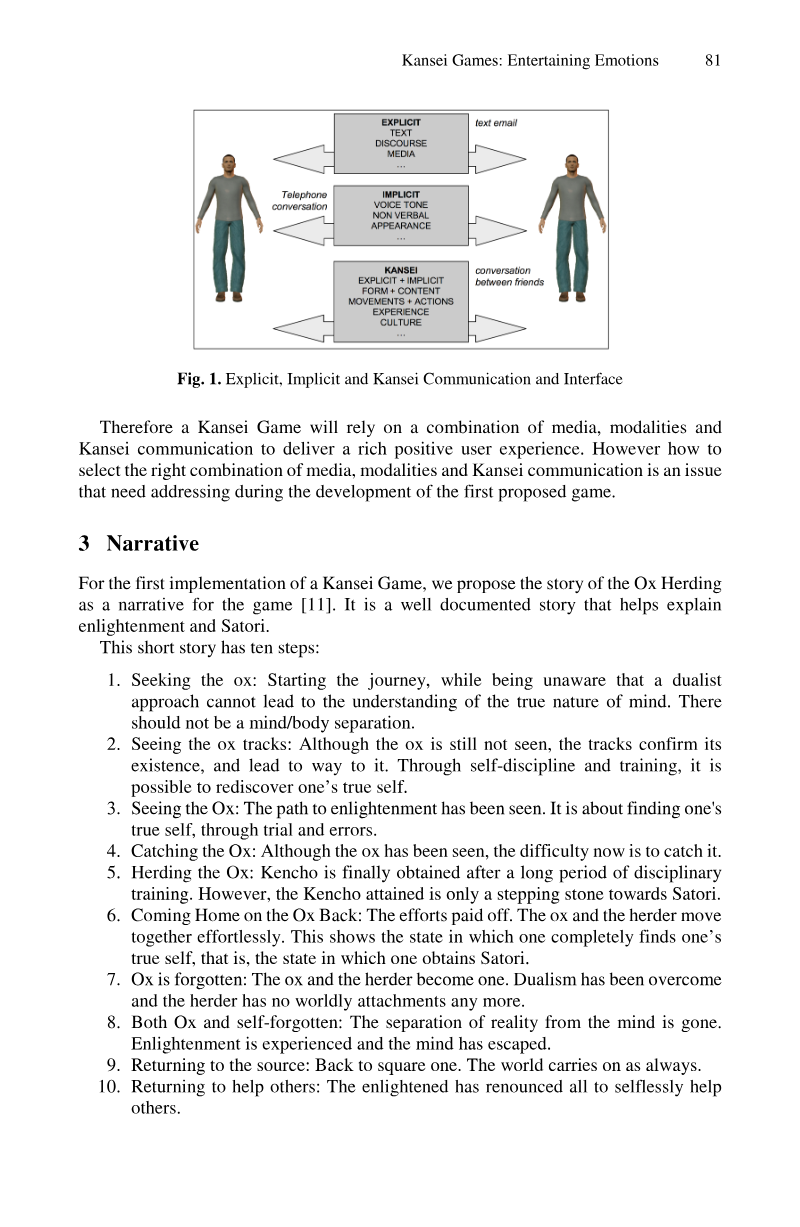
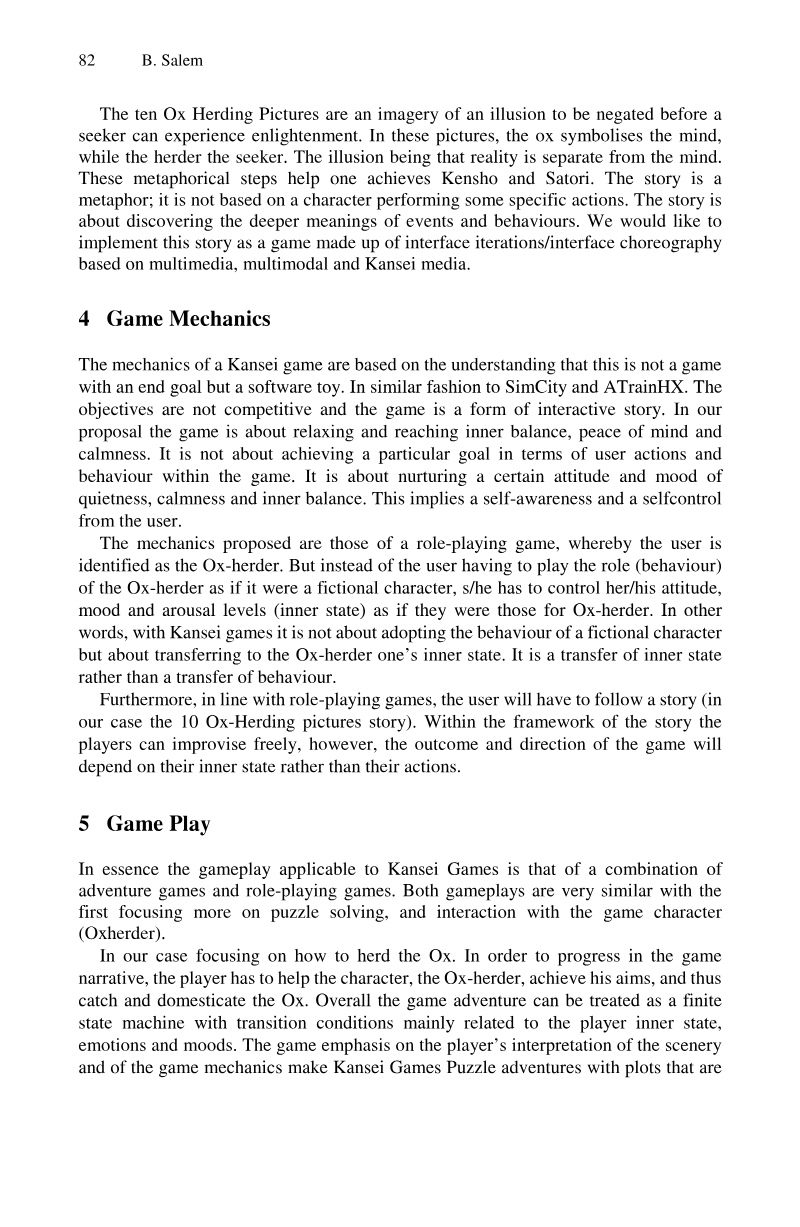
The proposed implementation utilizes the Zen narrative of the ten Ox Herding pictures as a structural framework. Unlike conventional games that rely on external objectives or winning conditions, this model functions as a software toy where the player’s progress is determined by their ability to regulate their own attitude, mood, and arousal levels. The game mechanics require a transfer of the player’s inner state to the in-game character, the Ox-herder. Consequently, gameplay is non-linear and relies on a combination of traditional input devices and physiological monitoring—such as heart rate, galvanic skin conductance, and body posture—to influence the game environment.
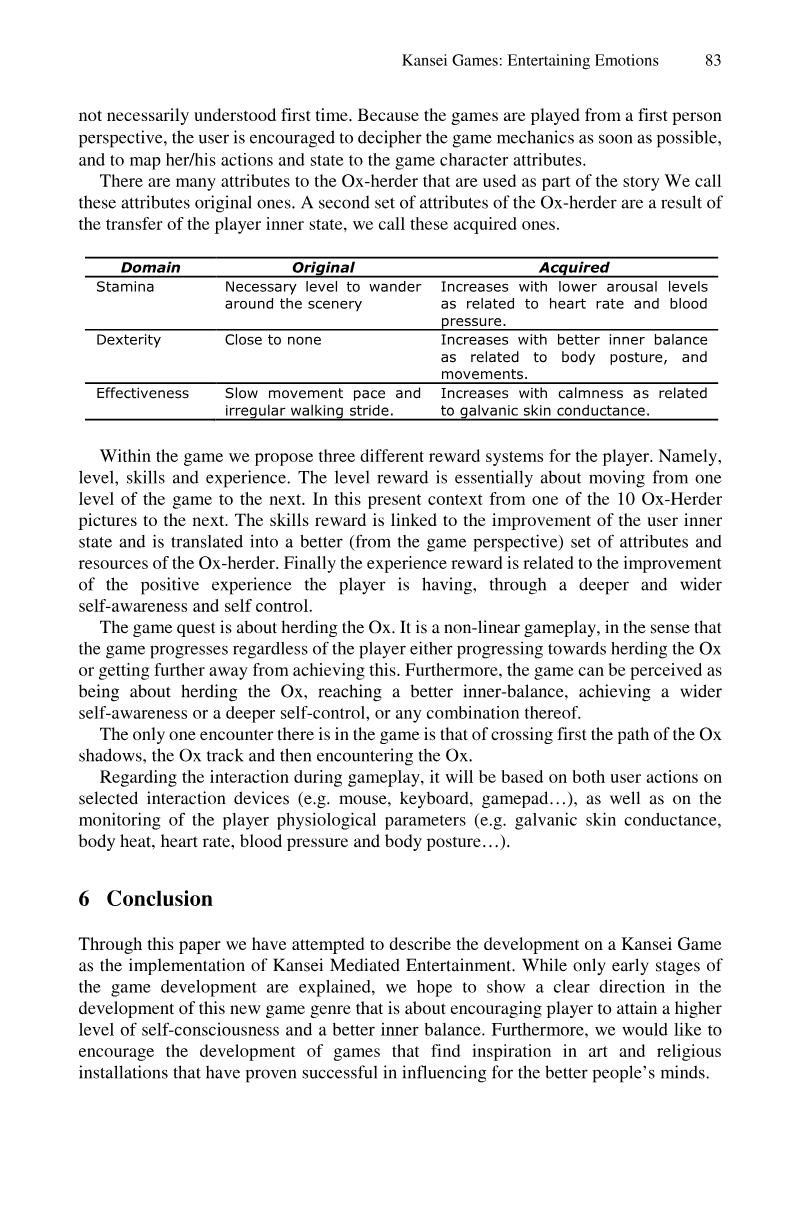
This approach draws on a multidisciplinary foundation, incorporating explicit, implicit, and Kansei media to create a rich, multimodal communication channel between the user and the system. By mapping physiological data to character attributes like stamina, dexterity, and effectiveness, the design seeks to reward self-control and deeper self-awareness. Ultimately, the framework advocates for a shift in game design toward aesthetic and affective goals, suggesting that games can serve as effective tools for psychological well-being and personal development.

IFIP International Conference on Entertainment Computing (ICEC) · 2023

Springer · 2023

IFIP International Conference on Entertainment Computing (ICEC) · 2022
IFIP International Conference on Entertainment Computing (ICEC) · 2021

University of Glasgow · 2021
IFIP International Conference on Entertainment Computing (ICEC) · 2019
IFIP International Conference on Entertainment Computing (ICEC) · 2018
IFIP International Conference on Entertainment Computing (ICEC) · 2017

IFIP International Conference on Entertainment Computing (ICEC) · 2017
IFIP International Conference on Entertainment Computing (ICEC) · 2016
University of Vienna · 2015
IFIP International Conference on Entertainment Computing (ICEC) · 2015
Serious Games Society · 2026


























Comments