Game Publishing reports and market data
Documents

How to Pitch Mattel the Perfect Game with Marcus Liassides, Mattel Digital SVP
Mattel is aggressively transforming its digital strategy by leveraging its extensive portfolio of over 800 iconic brands, including Barbie, Hot Wheels, and Masters of the Universe, to establish a dominant presence across mobile, console, and metaverse platforms like Roblox.
- Mattel is pivoting from a traditional licensing model to a collaborative strategic partnership, prioritizing long-term cultural relevance and community engagement over immediate monetization.
- The company is leveraging a portfolio of over 800 brands, including Barbie, Hot Wheels, and Masters of the Universe, to expand across mobile, console, and metaverse platforms like Roblox and Fortnite.
- Mattel currently manages over 50 active digital projects, supported by a hybrid model that combines external licensing with internal self-publishing capabilities following the acquisition of the Mattel163 joint venture.
'Advance Access' games - why should you pay more?
Publishers are increasingly monetizing early entry to highly anticipated titles through formal advance access programs, typically charging a premium of ten to fifteen dollars.
- GDC 2027 has restructured its format to a Monday–Friday schedule, moving the festival hall to Tuesday–Thursday and introducing a new Business Hall at Moscone West to centralize networking and mitigate the logistical challenges of the San Francisco venue.
- Advance Access for games like 'Mortal Shell II'—which achieved 23,000 concurrent users—is increasingly being monetized through premium editions that charge a $10–$15 surcharge for early play, effectively creating a market for artificial scarcity and FOMO.
- PlayStation has begun de-listing publishers associated with 'shovelware' or low-effort games designed primarily for easy Platinum trophy farming, though the platform's enforcement remains inconsistent and subject to reversal.

GTA6 Leaker Gonna Get Sued, Disney Sues FCC, & Roblox Sued by Everyone! | Games For Breakfast
The gaming industry is currently navigating a period of significant volatility, characterized by high-profile security breaches, shifting labor dynamics, and intense regulatory scrutiny.
- Roblox is facing a wrongful death lawsuit involving a child, with the company arguing it should be immune from liability because the parents purchased the platform's currency, despite allegations that the company was aware of the harmful behavior occurring.
- Disney is currently engaged in legal action against the FCC, a move viewed by the hosts as a high-stakes effort to challenge the current administration's regulatory reach.
- Grand Theft Auto 6 has suffered multiple significant leaks, including gameplay footage, map details, and combat mechanics, beginning on August 18th and continuing through the following days.

Xsolla on D2C's growing momentum and its biggest product wave yet
Xsolla is expanding its direct-to-consumer (D2C) infrastructure for the gaming industry, aiming to provide mobile, PC, and console developers with a comprehensive suite of tools that move beyond simple payment processing.
- Xsolla is launching six new solutions at Gamescom, headlined by the 'Web Shop Ecosystem,' a comprehensive direct-to-consumer (D2C) platform designed specifically for mobile games.
- The company reports that its D2C business volume doubled between 2023 and 2024, with that same total growth volume achieved again in 2025 alone.
- Xsolla’s new AI Toolkit features a command-line interface that allows developers to build functional storefronts in a single session, incorporating validation steps at every stage to prevent production errors.

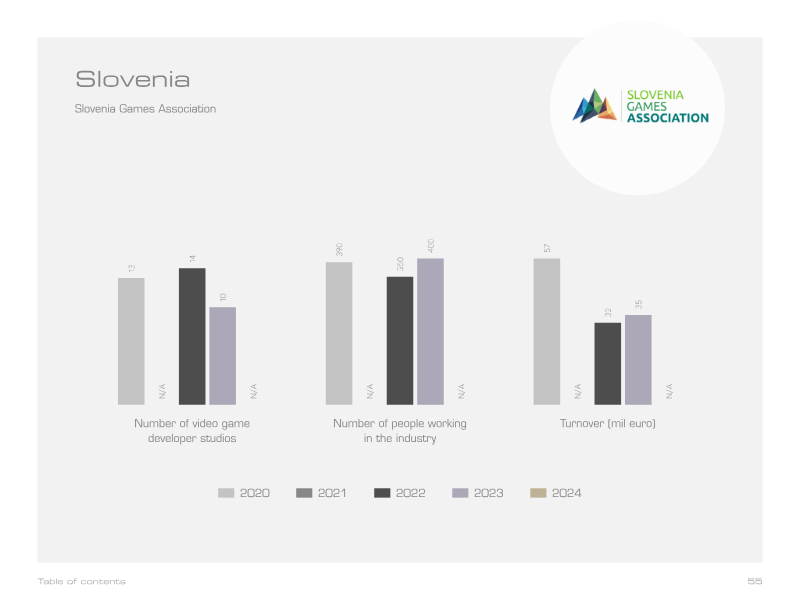
European Video Games Industry Insight Report: 2024
The European video games industry demonstrated notable resilience in 2024, achieving an estimated 6% growth in combined turnover despite a challenging macroeconomic climate marked by inflationary pressures and cautious investment strategies.
- The European video games industry generated €24 billion in total turnover in 2024, achieving 6% growth despite macroeconomic challenges.
- The sector currently comprises approximately 6,600 studios and 95,000 employees, though workforce numbers have stalled or slightly declined due to global consolidation.
- Germany, France, Finland, Sweden, Spain, and Serbia have emerged as the primary hubs for industry expansion.
The video games most at risk from PlayStation’s physical switch-off
The global video game industry faces a critical inflection point as hardware manufacturers and publishers navigate a transition toward a fully digital ecosystem.
- PlayStation plans to phase out physical discs by January 2028, requiring a strategy to convert consumers who rely on physical media resale value to justify day-one purchases.
- Projections suggest a $1,000 price point for next-generation consoles could lead to a 38% decline in sales volume over a five-year period as consumers retain existing hardware.
- To combat market stagnation, the industry must shift focus from incremental graphical upgrades toward software innovation and the development of new intellectual property.
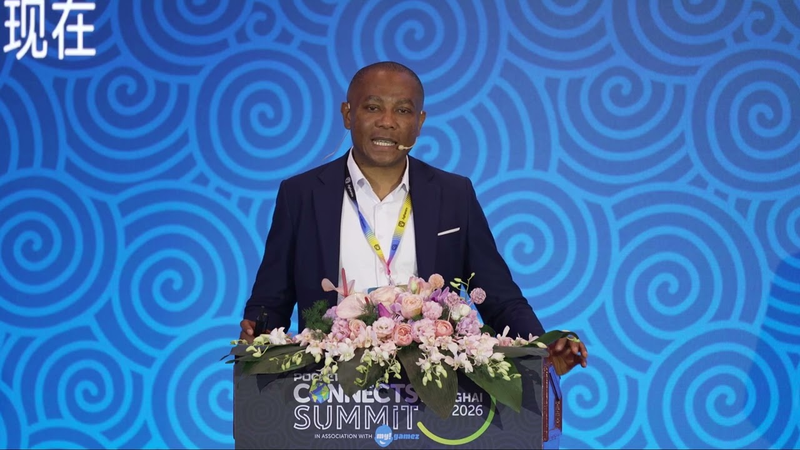
Session: From Code To Continent: Distribution Strategies & Partnerships For Scaling H5 Games......
The expansion of H5 gaming into emerging markets, particularly Africa, offers a significant growth opportunity for developers seeking to move beyond the saturated landscapes of China and the West.
- Africa represents a high-growth frontier with a population of over 1.3 billion, characterized by a young demographic (average age 19) that relies on mobile devices as their primary internet access point.
- H5 gaming is the dominant distribution model in emerging markets because it bypasses the need for app store installations, which is critical for users with limited device storage and data constraints.
- Traditional user acquisition playbooks fail in Africa; success relies on community-based distribution and social discovery, where games gain traction through peer-to-peer recommendations on platforms like WhatsApp rather than individual app downloads.
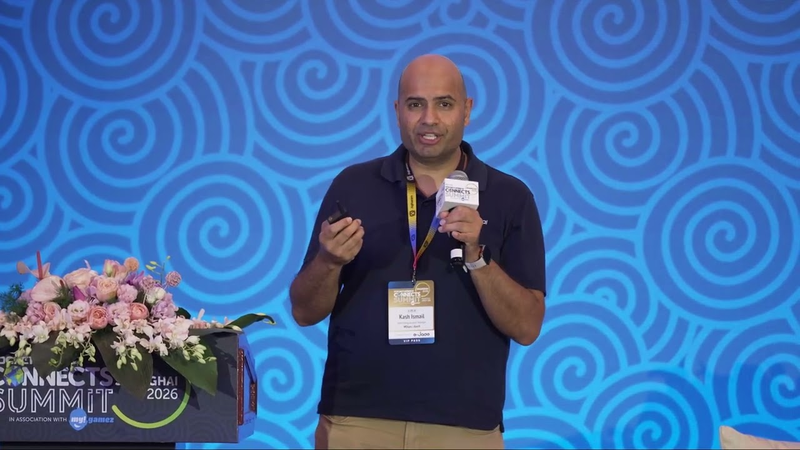
Session: Winning In China: Apple Ads Growth Strategies For Global Mobile Game Publishers.
Entering the Chinese mobile gaming market requires a shift in focus from mere scale to operational readiness.
- Entering the Chinese mobile game market requires rigorous operational readiness, including securing ISBN approvals, establishing local reporting structures, and ensuring App Store metadata is culturally localized rather than simply translated.
- Apple Search Ads remain the primary global media source for iOS gaming, providing visibility across the entire user journey from initial discovery to high-intent downloads.
- Campaign performance is frequently hindered by five common mistakes: direct keyword translation, mixing intent signals (brand vs. category), weak landing page relevance, premature scaling, and lack of a regular reporting cadence.
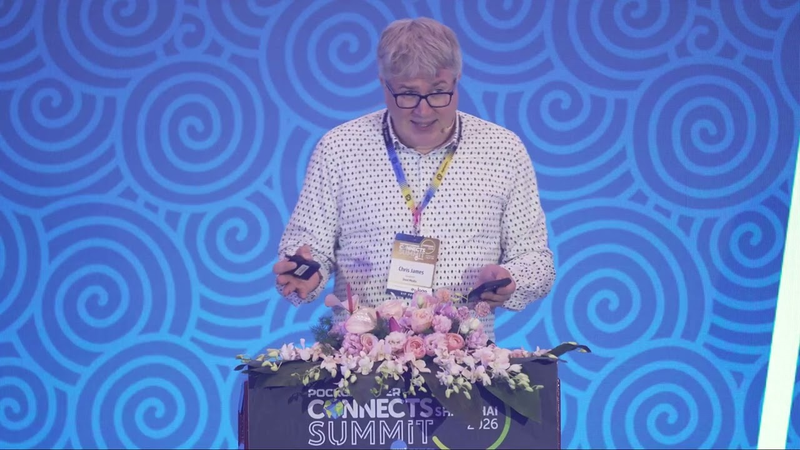
Welcome & Introduction to Pocket Gamer Connects Summit Shanghai - Chris James, Steel Media Ltd.
The Pocket Gamer Connects Summit Shanghai 2026 serves as a global industry forum dedicated to connecting, celebrating, and supporting the games sector.
- The global games market reached approximately $263 billion in total value last year when accounting for hardware sales and mobile advertising, significantly higher than the $200 billion figure often cited in standard reports.
- Direct-to-consumer (DTC) web stores are becoming a major revenue stream, with companies like Stillfront, Playtika, and Huuuge reporting that they now generate nearly as much revenue through these channels as they do via traditional app stores.
- Mini-games are a massive growth sector, with WeChat mini-games alone generating over $7.6 billion in revenue last year, alongside emerging platforms like TikTok Minis and YouTube Playables.
Session: How Much D2C Revenue Are Publishers Actually Making? - Craig Chapple, PocketGamer.biz
This analysis examines the growing prevalence of direct-to-consumer (D2C) web stores within the mobile gaming industry, focusing on how publishers are leveraging these platforms to bypass traditional app store fees and improve profit margins.
- Direct-to-consumer (D2C) channels are becoming a critical strategy for publishers to improve margins in a mature market where overall industry growth has slowed to single digits.
- Major publishers are seeing significant D2C adoption: Playtika reports a $1.2 billion annual run rate from its own platform, while Modern Times Group (MTG) saw D2C revenue grow to 39% of total group sales in Q1, with mid-core titles reaching 49%.
- There is a strong correlation between rising D2C revenue and increased user acquisition (UA) spending, suggesting that savings from avoided platform fees are often being reinvested into marketing to capture growth.
Is the Stop Killing Games Campaign destined to fail?
The Stop Killing Games campaign seeks to establish legal mandates for the preservation of online-only titles, aiming to protect consumers from losing access to purchased software when developers sunset servers.
- The 'Stop Killing Games' campaign faces significant legislative hurdles in the UK, EU, and California due to fundamental conflicts with existing intellectual property and consumer protection laws.
- Technical dependencies in live-service architectures, such as third-party assets, licensed music, and proprietary middleware, often prevent developers from legally releasing or preserving software even when they are willing to do so.
- Industry trade bodies oppose mandatory preservation initiatives, arguing that a one-size-fits-all legislative approach is incompatible with the diverse operational needs of studios ranging from independent developers to major publishers.
Sustainability at Embracer Group: FY 2026/27 ESG Fact Sheet
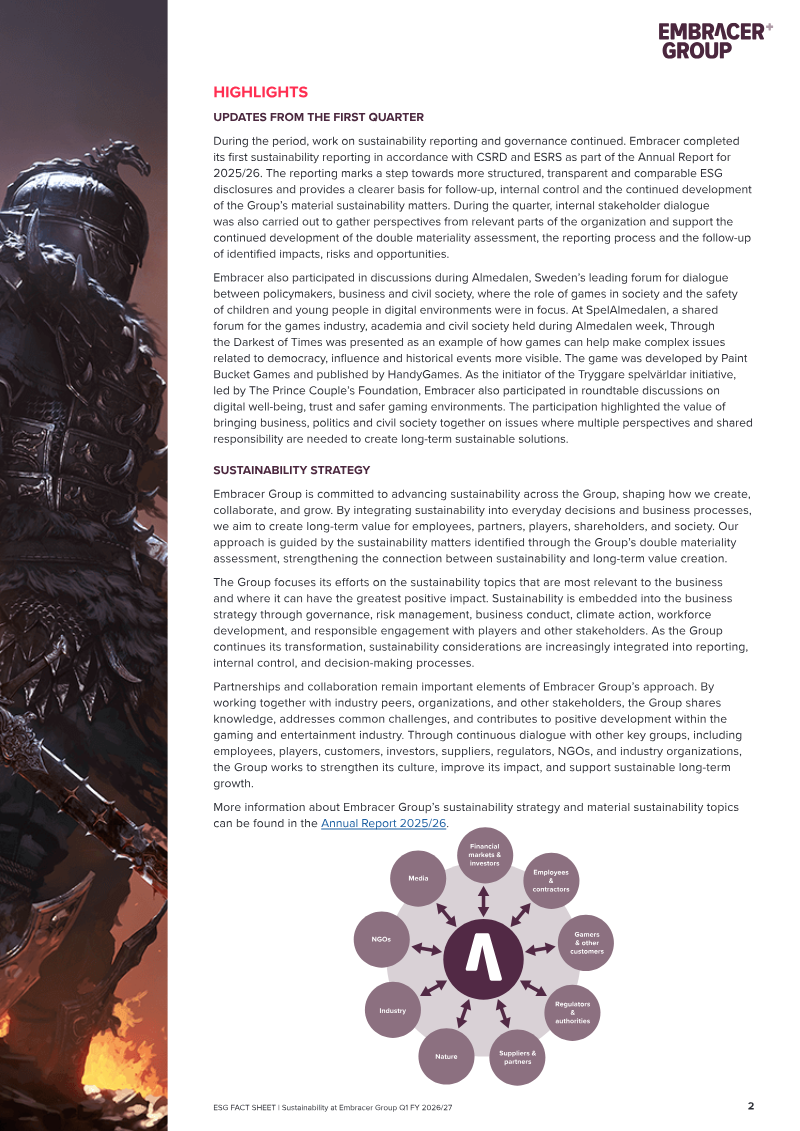
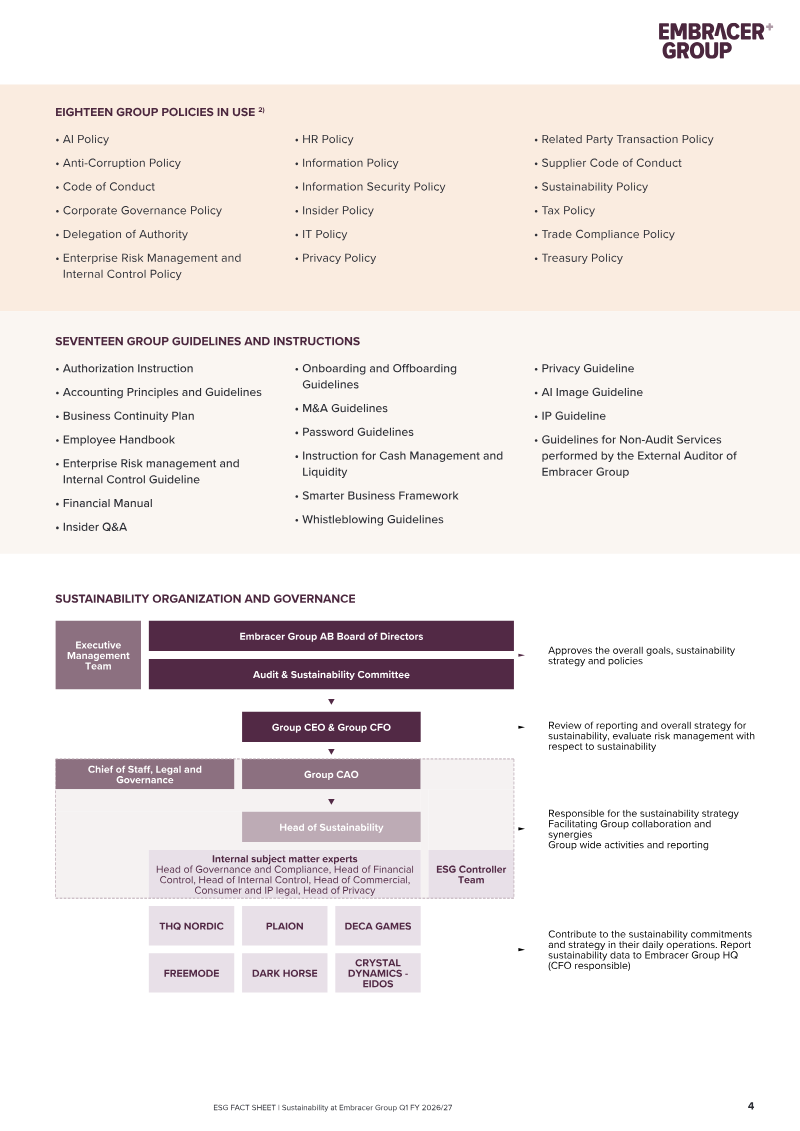
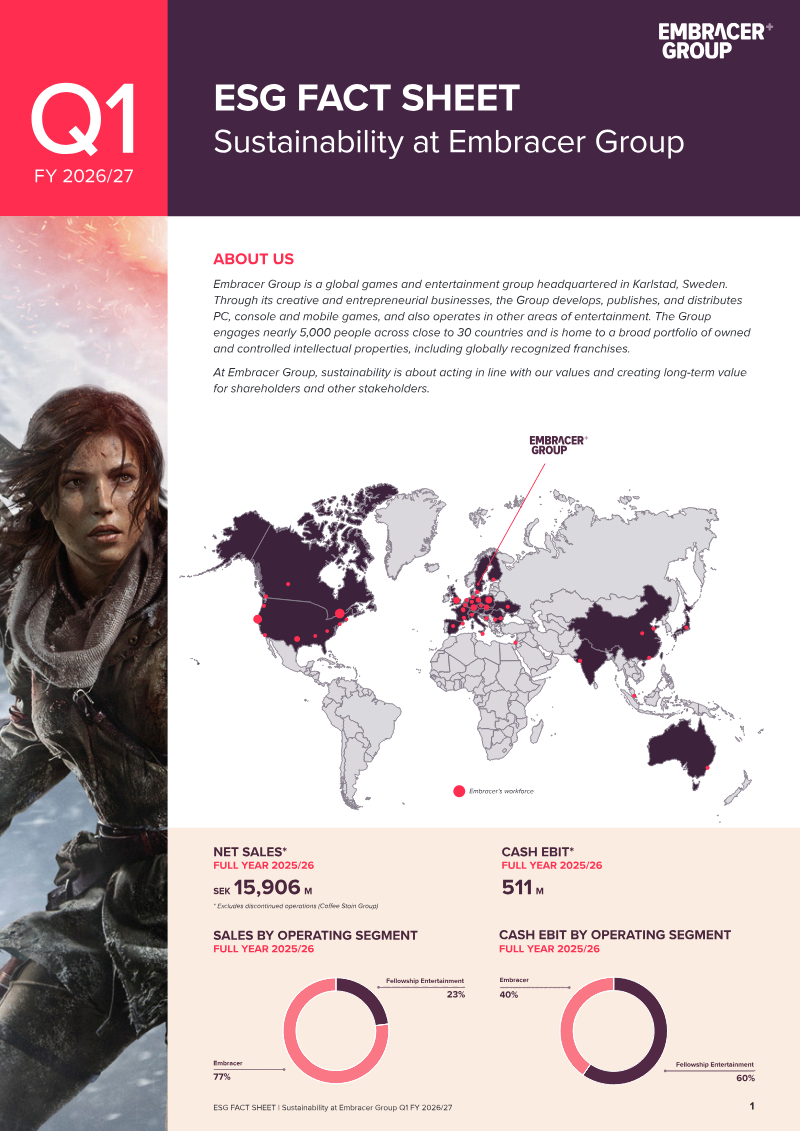
The Embracer Group’s sustainability disclosure for the 2025/26 fiscal year outlines the organization’s commitment to integrating environmental, social, and governance (ESG) criteria into its global operations.
- Embracer Group reported total greenhouse gas emissions of 203,099 tCO₂e for the 2025/26 fiscal year, with Scope 1 and 2 operations accounting for 4,633 tCO₂e.
- The company consumed 17,229 MWh of energy during the 2025/26 period, with 42% of this total sourced from renewable energy.
- The workforce consists of 4,992 employees, with women representing 27% of the total staff and 40% of top management positions.